
The US leaving the Middle East leads Riyadh to explore its options.
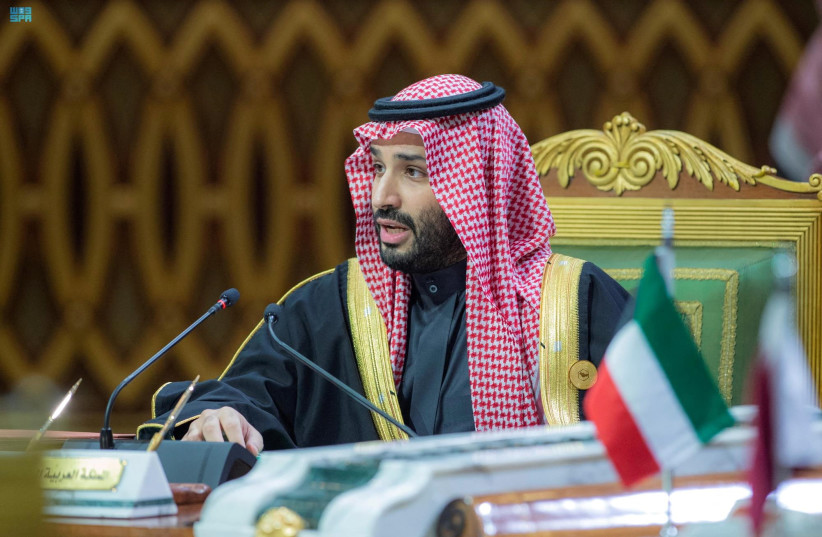
 Saudi Crown Prince Mohammed bin Salman speaks during the Gulf Summit in Riyadh, Saudi Arabia (photo credit: VIA REUTERS)
Saudi Crown Prince Mohammed bin Salman speaks during the Gulf Summit in Riyadh, Saudi Arabia
(photo credit: VIA REUTERS)

Iranian and Saudi representatives met once again in Baghdad for the fifth round of talks toward normalization, it was announced over the weekend.

For more stories from The Media Line go to themedialine.org

Iranian foreign ministry spokesman Saeed Khatibzadeh on Monday described the recent talks as positive. It was not immediately clear when they took place. The fourth round was held in September.

Saudi Arabia and Iran have been regional rivals ever since the ayatollahs came to power in the Islamic Revolution of 1979 and Tehran transformed from being an ally of Israel to seeking its destruction.

The United States has been very active in the region over the last decades. However, the administration of President Joe Biden has taken many actions showing that it intends to reduce the US role in the Middle East, leading to a shift in the geopolitical dynamics of the region.

Uzi Rabi, director of the Dayan Center for Middle Eastern and African Studies at Tel Aviv University, told The Media Line that the meeting had to do with the “less penetrating American rule.”

Brig.-Gen. (res.) Yossi Kuperwasser, director of the Project on Regional Middle East Developments at the Jerusalem Center for Public Affairs, agrees.

The Saudis are very concerned because they see the United States leaving the Middle East and decreasing its presence in the region, Kuperwasser told The Media Line.

“They see the American eagerness to resume the Iranian nuclear deal, and that tells them that they have to look for other friends,” he said.
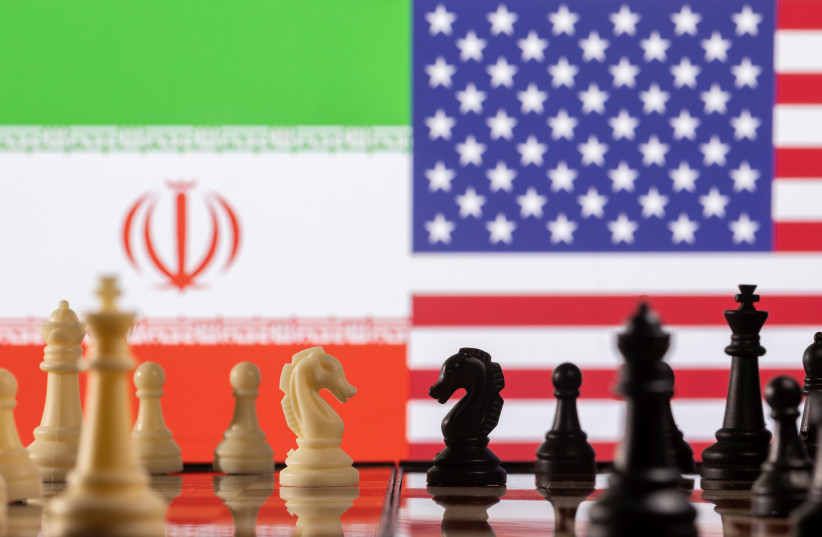
 Chess pieces are seen in front of displayed Iran's and U.S. flags in this illustration taken January 26, 2022. (credit: REUTERS/DADO RUVIC/ILLUSTRATION)Chess pieces are seen in front of displayed Iran’s and U.S. flags in this illustration taken January 26, 2022. (credit: REUTERS/DADO RUVIC/ILLUSTRATION)Israel is the most obvious friend for Saudi Arabia in this context, because the two countries share genuine interests, Kuperwasser explained. “We [Israel] would like to see them becoming closer to us,” he said. “But they choose to check all the options.”

The experts believe that these Saudi-Iranian meetings mostly have to do with the situation in Yemen, at least for Riyadh.

Rabi explained that the Saudis find themselves in a very complicated position in Yemen and that they are looking for an alternative to their current heavy involvement in the civil war there.

“The Saudis have been defeated in Yemen and they would like to get a compromise to make up for their losses and create a situation in Yemen where the Houthis [who are supported by Iran], don’t become too strong,” he said.

“Basically, what we can see here is a Saudi attempt to get Iran to compromise on the Yemen issue,” Rabi said.

Kuperwasser adds, “Saudi Arabia is worried about Iran having influence over Yemen, and that is the major incentive for the Saudis to meet the Iranians since they can control the Houthis and they [the Saudis] want to make sure that they won’t start firing [more] missiles at them.”

As for Israel and the other Abraham Accords countries that are also Iranian rivals, Rabi believes that Saudi Arabia has coordinated the talks with Iran with them.

The Abraham Accords’ Arab signatories, he continued, “are well in the picture, and some of them would even like to see sort of an alignment in Yemen because it is becoming a very bothersome issue and it has opened the door for Iran to get a stronghold on the southeastern flank of the Arabian Peninsula, which is not comfortable for anyone.”

Kuperwasser, on the other hand, is not so sanguine regarding the status of Israel in this issue.

“We are concerned about this because the Iranians may get only gestures and smiles from the Saudis, which will do nothing to bring stability to the Middle East,” he said.

If Saudi-Iranian relations continue to improve, that could endanger the Abraham Accords further down the road, and “that is something that Israel is concerned about,” he said.

Kuperwasser added, however, that many of the issues discussed in Baghdad had nothing directly to do with Israel.

The experts agree that Saudi Arabia is aiming to extricate itself from the morass in Yemen, but they are not sure the Iranians have the same reason for meeting.

“What Iran is trying to do is to weaken the more pragmatic and moderate states in the Arab world and take advantage of the fact that they have strained relations with the US at this point,” Kuperwasser said.

While Seyyed Javad Mousavi zare, an Iranian with a doctorate in political geography and geopolitics, agrees that one of the main issues is the situation in Yemen, he described other possible reasons Tehran may be meeting with the Saudis.

The first one, he said, has to do with religious tourism. It is in Tehran’s interest to succeed in sending Iranian pilgrims on Hajj to Mecca, but even more so to reactivate Shiite tourism from the Gulf to Iran, given the Islamic Republic’s ailing economy.

“The tomb of our eighth Shiite imam [Ali al-Ridha] is located in the city of Mashhad. As a result, many Shiites from the Persian Gulf countries, especially Kuwait, Bahrain, and Saudi Arabia, travel to this city for pilgrimage. Of course, after the severance of relations between the two countries, these trips have also been canceled,” Mousavi zare said.

For this reason, he continued, “the normalization of relations between the two countries in terms of tourism, especially in a situation where Iran is not in a good economic position,” would do a lot to help the country’s economy, he said.

The Iranian regime is also trying to improve its standing among the country’s citizens, he continued.

Iranian soccer clubs, including Persepolis FC and Esteghlal FC, both based in Tehran, are among the most popular in Asia, Mousavi zare explained. And the severance of ties with Saudi Arabia has led to an increase in the latter’s influence in the Asian Football Confederation, depriving the Iranian clubs of the right to host international matches.

“This has led many football fans in Iran to oppose the government. Therefore, the development of relations between the two countries leading to … Iranian football clubs hosting Saudi football clubs would have some positive repercussions for the Iranian government,” he said.

Mousavi zare added that it is in Iran’s interest to come to an agreement with Saudi Arabia concerning the proxy wars they are engaged in throughout the region, due to their high cost.

Iran and Saudi Arabia are currently competing on several fronts, he said, “including Yemen, Lebanon, Iraq, Syria. The normalization of relations would lead to a reduction in the cost of physical warfare.”

Lastly, he said Iran wants to improve its relations with the countries of the Islamic world, especially Kuwait, and increase coordination with Saudi Arabia regarding OPEC decisions on oil exports.


Criticizing Israel Has Become a Permanent Obsession

by Alan Baker / JNS.org

OPINION

Signs at a pro-BDS protest in New York following the US decision to move its embassy in Israel to Jerusalem. Photo: Reuters/Carlo Allegri.

JNS.org – The penchant for criticizing Israel, whatever it may or may not do, appears to have become a permanent fixation. Whether such criticism relates to Israel’s internal policies, governance of the territories and responses to terror attacks, or situations with no apparent linkage to Israel, the obsession with Israel and its alleged malfeasances inevitably emerges.

No such fixation exists in regard to any other country. The obsessives single out Israel as a butt of criticism for any and every reason. It appears to be an ingrained component of the psyche of those who revel in it and seek out every opportunity to denigrate and delegitimize the Jewish state.

No society or country is beyond rational criticism, Israel included. Israeli society, media and domestic politics are examples of the country’s openness and critical introspection.

Odd as it may seem, however, as a member of the world community, Israel has never benefited from the equality to which every other state is entitled. Since its establishment and acceptance into the United Nations as a full-fledged member of the international community, Israel has been denied one of the basic rights guaranteed to all states as set out in the opening articles of the Charter of the United Nations—that of sovereign equality.

This discrimination, which continues to the present, takes the form of exclusion from UN regional groupings. This prevents Israel from exercising the right to submit its candidacy and candidates to UN organs such as the Security Council or the International Court of Justice. Since this discrimination has been the accepted norm for over 70 years, it is no wonder that the fixation on singling out Israel is accepted internationally.

This normalization of the obsession with Israel extends to political and media entities, domestic and international, who have an agenda hostile to Israel’s existence and engage in delegitimizing Israel in international fora. These obsessed critics also include progressive and liberal elements within Western Jewish and gentile communities.

Another obvious source of automatic criticism has existed from time immemorial and permeates international society—antisemitism.

This is reflected in the anti-Israel fixation of Palestinian and pro-Palestinian elements that seek to delegitimize Israel in the international community. In turn, the effectiveness of their strategy is evident in the abuse and manipulation of respected international bodies such as the International Criminal Court, the UN Human Rights Council and the UN educational and cultural agency UNESCO.

As is widely known, the establishment of the ICC was inspired by the horrors of the Holocaust and other grave atrocities and crimes of concern to the international community, with the purpose of ensuring that the perpetrators of these crimes would be duly punished. Jewish and Israeli lawyers were among those who envisioned and worked toward the creation of such a court.

The Palestinians, however, have attempted to hijack the court and turn it into an Israel-bashing tribunal, abusing and undermining its founding statute. A similar phenomenon has occurred with the hijacking and irreparable abuse of the UN’s Human Rights Council, whose declared mission is “to promote and protect human rights around the world.”

Even the ostensibly professional UNESCO organization—established to promote “collaboration among the nations through education, science and culture in order to further universal respect for justice, for the rule of law and for the human rights and fundamental freedoms which are affirmed for the peoples of the world”—has been similarly hijacked, preferring to vent an obsession with Israel through politically inspired resolutions denying the linkage of the Jewish people to its historic holy sites.

Recently, the Palestinians have voiced concern that the international community is more interested in the Russia-Ukraine war than in pursuing Israel. Their expressions of indignation seek to equate the low-intensity Israeli-Palestinian dispute with the high-intensity open warfare conducted by Russia against Ukraine, with its massive bombardment of civilians, use of illegal weaponry and millions of refugees.

This attempt to invent a false equation is misplaced and malicious, indicative of the blindness caused by the obsession with criticizing Israel.

This obsession has also been voiced by the fringe US anti-Zionist organization Jewish Voice for Peace, which claimed, “The Israeli government is settling Jewish Ukrainian refugees on land it illegally occupies.”

Similarly, American Jewish pro-Palestinian propagandist and apologist Peter Beinart stated in the left-wing magazine Jewish Currents:

Ukrainians, a mostly white and Christian people battling an American foe, are viewed as fully human, and thus entitled to fight for their freedom. Palestinians, a mostly non-white and non-Christian people battling an American ally, are not.

Similar malicious comparisons have been made by former Human Rights Watch director Sarah Leah Whitson, president of the Foundation for Middle East Peace Lara Friedman, president of the Arab American Institute James Zogby and British Labor Parliament member Julie Elliott.

The attempts to equate the immensity and lethality of the Russia-Ukraine war with the Palestinian issue are false, misguided and presumptuous. They misrepresent the nature, history and complexities of the Israeli-Palestinian dispute, and ignore and undermine the ongoing Middle East peace process sponsored and supported by the international community.

Ambassador Alan Baker is director of the Institute for Contemporary Affairs at the Jerusalem Center and the head of the Global Law Forum. He participated in the negotiation and drafting of the Oslo Accords with the Palestinians, as well as agreements and peace treaties with Egypt, Jordan and Lebanon. He served as legal adviser and deputy director-general of Israel’s Ministry of Foreign Affairs and as Israel’s ambassador to Canada.

This article was originally published by the Jerusalem Center for Public Affairs.


The poll, which found that women and the ultra-Orthodox are more worried about another Holocaust, was conducted just days ahead of Holocaust Remembrance Day, starting Wednesday evening, April 27.

 Yahrzeit candles with names of Holocaust victims are giving away to the public ahead of Holocaust Remembrance Day, at Habima Square in Tel Aviv, April 26, 2022 (photo credit: TOMER NEUBERG/FLASH90)
Yahrzeit candles with names of Holocaust victims are giving away to the public ahead of Holocaust Remembrance Day, at Habima Square in Tel Aviv, April 26, 2022
(photo credit: TOMER NEUBERG/FLASH90)

Despite the phrase “never again” long linked to Holocaust commemoration, almost half (47%) of the Israeli public are concerned that another Holocaust will strike the Jewish people, according to a new survey.

The poll was conducted just days ahead of Israel’s Holocaust Remembrance Day, which starts Wednesday evening, April 27, by the Pnima movement and first published in the Israeli newspaper Israel Hayom.

The survey found that women expressed more anxiety about another Holocaust compared to men (55% versus 42%) and that younger Israelis are especially fearful – 24% of Israelis under the age of 24 said that they were very worried about a second Holocaust, in contrast to just 12% of Israelis over the age of 45.

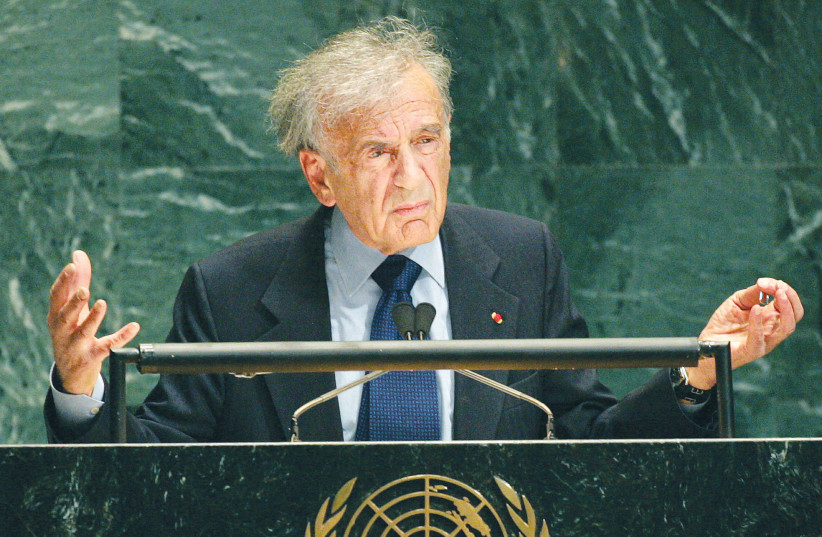
 NOBEL PRIZE winner and Holocaust survivor Elie Wiesel speaks at a special session of the UN General Assembly in 2005. The teachers were amazed that their students knew little or nothing about the Holocaust.  (credit: REUTERS)NOBEL PRIZE winner and Holocaust survivor Elie Wiesel speaks at a special session of the UN General Assembly in 2005. The teachers were amazed that their students knew little or nothing about the Holocaust. (credit: REUTERS)Notably, religiously observant Israelis are more worried about an ensuing Holocaust. Israelis who define themselves as haredim (ultra-Orthodox) responded that they were very concerned about the likelihood, as opposed to just 11% of Israelis who identify themselves as secular.

The ongoing threat from the Iranian regime, which has repeatedly declared its desire to wipe out the Jewish state, is a noted contributor to Israelis’ distress over another Holocaust.

The survey also asked Israelis how they think Holocaust Remembrance Day, which is widely observed in Israel as a day to memorialize the six million Jews murdered in the Shoah, will be commemorated in the future. Currently, telling the stories of the victims and survivors is the priority on this day, but this is becoming increasingly challenging as survivors are now in their 80s and 90s, meaning that soon there will be no living firsthand accounts of the attempted genocide.

In light of this, the poll found that most Israelis predict the day will be marked very differently in coming years. Forty-five percent of respondents said that within 30 years, it would be observed by events alone; 13% thought that it would not be marked at all and would be just another day.

Participants suggested increased exposure to recorded testimonies of survivors so that Holocaust Remembrance Day remains relevant, as well as subsidized trips to former Nazi concentration and death camps for every Israeli. Even so, 19% of respondents expressed the belief that it is inevitable that Holocaust Remembrance Day will lose its significance over time.
