Iranian Foreign Minister Abbas Araghchi said that “60 days have passed since the agreement signed with the US, we have no intention at the moment to return to negotiations with the United States.”
https://www.israelnationalnews.com/flashes/691809

Iranian Foreign Minister Abbas Araghchi said that “60 days have passed since the agreement signed with the US, we have no intention at the moment to return to negotiations with the United States.”
https://www.israelnationalnews.com/flashes/691809
In May, Iran said the four were affiliated with the Revolutionary Guards and had been on a maritime patrol before entering Kuwaiti territorial waters because of a navigation disruption.

A fighter jet fly during a military exercise called Fidayeen of Hareem Velayat in Isfahan, Iran, in this picture obtained on July 24, 2023.(photo credit: IRANIAN ARMY/WANA (WEST ASIA NEWS AGENCY)/HANDOUT VIA REUTERS)Why were four Iranians detained in Kuwait?›Why is Iran demanding emergency access to Qatar?›What is the Revolutionary Guards?›What did Qatari search teams find in March?›
ByREUTERS
AUGUST 16, 2026 10:54Updated: AUGUST 16, 2026 11:43
An Iranian military official said on Sunday that Qatar should allow an Iranian team to enter the country to investigate the fate of pilots whom Tehran says were captured by Qatari forces, Iranian media reported.
Qatar denies holding any Iranian pilots. Doha said on Saturday that its search and rescue teams had found the remains of one pilot after Iranian aircraft violated Qatari airspace in March and failed to respond to attempts to contact them.
Qatar said it had contacted Iran to coordinate the handover of the remains and had invited Tehran to review details of its search and rescue operations, but had received no response.
Mohammad Baqerzadeh, commander of the Committee for the Search for Missing Persons of Iran’s Armed Forces General Staff, said an Iranian Air Force expert and fact-finding team had been waiting for months to enter Qatar, according to the semi-official Tasnim news agency.
Baqerzadeh accused Qatari officials of repeatedly delaying the investigation and preventing the pilots’ return to Iran. He called for the International Committee of the Red Cross to urgently follow up on the case.

Baqerzadeh also said Kuwait was similarly withholding information about the fate of four Iranians held in Kuwait.
In May, Iran said the four were affiliated with the Revolutionary Guards and had been on a maritime patrol before entering Kuwaiti territorial waters because of a navigation disruption. Kuwait has said the four were suspected of planning hostile actions against the country.
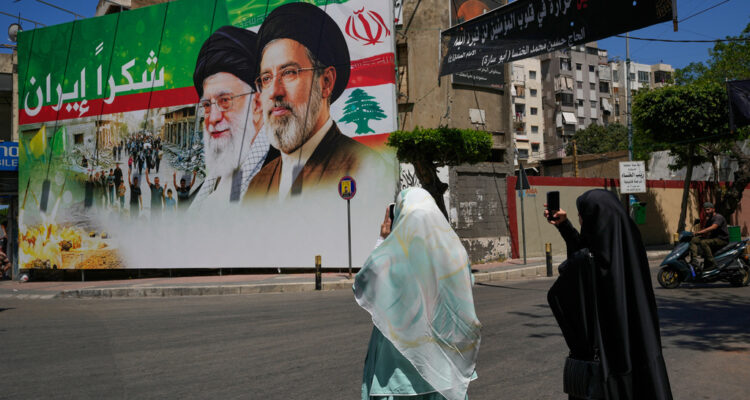
Supreme Leader Mojtaba Khamenei, or whomever is acting in his name, is not merely rebuilding Iran’s military command but, rather, is constructing a new security architecture for his rule.
The appointments reach across the General Staff, the Islamic Revolutionary Guard Corps, its naval command, and the paramilitary Basij.
Some changes were unavoidable. War and assassinations created vacancies Tehran had to fill.
But necessity does not fully explain the choices. Khamenei is neither promoting a new generation nor signaling military renewal.
He is turning to veterans forged by the revolution, the Iran-Iraq War, intelligence and counterintelligence operations, and the suppression of domestic dissent.
What is taking shape is an architecture built around institutional memory, loyalty, and coercive power.
Ali Abdollahi’s appointment as chief of the General Staff is emblematic. He joined the Islamic Revolutionary Committees after the 1979 revolution and entered the Islamic Revolutionary Guard Corps soon after.
Washington sanctioned him in January 2020 for his activities to destabilize the region.
His elevation is therefore not a generational break, but the restoration of a founding revolutionary-security figure to one of the state’s most important military posts.
Kiumars Heydari, the former commander of Iran’s regular Army Ground Forces and now deputy chief of the General Staff, adds another dimension.
In 2021, Heydari described the Army Ground Forces’ role in suppressing the November 2019 protests as one of its “proud” missions.
During the 2022 uprising, he derided protesters as “flies” while suggesting that restraint reflected the supreme leader’s preference rather than the Army’s reluctance to use force.
Such statements show that the regime has integrated the regular military, traditionally portrayed as less ideological than the Revolutionary Guard, into its domestic-security posture.
Ahmad Vahidi’s appointment as Islamic Revolutionary Guard Corps commander is also significant.
Vahidi’s career runs through some of the Islamic Republic’s most sensitive institutions and operations.
In the early 1980s, he served as deputy for intelligence affairs under then-Revolutionary Guard commander Mohsen Rezaei.
He was involved with the external-operations apparatus that developed into the Qods Force, gaining experience in intelligence, irregular warfare, and extraterritorial operations.
He reportedly was among a select group who accompanied Ali Khamenei during a 1989 visit to North Korea, a relationship crucial to Iran’s missile program and possibly nuclear programs.
The United States, Canada, and the European Union have each sanctioned Vahidi.
Interpol issued a Red Notice on Vahidi in response to his involvement in the 1994 bombing of the Jewish community center in Buenos Aires that killed 85 people.
U.S. officials allege longstanding contacts between Vahidi and then-Al Qaeda deputy Ayman al-Zawahiri in the run-up to the September 11, 2001, attacks.
Mostafa Izadi, newly appointed Islamic Revolutionary Guard Corps deputy commander, represents a more conventional case of old-guard continuity.
He joined the Guard in 1979 and served during the Iran-Iraq War and rose through the organization’s senior command ranks.
Ali Azmaei’s assumption of command of the Islamic Revolutionary Guard Corps-Navy after the killing of Alireza Tangsiri similarly appears to be institutional succession. Azmaei is also under U.S. sanction.
War creates vacancies, and authoritarian systems prefer familiar faces during crises. Not every appointment, then, is evidence of a grand strategic redesign, but Hossein Taeb’s return to lead the Basij is different.
Taeb, a former student of Ali Khamenei, spent decades inside the Khamenei network and the Islamic Republic’s security apparatus, including inside the Revolutionary Guard Intelligence Organization.
The United States sanctioned Taeb in 2010 for human-rights abuses. Rumors circulate about his involvement in both the “chain murders” of Iranian intellectuals in the 1990s and campaigns against dissidents abroad.
Taeb’s significance lies in not only his record but also the institution he now leads.
The Basij is not only a paramilitary force but also an ideological mobilization network, a reserve manpower pool, a mechanism for social surveillance, and one of the regime’s principal instruments for confronting unrest.
Returning an experienced intelligence and counterintelligence operative to its command suggests preparation for internal danger.
The six appointments, read together, map the coercive architecture of the Islamic Republic.
Collectively, they occupy every critical node of regime security: conventional command, intelligence, internal control, ideological mobilization, and asymmetric operations abroad.
That distribution is significant because Tehran increasingly confronts a threat environment in which the external and internal fronts merge.
Military pressure can accelerate domestic instability; economic deterioration can trigger unrest; intelligence penetration can expose elite fractures; and battlefield losses can erode the perception of invulnerability on which authoritarian control depends.
Here lies the regime’s central paradox. Its ability to replace commanders lost to war and assassination demonstrates institutional resilience, yet the identities of the replacements expose a vulnerability: Tehran repeatedly reaches back into the same aging revolutionary-security cohort.
The regime can refill the command structure, but its pool of individuals who are considered competent, ideologically reliable, and trustworthy appears limited.
Scofield Biblical Institute and Theological Seminary Copyright 2010 – 2020