Iran knows it can stoke tensions over several thousand miles of potential frontline – including the Gaza Strip, northern Israel and the Golan Heights.
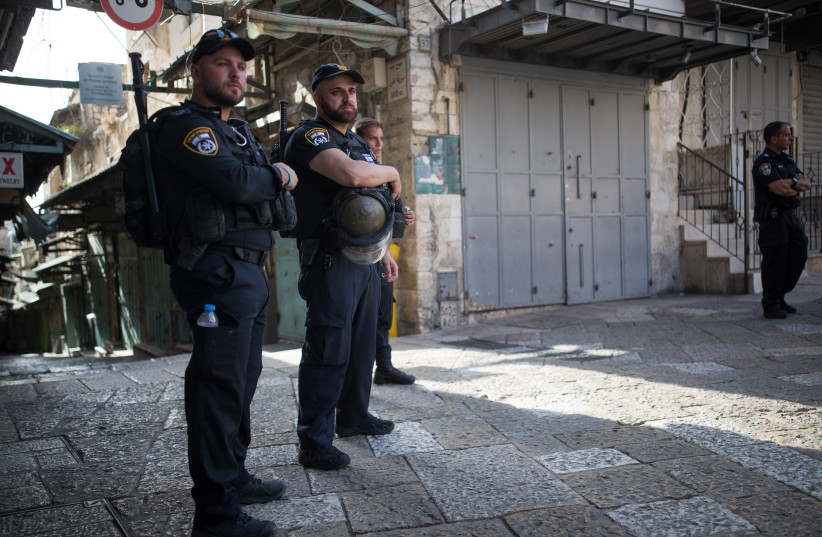
 Israeli security forces at the scene of a stabbing attack in the Old City of Jerusalem, on May 31, 2019. (photo credit: YONATAN SINDEL/FLASH90)
Israeli security forces at the scene of a stabbing attack in the Old City of Jerusalem, on May 31, 2019.
(photo credit: YONATAN SINDEL/FLASH90)

The recent series of terrorist attacks in Israel are of the sort that can easily cause violence to escalate and lead to Iran or its partners, such as Hamas and Hezbollah, to think it is time to challenge Israel.

Last year, a series of incidents in Jerusalem and tensions over Sheikh Jarrah led to Hamas firing rockets at Jerusalem. This led to a short war between Israel and Hamas. It was a war whose tempo was largely dictated not only by Hamas but by Iran.

The war in May 2021 taught us several lessons. First was that Iran and Hamas were willing to use incidents in Jerusalem to justify massive rocket fire on Israel. Second, Hamas had planned this war for some time, stockpiling rockets to fire in large salvos of up to 140 at a time.

Iran likely coordinated with Hamas on those attacks. Iran wanted to use Hamas not only to fire rockets indiscriminately; it also wanted to use drones and long-range rockets to try to carry out coordinated attacks on infrastructure. Iran has also used this model with the Houthis in Yemen, backing attacks on Saudi Arabia and Aramco energy facilities.

This means Iran may believe that with another Ramadan taking place right after several attacks in Israel, it may want to operationalize various groups against Israel. This could involve Palestinian Islamic Jihad, which praised the recent terrorist attack in Bnei Brak. In addition, it could involve groups in Syria or even Iraq.
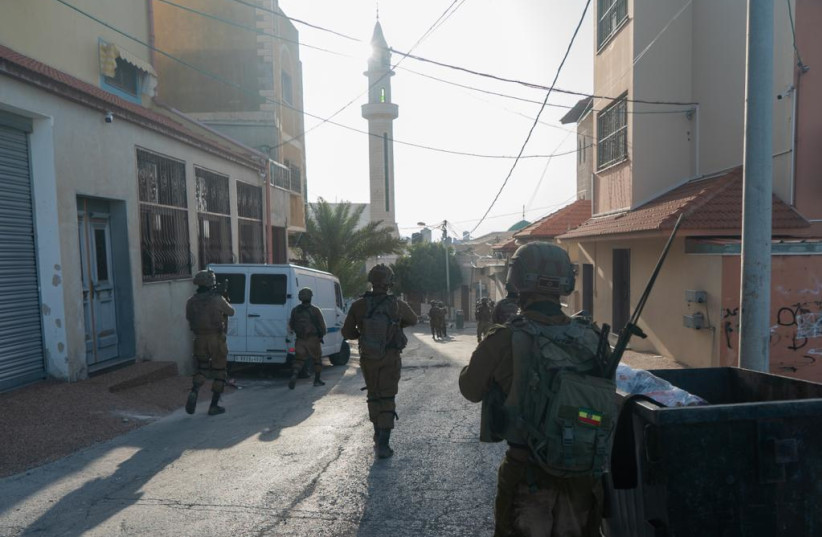
 IDF soldiers enter Jenin to arrest suspects of involvement in the Bnei Brak terror attack. (credit: IDF SPOKESPERSON UNIT)IDF soldiers enter Jenin to arrest suspects of involvement in the Bnei Brak terror attack. (credit: IDF SPOKESPERSON UNIT)

Last May, Iran used a drone from Iraq to target Israel. Recent reports indicate Israel also used F-35s to shoot down Iranian drones targeting Israel. In addition, the US has downed Iranian drones.

Iran also has assets in Yemen with the Houthis that could be used either against Israel or the Gulf states. This could include targeting shipping, as Iran has done in the past. Recent reports in Iranian media have made veiled threats against the Gulf states.

The foreign ministers of Bahrain, the UAE, Egypt and Morocco were recently in Israel for the Negev Summit. In addition, Israel has participated in several joint military drills with US Central Command, the US Navy and its Gulf partners over the past six months. This is important, and Iran is watching these developments.

Iran knows it can stoke tensions over several thousand miles of potential frontline – including the Gaza Strip, northern Israel and the Golan Heights – or using bases in Iraq and also potentially using drones to target shipping in the Gulf of Oman, as it did last July.

All of this presents a very real threat that is constantly shifting. Iran often tries to use local incidents to stoke a “cycle” of violence that then gives it an excuse to use groups such as Hamas. In the past, Iran has also sent Hezbollah cells with drones to areas near the Golan to target Israel.

Iran also upped threats to Israel in May and June 2019, when it was stoking tensions with the US in Iraq and the Gulf. In 2019 Israel had to neutralize a Hezbollah drone team in the Golan.

In addition, Iran used a drone from the T-4 base in Syria in February 2018 to target Israel. In December 2018, Israel launched Operation Northern Shield to neutralize Hezbollah tunnels in the North.

All of this is connected, and it is worth paying close attention to what Iran’s next move may be over the next month.


https://www.jpost.com/middle-east/article-702897

Israel can do and take whatever actions they need to take,’ ambassador to Jerusalem tells Channel 12; Blinken reportedly asks Bennett for Iran deal ‘alternative’

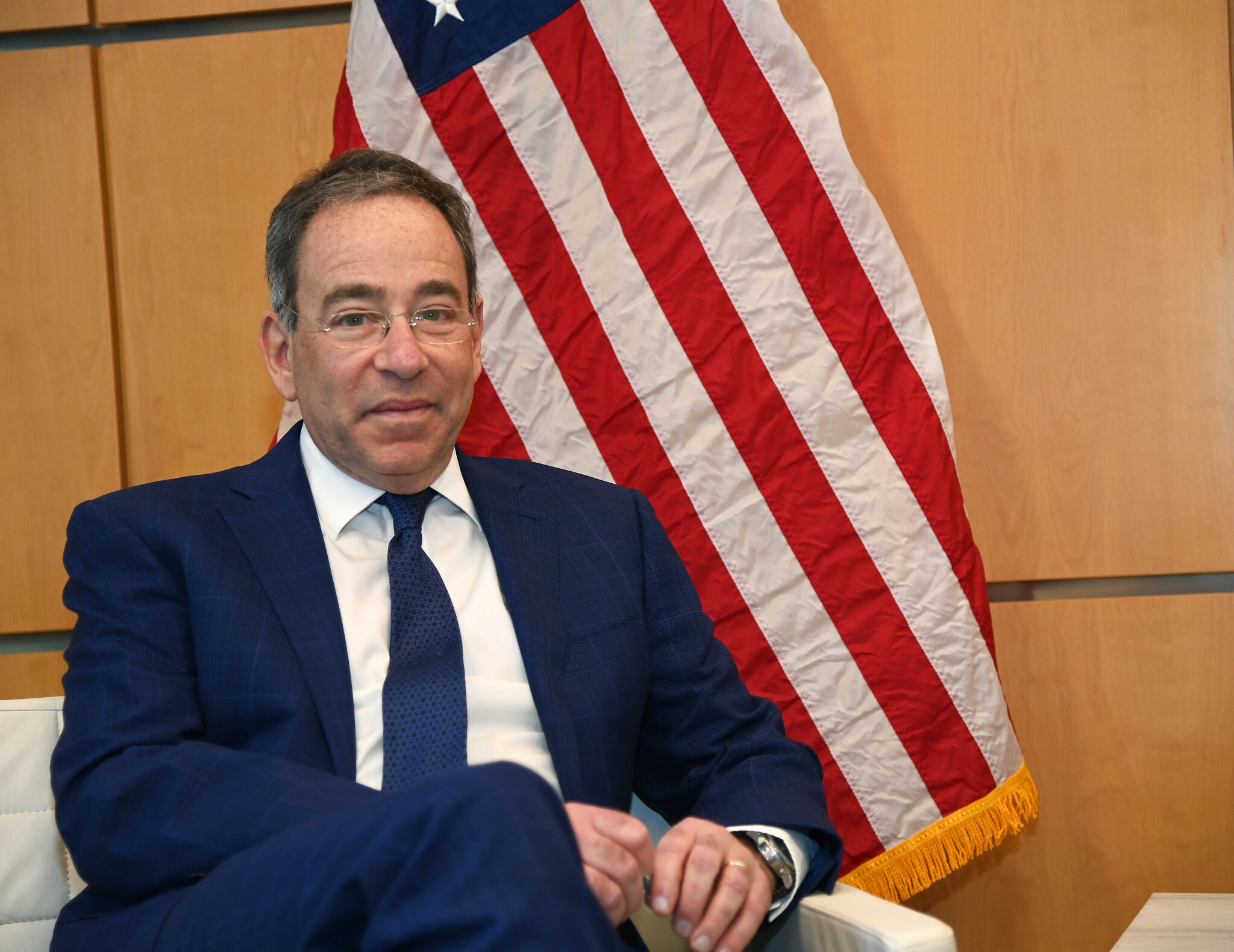
US Ambassador Tom Nides is interviewed by The Times of Israel at the US Embassy in Jerusalem, on January 7, 2022. (David Azagury/US Embassy)

US Ambassador Tom Nides is interviewed by The Times of Israel at the US Embassy in Jerusalem, on January 7, 2022. (David Azagury/US Embassy)

US Ambassador to Israel Tom Nides said on Thursday Israel won’t be faced with any American restrictions if it wishes to act against Iran, whether or not a nuclear deal is signed between Tehran and world powers.

“The president… will do whatever he can do to make sure that Iran does not have a nuclear weapon… It’s clear we’d like to do it through a diplomatic channel,” Nides told Channel 12 news.

Regarding the progress of the negotiations on a deal, he said: “The Israelis know very clearly exactly what is going on. I’m not suggesting they necessarily like it always, but there are no secrets here.”

Channel 12 asked Nides if the US expects Israel to “sit quietly and not do anything” if a deal is signed.

“Absolutely not. We’ve been very clear about this,” Nides said. “If we have a deal, the Israelis’ hands are not tied. If we don’t have a deal, the Israelis’ hands are certainly not tied.”

“Israel can do and take whatever actions they need to take to protect the state of Israel,” he added.

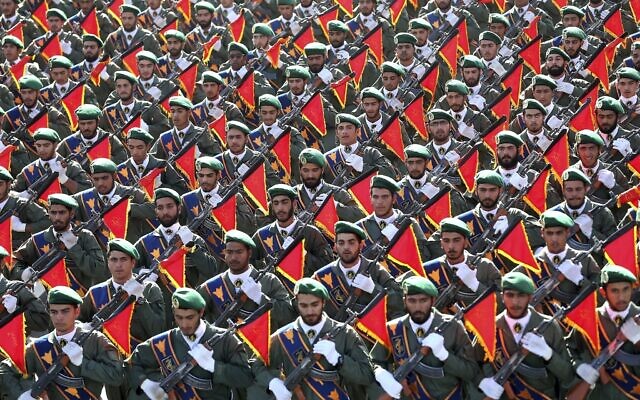
In this September 21, 2016, file photo, Iran’s Revolutionary Guard troops march in a military parade in Tehran, Iran. ​(AP Photo/Ebrahim Noroozi, File)

But Nides also dodged a direct question on whether Iran’s Islamic Revolutionary Guard Corps will be delisted from the US list of terror groups as it rejoins the nuclear deal with the Islamic Republic, as he also did in a Channel 13 interview.

Tehran has said that taking the IRGC off a US terror list is a condition for restoring the deal.

Israeli officials have openly expressed their concerns over this possibility, with the latest occurring during US Secretary of State Antony Blinken’s visit to Israel earlier this week for the Negev Summit.

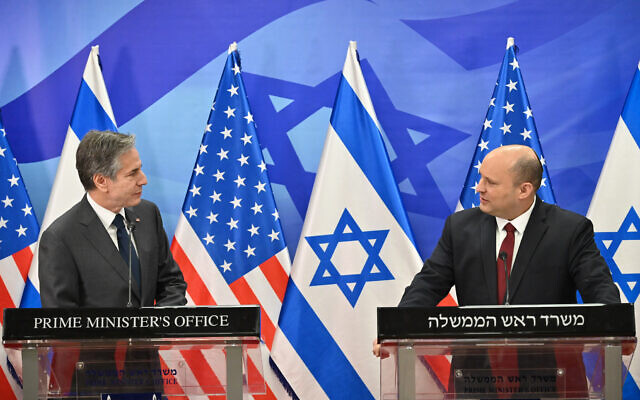
During a press conference on Sunday with the American top diplomat, Prime Minister Naftali Bennett referred to Houthi attacks in Saudi Arabia last week, which he called “horrific,” adding that he was concerned over the possible removal of the IRGC from the US Foreign Terrorist Organizations list as part of a revived nuclear deal with Tehran.

“I hope the US will hear concerned voices in the region, from Israel and others, on this issue,” he said.

Bennett also protested the notion of the IRGC being delisted during a cabinet meeting earlier Sunday.

“We are still hoping and working toward preventing this from happening,” he said.

Prime Minister Naftali Bennett (right) with US Secretary of State Anthony Blinken at the Prime Minister’s Office in Jerusalem, on March 27, 2021. (Kobi Gideon/GPO)

Blinken said during the press conference that “there is no daylight” between the US and Israel on the efforts to prevent Iran from obtaining a nuclear weapon, as well as countering its threats to the region.

He added that the US will maintain that stance regardless of whether a new Iran nuclear deal is reached.

“Deal or no deal, we will continue to work together and with other partners to counter Iran’s destabilizing behavior in the region,” he said.

Blinken had reportedly asked Bennett during their meeting on Sunday for his alternative to a nuclear deal with Iran during his visit, according to a report Thursday by the Axios news site, citing a senior State Department official and an Israeli official.

According to the report, Blinken asked Bennett how he would stop Iran from being capable of obtaining a nuclear weapon, when at its current enrichment pace, it would be able to within weeks.

Israeli officials said Bennett told him Iran can be deterred from enriching uranium at weapons-grade levels, if it knows Western nations will ramp up sanctions to the level they’ve been imposed on Russia, the report said.

The Israeli officials also said that Bennett described a revived Iran deal as “a Band-Aid” solution for a few years and merely allow Iran to expand its support for its regional terror proxies.

“It is us here in the region that will have to deal with that afterward,” Bennett told Blinken, according to a senior Israeli official.

Iran’s Governor to the International Atomic Energy Agency Kazem Gharib Abadi, Political deputy at the Ministry of Foreign Affairs of Iran Abbas Araghchi, and Deputy Secretary-General and Political Director of the European External Action Service Enrique Mora stand in front of the ‘Grand Hotel Vienna’ where closed-door nuclear talks take place in Vienna, Austria, on June 2, 2021. (AP Photo/Lisa Leutner)

The so-called Joint Comprehensive Plan of Action gave Iran relief from heavy sanctions in return for curbs on its nuclear program to prevent it from obtaining atomic weapons, a goal Tehran denies it seeks. In 2018, the Trump administration pulled the US out of the deal and reimposed sanctions. Iran has responded by dropping many of its commitments and ramping up its nuclear program.

European-sponsored talks in Vienna are aiming to bring the US back into the deal and see Iran recommit to its terms in return for lifted sanctions.

‘Nobody like violence’

Asked by Channel 12 about Israel’s efforts to tackle terrorism amid a wave of attacks, Nides said: “We’re not going to tell the government what to do.”

Regarding Blinken’s highlighting of settler violence and settlement expansion during his recent visit, as opposed to Palestinian terrorism, Nides says: “No one likes violence. Period. It doesn’t matter if it’s settler violence [or], you know, Palestinian violence.”

He said he made clear, in his own confirmation testimony, that the Palestinian Authority’s payments to terrorists and their families must be halted: “Martyr payments… must stop,” he said.

He stressed US support for the two-state solution, noting: “We can’t lose the vision… [though] we can’t impose anything on anyone.”

Nides also said the US was “very comfortable with what the Israelis are doing vis a vis Ukraine,” despite complaints out of Washington that Israel had failed to adopt anti-Russia sanctions or send equipment to Ukraine’s army.

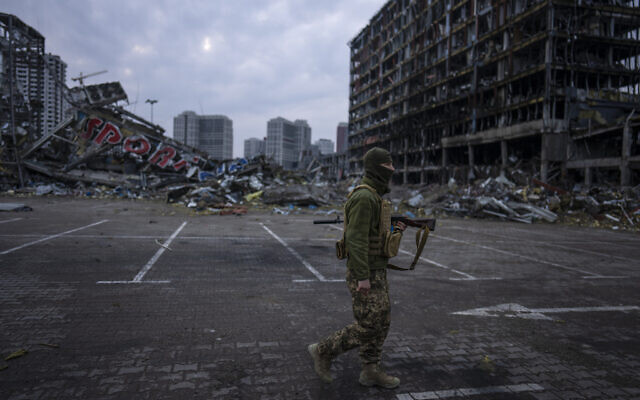
A soldier walks amid the destruction caused after the shelling of a shopping center in Kyiv, Ukraine, on March 30, 2022. (AP Photo/Rodrigo Abd)

“When we have issues, we express them, as Israel expresses them to us… I am very comfortable today on the relationship, with what they’re doing with Ukraine,” Nides said.

Israel has long maintained good relations with both Ukraine and Russia, and has been seeking to use its unique position to broker an agreement between the two sides, as it tries to walk a tightrope maintaining its ties to both countries.

Ukraine has repeatedly pushed Israel for more support since Russia launched its invasion. But Israel has been seeking to avoid antagonizing Russia, which has a strong presence in Syria, where Israel carries out military action against Iran-linked groups.


Iran’s IRGC head warns Israel against role in Persian Gulf

He then slammed Israel, which he referred to as “Zionists.”

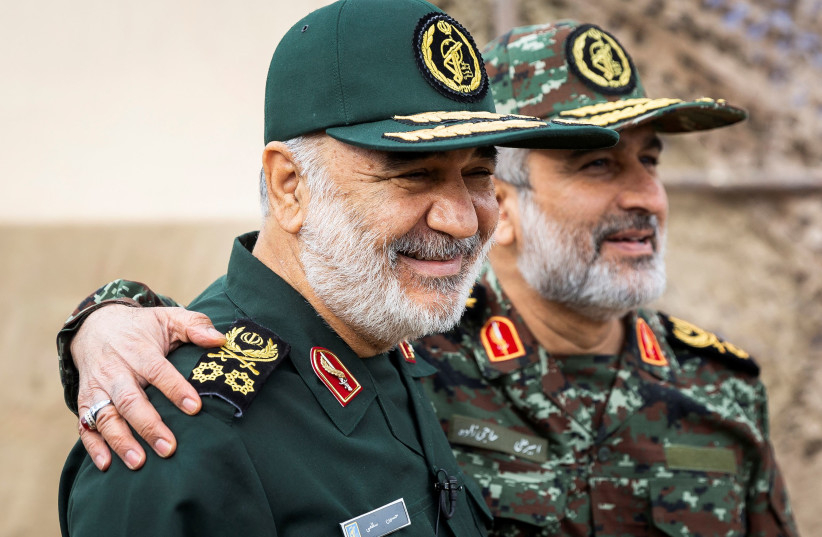
 Commander-in-Chief of the Islamic Revolution Guards Corps (IRGC) Hossein Salami smiles during a joint exercise called the 'Great Prophet 17' in the southwest of Iran (photo credit: SAEED SAJJADI/FARS NEWS/WANA (WEST ASIA NEWS AGENCY)VIA REUTERS)
Commander-in-Chief of the Islamic Revolution Guards Corps (IRGC) Hossein Salami smiles during a joint exercise called the ‘Great Prophet 17’ in the southwest of Iran
(photo credit: SAEED SAJJADI/FARS NEWS/WANA (WEST ASIA NEWS AGENCY)VIA REUTERS)

Iran’s Hossein Salami, commander-in-chief of the Islamic Revolutionary Guard Corps, warned the governments of the region and the “Zionist movement” against any role in the Persian Gulf. This comes in the wake of the Negev Summit, where Bahrain and the UAE, which are in the Gulf, attended an unprecedented and important summit in Israel.

The report of his comments took place in Iran’s Fars News and Tasnim News on Wednesday night. He was “referring to the security situation in the Persian Gulf, the Strait of Hormuz and the Sea of ​​Oman and some movements of the presence of the Zionists in this strategic region,” the report said. “We explicitly declare and warn that the continuation of such relations is not acceptable at all,” Salami said. “They should know that the existence of the evil Zionist regime everywhere is a cause of insecurity.”

He discussed strategic islands in his speech. “Explaining the capabilities and defense and combat readiness of the IRGC Navy, he emphasized: The IRGC Navy, especially in recent years, has achieved extraordinary capabilities and achievements in the fields of UAVs, missiles, buoyancy, forestry, air and submarines and is capable of all levels. Defensive, react quickly and effectively to the moment,” he said. Recently, the IRGC has put drones on its fast boats. Last July Iran used a drone to target a ship in the Gulf of Oman.

He discussed the “hope that with the great steps that the IRGC Navy has taken to make extraordinary leaps in the quality of equipment, weapons and upgrades and improve the state” of the Iranian IRGC forces. He bragged about the growth of power of “UAVs, submarines, vessels, missiles, electronic warfare units.”

He then slammed Israel, which he referred to as “Zionists.” In this context, he said that “unfortunately, some regimes in the southern Persian Gulf countries have established political and security relations with the Zionist regime.” This is a reference to Bahrain and the UAE.

 Military boat models are displayed at the IRGC booth at the Doha International Maritime Defense Exhibition and Conference (DIMDEX) in Doha (credit: REUTERS)Military boat models are displayed at the IRGC booth at the Doha International Maritime Defense Exhibition and Conference (DIMDEX) in Doha (credit: REUTERS)

“They have stated that this issue is a serious threat to the security of the region and especially these regimes. We explicitly declare and warn that the continuation of such relations is not acceptable at all and they should know that the existence of the evil Zionist regime anywhere is insecurity. Iran’s media said that the IRGC Commander-in-Chief emphasized: “the presence of the Zionists in these areas is not tolerable and it is necessary for these regimes to reconsider their political policy.”

This clearly indicates a new threat to Israel and its partners in the Gulf. Iran has attacked ships in 2019 and used both mines and UAVs.

https://www.jpost.com/international/article-702775