
Is Iran risking an attack on Israel? – analysis

The recent Iranian missile attack is a clear indication of the importance of considering Tehran’s allies in shaping Iraq’s political landscape.
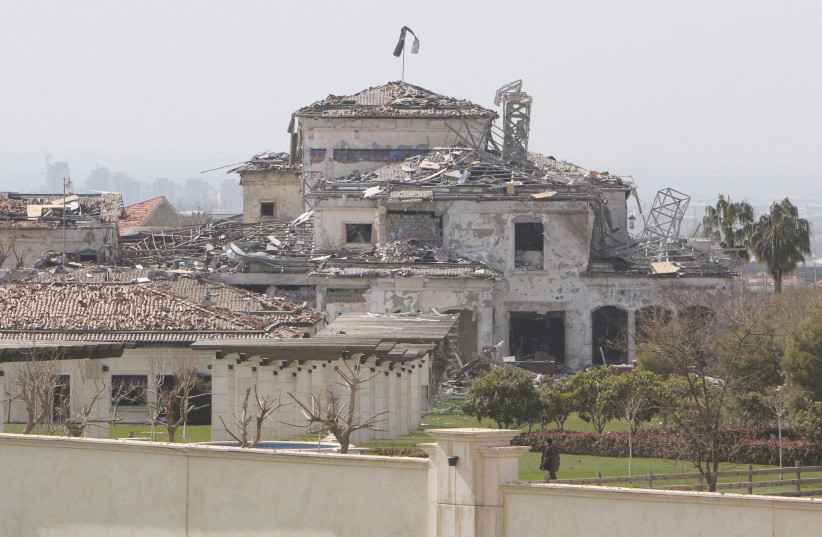
A BUILDING in Erbil, Iraq damaged in missile attacks earlier this month. (photo credit: AZAD LASHKARI/REUTERS)
A BUILDING in Erbil, Iraq damaged in missile attacks earlier this month.
(photo credit: AZAD LASHKARI/REUTERS)

The recent Iranian missile attacks in Erbil raise several questions given the scope and targets of these attacks, especially as they coincided with cyberattacks that were reportedly the largest against the electronic infrastructure of several Israeli government facilities.

Iranian media reports raise the question of whether the missile attack in Erbil is a prelude to a larger attack in the Golan or whether Iran is preparing to strike deep into Israel. United States defenses have not responded to the Iranian missile attack and the Iranian attacks are in response to the March 7 killing of two IRGC officers in Syria.

It is noteworthy that the Iranian response to the killing of the two guards was swift and sudden this time. Iran is gradually gaining bravado and confidence, prompting it to launch larger and more effective attacks.

This is mainly due to its increasing missile guidance capabilities and acquisition of drones that can carry out complex combat missions, constantly prompting Iran to show power and boost its deterrence capabilities against adversaries and those it considers enemies.

Gen. Kenneth McKenzie, commander of the US Central Command, which includes Israel, told a recent Senate Armed Services Committee hearing that Iran has 3,000 ballistic missiles of various types, some of which are capable of penetrating deep into Israel and hitting Tel Aviv.
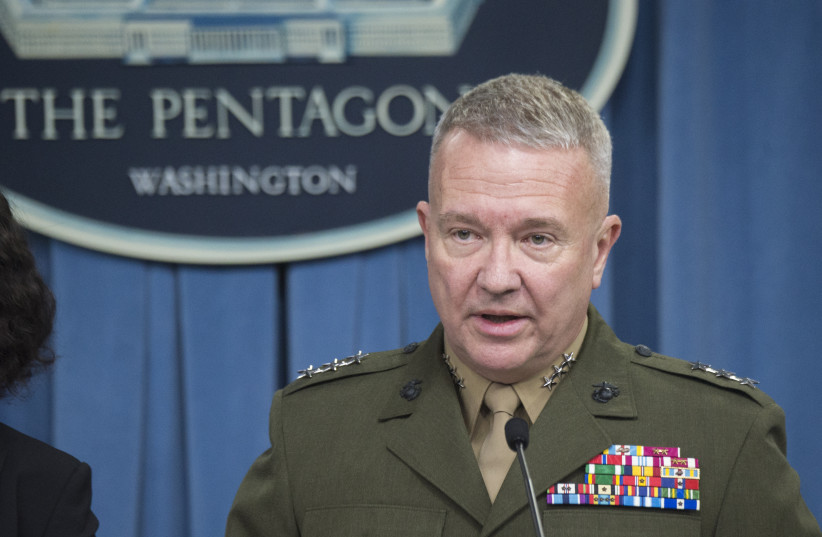
CENTCOM Gen. Kenneth McKenzie (credit: Wikimedia Commons)CENTCOM Gen. Kenneth McKenzie (credit: Wikimedia Commons)

He pointed out that the missiles pose an existential threat to the security of Middle Eastern countries and US interests, and that Iran has pumped enormous resources into increasing the range and accuracy of the missiles over the past five years.

“We saw that in the attack on Al Qaeda in Iraq in January 2020, when Iranian missiles accurately hit dozens of targets,” he said, adding that the effectiveness of Iranian ballistic missiles and offensive drones is “very worrisome.”

At the same time, experts believe that the threat of Iran’s ballistic missiles is no less dangerous than the militarization of Iran’s nuclear program and possession of nuclear bombs.

In fact, these missiles may outweigh the nuclear threat, considering that they can be deployed and used, while the nuclear bomb remains merely a nuclear deterrent that is difficult, if not impossible, to use given the balance of power, and the fact that many regional and international powers possess similar deterrents that provide second-strike capability.

At least to Iranian politics observers, these developments are not surprising. But, they raise some legitimate questions: How to reduce the Iranian threat, and most importantly, how to curb Iran’s drive to build up arsenals and put all its resources into developing weapons that it distributes to pro-military militias in countries in the region. In my view, Iran is trying to establish a balance of terror with Israel. From Tehran’s perspective, this balance is not limited to Iran’s interior.

It also extends to its regional allies in Lebanon, Iraq and Yemen. The point is to cripple Israel’s ability to target, threaten or attack Hezbollah and to force Israel to cease its military operations in Syria and Iraq. There is probably no better time for this strategy than the current international situation.

The US and European powers are preoccupied with the Ukraine crisis. There is no horizon for the final scenario and it is difficult to predict Russian President Vladimir Putin’s next move. Iran’s biggest ally, Russia, also seems to be not entirely satisfied with Israel’s stance in the Ukraine crisis.

Thus, there could not be a more opportune time for Iran to convey its messages to the Israeli and US sides, which are also anxious to avoid any reaction that could derail negotiations on the resumption of the nuclear agreement with Iran. I think Iran will not risk provoking Israel. But, as always, they could go to the extreme of playing the nail-biting game Iranian mullahs like.

Any Israeli move in the near future will be met with a similar response, perhaps even stronger, faster and bolder. But, it will be limited to playing chicken, as long as it achieves its intended tactical goal. It will not necessarily go so far as to fire missiles at the Israeli rear.

This would mean an open war scenario, which Iran does not want at this time. This belief underscores that one of the messages Iran wants to send to Israel is one of deterrence from a unilateral military strike against its nuclear facilities if there is indeed an agreement to resume the nuclear deal with the US.

Tehran fears that Tel Aviv will carry out its threats in this regard or get a green light from the US to attack. It is very important to recognize that the danger is not just Iran attacking Israel or others directly.

I think it is much more important to recognize that Iran is becoming bolder and more capable of attacking directly and effectively as it expands its arsenal of ballistic missiles and cruise missiles. This is being exploited because there are no red lines in the US to protect its interests and those of its allies.

After the Ukraine crisis, Tehran is certain that the US will not go to war to protect its allies and will only intervene militarily when its national security is directly affected. In this context, it is worth recalling that the recent Iranian missile attacks were not carried out by proxies.

It was even launched from Iranian territory to hit northern Iraq and was openly and quickly taken over by the Islamic Revolutionary Guard Corps (IRGC), a remarkable demonstration of Iranian missile power.

With all these political and military details, Iran is trying to pressure its neighboring countries and threaten Israel, consolidate its military presence in Syria and Iraq, and curtail the ability of Israel and other states to expel Iranian militias from Syria. All of this is aimed at maintaining the influence it has gained over the past decade from Yemen to Lebanon to Syria and Iraq.

The recent Iranian missile attack is a clear indication of the importance of considering Tehran’s allies in shaping Iraq’s political landscape. It also aims to increase pressure on the Vienna negotiations and respond to the killing of two IRGC officers in Syria.

But, the most important and dangerous message, in my view, is directed at Israel and its new friends in the Gulf. It is to remind them of the capabilities, accuracy and effectiveness of their missiles, to underscore Tehran’s clinging to its regional influence in the post-Vienna talks phase and that it is prepared to respond to any coalition or military attacks.

The writer is a UAE political analyst and former Federal National Council candidate.


Graham discussed Iran, plans for increased congressional oversight, Russia and Biden’s comments about Putin in an interview with JI on Monday

MAYA ALLERUZZO/AP

U.S. Sen. Lindsey Graham (R-S.C.) speaks to journalists in Jerusalem during his visit to Israel, Tuesday, June 1, 2021.

Sen. Lindsey Graham (R-SC) suggested that an Israeli strike on Iran could be the most likely way to prevent Tehran from acquiring a nuclear weapon in an interview with Jewish Insider on Monday from Jerusalem.

While “maximum pressure” sanctions “[make] it more difficult,” Graham argued the only ways to stop Iran’s nuclear ambitions are an unlikely “change of heart” by Supreme Leader Ayatollah Ali Khamenei, an internal overthrow of the regime or a U.S.-supported Israeli strike against Iran’s nuclear facilities.

“If you don’t [understand] that, you’re making a huge mistake,” Graham said. “This is never going to end short of a nuclear weapon unless somebody stops them. And those are the three ways that would stop the advance toward a nuclear weapon. The first one is one in a billion. The second one — who knows — if the Iranian people want to continue to live like this, that’s up to them. But the third one [the Israeli strike] is probably the way this movie ends.”

Graham detailed a plan to increase congressional oversight of Iran’s nuclear program that he has been developing during his trip. He said he had asked Israeli officials on his previous visit to the country in February to put together a detailed list of red lines and major concerns regarding Iran’s nuclear program.

The South Carolina senator said those conversations prompted him to craft legislation, tentatively titled the Iran Nuclear Weapons Monitoring Act, which will likely require a report from the administration every 120 days about Iranian weaponization efforts, fissile material, missile technology, proliferation and violations of International Atomic Energy Agency inspection regimes. The legislation will also require collaboration with U.S. allies.

“This would be in place in perpetuity until the threat goes away to monitor the Iranian nuclear program,” he said. “It’s a directive to our government, in consultation with our allies, to stay on top of the Iranian nuclear program. And if we see areas of concern, the administration, whoever they would be, would be required to come up with an action plan. This approach, I think, is the best insurance policy to make sure that the Iranian nuclear program does not get out of hand.”

Graham said he is still developing the specifics of the legislation but sees it as a more viable path than other possible proposals and believes there will be “a lot” of bipartisan support for his approach. He also said it is “essential” with or without a new Joint Comprehensive Plan of Action (JCPOA).

“I settled on the [monitoring] approach a couple of days ago because drawing red lines in statute and requiring sanctions and the use of force gets to be too complicated,” he said.

He also argued that the forthcoming legislation would fill gaps in the JCPOA’s weaponization monitoring.

“My first night here, I couldn’t sleep. I kept thinking, ‘Well, what are we trying to do? We’re trying to monitor the program,’” he said. “The JCPOA doesn’t monitor… the weaponization, it just monitors enrichment. I want to monitor the nuclear weapons arena.”

The South Carolina senator, who met with Israeli Foreign Minister Yair Lapid and leaders from the Mossad and Shin Bet, Israeli government experts on the Iranian nuclear program and former Prime Minister Benjamin Netanyahu, said that the Israelis showed him “multiple smoking-gun evidence” seized by Israel that he believes proved Iran is lying about its nuclear program and is seeking a bomb.

Graham blasted the Biden administration’s efforts to reenter the 2015 nuclear agreement, comparing them to “finding plans to Auschwitz in 1937 and still doing the Munich agreement” because “it is clear to anybody who is not deaf, dumb and blind on the issue that the Iranians are trying to build a nuclear weapon” — both as a weapon against Israel and to protect the Iranian regime.

Along with Sen. Bob Menendez (D-NJ), Graham has proposed creating a regional nuclear fuel bank — supplied by an outside power — for Middle Eastern countries, including Iran, to advance civilian nuclear weapons programs and barring Iran and others from conducting their own enrichment. But Graham acknowledged that this course is unlikely.

“I don’t think that’s remotely possible as long as [the Ayatollah] is in power,” he said. “So what happens here is you create a system to watch him like a hawk and when they take the steps that would lead to a weapon, you have enough notice to take corrective action… military strike by Israel supported by the United States.”

Graham also said a “maximum pressure” sanctions campaign is the “best way to go” if the Iranians reject his proposal.

Graham also touched on the ongoing Russia-Ukraine conflict and appeared to defend President Joe Biden’s off-the-cuff comment made over the weekend that Russian President Vladimir Putin “cannot remain in power,” which set off an international firestorm.

“If you’re upset with Biden calling for Putin to go — question for the French and everybody else: Are you willing as part of a negotiated settlement to provide security guarantees to Ukraine from future invasions by Russia?” he said. “If you’re not willing to do that, then I think more conflict is inevitable.”

The South Carolina senator has been outspoken about the conflict, even calling for Putin’s assasination on Twitter, but was largely uncritical of Israel’s role in the crisis.

Israel served as a mediator between Russia and Ukraine in the weeks since the conflict began. It built a field hospital in Ukraine, but has declined to provide weapons to Ukraine or join some Western sanctions.

“I think Israel is making a really good-faith effort to make sure that Israel doesn’t become a safe haven for oligarchs,” Graham said. “They have really been generous on the nonlethal front… What I’ve learned on this trip is that Ukraine from early on asked Israel to be a mediator. And I’m OK with the war ending. I just don’t want Ukraine to be sold out. So Israel’s sort of been between a rock and hard place.”

He suggested that Israeli officials could have been more outspoken against Moscow, noting that Israel refrained from cosponsoring a U.N. Security Council resolution condemning the invasion last month.

“The big mistake, in my view, was not being clear about the invasion. It’s one thing to mediate, it’s another thing to be clear,” he said. “They were trying to make sure they could be an honest broker, but there was an opportunity to tell Putin and the world, ‘What you did was wrong.’”

Graham said he’s afraid that a peace agreement could “sell out” Ukraine by legitimizing Russia’s takeover of parts of eastern Ukraine, further fueling Putin’s ambitions to pursue a renewed Russian Empire or Soviet Union.

Graham’s trip coincided with Secretary of State Tony Blinken’s stop in the region for the “Negev Summit,” a meeting of leaders from Israel, the U.S. the United Arab Emirates, Bahrain, Morocco and Egypt. Graham praised the Biden administration for “nurturing” the recent normalization agreements between Israel and several Arab states.

https://jewishinsider.com/2022/03/sanctions-alone-wont-stop-iran-israeli-strike-may-be-necessary-graham-says/


View of a damaged building in the aftermath of missile attacks in Erbil, Iraq March 13, 2022. REUTERS/Azad Lashkari

BAGHDAD/ANKARA, March 28 (Reuters) – A nascent plan for Iraq’s Kurdistan region to supply gas to Turkey and Europe – with Israeli help – is part of what angered Iran into striking the Kurdish capital Erbil with ballistic missiles this month, Iraqi and Turkish officials say.

The March 13 attack on Erbil came as a shock to officials throughout the region for its ferocity, and was a rare publicly declared assault by Iran’s Islamic Revolutionary Guards Corps (IRGC). read more

The IRGC said the strike hit Israeli “strategic centres” in Erbil and was retaliation for an Israeli air raid that killed two of its members in Syria.

The choice of target, however, baffled many officials and analysts. Most of the 12 missiles hit the villa of a Kurdish businessman involved in the autonomous Kurdistan region’s energy sector.

Iraqi and Turkish officials who spoke to Reuters on condition of anonymity this week said they believe the attack was meant as a multi-pronged message to U.S. allies in the region – but that a key trigger was a plan to pump Kurdish gas into Turkey and Europe, with Israel’s involvement. read more

“There had been two recent meetings between Israeli and U.S. energy officials and specialists at the villa to discuss shipping Kurdistan gas to Turkey via a new pipeline,” an Iraqi security official said.

Iran’s foreign ministry and the IRGC did not immediately respond to requests for comment.

A senior Iranian security official told Reuters the attack was a “multi-purposed message to many people and groups. It’s up to them how to interpret it. Whatever (Israel) is planning, from energy sector to agriculture, will not materialise.”

Two Turkish officials confirmed that talks involving U.S. and Israeli officials recently took place to discuss Iraq supplying Turkey and Europe with natural gas, but did not say where they took place.

The Iraqi security official and a former U.S. official with knowledge of the plans said the Kurdish businessman whose villa was hit by the Iranian missiles, Baz Karim Barzanji, was working to develop the gas export pipeline.

The disclosure puts Iran’s attack on Erbil in the context of regional players’ energy interests, rather than a single Israeli military attack on the IRGC, as widely reported. read more

Israel’s foreign ministry said it was not familiar with the matter. Barzanji did not immediately respond to a request seeking comment.

The office of Iraqi Kurdish President Nechirvan Barzani denied any meetings with U.S. and Israeli officials to discuss a pipeline took place at Barzanji’s villa. The Kurds deny there is any Israeli military or official presence in their territory.

TURKEY-ISRAEL RAPPROCHEMENT

The Iraqi, Turkish and Western sources spoke mostly on condition of anonymity because they are not allowed to give statements to the media.

They said the move comes as a politically sensitive time for Iran and the region: the gas export plan could threaten Iran’s place as a major supplier of gas to Iraq and Turkey while its economy is still reeling from international sanctions.

Efforts to revive a nuclear deal between Iran and the West have faltered in recent weeks, casting doubt on prospects for lifting sanctions on Tehran including on its energy sector.

It also comes as Israel, Iran’s biggest enemy in the region, and Turkey are strengthening ties and looking at further energy cooperation as sanctions on Russia over its invasion of Ukraine threaten severe shortages across Europe.

Turkish President Tayyip Erdogan said last month that Turkey and Israel can work together to carry Israeli natural gas to Europe. Erdogan also met Barzani and said that Ankara wants to sign a natural gas supply deal with Iraq.

Iraqi and Turkish officials did not give specific details on the plan to pump gas from Iraqi Kurdistan to Turkey, say how far along it was, or what Israel’s role is in the project.

“The timing of the attack in Erbil is very interesting. It seems it was more directed at northern Iraq’s energy exports and possible cooperation that would include Israel,” one of the Turkish officials said.

“Some talks were held for northern Iraq natural gas exports and we know that Iraq, the United States and Israel were involved in this process. Turkey supports this too,” the official added.

The Iraqi security official said at least two meetings to discuss the issue, with U.S. and Israeli energy specialists, had taken place at Barzanji’s villa, which he said explained the choice of target for Iran’s missile strike. No one was seriously hurt in the attack but the villa was severely damaged.

An Iraqi government official and a Western diplomat in Iraq said that Barzanji was known to host foreign officials and businessmen at his home and that they included Israelis.

The Iraqi security official and the former U.S. official said Barzanji’s KAR Group company is working to expedite the gas export pipeline. The new pipeline would eventually connect to one that has already been completed on the Turkish side of the border, the former U.S. official said.

KAR Group could not be immediately reached for comment.

KAR Group built and manages the Kurdish region’s domestic pipeline, the Kurdistan presidency’s chief of staff Fawzi Harir said. It also owns a third of Kurdistan’s oil export pipeline under a lease agreement. The rest is owned by Russia’s Rosneft.

Register now for FREE unlimited access to Reuters.com
Register
Reporting by Ahmed Rasheed in Baghdad, Amina Ismail in Erbil, Orhan Coskun in Ankara, Rowena Edwards in London; additional reporting by Parisa Hafezi and Maha El Dahan in Dubai, Ari Rabinovitch in Jerusalem Additional reporting, writing by John Davison in Baghdad, Editing by William Maclean
