
Ex-editor of Al Arabiya English writes that America is failing the region and siding with Iran while dismantling the last 70 years of regional order.
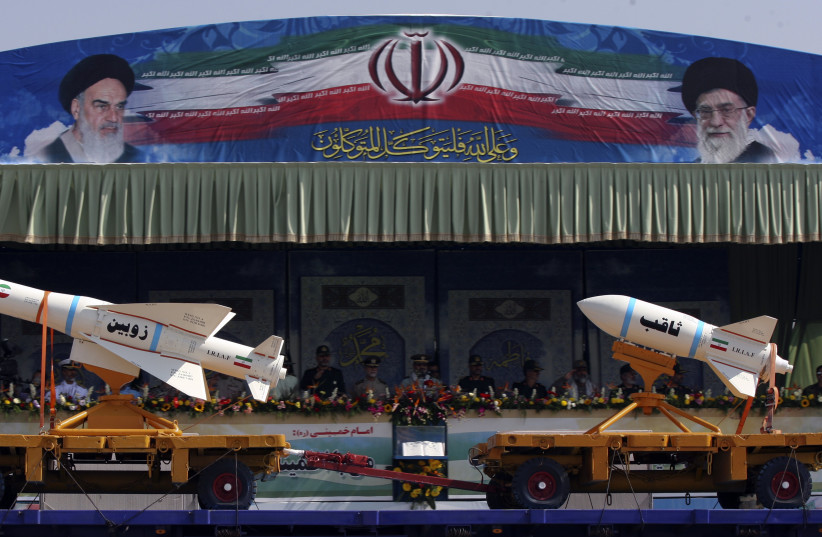
A military vehicle carrying Iranian Zoobin smart bomb (L) and Sagheb missile under pictures of Iran's Supreme Leader Ayatollah Ali Khamenei (R) and Late Leader Ayatollah Ruhollah Khomeini during a parade to commemorate the anniversary of the Iran-Iraq war (1980-88), in Tehran September 22, 2011. (photo credit: REUTERS/STRINGER)
A military vehicle carrying Iranian Zoobin smart bomb (L) and Sagheb missile under pictures of Iran’s Supreme Leader Ayatollah Ali Khamenei (R) and Late Leader Ayatollah Ruhollah Khomeini during a parade to commemorate the anniversary of the Iran-Iraq war (1980-88), in Tehran September 22, 2011.
(photo credit: REUTERS/STRINGER)

The Saudi-US relationship is in the throes of a crisis. As a Saudi who went to college in the US, loves America and wants to see it strong, I am increasingly disturbed by the unreality of the American discussion about the subject, which often fails to acknowledge just how deep and serious the rift has grown.

A more realistic discussion should focus on one word: “Divorce.”  When President Barack Obama negotiated the nuclear deal with Iran, we Saudis understood him to be seeking the breakup of a 70-year marriage.

How could we not?  After all, the flaws in the deal are well known. It paves a path for Iran to a nuclear bomb. It fills the war chest of Iran’s Islamic Revolutionary Guard Corps, which has spread militias across the Arab world armed with precision-guided munitions to maim and kill people who formerly looked to America to help guarantee their safety.
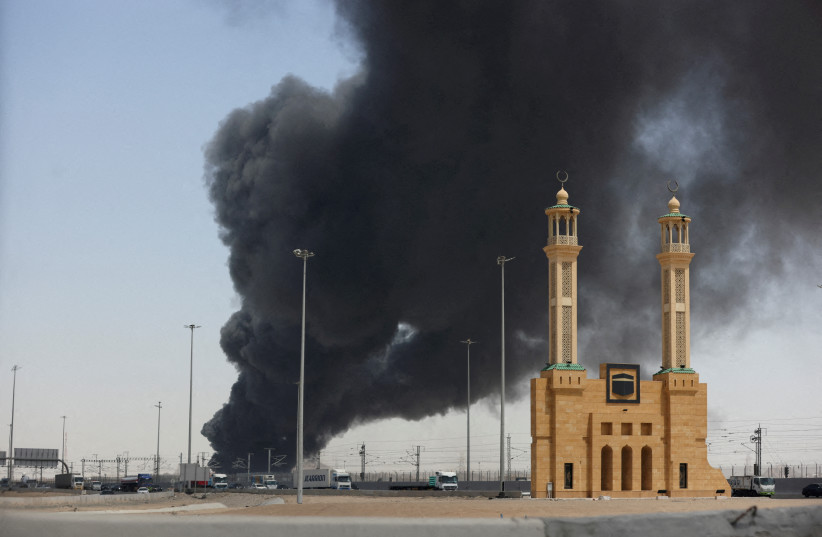
 Smoke billows from a Saudi Aramco's petroleum storage facility after an attack in Jeddah, Saudi Arabia March 26, 2022. (credit: STRINGER/ REUTERS)Smoke billows from a Saudi Aramco’s petroleum storage facility after an attack in Jeddah, Saudi Arabia March 26, 2022. (credit: STRINGER/ REUTERS)

This past weekend, Secretary of State Antony Blinken joined a conference in the Negev, hosted by Foreign Minister Yair Lapid and attended by a number of Arab foreign ministers. Blinken used this occasion to paper over the rift that the nuclear deal has created by presenting an image of regional solidarity, but the region is not deceived.

Sold disingenuously to the American public as an arms control agreement, the deal is an assault on the regional order that the United States established in the aftermath of World War II. Explicitly hostile to Saudi Arabia, to say nothing of America’s other greatest ally in the region, Israel, the deal replaces the former American-led regional security structure with a concert system in which Iran, backed by Russia and China, become America’s new subcontractors while America’s former allies—the Gulf States and Israel— are demoted to second-tier status.

Most importantly, to its authors, the deal takes the United States out of the business of containing Iran, which in response has further ramped up its attacks on regional peace and stability.

Last Friday, as Blinken prepared for his trip to at David Ben Gurion’s old kibbutz of Sde Boker, the Iranian-backed Houthi militia launched a rocket attack against Aramco in Jeddah. This attack was only the latest in a long series of brazen attacks that Iran has conducted, either directly from its own soil or indirectly through proxies.

During the Obama and Biden administrations, Iran’s aggressions have been met with American calls for “de-escalation” and frequent blaming of the Kingdom for a conflict we did not seek with terrorists on our borders backed by Iran — a foreign power which the Biden administration is promising to enrich with hundreds of billions of dollars in sanctions relief. Russia will also get a cut, which will no doubt go towards funding its war in Ukraine.

It was not that long ago that the United States presented itself to its allies as their shield against all actors who sought regional hegemony. The watchword of the alliance was collective defense.

The pretense of “balance” put forward by Obama to justify the deal never made much rational sense. After all, if a friend promises to “balance” your needs with the needs of your enemies, it seems fair to conclude that he is no longer very interested in being your friend.

Instead of friendship, America seems more inclined to use its old friends as human shields for Iran. Earlier this month, when Iran conducted a ballistic missile strike near the US consulate in Erbil, Iraq, it falsely claimed to be targeting an Israeli facility. A senior Biden official then confirmed the Iranian claim. While other officials later denied it, the damage was done. An American official had assisted Iran in getting the most out of its propaganda by action.
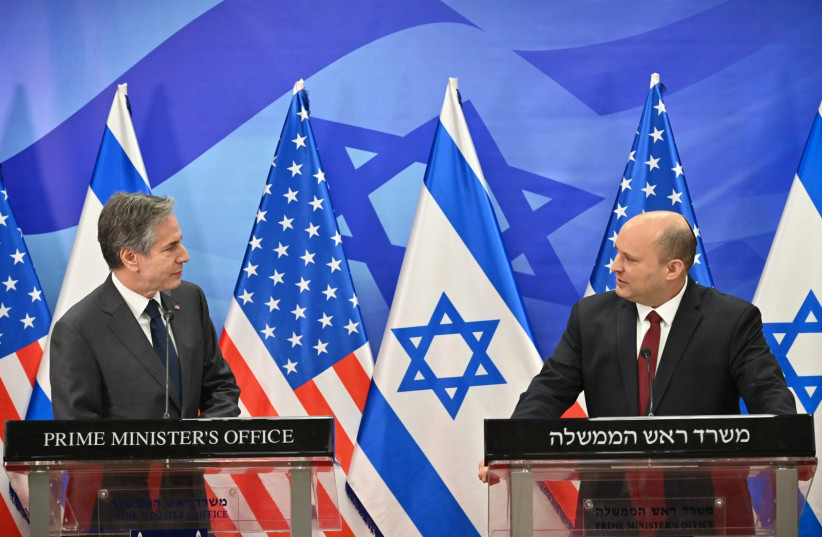
 Prime Minister Naftali Bennett and US Secretary of State Antony Blinken at a joint press release, March 27, 2022.  (credit: KOBI GIDEON/GPO)Prime Minister Naftali Bennett and US Secretary of State Antony Blinken at a joint press release, March 27, 2022. (credit: KOBI GIDEON/GPO)

For Arab states in the region, and especially for Saudi Arabia, this weird spectacle was an edifying one. If the Americans won’t side with Israel against Iran, what’s the chance they will side with us?

It was not that long ago that the United States presented itself to its allies as their shield against all actors who sought regional hegemony. The watchword of the alliance was collective defense.

These days, the United States depicts military deterrence against Iran as a slippery slope to war—on behalf of “ungrateful allies.”  While this attitude is most prevalent among Democrats, President Donald Trump also failed to help Riyadh deter Iran after the attack on the Abqaiq refinery in September of 2019. Combined with his statements of intention to leave the Middle East, this abandonment of deterrence made Saudis wonder if the Republicans, too, weren’t aiming for a divorce.

But it is the Biden administration’s determination to resurrect the Iran nuclear deal that has most convinced Saudis that America is determined to dismantle the regional order that it created, no matter what demons it may unleash.

Seemingly nothing will deflect the White House from its goal. During the negotiations in Vienna, attacks from Iran have grown ever more brazen. Not even an attack by Iranian proxies on American forces in the Tanf region of Syria and repeated attacks on the American embassy in Iraq have deflected Biden from his goal of delivering hundreds of billions of dollars to the IRGC.

The incoherence of this policy is stunning, as is the scale of the human and economic destruction it has already caused over the course of the past decade.

In Riyadh, it is not forgotten that the Russian invasion of Ukraine in 2014 was followed swiftly by the rise of a Russian-Iranian alliance in Syria that leveled most of the major cities of that country and awarded Moscow with a military base on the Eastern Mediterranean – cementing Russia’s first foothold in the Middle East since the collapse of the Soviet Union.

When the Saudis protested  Obama’s passivity, he told them they must “learn to share the region with Iran.”  And it is not lost on America’s regional allies now that, even as Biden asks Saudi Arabia to raise oil production to help support the campaign against Russia over Ukraine, he is granting sanctions waivers to Russia so that it can continue to guarantee the nuclear deal with Iran that it helped broker — in part by husbanding Iran’s uranium reserves and protecting its underground nuclear facilities filled with illegal centrifuges spinning material for weapons.

Why should America’s regional allies help Washington contain Russia in Europe when Washington is strengthening Russia and Iran in the Middle East?

The guiding American assumption here, if there is one, is that the country’s old regional allies have little choice but to eat whatever is served to us for breakfast, and to eat it again for lunch. This  assumption is arrogant and false.

While American policy is beset by baffling contradictions, Chinese policy is simple and straightforward. Beijing is offering Riyadh a simple deal: Sell us your oil and choose whatever military equipment you want from our catalogue; in return, help us to stabilize global energy markets. In other words, the Chinese are offering what increasingly appears modeled on the American-Saudi deal that stabilized the Middle East for 70 years.

What is not yet clear is whether the Chinese can be helpful in deterring Iran, or whether they share the American belief in “balance.” But Xi Jinping will visit Riyadh in May. It is a certainty that Saudi leaders will ask him if Iran’s rocketing of the oil facilities of the world’s most reliable oil producer is in the interest of China and, if not, can Beijing make stop?

The writer is a fellow at the Hudson Institute in Washington D.C. and the former Editor in Chief of Al Arabiya English.
If Tehran took this step, it would force Israel to make a new unprecedented kind of choice.

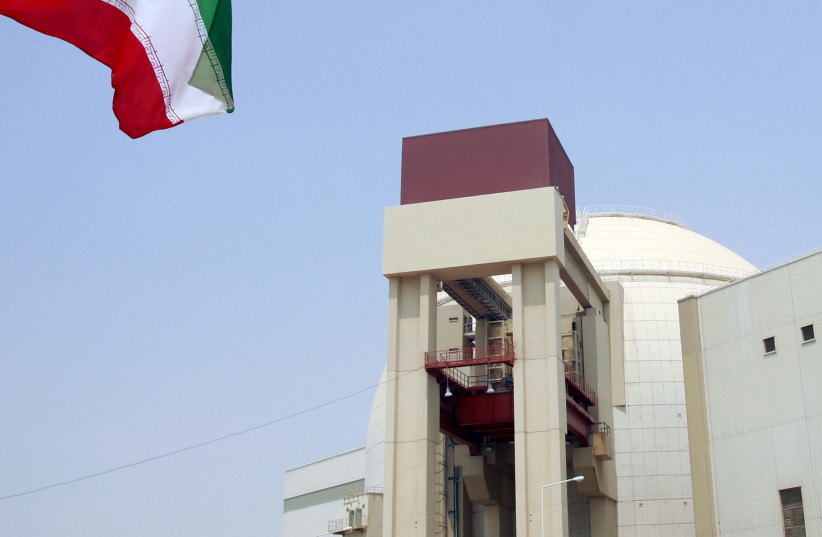
A general view of the Bushehr main nuclear reactor, Iran (photo credit: REUTERS/RAHEB HOMAVANDI)
A general view of the Bushehr main nuclear reactor, Iran
(photo credit: REUTERS/RAHEB HOMAVANDI)

So both Iran and the US thought there would be a return to the JCPOA 2015 nuclear deal sometime between early February and early March when the IAEA quarterly meeting was held.

Now that this did not happen, several more weeks have gone by and there is no new obvious way to set a deadline before the next big IAEA meeting in June, will the Islamic Republic finally weaponize its uranium?

If Tehran took this step, it would force Israel to make a new unprecedented kind of choice.

Would Jerusalem finally order a high-stakes preemptive strike on Iran’s nuclear facilities to prevent the ayatollahs from having the possibility of fielding a functional nuclear weapon?

Or would Prime Minister Naftali Bennett rely on Israeli intelligence to thwart and follow the progress of Iran Supreme Leader Ayatollah Ali Khamenei’s clandestine weapons group, hoping there would be a later opportunity to thwart the firing of a nuclear missile – even if this meant an increased risk of Iran crossing the threshold in secret?

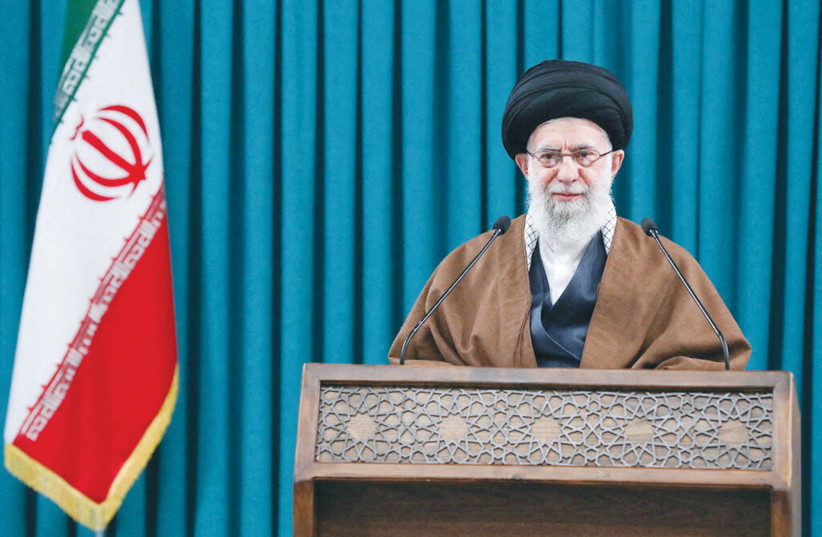
 IRAN’S SUPREME LEADER Ayatollah Ali Khamenei delivers a televised speech in Tehran earlier this month.  (credit: OFFICIAL KHAMENEI WEBSITE/HANDOUT VIA REUTERS)IRAN’S SUPREME LEADER Ayatollah Ali Khamenei delivers a televised speech in Tehran earlier this month. (credit: OFFICIAL KHAMENEI WEBSITE/HANDOUT VIA REUTERS)

Some of this decision is gaging which risk is worse: the blowback from attacking Iran or the dangers of inaction.

But the controversy goes back to a dispute within the defense establishment about whether a preemptive strike to stop Iran’s nuclear program would need to be launched to be effective.

Some say a strike needed to happen 10 years ago before Iran had operating underground facilities.

Some say it could still be effective before or immediately after Iran enriches its uranium to the weapons level of 90%?

Finally, some say it could still be effective six months to two years after uranium weaponization.

The six months to two years dispute is rooted in different guesses about how long it would take Iran to master detonation, miniaturization and delivery of a nuclear warhead on a missile – all of which are separate tasks from uranium enrichment.

However, weapons testing issues are much easier to hide in smaller facilities. This is why the focus has always been on not letting the Islamic Republic get to the 90% level in the first place.

So that is the dilemma that Israel would face.

But will Khamenei roll the dice and cross the 90% threshold or will he see that as too risky, not wanting to see what Bennett would decide?

To date, there is evidence to argue both ways.

But the majority of the evidence is that Khamenei will not jump to 90% and is still fishing for a return to the JCPOA, but feeling out if there are any more concessions he can peel out of the US.

First, the most effective time to have jumped to weaponized uranium, if he wanted to pressure the West into more concessions, would have been in early March.

This would have been right after the IAEA Board of Governors got cold feet and failed to condemn Iran despite having threatened to do so if there was still no deal.

Apparently, Khamenei himself got cold feet about going to the mat and his representatives have continued to send positive messages about hoping for a deal.

Also, Khamenei has taken many other actions to pressure the West which, while provocative, were much less provocative than weaponizing uranium.

These include in mid-March, converting some of the 60% uranium hexafluoride into a form closer to the weaponized state and harder to dispose of if there is a deal, but in tiny amounts and still far short of weaponizing it.

In addition, Tehran launched attempted drone strikes on Israel and has engaged in an escalating mixed physical and cyber conflict with Jerusalem in recent weeks and months.

In recent days, Iran’s Houthi proxies in Yemen also launched multiple drone attacks on Saudi Arabia.

All of these measures are in line with Khamenei trying to blackmail the West into more concessions. But the fact that Iran tried to blackmail the West, but did so in weaker ways than weaponizing uranium, shows Khamenei is still being cautious. He is still worried about going too far in Bennett’s eyes.

On the flip side, Iran was supposed to send the IAEA updated answers about the past military dimensions of its nuclear program by March 20 after a hard-negotiated deal between the sides.

The Islamic Republic broke the deal, produced nothing and there is no sign that it will restore normal inspections with the IAEA if the JCPOA is not restored.

This means Khamenei is preserving an off-ramp where he drops the JCPOA negotiations and moves in a more confrontational manner.

But what is most likely from US and Iranian official statements over the weekend is that the sides are doing final negotiations about the status of the Islamic Revolutionary Guard Corps (IRGC).

US negotiator Rob Malley on Sunday said even if the IRGC is dropped from the terrorists list, that non-nuclear sanctions will still remain.

In diplomatic speak, this was the clearest sign yet that the US is ready to drop the IRGC from the terror list.

Meanwhile, Iranian Foreign Minister Hossein Amir-Abdollahian said that an IRGC official told him that taking the group off of the terror list should not hold up the deal, then added paradoxically that he would still press for removal from the list.

All of this suggests that the IRGC will be removed from the list, but that the sides are negotiating over what guarantees Khamenei will give the US in return about refraining from attacking Americans and possibly turning down the heat in the Yemen conflict.

So at this moment, it appears Khamenei still wants a deal over jumping to weaponizing his uranium.

Yet, the dynamics are fluid and Israel will need to be on its guard more than ever the longer Iran remains at the 60% enrichment level with no new deal imminent.


by Sharon Wrobel

Workers put up flags in preparation for “The Negev Summit” to be hosted by Israel’s Foreign Minister Yair Lapid and attended by U.S. Secretary of State Antony Blinken, and the foreign ministers of the UAE, Bahrain, Morocco and Egypt, in Sde Boker, Israel, March 27, 2022. REUTERS/Amir Cohen

Prime Minister Naftali Bennett on Sunday urged the US to listen to its allies in the Middle East concerned over the possibility of removing Iran’s Islamic Revolutionary Guards Corps (IRGC) from a list of terror groups as part of efforts to revive the 2015 nuclear deal.

Bennett told US Secretary of State Antony Blinken during a press conference in Jerusalem that Israel is “concerned about the intention to delist the IRGC,” from its list of terrorist organizations.

“Their proxy, the Houthis, just this weekend carried out a horrific attack on Saudi Arabia,” Bennett said. “I hope the US will hear the concerned voices from the region, Israel’s and others, on this very important issue.”

Bennett last week warned that US willingness to remove the IRGC from its list of foreign terrorist organizations would be “too high a price” to pay for a supposed commitment from Iran of de-escalation in the region. Washington blacklisted the IRGC in April 2019 for supporting terrorist groups in Syria, Iraq, Lebanon, the Gaza Strip, Bahrain, and the Gulf region.

MARCH 27, 2022 4:00 PM

Two Arab Gunmen Kill Two in Israel and Are Shot Dead

Two Arab gunmen killed two people in Israel on Sunday and were then shot dead, Israeli security officials said, as…

Blinken arrived in Israel to join his counterparts from Israel, the UAE, Bahrain, Morocco and Egypt on Sunday for a two-day summit in the Negev desert, which Bennett described as “historic.”

As the summit convened Sunday, two Arab gunmen killed two Israelis in the city of Hadera. The two assailants, Arab citizens of Israel, opened fire on a main street before being shot dead.

Bennett visited the Hadera police station Sunday night for assessments with security officials and to meet with one of the officers who killed the attackers, the prime minister’s office said.

Earlier on Sunday, Bennett conveyed to Blinken that ahead of the holy month of Ramadan, which starts at the end of the week, Israel’s cabinet had approved 20,000 workers from the Gaza Strip to be able to work in Israel.

“Our government is working very hard to improve the lives of the Palestinians in the West Bank and in Gaza,” Bennett stated. “We are going to be investing almost 40 million shekels in improving the crossings between Israel and the Gaza Strip to allow smooth and dignified movement between Gaza and Israel.”

“While we can’t solve everything, we can improve the lives of people on ground and thanks to your help, this is happening,” he added.

Blinken commended Bennett and the Israeli government for efforts to address challenges facing Palestinians, citing the increase of Israeli water sales to Gaza and legalizing the status of thousands of Palestinians in the West Bank.

He also expressed his support for the prospect of Israeli cabinet members meeting with Palestinian leaders, referring to reports that Defense Minister Benny Gantz wants to meet with Palestinian Authority President Mahmoud Abbas and Jordan’s King Abdullah next week.

“Our administration is also rebuilding America’s relationship with the Palestinian Authority and the Palestinian people, something I will continue to do today in Ramallah with President Abbas, and in east Jerusalem with leaders of that community’s vibrant and diverse civil society,” Blinken announced. “We are increasing humanitarian assistance to the Palestinian people, totaling half a billion dollars since April of 2021.”

Gantz said Sunday that Israel will continue to work with the Palestinian Authority in order to improve the humanitarian and economic situation of its citizens.
