January 18, 2026
Much of the public reaction to President Donald Trump’s statements and actions regarding Greenland, NATO, Gaza, Iran, and Israel has been driven more by surprise than by historical understanding. When examined carefully, what President Trump is doing is neither unprecedented nor irrational. It reflects long-standing strategic realities that the United States has understood for decades, often managed quietly, sometimes inconsistently, but never without awareness of their importance.
The United States has attempted to acquire or secure Greenland multiple times in its history, not as an expression of expansionism, but because of geography and security. In 1867, the same year the United States purchased Alaska, Secretary of State William H. Seward explored the possibility of acquiring Greenland from Denmark. Congress ultimately chose not to proceed, but the proposal was taken seriously and reflected an early understanding that the Arctic would one day matter for American security. In 1946, President Harry Truman made a formal offer to Denmark of one hundred million dollars in gold for Greenland. Denmark refused, but the offer itself was not casual. Truman viewed Greenland as a strategic military asset in the emerging Cold War order, not as a symbolic territory. When formal ownership did not occur, the United States chose another path. During the Cold War, it built Thule Air Base, now known as Pituffik Space Base, established a permanent military presence, and treated Greenland as essential for missile early warning, Arctic control, and deterrence. The United States never abandoned Greenland. It simply chose military presence over formal purchase.
Greenland’s importance has only increased with time. As Arctic ice recedes, new shipping routes are opening between Asia, Europe, and North America, shortening transit times and bypassing traditional chokepoints, turning the Arctic into a strategic corridor rather than a frozen boundary. Greenland lies directly along these routes. Whoever shapes Greenland’s infrastructure and security posture is positioned to monitor, regulate, and, in times of crisis, control Arctic movement. At the same time, Greenland sits between North America and Eurasia. Russia has rebuilt and expanded its Arctic military footprint, reopening Cold War bases and strengthening submarine and missile capabilities. China, while not an Arctic nation, has declared itself a near-Arctic power and has sought influence through infrastructure projects, research activity, shipping, and mineral access. Greenland thus becomes either a buffer or a vulnerability depending on who secures it.
Greenland is also central to U.S. homeland defense. Ballistic missiles launched from Eurasia toward North America pass over the Arctic. For that reason, the United States operates missile early-warning and space surveillance systems in Greenland. Seconds matter. Greenland has been a core part of U.S. missile-warning architecture since the Cold War and remains so today. In addition, Greenland contains significant deposits of rare earth minerals essential for advanced weapons systems, electronics, and defense manufacturing. China’s dominance over rare-earth supply chains has already created strategic dependence elsewhere. Allowing hostile influence over Greenland’s resources would weaken American and allied resilience. Finally, Greenland anchors the northern flank of the North Atlantic–Arctic corridor, including the Greenland–Iceland–UK gap, which remains vital for monitoring submarine movement, reinforcing Europe in crisis, and maintaining freedom of maneuver across the Atlantic, just as it did during the Cold War.
Previous administrations understood all of this. They thought about Greenland quietly, negotiated quietly, and expanded military presence without discussing ownership publicly. President Trump did not invent the strategy. He said it out loud. That bluntness offended European sensibilities, but it did not change the underlying reality: Greenland has been strategically vital to the United States for more than a century. Trump did not create that reality. He named it.
The same clarity applies to NATO. For decades, the United States has been the primary military force sustaining European security. American power deterred the Soviet Union, stabilized Europe during the Cold War, and intervened when Europe could not stop wars on its own, including in the former Yugoslavia and Serbia in the 1990s. Those conflicts did not end because Europe found unity or resolve; they ended because American military power was applied. Since then, wars and crises have continued to erupt across Europe’s periphery while many European nations underinvested in defense and relied on U.S. protection. This is not an accounting argument. It is the historical record of who carries military responsibility.
The United States provides the high-end capabilities Europe has not replicated independently: intelligence, logistics, missile defense, nuclear deterrence, and forward presence. NATO functions because America underwrites it. President Trump did not argue that NATO was useless. He argued that dependency without responsibility could not continue indefinitely. His demand for reciprocity was blunt, but it addressed a reality long acknowledged privately. After pressure was applied, European defense spending increased. That outcome speaks for itself.
What President Trump published this morning is revealing in how he frames the moment. He referred specifically to Davos as his Sunday morning revival message, using that expression deliberately. By doing so, he placed a spiritual frame over a global political stage. Trump is not approaching Davos simply as an economic forum. He sees it as a moment to speak truth directly to Europe and to global leaders, including on issues such as Greenland, NATO, security, and the direction Europe is taking. In that sense, Davos becomes more than a conference. It becomes a moment of confrontation and awakening. The language of a Sunday revival message functions as a metaphor, because he intends to provoke awareness and responsibility in a continent that has largely lost moral and spiritual clarity.
It increasingly appears that pressure has reached the very top of the Iranian regime, and that leadership survival is no longer taken for granted. This pressure is being applied deliberately, while attention is redirected elsewhere. At the same time, NATO leadership has begun to acknowledge realities it previously dismissed. Mark Rutte’s engagement with President Trump on Greenland and Arctic security reflects a shift from denial to recognition, confirming that what was once criticized as exaggeration is now treated as serious strategic concern.
There is another reality that must be named plainly. Europe has become antisemitic, and it is becoming increasingly anti-Christian as well. This is visible in the normalization of hostility toward Israel, in rising threats and violence against Jewish communities, and in growing restrictions on Christian expression. Public preaching is criminalized. Churches are vandalized. Jewish institutions require police protection. These developments reflect a deeper moral drift across the continent that history has recorded many times before.
In Genesis, God made a covenant with Abraham, declaring that those who bless him would be blessed and those who curse him would be cursed. That covenant passed through Isaac and Jacob and has never been revoked. Across history, antisemitism has always carried consequences. It has a name. It is the act of cursing what God has chosen to bless, and nations that move down that path may appear strong for a season, but decline follows.
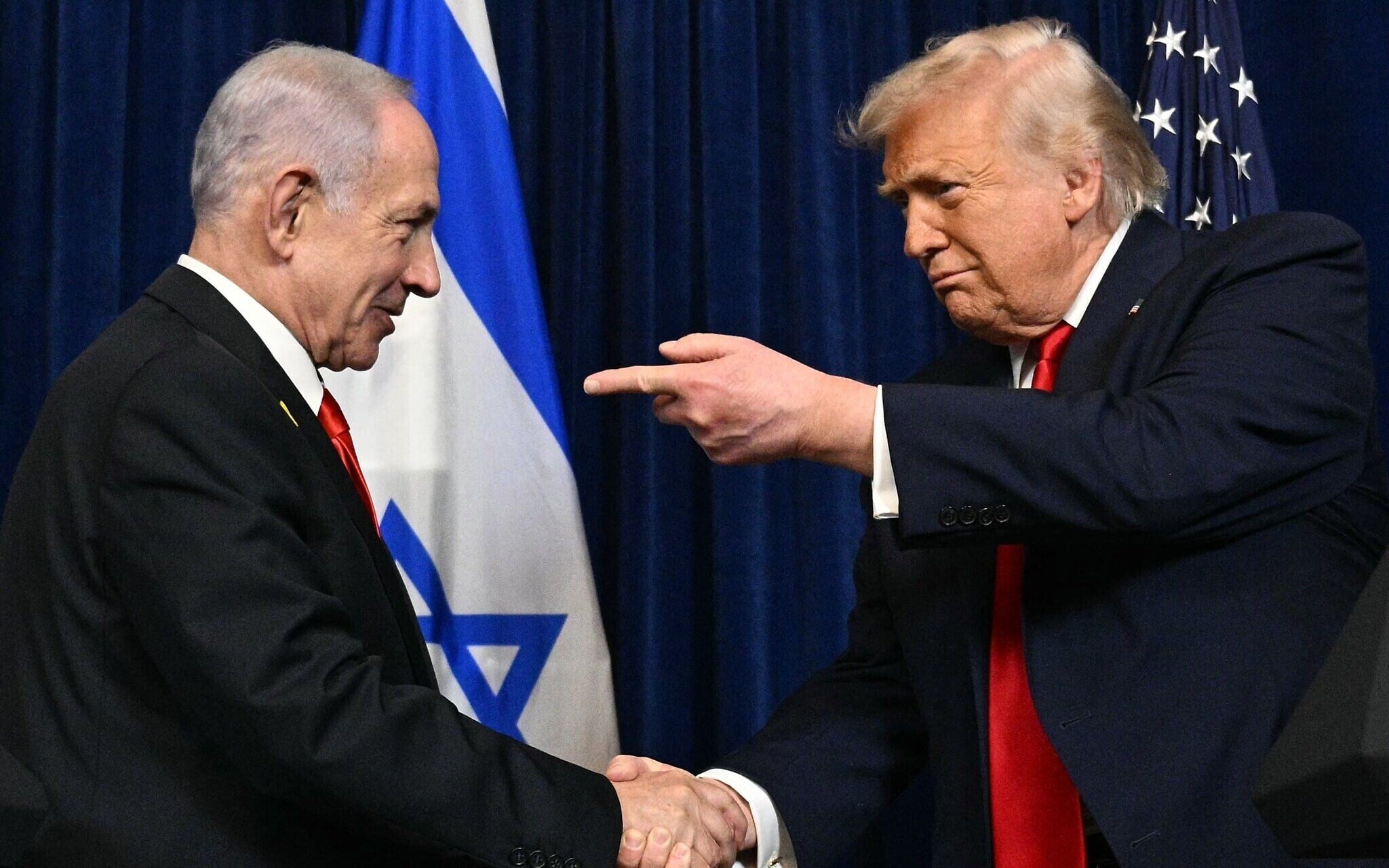
This is why the partnership between the United States and Israel matters so deeply. Under President Trump, that partnership has reached a level of clarity and strength unmatched in modern times. Intelligence exchange has deepened, coordination has become direct, and Israel’s assessment of timing and preparation has been given real weight. This was visible in Venezuela, where Israeli intelligence and strategic experience played a decisive role behind the scenes, and it is visible again now in the handling of Iran, where Israel is leading the strategic case and President Trump is listening.
Trump respects Israel’s military discipline, intelligence capability, and understanding of survival. Israel does not push America into war. Israel advises sequencing, preparation, and restraint. That counsel has mattered.
Gaza, Phase Two, and Strategic Redirection
The opening of what is being called the second phase of the Gaza plan has to be understood in its timing. It is not meant to give clarity about Gaza itself, and it is not meant to resolve the conflict. It is meant to gather actors who, at this moment, are the most vocal and the most dangerous in opposing American action against Iran.
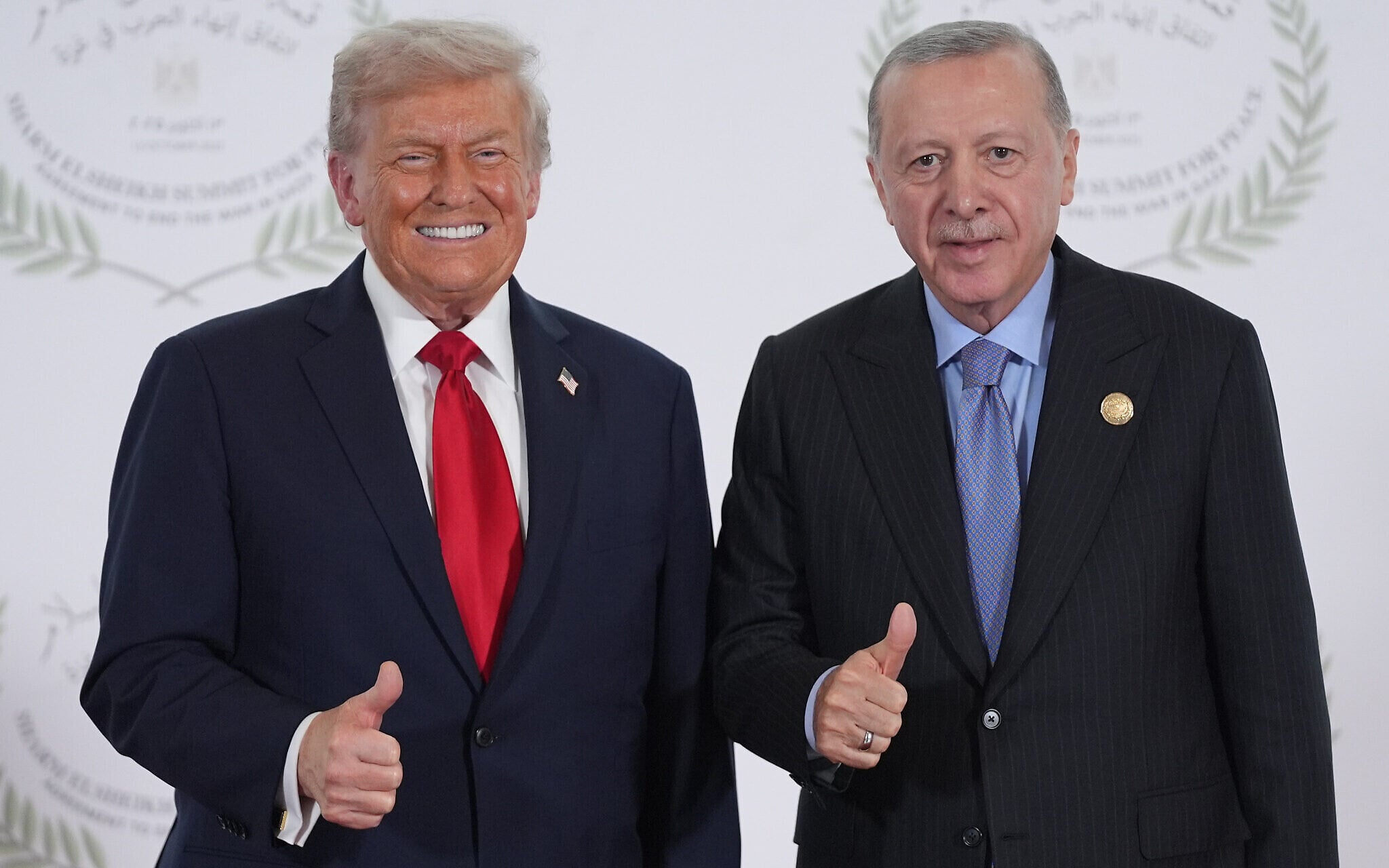
By opening a visible peace framework around Gaza, President Trump has placed Turkey, Qatar, and other regional actors onto a board of negotiation. They are invited into talks, statements, proposals, and processes that demand attention and time. As a result, their focus shifts away from resisting American intervention in Iran and toward participation in a peace discussion. This does not mean Iran is no longer central. It means opposition is being managed.
Throughout this process, coordination between the United States and Israel regarding Iran continues at a very high level. Intelligence exchange has not slowed; it has intensified. President Trump does not believe that limited gestures or partial pauses represent real change inside the Iranian regime. He understands how authoritarian systems operate and how they use delay and deception to survive.
President Trump is not naïve enough to believe the Iranian regime’s broader narrative, even though he publicly acknowledged their statement that over eight hundred scheduled hangings, which were to take place the previous day, had been cancelled by Iran’s leadership. His decision to publish that statement was not an acceptance of the regime’s account, but a deliberate move made with full awareness of the scale of repression and the regime’s long record of deception.
President Trump made his position even clearer when he addressed Israel directly, writing, “Do not drop those bombs. Bring your pilots home now.” This was not confusion and it was not retreat. It was a public assertion of control. By making that instruction visible, he signaled that timing and escalation are being directed deliberately. He has used this approach before, including during the twelve-day war, where public restraint existed alongside real preparation.
Shortly after, Trump added further context, stating that on the final day of that twelve-day war, following a deadly Iranian ballistic missile strike on Be’er Sheba, Israeli fighter jets were already on their way toward Iran and prepared to eliminate Khamenei, and that the order to stop came directly from him. By making this intervention public, Trump showed that restraint and authority were being exercised together, not separately.
What is happening now is not quiet retreat. It is controlled positioning. President Trump is not becoming less decisive; he is becoming more precise. With time, experience, and direct exposure to intelligence at the highest levels, his judgment has sharpened. He listens closely to Israel because Israel has proven, repeatedly, that it understands the region, the threats, and the cost of miscalculation.
Those who assume silence means passivity misunderstand both the president and the moment. Coordination continues. Planning continues. And when action comes, it will not come impulsively.
Prayer, in this context, is responsibility. Scripture commands prayer for kings, for those in authority, for nations, and for the peace of Jerusalem. God has always used imperfect leaders to restrain evil, buy time, and preserve life, not because their character was flawless, but because His sovereignty is greater than human weakness.
What President Trump is doing regarding Greenland, NATO, Gaza, Iran, and Israel is not novelty policy dressed as courage. It is long-standing strategic reality spoken openly. He did not invent these concerns. He refused to hide them. In a time when history is accelerating, clarity, preparation, and prayer are not optional. They are necessary.