
Before he flies to DC to meet his counterpart Sullivan, PM’s aide Eyal Hulata presents 2022 national security estimate, with new focus on crime in Arab communities


Prime Minister Naftali Bennett (center) addresses a weekly cabinet meeting in Jerusalem on February 6, 2022. (Haim Zach/ GPO)

Prime Minister Naftali Bennett (center) addresses a weekly cabinet meeting in Jerusalem on February 6, 2022. (Haim Zach/ GPO)

US President Joe Biden explicitly supports Israel’s freedom to act against Iran, whether there is a return to a nuclear deal or not, Prime Minister Naftali Bennett said Monday.

According to Bennett, Biden made a statement to that effect in their phone conversation Sunday night.

The US readout of the conversation had Biden expressing his “unwavering support for Israel’s security and freedom of action,” but did not tie it directly to Iran.

“I  made clear, and I was happy that he made it explicitly clear, that Israel will maintain its freedom of action in every situation,” Bennett told Israeli reporters during a briefing at his Jerusalem office. “It is extremely important. We will maintain our freedom of action without any connection to what will be, with or without an agreement.”

National Security adviser Eyal Hulata laid out at the briefing the main points of the National Security Council estimate for 2022, which was presented to Bennett on Sunday.

Hulata said that he expects 2022 to be a year of change regarding the Iranian threat.

“Whether there is a return to the nuclear deal or not, 2022 will be a year during which our surroundings will make us operate differently than we did until now, and we have to prepare,” he said.

Hulata is slated to fly to Washington, DC, Monday night to meet with his US counterpart, Jake Sullivan. He called the coordination with the US “deep, important, and strategic.”

National Security adviser Eyal Hulata speaks during the IISS Manama Dialogue in the Bahraini capital Manama on November 21, 2021.(Mazen Mahdi/AFP)

Hulata said there is a real chance that Iran will return to a nuclear deal and that the US would lose its tools to push Iran into a “longer and stronger” deal.

“We must prepare for every one of the possibilities, whether there is a return to a deal or not,” he said.

Talks to revive Iran’s tattered 2015 nuclear deal with world powers are resuming on Tuesday after breaking off for over a week for diplomats to return home for consultations.

Israel has changed its approach toward Iran dramatically in recent months, an Israeli official said Monday, initiating a long-term campaign to weaken the Islamic Republic.

“Weakening it first of all economically, using a range of activities — economic, diplomatic, targeted killings, overt, covert, in cyber and other realms,” he said. “Our goal is to harass them at home, so that they will be busy with themselves.”

“The campaign will be ongoing,” he promised. “It will not occur in one or two years.”

FILE – Iranian President Ebrahim Raisi addresses the parliament during a vote of confidence session for the education minister, in Tehran, Iran, November 16, 2021. Iran and world powers resume talks in Vienna the week of November 28, aimed at restoring the nuclear deal that crumbled after the US pulled out three years ago. There are major doubts over whether the deal can be reinstated after years of mounting distrust. (AP Photo/ Vahid Salemi)

The official said that over the past decade, Israel focused on fighting Iran’s proxies in Gaza and Lebanon, while the patrons in Tehran sat comfortably a thousand kilometers away.

He added that Israel was investing heavily in this campaign: “We inherited a massive gap here, because there was no internal Plan B. We allocated hundreds of millions of shekels in order to close the intelligence and operational gap. We are closing the gap rapidly.”

Careful progress

Bennett, during his briefing, also turned to a possible thaw in relations with Turkey.

He said that President Isaac Herzog was playing an important role in diplomatic outreach to Ankara. “In my view, the president is doing outstanding work, he is an extraordinary diplomatic asset for solving problems.”

Bennett said the two leaders were fully coordinated in their activities, including on a potential trip to Turkey by Herzog.

On Sunday evening, Herzog spoke with Turkish President Recep Tayyip Erdogan. The two leaders also discussed the possibility of meeting soon,

On Friday, Erdogan said that Turkey and Israel could work together to deliver natural gas from the Middle East to Europe, and the two countries would discuss energy cooperation during talks next month.

President of Turkey Recep Tayyip Erdogan delivers a speech during a press conference in Ankara, on January 20, 2022. (Adem Altan/AFP)

Erdogan had previously stated to Turkish media that he will host Herzog for an official visit in mid-March amid efforts to revitalize once-strong relations between the two countries, but this was not confirmed and a spokesperson for Herzog had declined to comment on Erdogan’s announcement.

“We are going to progress very carefully with Turkey,” the Israeli official said. “Very slowly. They are no big friends of Iran to say the least, so we must not commit ourselves to some sort of purity that prevents us from operating and creating alliances.”

Eating us from within

The NSC estimate treated certain domestic challenges, including climate change and natural disasters, as national security threats.

During Monday’s briefing, there was a particular focus on violent crime in Arab communities as a national security issue.

“We must understand the scope of the danger from crime families in Israel,” said Bennett. “It is eating us from within. Protection rackets eat away at the foundations of society.”

“In Arab society, this was ignored, and we must deal with it,” he continued. “It is far worse than we thought.”

Iran thinks oil may help push new Iran deal

Iran’s analysis says that during the Trump era, the White House opted to re-impose oil sanctions to “open more space in the world market in order to sell more oil.”

Iranian oil platform, Iran flag (photo credit: Reuters)
Iranian oil platform, Iran flag
(photo credit: Reuters)

Iran believes that the price of oil could help push the US into a new Iran deal, according to a new article at pro-government media in Tehran. As talk about sanctions and the possibility of a new deal continued this week, Iran’s Fars News predicted that rising oil prices may be a win for Iran.

The recent article notes that “the United States has intensified sanctions on Iran’s oil in two periods of time and tried as much as it can to warn traditional Iranian oil customers from continuing to import from our country.” The article claims that this coincided with the US using “hydraulic fracturing technology to extract shale oil from major shale fields in that country, especially in Texas, which was referred to as the Shale Boom in the United States.”

Supposedly, the US gains in this technology coincided with sanctions in 2013-2014. “It was this shale boom that, according to statistics, pushed oil prices up from an average of $111 a barrel in 2012 to $98 in 2014 and $ 43 in 2016. “The use of hydraulic fracturing technology led to a sharp increase in US oil production, from a mere importer of oil to one of the largest producers.”

The US was thus angling to prepare the world to accept imports of American oil and was driven by economic reasons to sanction Iran’s oil, the article claims. “This served American interests in two ways; first, it put Iran under economic pressure, at least in the Middle East and North Africa, as one of America’s main competitors, and second, it opened the door for US oil to enter the world market. After the imposition of oil sanctions, some old Iranian oil customers who did not want to violate the sanctions were forced to import oil from the United States, which, along with declining Iranian oil revenues, boosted the US oil industry and benefited both sides.”

Now Iran’s analysis says that during the Trump era, the White House opted to re-impose oil sanctions to “open more space in the world market in order to sell more oil and make American oil companies more profitable.” This was the real conspiracy at the heart of the US ending the Iran deal, Fars News claims. The US was increasing oil sales and pumping two million barrels a day, the article asserts. But then came Joe Biden.

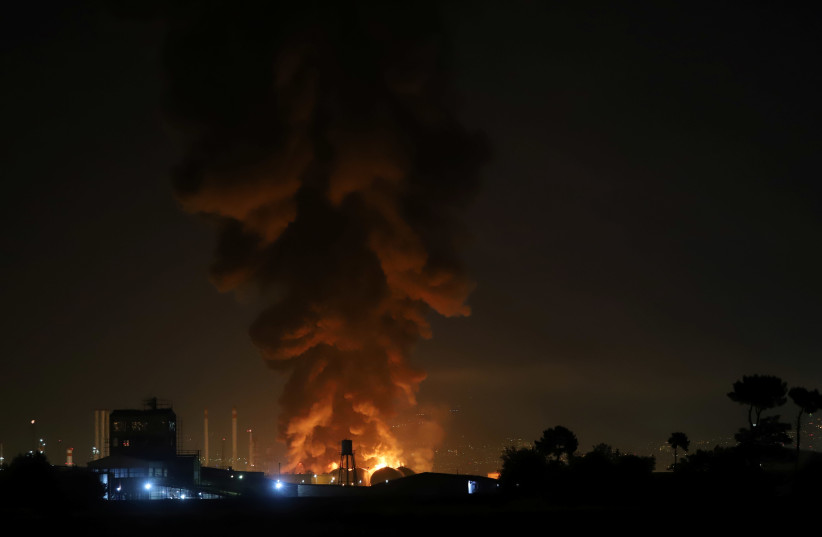
Smoke rises at an oil refinery in Tehran. (credit: REUTERS)Smoke rises at an oil refinery in Tehran. (credit: REUTERS)

According to Fars News, the new US administration wants to control the price of gas in the US, which has been rising. But the Biden administration also cares about climate change.  “To achieve the first goal, the US government must stop the increase in oil prices in the world market, and to achieve the second goal, the increase in oil prices will be a serious challenge. Therefore, in order to achieve both goals, the US government must lower oil prices.”

Meanwhile, the US is making some own goals. The Biden administration, the article notes, revoked a license for the Keystone pipeline. Gas prices jumped and Canada was incensed. Meanwhile, OPEC has rejected US demands to raise oil output, only tacitly agreeing to raise output by 400,000 barrels a day. With the Covid pandemic shifting, there is high demand for oil and gas again. “In addition, rising gas prices in Europe and the consequent shift of power plants to higher oil consumption have been further exacerbated by rising oil prices on the world market, which have now crossed $93 a barrel,” the article says.

Iran now has America over a barrel. The US has tried to prevent the rise in oil prices, and the Biden administration even opened the strategic reserve in the US. “The Biden administration tried hard to bring the energy price down before the Christmas holidays in the country, where travel is naturally on the rise and gasoline prices are becoming more and more apparent. Omicron provided some relief, as prices dropped but now the US faces pressure again.”

The article says that over the last year oil had gone from some $60 a barrel to $93. “US gasoline prices are at their highest level in seven years and the puzzle of lifting sanctions is being completed.” Iran is watching middle America be squeezed. “The American Automobile Association says that the average price of gasoline in all US states and even in the states of Texas, Mississippi, Arkansas and Alabama, which have the lowest gasoline prices, was more than $3 per gallon,” the article notes. Now all Iran has to do is wait for the US role in the new Iran deal talks in Vienna to be activated.

“It must be said that it is likely that this is the difference in oil prices that this time has forced the Americans to enter into serious negotiations with the Iranian side,” the article continues. “The United States has no choice but to open the door for Iranian oil to enter the equation of limiting its oil industry in order to counter climate change, and on the other hand in promising to control gasoline prices to help livelihoods, both of which were part of Biden’s election promises.”

Iran is watching now that the increased gas prices could “plunge many American companies into crisis and will absorb a significant portion of the income of the American people. If Biden can reduce the price of gasoline in any way, it can live up to one of its campaign promises and boost its popularity again in the months leading up to the congressional election.”

The article claims that the administration “can use the agreement with Iran as an achievement for the victory of the Democrats in the Senate and the House of Representatives.” Iran is thus meddling in the US election by dragging out the deal negotiations. “In fact, given what has been said, controlling world oil prices and preventing further price increases is the main reason why the Americans have come to the negotiating table with the Iranian side in Vienna and reduce the maximum pressure on the negotiating table.”

Iran’s media and experts. Predicts that the US will be more active in the coming days and weeks, “both in terms of giving concessions to the Iranian side and in terms of reaching an agreement with the American side as soon as possible.”


Will Iranian-backed militias attack Turkey in Iraq? – analysis

The Kataib Hezbollah group was conducting a ceremony for a “high ranking martyr” when the comments against Turkey were made.

Destroyed headquarters of Kataib Hezbollah militia group are seen after in an air strike in Qaim, Iraq, December 30, 2019 (photo credit: REUTERS/STRINGER)
Destroyed headquarters of Kataib Hezbollah militia group are seen after in an air strike in Qaim, Iraq, December 30, 2019
(photo credit: REUTERS/STRINGER)

Kataib Hezbollah, which is an Iranian-backed group in Iraq, reportedly threatened Turkish forces in Iraq over the weekend. Turkey has numerous outposts and bases in northern Iraq and Ankara often carried out airstrikes against Yazidi minorities in Sinjar.

The Turkish role in Iraq, where Turkey says it is “fighting terrorism,” has caused controversy before with Baghdad. Pro-Iranian groups tend to view Turkey as violating Iraq’s sovereignty, an irony considering these groups work with Iran which also violates Iraq’s sovereignty.

According to Iran’s Fars News, the Kataib Hezbollah group was conducting a ceremony for a “high ranking martyr” when the comments against Turkey were made. The group said that it defends the Iraqi nation and that anyone who insults the Iraqi authorities “insults all the people of this country and the Muslim ummah.” According to the statement, the movement “went on to address the parliamentary elections.” Then, they turned their attention to other issues such as Yemen.

On February 3, a previously unknown militia in Iraq took responsibility for attacking the UAE using drones. This was apparently coordinated with Iran and Kataib Hezbollah. Kataib has attacked Saudi Arabia in the past using drones. Iran has encouraged the Houthis in Yemen to attack the UAE and is now using Iraq to do the same.

Then Kataib Hezbollah threatened Turkey. “The knife has reached the bone,” the statement concluded, referring to Turkey’s attacks on northern Iraq.” It is enough to ignore the lives of our people and the [role] of the sovereignty of our country…Know that a nation that shattered the grandeur of the world’s greatest power [the United States] and rubbed its snout on the ground can also rub your nose into the ground,” the statement said.

Iraqi Shi'ite Muslim men from the Iranian-backed group Kataib Hezbollah wave the party's flags as they walk along a street painted in the colours of the Israeli flag during a parade marking the annual Quds Day, or Jerusalem Day, on the last Friday of the Muslim holy month of Ramadan, in Baghdad (credit: THAIER AL-SUDANI/REUTERS)Iraqi Shi’ite Muslim men from the Iranian-backed group Kataib Hezbollah wave the party’s flags as they walk along a street painted in the colours of the Israeli flag during a parade marking the annual Quds Day, or Jerusalem Day, on the last Friday of the Muslim holy month of Ramadan, in Baghdad (credit: THAIER AL-SUDANI/REUTERS)

The group demanded Turkey withdraw its forces “before it’s too late,” according to Iran’s Fars News, which is considered close to the IRGC. Kataib Hezbollah is also close to the IRGC. Its previous commander Abu Mahdi al-Muhandis was with IRGC Quds Force head Qasem Soleimani when the US killed both of them in January 2020.

According to the report, the Kataib Hezbollah threat may be due to increased Turkish airstrikes in Iraq. Turkey claims to be bombing terrorists, but its airstrikes are increasing to areas near Iraqi forces in Sinjar and Mahmour. Turkey usually operates mountain bases in the autonomous Kurdish region of northern Iraq. However, Turkey’s Bashiqa base, which was established during the war on ISIS and overlooks Nineveh plains, has been targeted by pro-Iran militias in the past.

Reports say rockets targeted the Turkish base in January 2022, December, November and April 2021. Pro-Iran militias have targeted US forces in Erbil in the Kurdish region several times over the last two years. This includes a February 2021 attack and a drone attack in April 2021, as well as an attack at the end of September 2020.
