
‘Damaging’ Iran deal is on the way, Bennett warns

“Whoever thinks an agreement will increase stability is wrong,” he added.
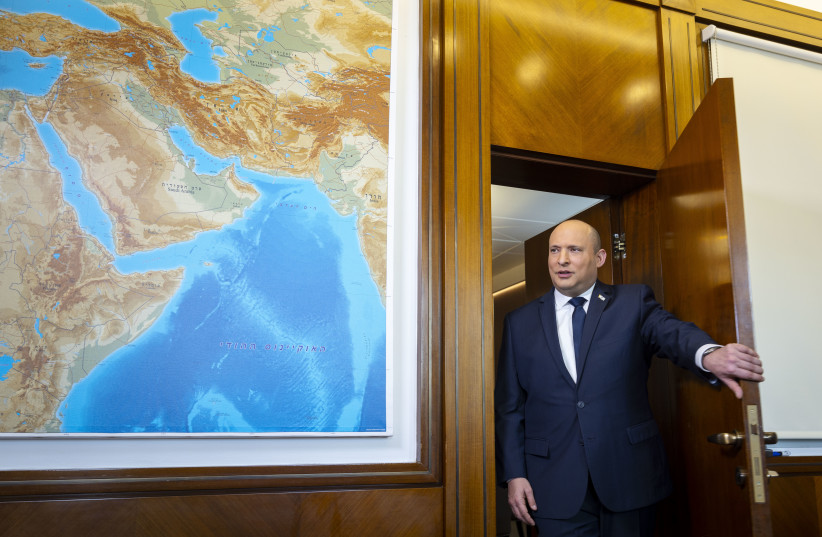
Prime Minister Naftali Bennett enters his office this week after an interview with The Jerusalem Post.  (photo credit: OLIVIER FITOUSSI/FLASH90)
Prime Minister Naftali Bennett enters his office this week after an interview with The Jerusalem Post.
(photo credit: OLIVIER FITOUSSI/FLASH90)

The Iran nuclear deal that world powers are negotiating in Vienna will make it harder to stave off a nuclear Iran, Prime Minister Naftali Bennett warned at the opening of Sunday’s cabinet meeting.

“Foremost among the threats to the State of Israel is Iran,” Bennett said. “We, as the cabinet, are responsible for taking on the Iranian nuclear [threat], and are closely following what is happening in the talks in Vienna.”

Bennett said that “the agreement and what appears to be its conditions will damage the ability to take on the nuclear program.

“Whoever thinks an agreement will increase stability is wrong,” he added. “It will temporarily delay enrichment, but all of us in the region will pay a heavy, disproportionate price for it.”

Bennett pointed out that, in recent weeks, Iran has been upping its aggression in the region, at the same time as it negotiated in Vienna.
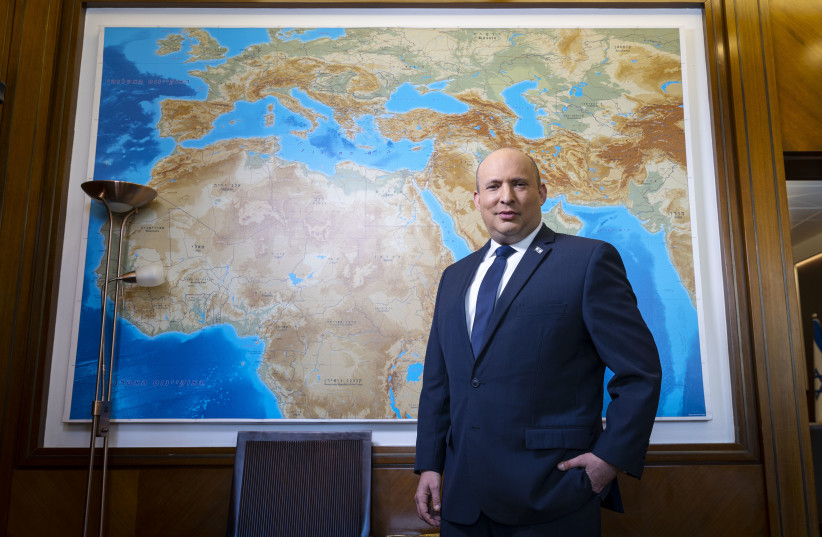
 Prime Minister Naftali Bennett stands before a map of the region in his office. (credit: OLIVIER FITOUSSI)Prime Minister Naftali Bennett stands before a map of the region in his office. (credit: OLIVIER FITOUSSI)

Israel is working to strengthen itself militarily for the coming decades, the prime minister said.

“Israel will maintain freedom of action in any situation, with or without an agreement,” he stated.

World powers have been negotiating on-and-off with Iran for the past 10 months for the Islamic Republic and the US to return to compliance with the 2015 Joint Comprehensive Plan of Action nuclear deal, which restricted Iran’s uranium enrichment – but not its ballistic missile program or funding of proxy militias – until 2030, along with the gradual lifting of sanctions. The US left the deal and placed heavy sanctions on Iran in 2018, due to its malign actions in the region and evidence, found in an archive smuggled out by the Mossad, that its nuclear program was a weapons program, contrary to Tehran’s denials.

Bennett’s remarks came as Israeli officials are concerned that the renewed deal with Iran will maintain the regime’s time to nuclear breakout at less than six months. One of the flagship goals of the JCPOA in 2015 was to keep Iran a year away from nuclear breakout.

US Special Envoy for Iran Rob Malley admitted in an interview with MSNBC over the weekend that the breakout time in a new deal would be shorter than the original JCPOA.

“Because of the advances that they’ve made over the years since we withdrew from the deal…it’s going to be hard to recapture the full non-proliferation benefits, the full breakout timeline,” Malley said. “That’s obviously one of the many catastrophic consequences of the decision to leave the deal.”

Iran’s current breakout time, without any deal, is weeks away, Malley argued, and a deal would extend that timeline.

“We have differences with Israel, but we are working hand in glove with them to make sure our common interests are defined,” Malley stated.

Israeli officials are also concerned about the Biden administration waiving sanctions for other countries to provide enriched uranium for the Tehran research reactor, convert its Arak heavy water research reactor and send spent and scrapped reactor fuel abroad.

The State Department said that these measures will allow “disposition of stockpiles and other activities of nonproliferation value,” and argued that the waivers are not a concession to Iran.

 

Iran says the US’ restoration of sanction waivers regarding Iran’s nuclear program is not enough and that Iran has a legal right to maintain its peaceful nuclear capabilities.

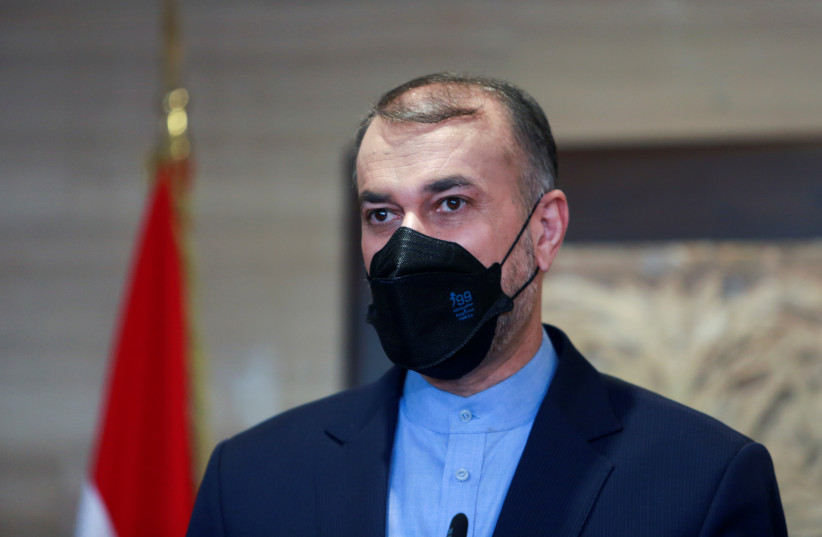
Iranian Foreign Minister Hossein Amirabdollahian attends a press conference after his meeting with Lebanese Parliament Speaker Nabih Berri, in Beirut, Lebanon, October 7, 2021. (photo credit: REUTERS/AZIZ TAHER)
Iranian Foreign Minister Hossein Amirabdollahian attends a press conference after his meeting with Lebanese Parliament Speaker Nabih Berri, in Beirut, Lebanon, October 7, 2021.
(photo credit: REUTERS/AZIZ TAHER)

Tehran dismissed as insufficient the Biden administration’s restoration of sanction waivers that would allow Russian, Chinese and European companies to carry out non-proliferation work at Iranian nuclear sites.

“The lifting of some sanctions can in itself translate into good faith,” Iranian Foreign Minister Hossein Amirabdollahian said in comments reported by Iranian media, adding, “While what is on paper is good… it’s not enough.”

The gesture comes as the United States and Iran are in the midst of the eighth rounds of indirect talks in Vienna that began in April. The talks are aimed at reviving the 2015 Iran deal, known as the Joint Comprehensive Plan of Action, which lifted sanctions against Tehran in exchange for restrictions on its nuclear program.

Amirabdollahian said one of the major issues in the Vienna talks was getting “guarantees, especially from the West, to fulfill their obligations.”

European Union foreign policy chief Josep Borrell spoke with Amirabdollahian on Saturday. He tweeted that, “We need good faith efforts from all sides and a spirit of compromise to swiftly conclude the negotiations and go back to full implementation of the JCPOA.”

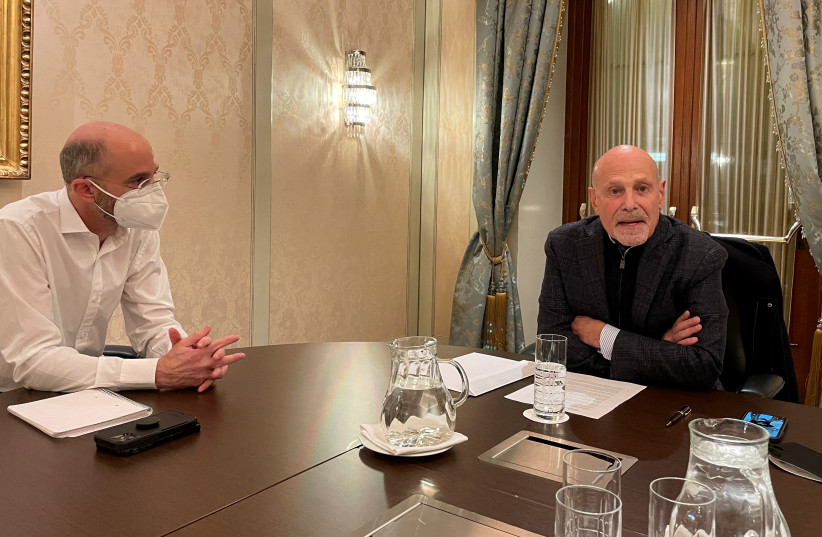
 US Special Envoy for Iran Robert Malley and Barry Rosen, campaigning for the release of hostages imprisoned by Iran, sit at a table during an interview with Reuters in Vienna, Austria. (credit: REUTERS/FRANCOIS MURPHY)US Special Envoy for Iran Robert Malley and Barry Rosen, campaigning for the release of hostages imprisoned by Iran, sit at a table during an interview with Reuters in Vienna, Austria. (credit: REUTERS/FRANCOIS MURPHY)

“We demand guarantees in the political, legal and economic spheres. Certain agreements have already been reached,” Amirabdollahian added.

Israel opposed the deal and has opposed its revival. It now fears that the US will accept a deal that would be weaker than the original document.

The 2015 deal was designed to create a breakout time of a year before Iran would have the capacity to create a nuclear weapon.

Now Israel and others are concerned that a revived deal would leave Iran with less than half a year breakout time.

US Special envoy for Iran Robert Malley told NBC on Saturday that at present the breakout time was only a matter of weeks, a fact that made it more imperative than ever that a deal can be reached.

“It is the best way we have to put Iran’s nuclear program back in the box,” Malley said. “Our priority is to get back into the deal. If Iran is prepared to do so, we are prepared to do our share in lifting those sanctions that were reimposed by [former] president [Donald] Trump that are inconsistent with the deal,” he said.

“We have differences with Israel, but we are working hand in glove with them to make sure our common interests are defined,” Malley explained.

Concern is high, however, that the US is taking risks such as the waiving of sanctions imposed by Trump in 2020, as it did on Friday.

The waiver covered the conversion of Iran’s Arak heavy water research reactor, the provision of enriched uranium for its Tehran research reactor and the transfer of spent and scrap reactor fuel abroad.

A senior State Department Official defended the US decision on the sanctions waiver.

“We decided to restore a sanctions waiver to enable third party participation in nuclear non-proliferation and safety projects in Iran due to growing non-proliferation concerns, in particular with respect to increasing stockpiles of enriched uranium in Iran.”

The official said that without this sanctions waiver, “detailed technical discussions with third parties regarding disposition of stockpiles and other activities of nonproliferation value cannot take place.”

They went on to say that the “technical discussions facilitated by the waiver are necessary” in the final weeks of JCPOA talks, and that “the waiver itself would be essential to ensuring Iran’s swift compliance with its nuclear commitments.”

“If talks do not result in a return to the nuclear agreement, such technical discussions could still contribute to achieving our non-proliferation goals,” the official argued.

The official clarified, “This is not a signal that we are about to reach an understanding on a mutual return to full implementation of the JCPOA.

“To be clear: this is not a concession to Iran,” the official continued. “The nuclear non-proliferation and safety projects enabled by this waiver are in our vital national interest as well as the interest of the region and the world – and will continue to be regardless of the outcome of talks in Vienna.”

After Trump pulled the US out of the deal in 2018 and reimposed harsh sanctions, Iran gradually started violating the pact’s nuclear curbs. Tehran insists its nuclear program is purely for peaceful purposes.

Ali Shamkhani, the secretary of Iran’s Supreme National Security Council, said in a post on Twitter on Saturday, “Iran’s legal right to continue research and development and maintain its peaceful nuclear capabilities and achievements, side by side with its security… cannot be curbed by any agreement.”

Reuters contributed to this report.


Israel fears a new agreement between world powers and Iran will only delay Tehran from reaching the amount of material needed for a nuclear bomb by a few months, the Kan public broadcaster reports.

The report did not source which officials in Israel are worried about Iran possibly reaching its so-called breakout time earlier than originally anticipated.

The original deal had envisioned keeping Iran away from this target by a year.

American sources say “it is better to have a distance of a few months and not just weeks, as would happen if no agreement is signed,” according to the network.

Still, enough nuclear material for a bomb is not the same as having the capabilities to build the core of the weapon and to attach it to the warhead of a missile, which Iran is not believed to possess and would likely take many more months to achieve.

Talks in Vienna are expected to resume next week.