Cabinet holds meeting on strategic plateau, with ministers approving $317M development plan; Bennett hails Trump recognition, then goes into quarantine as daughter catches COVID


Ministers take part in a special cabinet meeting on the Golan Heights on December 26, 2021. (Kobi Gideon/GPO)

Ministers take part in a special cabinet meeting on the Golan Heights on December 26, 2021. (Kobi Gideon/GPO)

The cabinet unanimously approved a NIS 1 billion ($317 million) development plan on Sunday aimed at encouraging demographic growth in the Golan Heights, with Prime Minister Naftali Bennett saying Israel intends to double the number of Israelis living in the strategic area in the coming years.

Bennett also announced several new communities and neighborhoods in the Golan, during a special cabinet meeting held in the Golan’s Kibbutz Mevo Hama.

“This is our moment. This is the moment of the Golan Heights,” Bennett told ministers. “After long and static years in terms of the scope of settlement, our goal today is to double settlement in the Golan Heights.”

The plan’s goal, formulated by a team headed by the Prime Minister’s Office director-general, Yair Pines, is to boost the population in the Golan Regional Council and the Katzrin Local Council in 2022-2025.

Bennett announced the plan in October, saying that the ultimate goal was to reach 100,000 residents in the coming years.

Currently, some 53,000 people live in the Golan Heights: 27,000 Jews, 24,000 Druze, and some 2,000 Alawites (an ethnoreligious group originating from Shia Islam and a minority sect to which Syria’s ruling family, the Assads, belong).

During Sunday’s cabinet meeting, Bennett announced two new neighborhoods in the town of Katzrin, as well as two new communities to be named Asif and Matar, each with about 2,000 housing units.

Prime Minister Naftali Bennett speaks during a cabinet meeting held on the Golan Heights on December 26, 2021. (Kobi Gideon/GPO)

The prime minister noted the recognition of former US president Donald Trump’s administration of Israeli control of the Golan Heights, and “the fact that the Biden administration has made it clear that there is no change in this policy.”

He added that since the COVID-19 pandemic has proven how many people can now work from home, the Golan is a “great option for those who prefer clean air, space and quality of life.”

Apart from the United States, the international community regards the Golan as part of Syria, which lost the territory in the 1967 Six Day War. Israel annexed the Golan in 1981.

In 2019, a new town, named Trump Heights, was inaugurated on the Golan to honor Trump’s recognition.

A construction truck enters Trump Heights on September 21, 2020 (Emmanuel DUNAND / AFP)

Bennett said that in light of the decade-long civil war in Syria, “every knowledgeable person in the world understands that it is preferable to have Israeli heights that are quiet, flourishing and green as opposed to the alternative.”

For the first time since the start of the pandemic, all attending ministers were required to take a rapid COVID-19 antigen test before entering the cabinet meeting.

While Bennett tested negative, shortly after making his remarks his office said it was notified that Bennett’s daughter had tested positive for the coronavirus, prompting the premier to leave the cabinet meeting and head into self-isolation at home. Bennett’s office said his daughter was vaccinated.

The government plan aims to upgrade infrastructure, establish new communities and neighborhoods, and create 2,000 new jobs by turning the region into “the capital of Israel’s renewable energy technologies,” Hebrew media reported.

View of the town of Neve Ativ, in the Golan Heights. (Moshe Shai/Flash90)

The plan involves a number of agricultural technology projects, including agro-voltaic projects where solar panels are mounted over crop fields to facilitate crop growth and generate electricity at the same time.

Some NIS 576 million ($183 million) will be allocated for housing planning — about 3,300 new housing units in Katzrin and another 4,000 in the Golan Regional Council — within five years.

Another NIS 160 million ($51 million) is to be invested in infrastructure and transportation, to improve the quality of life in the Golan Heights.

Some Golan Heights residents are expected to oppose parts of the plan. Opposition is also expected from environmental organizations over the possible impacts further development could have on the environment and wildlife in the area.

Joint List MK Ahmad Tibi at a Knesset Finance Committee meeting on June 23, 2021. (Yonatan Sindel/Flash90)

Opposition MK Ahmad Tibi of the predominantly Arab Joint List party criticized the decision to hold the cabinet meeting on the Golan Heights.

“It doesn’t matter how many cabinet meetings are held on the Golan, it is occupied Syrian territory,” tweeted Tibi. “All parts of the coalition are responsible for the decisions made during this cabinet meeting, as well as for the deepening of the settlements and the violence of settlers.”

The Islamist Ra’am party, which is a member of the coalition but has no ministers, did not take part in the meeting.

Left-wing Meretz ministers Tamar Zandberg and Nitzan Horowitz did attend the meeting, though Zandberg said the decision was “complicated. We support peace and hope one day it will happen.”

Regional Cooperation Minister Esawi Frej, also of Meretz, chose not to attend the cabinet meeting.

AP contributed to this report.

Russia and Turkey’s role in Africa gains spotlight

Action in Africa is increasingly becoming part of the broader tensions between Moscow and the West.

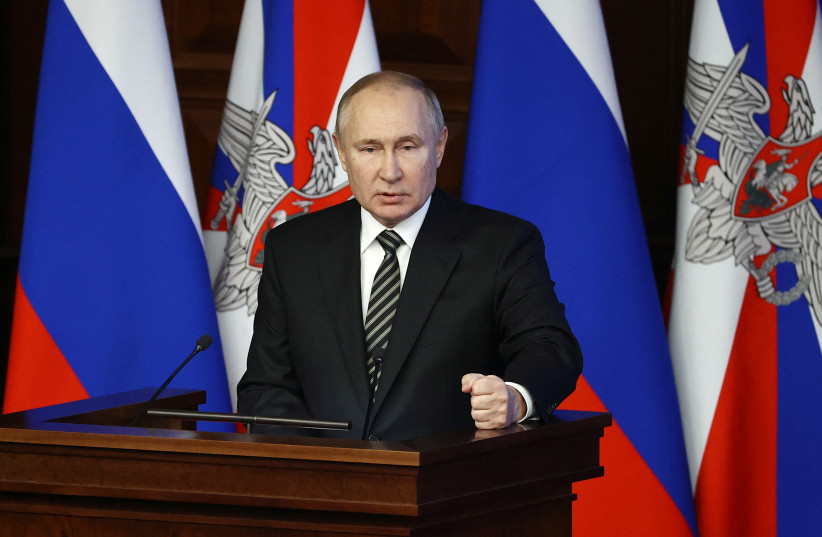
Russian President Vladimir Putin delivers a speech during an expanded meeting of the Defence Ministry Board in Moscow, Russia, December 21, 2021. (photo credit: SPUTNIK/MIKHAIL TERESHCHENKO/POOL VIA REUTERS)
Russian President Vladimir Putin delivers a speech during an expanded meeting of the Defence Ministry Board in Moscow, Russia, December 21, 2021.
(photo credit: SPUTNIK/MIKHAIL TERESHCHENKO/POOL VIA REUTERS)
Over the last week reports that Russia might send contractors to Mali have raised eyebrows in Europe and the West, as the US and Russia are in rising tensions over Ukraine. It is also part of the wider tensions between Russia and the West.
Russia and Turkey, as well as China, have increasingly been playing a more muscular role abroad. That includes drone sales by Turkey, Iran and other countries to Ethiopia. It includes a role by Turkey in Somalia as well as Mali and the Central African Republic, sometimes as UN peacekeepers. Russia and Turkey play a role in Libya as well.
Meanwhile, Russia was accused by Western countries of sending private military contractors to Mali. Russia has denied the reports. This matters to Russia. TASS media in Moscow says “the government of Mali debunked the accusations made by Canada and a number of European countries about the alleged deployment of a private military corporation (PMC) in the country in a statement.”
According to this narrative, the government of Mali “officially rejects these groundless accusations and demands proof from independent sources.” The government of Mali noted that it “participates only in an inter-state partnership with the Russian Federation, its historic partner,” asking to “judge it by actions, not rumors.” The “Wagner” PMC is not mentioned in the statement, Tass says. “On September 25, the Russian Foreign Minister disclosed that Mali contacted a Russian private military contractor for aid in combating terrorism, adding that Moscow is not involved in this deal.”
So what is happening in Mali and the Sahel in Africa?
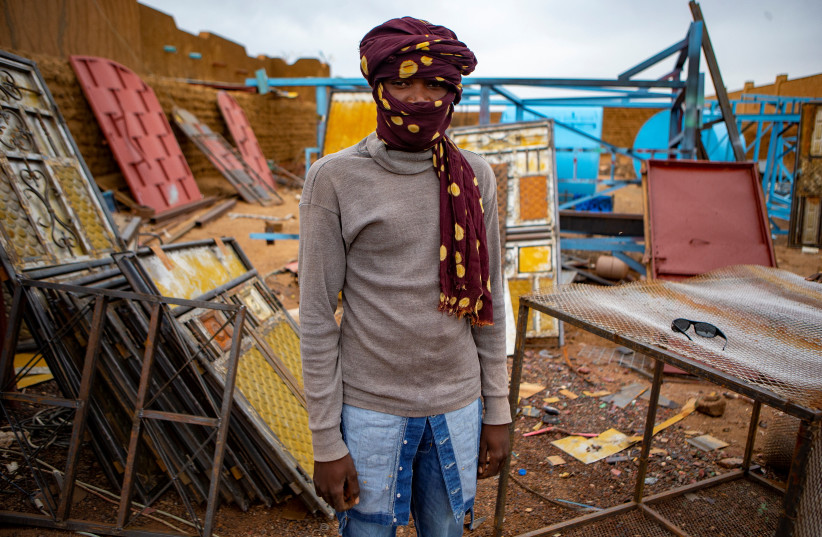
 Aliou, 15, who was recruited by armed groups in northern Mali and spent three years with them until UNICEF and its partners helped him leave, is pictured at a workshop, in Mali August 31, 2021 (credit: VIA REUTERS)Aliou, 15, who was recruited by armed groups in northern Mali and spent three years with them until UNICEF and its partners helped him leave, is pictured at a workshop, in Mali August 31, 2021 (credit: VIA REUTERS)
Russia could play a larger role in this area, but France and other European countries already play a role. These are sometimes former colonies and the European countries want to maintain their influence.
However, extremist groups have been growing in Nigeria and across a swath of countries. These countries are now looking increasingly to China for financial deals and possibly to Russia or Turkey or other countries for military deals that could mean advisers or contractors.
This comes as the US is drawing down in places across Africa. In 2017, four US personnel were killed in Niger. But these days, the US wants to reduce its role in places like Niger or Somalia. The vacuum will mean Russia, Turkey, China and even Iran step in.
In fact, media reports argue that France’s inability to stop jihadist threats across the Sahel, in places like Mali, will open the door to Russia. European countries are coordinating concerned Statements about this development.
Czech Republic’s Foreign Ministry, for instance, wrote “together with partners, the Czech Republic deeply regrets Mali’s decision to invite mercenary troops of the Russian Wagner Group to its territory, with Russia participating in their deployment.”
What matters here is whether this is part of the broader trend whereby Western countries and the US are reducing their footprint and role in areas such as Africa and the Middle East and whether the end result will be more of a role for Russia, Turkey, China and others.
Whether those countries will clash over influence or coordinate in these countries remains to be seen. What is symbolic is how this slow-moving shift is increasingly part of the broader tensions between Moscow and the West.


Iran threatens nuclear explosion in Israel’s Dimona facility

The IRGC threatened to attack the Dimona nuclear facility, as well as Jerusalem, Tel Aviv and Haifa, in a series of tweets.

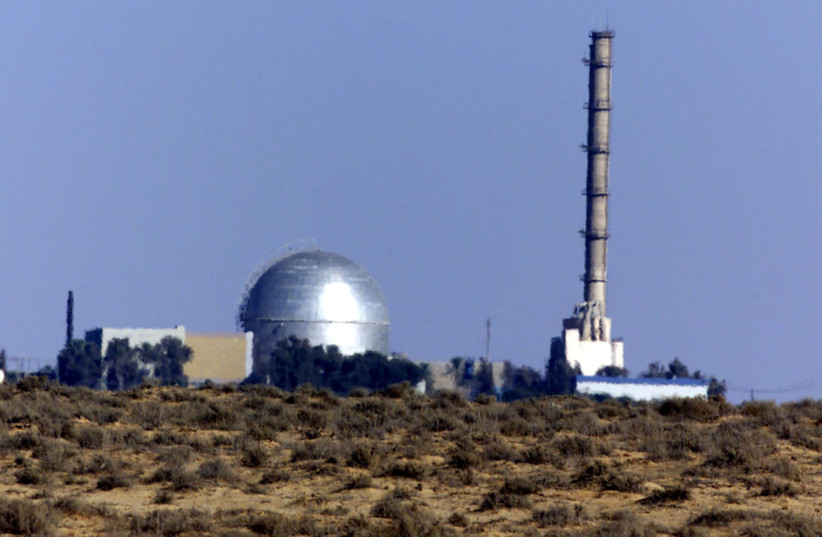
View of the Israeli nuclear facility in the Negev Desert outside Dimona  (photo credit: JIM HOLLANDER / POOL / REUTERS)
View of the Israeli nuclear facility in the Negev Desert outside Dimona
(photo credit: JIM HOLLANDER / POOL / REUTERS)
A Twitter account run by Iran’s Islamic Revolutionary Guard Corps (IRGC) on Friday threatened to blow up the city of Dimona in the Negev desert, where a nuclear facility is located.
The IRGC account, with its 12,100 followers, posted a video showing multiple explosions in a desert. “Then on the day, we [God] will deal you the fiercest blow. We will surely inflict punishment, “ the IRGC wrote in Arabic, citing a quote from the Koran, adding the hashtag “Dimona.”  The video is post-dated to Friday.
The account provides a link to the IRGC’s Telegram account, with its 376,084 subscribers. Both the IRGC Twitter account and Telegram account show the IRGC logo—an arm raised while clutching a rifle.
The IRGC Arabic account only follows the Farsi language Twitter account of the Islamic Republic’s Supreme Leader,  Ali Khamenei, as well as a backup account for IRGC Arabic.

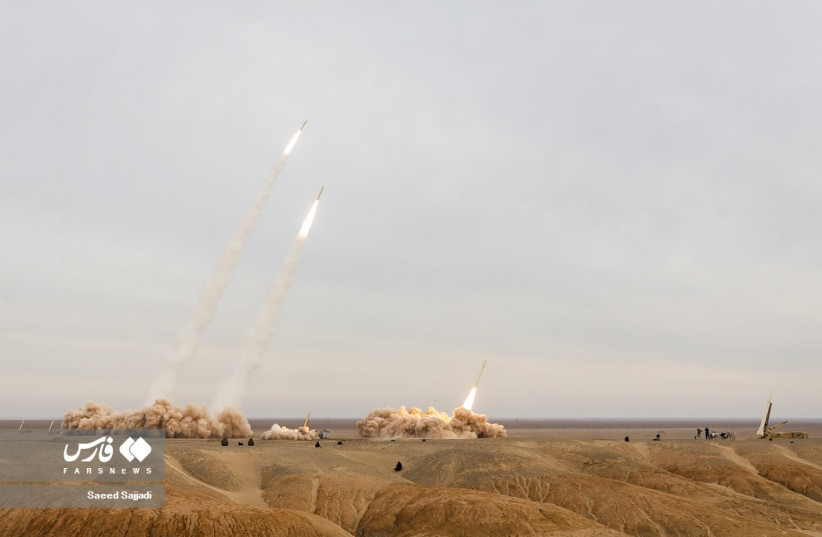
Missiles fired during Iran's ''17th Great Prophet'' drill (credit: Saeed Sajjadi/Fars News Agency)Missiles fired during Iran’s ”17th Great Prophet” drill (credit: Saeed Sajjadi/Fars News Agency)

A December 13 tweet from the IRGC account reads: “In the event of foolishness on the part of the Zionist regime, the Islamic Republic of Iran is no longer ready to destroy Tel Aviv and Haifa, but to liberate holy Quds. If the security of the holy land of Iran is compromised, no one will taste the moment of security, whether those who are at 1,000 km or at 10,000 km.“
Quds is the Arabic name for the capital of Israel, Jerusalem.
Sheina Vojoudi, an Iranian dissident who fled the Islamic Republic due to repression and who closely tracks Iranian regime social media activity told The Jerusalem Post that “An army is supposed to protect and defend the people and the soil of its country but I dont see any sign of my country in the Islamic Revolutionary Guard Corps, no name of Iran or the Iranian people is even mentioned in it.
“The Persian term Sepah-e Pasdaran has a great value and has its root in ancient Persian but the IRGC ruined it. Why should the IRGC publish its statements mostly in Arabic while the official language of Iran is Persian and most of the people in Iran speak and everyone understands Persian? Because it’s talking to its proxies like Hezbollah, Hamas, Houthis, Hashd al Shabi and the other entities under its commands not the Iranian people.
“The IRGC’s priority is the complete destruction of Israel and to follow Khomeini’s Ideology instead of defending its own people,” he said.
In 2019, the US designated the IRGC as a foreign terrorist organization. The US State Department—under both Democrat and Republican administrations—has classified the Iranian regime as the world’s worst state-sponsor of terrorism. The IRGC is estimated to have murdered over 600 US military personnel in the Middle East.
The London-based Iran International news channel tweeted on Friday: “The IRGC-affiliated Tasnim news agency says the Revolutionary Guards have simulated missile strikes against Israel’s Dimona nuclear facility in the ‘Great Prophet 17’ military exercises.”
The Post reported last week that an Arabic language Twitter account of the Islamic Republic of Iran published an image on December 17 that showed the planned burned elimination of the Jewish state in 2022.
The picture shows Israel composed of nails and matches and a book of matches next to words in Hebrew and English declaring: “Just try and you will see.”
The book of matches, which is situated next to Israel in the image, says “Ballistic matchstick” and shows an Iranian regime flag on it. The apparent message is that the clerical regime is prepared to detonate the matches to destroy Israel in 2022.
In late November, the spokesman for the Islamic Republic of Iran’s armed forces, Brig.-Gen. Abolfazl Shekarchi, urged the total elimination of the Jewish state during an interview with an Iranian regime-controlled media outlet.
“We will not back off from the annihilation of Israel, even one millimeter. We want to destroy Zionism in the world,” Shekarchi told the Iranian Students News Agency.
On December 15 the Tehran Times wrote on its front page “One wrong move,” with military targets listed within Israel.