
Centrifuges enrich uranium for potentially making a nuclear weapon, and some of Iran’s more advanced models can speed up that process by a rate of four to five times compared to older models.

 Will Iranian President Ebrahim Raisi lead the breakout to military-grade uranium? (photo credit: REUTERS)
Will Iranian President Ebrahim Raisi lead the breakout to military-grade uranium?
(photo credit: REUTERS)
Iran has resumed production of equipment for advanced centrifuges at the Karaj nuclear site that it accused the Mossad of blowing up in June, the Wall Street Journal reported on Tuesday.
The report cited Western diplomatic sources who expressed concern that  Iran could start to secretly divert advanced centrifuges to undeclared sites if it wished to clandestinely move closer to a nuclear weapon.
Centrifuges enrich uranium for potentially making a nuclear weapon, and some of Iran’s more advanced models can speed up that process by a rate of four to five times compared to older models.
These concerns are exacerbated by the fact that the IAEA admitted in September that it has been blind to what is going on at Karaj since June because of the Islamic Republic’s refusal to grant the nuclear inspectors access to the site or explain what happened to the monitoring cameras.
Although Tehran has claimed that postponing IAEA access relates to its investigation of the June sabotage attack in which the site was attacked by a drone, allegedly directed by the Mossad, IAEA Director-General Rafel Grossi has already said in September that such an explanation no longer holds water.
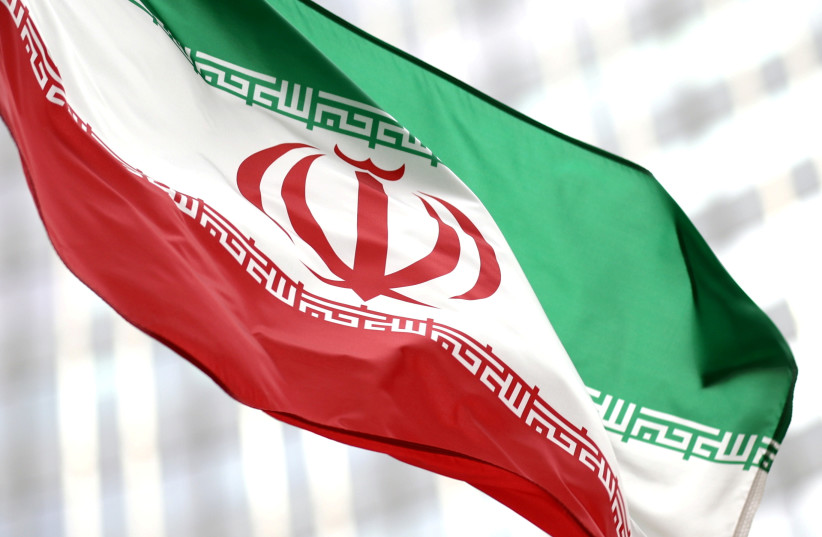
Iranian flag flies in front of the UN office building, housing IAEA headquarters, amid the coronavirus disease (COVID-19) pandemic, in Vienna, Austria, May 24, 2021. (credit: LISI NIESNER/ REUTERS)Iranian flag flies in front of the UN office building, housing IAEA headquarters, amid the coronavirus disease (COVID-19) pandemic, in Vienna, Austria, May 24, 2021. (credit: LISI NIESNER/ REUTERS)

Former prime minister Ehud Barak has expressed concern that with a newly growing supply of 60% enriched uranium and advanced centrifuges, it would be easier to hide aspects of the nuclear program than in the past, when a bigger space was needed for a much larger number of less advanced centrifuges to enrich lower quality uranium.
Former Mossad director Yossi Cohen has also expressed concerns about Iran’s ability to make clandestine moves and that any return of the US to a nuclear deal with the Islamic Republic would require much stricter controls over the nuclear program.
The Western diplomats quoted said there was no sign that Iran was trying to break out faster to a nuclear weapon, but it was unclear how they would know if Tehran tried to do so clandestinely.
Israeli intelligence officials have also expressed concern that the more advanced centrifuges there are – overt or covert – the greater the danger that Iran could breakout not with one but with five nuclear weapons, along the lines of its 1999-2003 plans.
It was unclear how the Western diplomats had information on general developments at Karaj without getting to physically visit the site and whether the revelations were based on a summary of developments passed on by Iran or independent resources.
The report also noted that some of the 170 newly built advanced centrifuges from the parts produced at Karaj were being installed in Tehran’s Fordow facility, deep underground and fortified.
 In addition, the report said that production at Karaj resumed in August, but that now production had jumped to much higher levels.
Iran’s production of centrifuges will be a critical issue in talks to revive the 2015 nuclear deal with the world powers scheduled to resume November 29. It is possible that the latest leaked reports might be an attempt by the ayatollahs to intimidate the Biden administration into agreeing to new concessions for fear of how far Iran will go if no deal is cut soon.
Israel continues to oppose any negotiations modeled after the 2015 deal which it considers too weak to limit Iran’s nuclear enrichment, ballistic missile program and regional aggression not to mention its approaching expiration dates in 2025 and 2030.
With the Islamic Republic already at more than 1,000 advanced centrifuges and the 2015 deal limiting it to fewer than 100 such centrifuges, Israeli intelligence officials are concerned that any deal which does not lead to the destruction of these new centrifuges will be close to meaningless.



by i24 News and Algemeiner Staff

Iranian flag flies in front of the UN office building, housing IAEA headquarters, amid the coronavirus disease (COVID-19) pandemic, in Vienna, Austria, May 24, 2021. Photo: REUTERS/Lisi Niesner

i24 News – Iran has reportedly resumed production of advanced centrifuges at a nuclear site that the regime accused Israel of blowing up in June.

Unidentified diplomats familiar with Tehran’s activities told The Wall Street Journal that the Karaj facility in northern Iran restarted in August, and operations have since ramped up.

The sources expressed concern that Iran could divert advanced centrifuges to undeclared sites in order to move closer to a nuclear weapon.

One diplomat suggested that enough parts for 170 centrifuges have been produced since the facility reopened.

NOVEMBER 11, 2021 4:14 PM

Iranian General Says Israel Is ‘Doomed to Disappear’

i24 News – The commander of the Iranian Revolutionary Guard’s aerospace forces said Thursday that Israel was “doomed to disappear,” and…

Centrifuges are necessary to enrich uranium, which can be used for both civilian applications or — at higher levels of purity — to produce nuclear weapons.

Since the renewal of production, Iran has refused access to the facility by inspectors from the International Atomic Energy Agency (IAEA), the Journal reported.

In September, Iran acknowledged that it removed surveillance cameras installed by nuclear inspectors.

While there is reportedly no evidence that Iran has diverted the centrifuge parts for use in a weapons program, one sourced diplomat suggested that “as the number of unmonitored centrifuges increases, the likelihood for this scenario increases.”

In July, Iran accused Israel of a sabotage attack on the Karaj facility in June.

According to The Journal, the IAEA said that one of its cameras was destroyed and another heavily damaged in the blast.

The head of the IAEA said last month that its monitoring program at the facility was “no longer intact.”


Israel fears US pursuing even weaker nuclear deal with Iran

PM Bennett to refrain from meeting US envoy on Iran in protest against del which leaves Iranian nuclear infrastructure in place.

Arutz Sheva Staff , Nov 14 , 2021 7:32 AM


Naftali Bennett

Naftali Bennett

Chaim Tzach/GPO

There is grave concern in Israel that the US and the West will try to reach a partial settlement with Iran, which will be even more limited than the original 2015 nuclear agreement which was heavily criticized by the Jewish State.

The Israel Hayom newspaper reported that one of the scenarios presented in recent days’ discussions is that the Biden Administration will be content with a deal that includes only two components: the removal of sanctions by the international community, in exchange for Iran only ceasing the enrichment of uranium.

Such an outline would mean, among other things, that there would be no dismantling of Iran’s advanced enrichment infrastructure, no removal of the 25 kilograms already enriched and no dealing with Iran’s nuclear program and its regional aggression. Such an agreement also would not meet the administration’s early commitment to reach a “stronger and longer-term” agreement with Iran.

The assessment that the West will strive for a limited agreement with Iran is based on messages conveyed to Jerusalem in recent days, which state that “first of all, the Iranians’ urgent enrichment race must be stopped. This is the most urgent thing.”

Israel has a serious difference of opinion with the ABiden Administration regarding their insistence on reaching an agreement with Iran at all costs. As a symbolic step towards Israeli resistance, Prime Minister Naftali Bennett will refrain from meeting the US special envoy for Iranian affairs, Robert Malley, who will arrive in Israel today. Malley is leading the Biden administration’s conciliatory line towards the ayatollahs’ regime, recently saying that “the window of diplomacy is never going to be closed.”