
IDF strikes in Gaza following incendiary balloon attacks

IAF ircraft attack Hamas targets in the Gaza Strip, aftr incendiary balloons cause three fires in southern Israel.

Elad Benari, Canada , Sep 06 , 2021 11:58 PM


Gaza air strikes

Gaza air strikes

Kobi Richter/TPS

IAF aircraft attacked Hamas targets in the Gaza Strip on Monday night, in response to the firing of incendiary balloons into southern Israel.

The IDF Spokesperson’s Unit said in a statement that the air strikes targeted a Hamas rocket manufacturing site and a military compound in Khan Yunis, where a concrete plant used to build terrorist tunnels is located.

“The IDF will continue to respond strongly to terrorist attempts and considers the Hamas terrorist organization responsible for everything that happens in the Gaza Strip,” the statement said.

Earlier on Monday, three fires broke out in open areas in the Shaar Hanegev Regional Council as a result of incendiary balloons fired from the Strip.

Last week, IDF fighter jets attacked a military compound of the Hamas terrorist organization which is used for training and the production of weapons.

A shaft of a terrorist tunnel near Jabalya was also attacked.

The IDF said that the attacks were carried out in retaliation for the firing of incendiary balloons into Israeli territory and the violent riots in the Gaza Strip.

Israel just several days ago approved relief measures for Gaza, including the expansion of the fishing area in the Gaza Strip to up to 15 nautical miles.

In addition, the opening of the Kerem Shalom crossing was expanded for the transfer of equipment and goods.

Last Tuesday, Kan 11 News reported that the Israeli government has approved the entry of construction materials intended for the private sector in the Gaza Strip, and not just for humanitarian projects as has been the case until now. This is the first such approval the end of Operation Guardian of the Walls in May.

According to the report, dozens of trucks with cement, iron and gravel have been brought into the Strip through the Kerem Shalom crossing in the last two days.


(Arutz Sheva’s North American desk is keeping you updated until the start of Rosh Hashanah in New York. The time posted automatically on all Arutz Sheva articles, however, is Israeli time.)
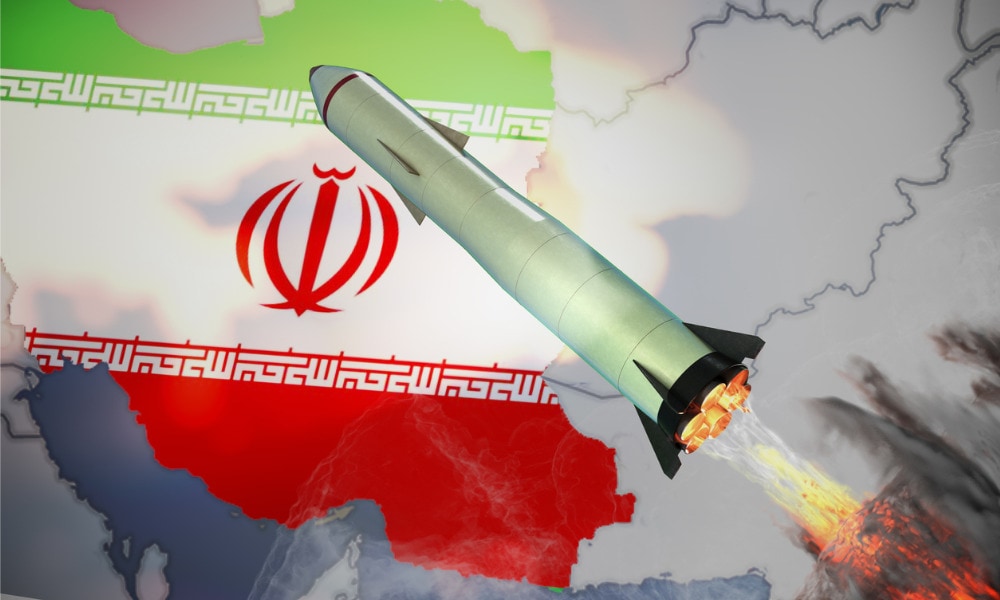


IRAN DEPLOYS HIGH-PRECISION MISSILES IN SYRIA, LEBANON

Iran Deploys High-Precision Missiles in Syria, Lebanon 1
Iran deploys high-precision missiles in Syria (Archive: Vchal/iStock)

Iran’s Quds Force smuggled high-precision missiles into Syria and now aims them at Israel, IDF major general Tal Kalman warns.

The senior officer refused to reveal the exact number of such weapons in his interview with military reporter Tal Lev-Ram in Maariv daily. However, he confirmed that more than a few missiles were transferred so far, and that Iran keeps trying to bring in more.

In parallel, Hezbollah built an arsenal of 100 or more precision-guided rockets in Lebanon, military journalist Amos Harel reported in Haaretz daily. The group also developed initial capabilities of industrial scale production in Lebanese territory, he wrote.

Israel will consider a preemptive strike to neutralize Hezbollah’s missile power, general Kalman said, warning that an assault would likely trigger a wider war.

The IDF will deliver a grave blow to Hezbollah in case such war erupts and may destroy it, the high-ranking officer threatened. He added that Lebanon will also pay a high price and suffer the consequences of a conflict for many years to come.


SEPTEMBER 6, 2021 10:56 AM
IDhiefof Staff: ‘Central Goal Is to Minimize Iran’s Presence in the Middle East’

by Benjamin Kerstein

Israel’s Chief of Staff Aviv Kochavi delivers a joint statement with Israel’s Prime Minister Benjamin Netanyahu in Tel Aviv, Israel November 12, 2019. REUTERS/Corinna Kern

With the new year about to arrive, IDF Chief of Staff Aviv Kochavi outlined the security establishment’s strategy of countering Iran, saying that its “central goal is to minimize the Iranian presence in the Middle East.”

Speaking with Israeli news site Walla, Kochavi said that over the past year, “We accelerated our preparations for activity in Iran. This is a considerable part of the expansion of the security budget that has only recently been agreed upon for this issue.”

“This is extremely complicated work,” he said, involving expanded intelligence operations and operational capabilities.

All of this relates to Israel’s “war between the wars,” which involves confronting Iranian activities in Syria via airstrikes, as well as acting against Iran’s expansionism and nuclear program via intelligence operations.

These activities, said Kochavi, “have several goals. They are not only against Iran. The central goal is to minimize the Iranian presence in the Middle East, with emphasis on Syria.”

However, he added, such operations are not confined to Syria, but take place “across the Middle East,” including “against Hamas. Also against Hezbollah. They are also against the Iranians. And sometimes against other organizations.”

These operations, the chief of staff asserted, have had “pretty good” results, though they are “not perfect.”

“The most important achievement is that we very much reduced the Iranian presence and their fighting abilities in the northern arena; certainly in relation to what they planned on,” he said.

“It’s not that they disappeared from there,” Kochavi cautioned. “The Iranian presence is still there. Therefore, we continue with these activities.”