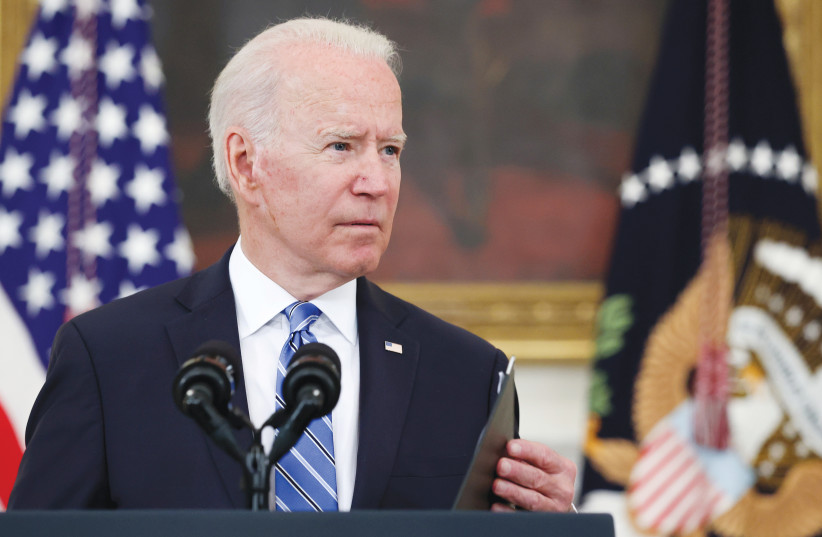
There is plenty of time for second and third acts for the Biden administration, but the first act has now been clearly framed.
The US has been razor-focused on confronting both China and Russia across the board, including much closer coordination with European allies.
US President Joe Biden is convinced that the country could lose out in both geopolitical and technological influence races if anything distracts it from barreling forward in cyber, 5G, artificial intelligence, quantum computing and forming a united wall of free democratic countries to resist Chinese and Russian influences.
But it has made a clear choice to refocus nearly all energies in these areas, while entirely dropping or mostly ignoring Iran, North Korea, Iraq, Afghanistan and the global war on terror.
Washington’s calculation has been one of the most brutal versions of realpolitik.
Biden does not want to use force in almost any way against Iran to slow its march toward a nuclear weapon – including covert or cyber – so he wants to return to the 2015 JCPOA nuclear deal at nearly all costs.
America has done close to nothing, whether exerting pressure or engaging, to reduce the nuclear dangers posed by
North Korea.
This is despite clear signs that Pyongyang is on course toward new nuclear tests, a larger nuclear arsenal incrementally rising to rival some other medium nuclear powers and eventually intercontinental ballistic missiles which could hit the US.
There are no good or easy choices so why invest time and energy?
Ending combat operations in Iraq? Most of the soldiers who were there before Biden’s big announcement remained thereafter, simply their mission changed to passive advisers.
The important thing for Biden was to inform Americans, Iraq and others that the US was no longer responsible for what went on there and would not be investing any more “blood”, only limited amounts of “treasure.”
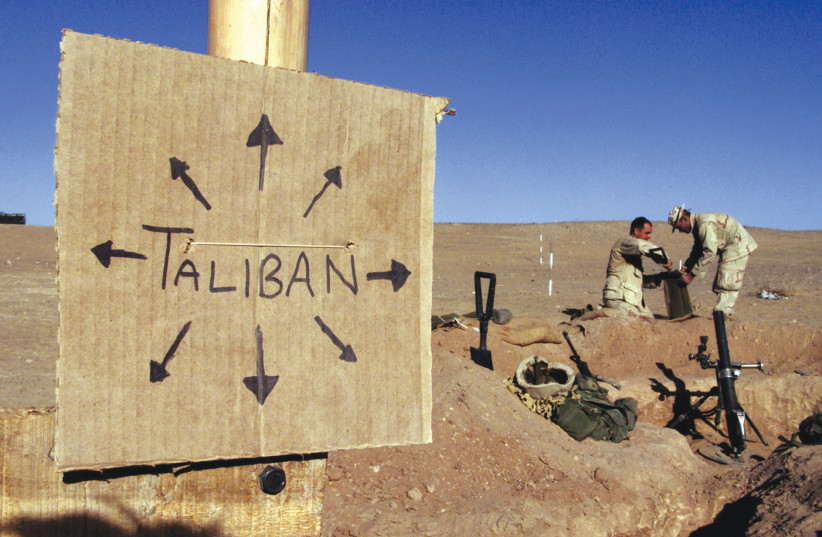
Afghanistan, where the pro-Western government fell on Sunday, is only the latest and most dramatic version of Biden’s doctrine not to invest in anything that he views as secondary to confronting China and Russia.
In Biden’s vision, the only difference between Afghanistan and the other countries like Iraq, where there is still some very limited US investment of power, was that it had zero geopolitical value for future US interests as long as he convinced the Taliban to stay away from attacking the US in the future.
Banking on the Taliban leaving the US alone and the fall of ISIS a few years ago, Biden has also starkly reduced US investment in the global war on terror – once again to devote more resources to confronting China and Russia.
It is unclear whether these moves will be a political win for Biden considering that a majority of both Democrats and Republicans supported withdrawing from Afghanistan and foreign conflicts in general, but also do not like to be seen as losing.
In foreign policy and defense circles, Biden has received heavy criticism from interventionist Republicans and Democrats either concerned about America’s reputation globally or protecting human rights using force.
Former Trump administration and Lt. Gen. H.R. McMaster said over the weekend, “Another lesson to learn here from 9/11 and I would say from COVID, is that challenges to our security that develop abroad can only be dealt with at an exorbitant cost once they reach our shores. That, I think, is the strongest and most important argument for remaining engaged with partners who are sharing the burden against this jihadist terrorist threat.”
“We set an unrealistic objective, I think in the minds of Americans… The narrative was: ‘We failed in Afghanistan because Afghanistan wasn’t Denmark.’ Afghanistan doesn’t need to be Denmark, it just needs to be Afghanistan. Was it still a violent place? Heck yes. Was it still dependent on international support? Heck yes…Was it worth it, with that relatively small effort, to prevent what’s happening now? I’d say the answer to that has to be hell, yes it was,” said McMaster.
So there will be three real tests that will lead to history’s judgment of this first act of the Biden era.
Will the Taliban and other jihadi groups now leave the US be and focus on their own local conflicts or will they use the lack of American pressure abroad to bring conflict back to the US mainland?
Will Iran, North Korea and other nuclear or regional threats create new crises because they are being ignored or dealt with from a weaker position?
Will Biden be more effective than Trump in rolling back Chinese and Russian global moves seeking global and technological influence?
It is unclear given that China and Russia focus single-mindedly on a complex mix of carrots: giving individual countries, including Democratic ones like Germany, major economic deals and boosts. and sticks: threatening the security or economic stability of countries becoming dependent on them.
If refocusing resources makes the difference in those critical competitive races, he may yet be given a pass – at least by Americans – for going lighter on Afghanistan, Iraq, Iran, North Korea and global terrorism.
In contrast, if any of these ignored “secondary” problems blow up, it will be a major challenge to his legacy.
Meanwhile,
Israel is just one of many countries which may be left fending for itself with its local “secondary” challenge – Iran – and the Afghanistan collapse cannot have made that more clear.