By Caroline Glick, Israel Hayom via JNS.org
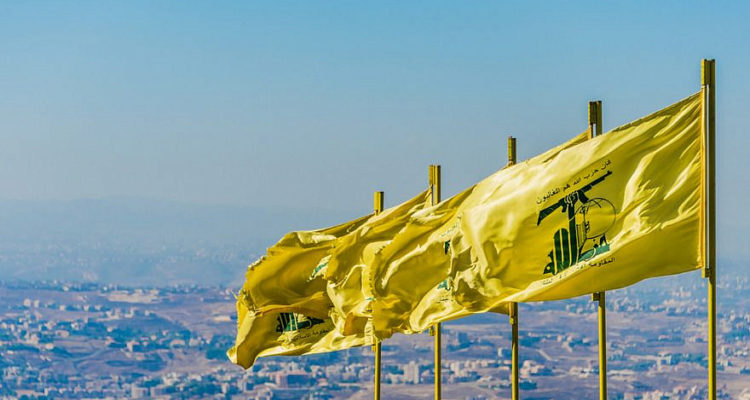
The likelihood that Hezbollah will start a major war against Israel increased significantly in the wake of its Aug. 6 missile attack.
Hezbollah attacked Israel with 20 missiles because the outcome of Hamas’s offensive against the Jewish state in May convinced Iran’s foreign legion in Lebanon that it would only gain from aggression.
Three months ago, Hamas opened an unprovoked missile assault against Israel and incited Israeli Muslims to launch pogroms against Israeli Jews in cities across the country.
Israel responded to Hamas’s aggression with pinpoint airstrikes that targeted the terror group’s military infrastructure and command and control mechanisms and bases.
For its painstaking efforts to limit its strikes to military targets, Israel was pilloried as a racist, illegitimate state and threatened with an arms embargo by progressives in the U.S. Congress. Jews were attacked on the streets from Los Angeles to New York to Paris and London.
On the other hand, Hamas was celebrated. Even as it rained down missiles on Tel Aviv, the international community, led by the Biden administration, pledged hundreds of millions of dollars in “humanitarian aid” to Gaza. To date, Hamas has received nearly a billion dollars in pledges, and the money is already flowing in by the tens of millions.
Before it launched its offensive against Israel. Hamas was on the economic ropes. It had squandered the resources, destroyed the infrastructure and sucked dry the earning capacity of the denizens of Gaza, which it has controlled since 2007. But now, thanks to its latest illegal war of aggression against the Jews, it has the economic wherewithal to keep its terror fiefdom afloat.
For Hamas, its Iranian controllers and its fellow Iranian proxy Hezbollah, the lesson of May’s terror offensive is that attacking the Jewish state is the best economic development plan. It rendered sanctions relief for Iran unnecessary.
Iran can keep spinning its centrifuges and the U.S. and Europe will fund its terror arms for it.
Like Hamas’s situation in Gaza, since Hezbollah seized control over the Lebanese government through elections in 2007 and military force in 2008, the Iranian group has turned what was once the banking capital of the Middle East into an economic death trap. Lebanon defaulted on its loans. Its infrastructure is destroyed. Its people are going hungry and living without electricity or fuel, or prospects for earning a living. So Hezbollah decided to test out Hamas’s economic plan with a limited missile strike to see what would happen.
And it worked. All Hezbollah chief Hassan Nasrallah needed were 19 measly missiles to hit the jackpot.
On Tuesday, the Lebanese media reported that the Biden administration intends to transfer $100 million in aid to the Lebanese Health Ministry for assistance in managing the COVID-19 pandemic. Notably, although unsaid in the report, was the fact that Hezbollah has controlled Lebanon’s Health Ministry since 2019.
The Lebanese Armed Forces are also set to receive a boost in U.S. support following Hezbollah’s attack. In testimony before the Senate this week, Mira Resnick, Assistant Deputy Secretary of State for Regional Affairs, gushed that the LAF “is one of our most competent partners in the Middle East.”
US economic assistance to Hezbollah
As to Israel, not only did it barely respond to Hezbollah’s wanton aggression, it joined the United States in loudly advocating on behalf of economic assistance to Iran’s Hezbollah-run colony. In a tour of the border zone with Lebanon, Israeli Defense Minister Benny Gantz restated his desire to give money to Hezbollah’s satrapy to keep the country from collapsing.
The U.S. and Israeli responses to Hezbollah’s aggression taught the terror army important—and dangerous—lessons about how it should advance its interests going forward.
As far as the Biden administration is concerned, Nasrallah learned the U.S. policy of appeasing Iran extends to its proxies, as well. To win over the ayatollahs in Iran, U.S. President Joe Biden and his advisers now believe it is the responsibility of the United States to protect Hezbollah (and Hamas) from Israel. It wasn’t coincidence that stood behind the administration’s decision to tell Arab media outlets that Israel’s decision to give Hezbollah a pass for its aggression was spurred by U.S. pressure.
The administration wanted to send a message to Hezbollah and Iran that Washington has their back. And they wanted to make sure that the Lebanese people and the Sunni Arab states threatened by Iran also understood that the Biden administration now sides with Iran’s terror proxies against Israel and other U.S. allies.
Underscoring the administration’s refusal to consider any policy other than appeasement towards Iran, Bloomberg reported last week that the administration is coming to terms with the fact that Iran will not agree to return to the 2015 nuclear deal. That deal requires Iran to temporarily scale down some of its nuclear operations in exchange for massive economic support and reintegration into the international economy.
In selecting the mass-murdering terrorist Ebrahim Raisi to serve as president, the regime has demonstrated irrefutably that it will not respond cooperatively to U.S. efforts.
Rather than reconsider its commitment to appeasement in light of the new reality, Bloomberg reported the administration has decided to ask less from Iran. Instead of getting sanctions relief for accepting the nuclear restraints it accepted in the 2015 deal, the administration intends to offer the cancellation of some sanctions in exchange for some restraints on some nuclear activities.
This brings us to Israel. According to the Arab media reports, the U.S. demanded that Israel not respond to Hezbollah’s aggression out of a fear that significant Israeli retaliation would make Iran even more unwilling to reinstate its pointless negotiations with the Americans. Israel’s decision to accede to Washington’s pressure showed Nasrallah Israel will take no action to defend itself against Iran or its proxies without U.S. permission.
True, the government denied the report that it stood down due to U.S. pressure. But the Arab media reasonably dismissed the denial. To date, Prime Minister Naftali Bennett and his senior partner Foreign Minister Yair Lapid, along with Gantz, have toed the U.S. line on every major effort. They have committed to a “no surprises” policy on Iran that gives Washington veto power over all Israeli actions against Iranian aggression and nuclear operations.
Bennett supports aid to Gaza, PA
Bennett has also aligned himself with the United States on Hamas and more broadly on the Palestinian Authority. He supports “humanitarian aid” to Gaza. And according to Arab Affairs expert Yoni Ben Menahem, Bennett has even agreed to provide budgetary assistance to the Palestinian Authority and pave the way for a renewal of massive U.S. assistance to the PA despite the fact that the PA continues to pay the salaries of terrorists serving time in Israeli prisons, as well as the families of Palestinian terrorists.
Both U.S. and Israeli law bans financial support to the PA so long as the terror payments are maintained.
The government has bowed to U.S. and European Union pressure and permitted mass building for Palestinians in the strategically vital Area C of Judea and Samaria, and is significantly constraining Israeli construction in Judea and Samaria communities.
Bennett is even falling into line with the administration on Jerusalem. He supports a “compromise” offered by the Supreme Court on the Shimon HaTzadik/Sheikh Jarrah lawsuit. The lawsuit surrounds the efforts by Jewish owners of buildings in the neighborhood, illegally occupied by Palestinian squatters, to secure physical control over their property.
Siding with the squatters, the Biden administration and the European Union demand that the property rights of the Jews be seized and transferred to the illegal squatters simply because the owners are Jews.
Before issuing a ruling, the Supreme Court offered a “compromise” that would block the Jewish owners from regaining control over their buildings and leave the Palestinian squatters on the premises but compel the squatters to acknowledge that the Jews own the buildings. According to news reports, rather than reject the offer, which discriminates against the lawful owners simply because they are Jews, Bennett has asked the Biden administration to convince the squatters to accept the court’s offer.
Watering down Israeli sovereignty over Jerusalem
Like many Israelis, Hezbollah understands that when Israel’s government is willing to bow to U.S. pressure to water down its sovereignty over Jerusalem and break its own laws to finance a PA that pays salaries to terrorists and their families; when the government is willing to give the pro-Iranian Biden administration veto power over its efforts to block Iran from becoming an nuclear state, it will certainly not make a move in Lebanon without a green light from Washington (which will never come).
Hezbollah learned something else, as well, from the government’s statements and actions in the aftermath of its missile attack. It learned that Bennett, Gantz and Lapid don’t understand the political realities in Lebanon and that as a consequence, their strategy for fighting Hezbollah, when and if they ever do, will only advance Hezbollah’s interests.
Defense Ministry sources told the Breaking Defense website that ahead of a future assault, Israel “has prepared a collection of targets in Lebanon, including critical infrastructure whose destruction is designed to put political pressure on Hezbollah.”
But as we saw last weekend, Hezbollah is immune to political pressure, because it controls Lebanon through force. The missiles were launched against Israel by a mobile missile squad operating from a Druze border village. The local villagers responded with fury to the use of their lands as a launching pad. They attacked the missile crew and seized their missile launchers. Members of the missile squad were detained and their launchers were seized.
But three days later, the vaunted LAF, working with Druze leader Walid Jumblatt, released the squad members and returned the missile launcher to Nasrallah’s field commanders. Whether they like it or not, Jumblatt and the LAF recognize that they cannot get into a fight with Hezbollah. The terror army is too powerful. Attacking civilian infrastructure in Lebanon to put political pressure on Hezbollah is like attacking a school in Afghanistan to put pressure on the Taliban. They couldn’t care less.
And anyway, if Israel destroys Lebanese infrastructure, the Biden administration will finance its reconstruction.
Early this week, Raisi hosted the heads of Hamas and Palestinian Islamic Jihad in Tehran. According to reports of the meeting, its purpose was to intensify military cooperation between Iran and its Palestinian proxy armies. The Israel Defense Forces is reportedly operating under the assumption that in the next war, Israel will be attacked simultaneously from the north and south by Hezbollah and Hamas.
There is one thing that the government can do to reduce the chances of war, or at a minimum, increase the chance that if war does indeed break out, Israel will emerge stronger and its enemies will be weakened.
If the government cancels its “zero surprises” commitment to Washington and acts unilaterally against Iran, or against its proxies (or both), or if it simply defends the property rights of Jews in Jerusalem and announces that it will refuse the administration’s plan to open a consulate to the Palestinians in its capital, it will change the dynamic that is catapulting it into a war it is ill-prepared to fight or win. Unfortunately, given the government’s behavior and its temperament, there is little reason to believe that this will happen.
Caroline Glick is an award-winning columnist and author of “The Israeli Solution: A One-State Plan for Peace in the Middle East.”