The IDF responded shortly after the rocket fire, with tank fire towards the launch site.
IDF’s artillery response to the rocket attack on northern Israel from Lebanon. (IDF SPOKESPERSON UNIT)
The IDF carried out four rounds of retaliatory strikes along the entire Lebanese border, firing over 100 shells on Wednesday afternoon after three rockets were fired toward Kiryat Shmona.
Sirens sounded in Kiryat Shmona and the communities of Kfar Giladi and Tel Hai at around noon on Wednesday, sending thousands to bomb shelters.
The IDF retaliated four times over the course of Wednesday and early Thursday morning, and issued a statement confirming that the air force targeted areas “from which rockets were fired during the dat at the State of Israel…another target was also attacked in the area from which rockets were fired in the past.
“IDF attacks will continue and even intensify in the face of terrorist attempts against the State of Israel and its citizens,” the statement continued.
“The State of Lebanon is responsible for what happens in its territory. The IDF warns of continued attempts to harm Israeli citizens and their sovereignty.”
Magen David Adom emergency services said it treated four people for anxiety attacks following the rocket fire.
The IDF said it identified three launches from Lebanon. One failed and fell inside Lebanese territory, while two others hit open areas inside Israel.
IDF hitting targets in retaliation to rocket attacks from Lebanon on Wednesday. (IDF SPOKESPERSON UNIT)
Shortly afterward the IDF retaliated with artillery shells toward the launch sites. Some six artillery shells were fired by the IDF toward an open area in Lebanon located north of Metulla, according to Hezbollah-affiliated reporter Ali Shoeib.
The military later carried out two other large-scale retaliations across the entire border.
Following the rocket fire, the United Nations Interim Force in Lebanon released a statement saying that it had received reports of rocket fire from Lebanon toward Israel.
“UNIFIL’s head of mission and force commander, Maj.-Gen. Stefano Del Col, was in immediate contact with the parties. He urged them to cease fire and to exercise maximum restraint to avoid further escalation, especially on this solemn anniversary,” the statement read, Wednesday marking a year since the explosion at the Beirut Port, in which over 200 people were killed and thousands were wounded.
“UNIFIL remains fully engaged with the parties through our liaison and coordination channels, and we are working with the Lebanese Armed Forces to ensure immediate follow-up on the ground and to reinforce security along the Blue Line,” the statement said.
Though the city of Kiryat Shmona said it had opened bomb shelters, the military said that there was no change in instructions and that residents near the border could continue with their daily routines.
 Prime Minister Naftali Bennett and Defense Minister Benny Gantz were updated about rocket fire from Lebanon while in the Knesset plenum.August 4, 2021. (photographer: SCREENSHOT/KNESSET CHANNEL)
Prime Minister Naftali Bennett and Defense Minister Benny Gantz were updated about the rocket fire while in the Knesset plenum. Gantz also conducted a situational analysis with IDF Chief of Staff Lt.-Gen. Aviv Kohavi, head of the Political-Military Bureau at the Defense Ministry Zohar Palti, head of the IDF’s Operations Directorate Maj.-Gen. Oded Basiuk and head of IDF Intelligence Maj.-Gen. Tamir Heiman.
Gantz ordered that a strict message be sent to UNIFIL concerning the rocket fire, his office said.
The United States condemns rocket attacks by armed groups based in Lebanon on Israel, the U.S. State Department said on Wednesday, and will remain engaged with Israeli and Lebanese partners to de-escalate the situation.
“We absolutely condemn the rocket attacks from armed groups, based in Lebanon, that were fired into Israel,” State Department spokesman Ned Price told reporters.
It is still unclear who fired the rockets, but it is believed to be the same Palestinian terrorists who’ve fired over a dozen rockets since May.
While Hezbollah has full control in southern Lebanon, the Shi’ite terrorist group is not suspected to be behind any rocket fire. The group is believed to have nevertheless given tacit consent to the rocket cell to fire toward Israel.
Despite terrorist groups being behind the rocket fire, Israel holds Lebanon responsible, the IDF said in a statement released on its Arabic Twitter page.
“We will not allow rocket fire… no matter what and no matter the reason. The government of Lebanon bears full responsibility for any aggression emanating from its territory,” the tweet read.
Twice this week, the IDF fired flares along the border with Lebanon after suspicions of infiltration were reported along the border fence. No infiltration into Israeli territory was identified in either incident.
THREE WEEKS ago, two rockets were fired toward Israel, setting off incoming rocket sirens in communities along the border, including Rosh Hanikra, Shlomi, Kabri and Hanita. One rocket was intercepted by the Iron Dome missile defense system, and the other struck an open field.
Gantz said at the time that Lebanon was responsible for the rocket fire.
“The one responsible for the night shooting is the Lebanese state, which allows terrorist acts from inside its territory. The State of Israel will act in the face of any threat to its sovereignty and its citizens and will respond in accordance with its interests, at the relevant time and place,” he warned.
In May, during Operation Guardian of the Walls, a dozen rockets were fired into Israel from Lebanon, causing several people to be injured while running for shelter. Incoming rocket sirens were activated in the Lower Galilee region, as well as the Haifa suburbs of Kiryat Bialik and Kiryat Motzkin. This marked the first time since the Second Lebanon War in 2006 that sirens were heard in the North.
Several days earlier, six rockets were fired from Rashaya Al Foukhar, north of Kfar Chouba, in southern Lebanon. All fell short of the border and landed inside Lebanese territory, and the IDF fired back toward the source of the rocket launch in Lebanon with some 22 tank and artillery shells.
In a recent interview, Col. Raz Haimlich, commander of the Artillery Corps Fire Brigade’s 411th “Keren” Battalion, told The Jerusalem Post that with the Lebanese economy in a free fall, the IDF is concerned that there may be an increase of incidents along its northern border.
“The Lebanese economy is not good, and that can lead to things happening on the border,” he said.
Hezbollah secretary-general Hassan Nasrallah is set to deliver a speech on Saturday evening to mark the anniversary of the Second Lebanon War.
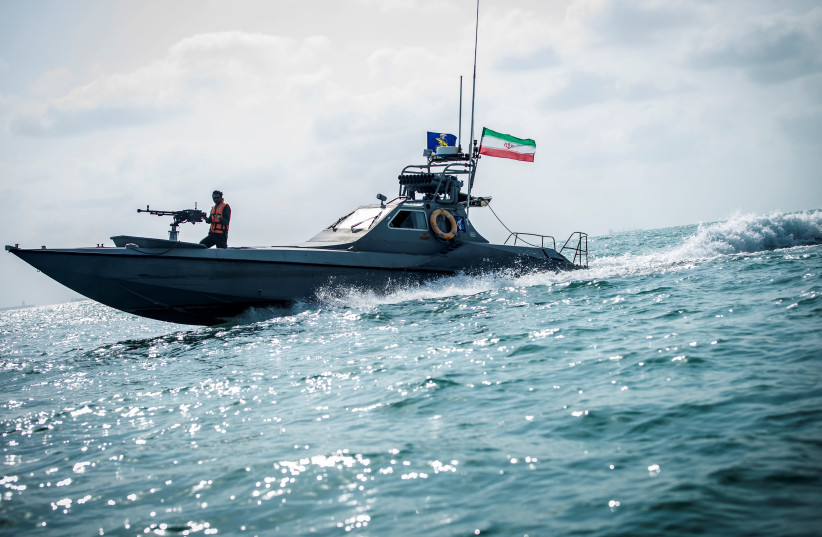
The rocket fire also comes as tensions remain high in the region after an Israeli-managed tanker was targeted by an Iranian drone strike, killing a British and a Romanian civilian. Officials from the US, Israel and the UK have warned that they will respond to the attack. Iran denies any involvement in the incident.
On Tuesday, a tanker was hijacked off the coast of the United Arab Emirates, with the hijackers leaving the vessel on Wednesday.
Reuters contributed to this report.