WASHINGTON (AP) — The Biden administration is considering a near wholesale rollback of some of the most stringent Trump-era sanctions imposed on Iran in a bid to get the Islamic Republic to return to compliance with a landmark 2015 nuclear accord, according to current and former US officials and others familiar with the matter.
As indirect talks continue this week in Vienna to explore the possibility of reviving the nuclear deal, American officials have become increasingly expansive about what they might be prepared to offer Iran, which has been driving a hard line on sanctions relief, demanding that all US penalties be removed, according to these people.
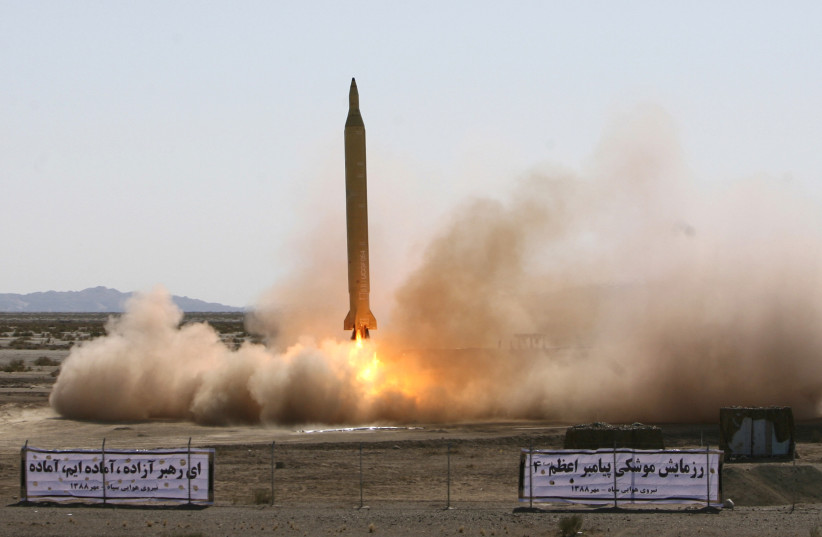
American officials have refused to discuss which sanctions are being considered for removal. But they have stressed that they are open to lifting non-nuclear sanctions, such as those tied to terrorism, missile development and human rights, in addition to those related to the nuclear program.
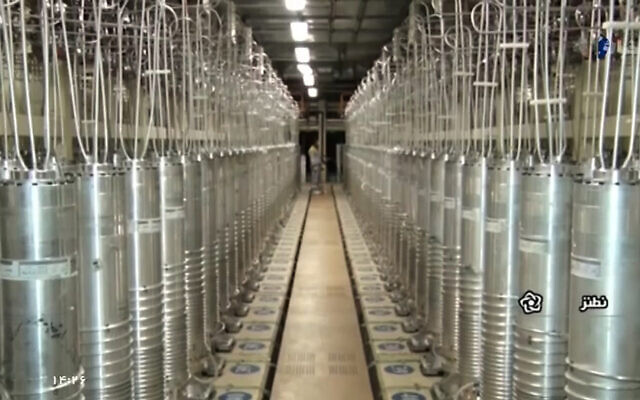
Biden administration officials say this is necessary because of what they describe as a deliberate attempt by the Trump administration to stymie any return to the deal. Under the 2015 agreement, the United States was required to lift sanctions tied to Iran’s nuclear program, but not the non-nuclear sanctions.

Abbas Araghchi, political deputy at the Ministry of Foreign Affairs of Iran, is leaving the ‘Grand Hotel Wien’ after the closed-door nuclear talks in Vienna on April 16, 2021, where diplomats of the EU, China, Russia and Iran hold their talks. (JOE KLAMAR / AFP)
When former president Donald Trump re-imposed sanctions after withdrawing from the deal in 2018, he not only put the nuclear sanctions back in but also added layers of terrorism and other sanctions on many of the same entities. In addition, the Trump administration imposed an array of new sanctions on previously unsanctioned entities.
This has put the current administration in an awkward position: Iran is demanding the removal of all sanctions. If the US doesn’t lift at least some of them, Iran says it won’t agree to halt its nuclear activities barred by the deal known as the Joint Comprehensive Plan of Action, or JCPOA.
But if the Biden administration makes concessions that go beyond the nuclear-specific sanctions, Republican critics and others, including Israel and Gulf Arab states, are likely to seize on them as proof that the administration is caving to Iran. Former secretary of state Mike Pompeo has led the charge among Trump alumni to denounce any easing of sanctions.
Former Trump administration officials say all the sanctions are legitimate. Gabriel Noronha, a former State Department senior adviser on Iran, said all the Trump-era sanctions had been approved by career Justice Department lawyers and would have been rejected if they weren’t legitimate.
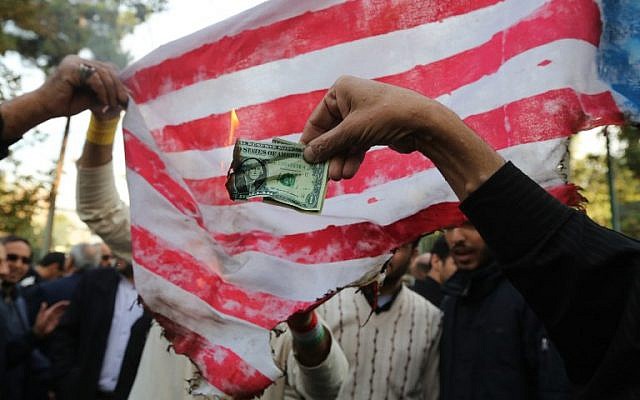
On the eve of renewed sanctions by Washington, Iranian protesters burn a dollar banknote and a US makeshift flag during a demonstration outside the former US embassy in the Iranian capital Tehran on November 4, 2018, marking the anniversary of its storming by student protesters that triggered a hostage crisis in 1979. (ATTA KENARE / AFP)
But a senior State Department official involved in the negotiations said officials now “have to go through every sanction to look at whether they were legitimately or not legitimately imposed.”
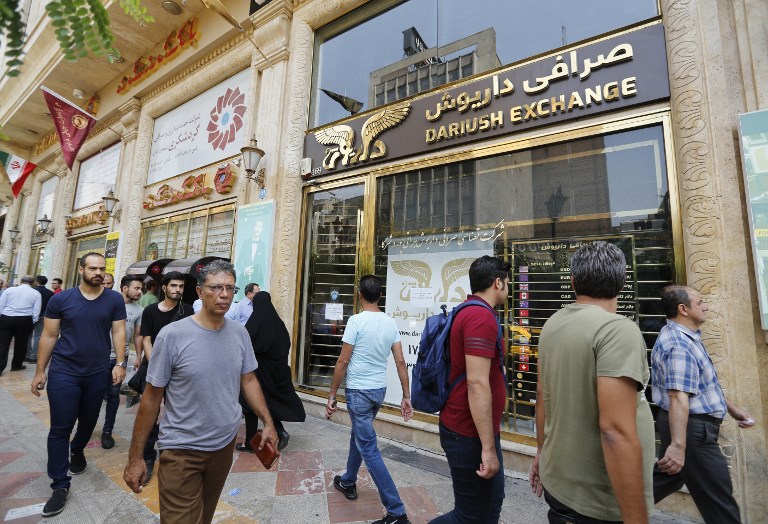
The official, who like the others spoke on condition of anonymity to discuss the private talks, also said the US would be prepared to lift sanctions that would otherwise deny Iran the benefits it’s entitled to under the deal, not just those specifically related to nuclear activity. Those sanctions could include restrictions on Iran’s ability to access the international financial system, including dealing in dollar-based transactions.
“There are sanctions that are inconsistent with the JCPOA and as we have said, if Iran resumes its compliance with the nuclear deal … we would be prepared to lift those sanctions that are inconsistent with the JCPOA,” State Department spokesman Ned Price said last week. He declined to elaborate on what might be “inconsistent” with the deal.
Despite the reticence of Price and the senior official, their comments suggested that sanctions imposed on Iran’s Central Bank, its national oil and shipping companies, its manufacturing, construction and financial sectors are on the block. Deal critics briefed on aspects of the Vienna negotiations say they suspect that is indeed the case.

This image taken from the Twitter account of President Donald J. Trump @realDonaldTrump, shows what looks like a movie-style poster that takes creative inspiration from the TV series ‘Game of Thrones’ to announce the re-imposition of sanctions against Iran. Trump tweeted a photo of himself with the words ‘Sanctions are Coming’ Nov. 5. The US sanctions on Iran had been lifted under a 2015 nuclear pact, but they are taking effect on Monday. (Donald J. Trump Twitter account via AP)
That’s because the bank, oil, shipping and other sanctions, all ostensibly imposed by the Trump administration for terrorism, ballistic missile and human rights concerns, also affect nuclear sanctions relief.
Current officials say no decisions have yet been made and nothing will be agreed in Vienna until everything regarding sanctions relief and Iran’s return to compliance with the nuclear deal has been settled.
But critics of the nuclear deal fear the administration will go beyond even what has been suggested by the administration’s oblique comments. They suspect that sanctions on people, companies, government agencies or other entities identified for nuclear sanctions relief in the 2015 deal will be cleared; even if they were subsequently penalized on other grounds.
“The administration is looking to allow tens of billions of dollars into the coffers of the regime even if it means lifting sanctions on major entities blacklisted for terrorism and missile proliferation,” said Mark Dubowitz, a prominent Iran deal critic and CEO of the Foundation for Defense of Democracies.
“They’re even looking to give the regime indirect access to the US dollar through the US financial system so that international companies can clear transactions with Iran through the US dollar,” said Dubowitz, who is frequently criticized for his hard-line stance on Iran but has also been asked for his views on sanctions by the administration.

Iran’s President Hassan Rouhani addresses the nation in a televised speech in Tehran, Iran, August 6, 2018. (Iranian Presidency Office via AP)
The State Department spokesman’s reply to such concerns only increased the worries of the critics.
“The JCPOA, that original agreement, spells out precisely what is allowed, precisely what is prohibited in order for a country to be in compliance with it. That remains the blueprint for all of this,” Price said.
The Obama administration grappled with much the same issue after the conclusion of the nuclear deal in 2015. It took the position that some sanctions previously imposed by it and former President George W. Bush’s administration for terrorism reasons should actually be classified as nuclear sanctions and therefore lifted under the deal.
Still, many countries and international companies were hesitant to jump into the Iranian market for fear that the sanctions relief was not clear-cut and that a future US president could re-impose the sanctions. Now, that that has happened, and even before an agreement has been concluded in Vienna, that concern has resurfaced.
Already, Republicans in Congress and opponents of the Iranian government are stepping up efforts to codify Trump’s hard-line stance on Iran with new legislation. Although a law to bar a return to the nuclear deal is unlikely to pass, there is wide bipartisan support for resolutions encouraging the administration to take a tougher line on Iran.
Such a resolution was introduced on Wednesday with more than 220 Democratic and Republican co-sponsors. In it, they call for the administration to recognize “the rights of the Iranian people and their struggle to establish a democratic, secular, and non-nuclear Republic of Iran while holding the ruling regime accountable for its destructive behavior.”