
Jerusalem said to tell US it hit vessel in response to attacks on Israeli ships; official US report calls Saviz covert IRGC base; strike comes amid indirect US-Iran nuke deal talks


A suspicious boat off the stern of the Iranian ship 'Saviz' in the Red Sea in 2018. (Al Arabiya video screenshot)

A suspicious boat off the stern of the Iranian ship ‘Saviz’ in the Red Sea in 2018. (Al Arabiya video screenshot)

Israeli forces carried out a strike on an Iranian ship in the Red Sea in retaliation for previous strikes by Iran against Israeli vessels, according to a Tuesday report.

A US official told The New York Times that Israel notified the US that Israeli forces attacked the ship around 7:30 a.m. local time on Tuesday.

The development came as the US and Iran opened indirect talks aimed at rescuing the 2015 Iranian nuclear deal. Israel strongly opposes the deal’s revival.

The anonymous US official said Israel called the strike a retaliation, and that the ship had been hit below the water line.

Israel has not officially commented on the incident. Israel rarely confirms or denies strikes against Iran-linked targets, but sometimes claims credit for attacks that are a direct response to aggression by Iran or its proxies.

Iran’s semi-official Tasnim news agency reported Tuesday that the Iranian-flagged ship, the Saviz, was hit by a limpet mine.

Arabic media reports claimed the ship was an intelligence-gathering vessel linked to Iran’s Islamic Revolutionary Guard Corps.

Tasnim said Saviz “has been stationed in the Red Sea for the past few years to support Iranian commandos who are sent to escort commercial vessels.”

The outlet said the vessel had been hit by a mine that had been attached to it. Limpet mines are a type of naval explosive that attach to targets using magnets.

The New York Times said the ship was stationed in the area to combat pirates, making it the first military vessel known to have been attacked in the Israel-Iran shadow war. The Saviz was classified as a cargo ship.

Iranian media showed flames and smoke aboard the ship, but the level of damage was unclear, and it was unknown if there were any casualties.

The IRGC blamed Israel for the attack on social media, The New York Times said.

The US official said the attack may have been timed to let an American aircraft carrier, the Dwight D. Eisenhower, to move away from the area. The carrier was around 200 miles away at the time of the strike, the official said.

Unnamed American officials told Reuters that the United States was not responsible for the attack.

Israel’s Channel 12 reported that an intelligence firm believed the ship was used by the IRGC for surveillance and espionage purposes and was known to western intelligence.
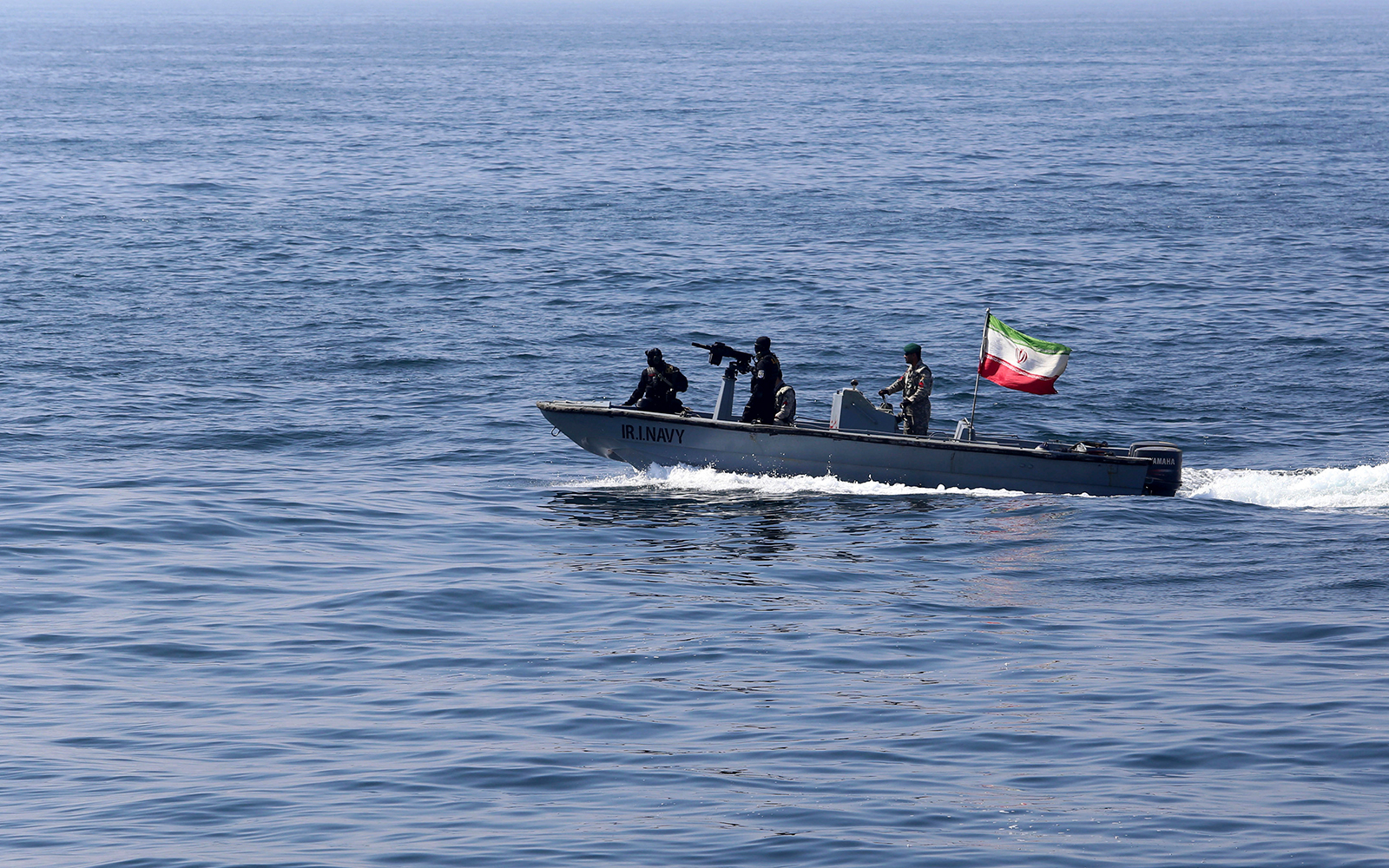
An Iranian naval vessel flying an Iranian flag participates in a joint naval exercise of the Russian navy, the Iranian navy and the Iranian Revolutionary Guard’s navy in the Indian Ocean, Feb. 17, 2021. (Iranian Army via AP)

The ImageSat intelligence firm said satellite imagery showed the ship has hardly moved in the past two years, strengthening suspicions that it was used to monitor maritime activities in the area.

The US Naval Institute said in an October 2020 report that the Saviz, although officially a merchant vessel, was “most likely a covert Islamic Revolutionary Guard Corps (IRGC) forward base.”

Saudi Arabia and other intelligence experts accused the IRGC of operating the Saviz, the report said.

The ship is located at a strategic choke point in the Red Sea. It can provide constant real-time intelligence to Iran about maritime traffic in the area from its strategic position, including on military vessels, the report said.

Uniformed men have been seen onboard the ship, and on the deck are small launch boats that are commonly used by the IRGC and not congruent with the ship’s purported civilian purposes.

“The inference is clear. There is no legitimate civilian explanation for the action,” the US Naval Institute report said.
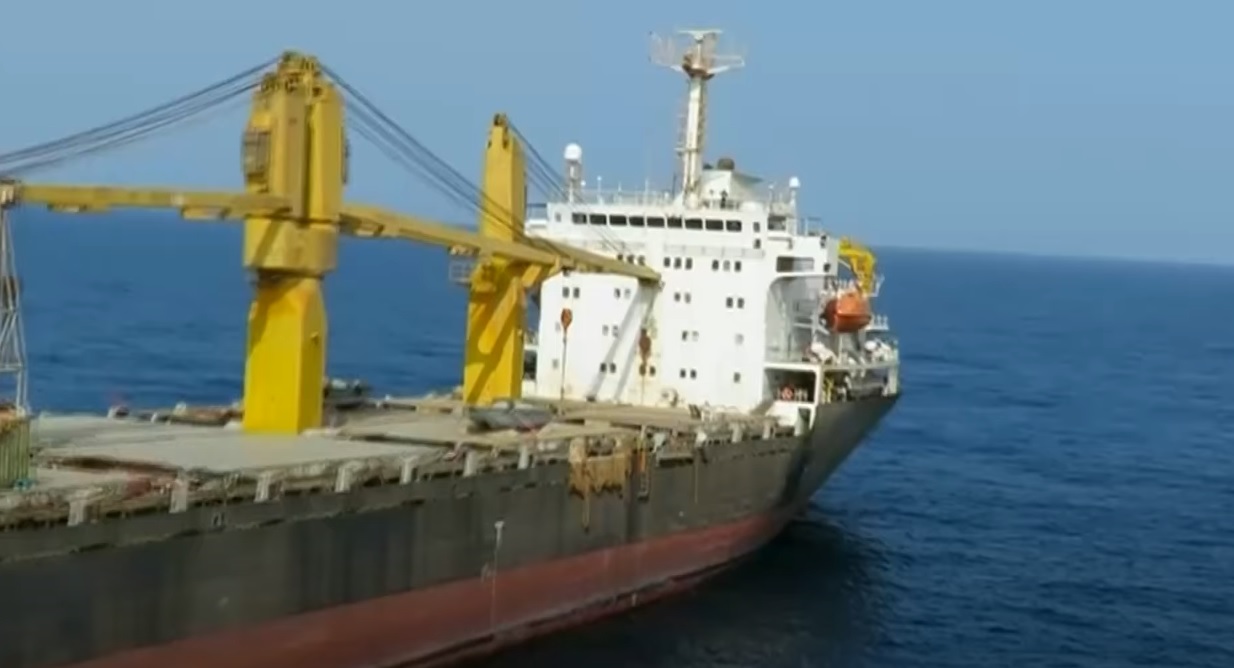
The Iranian ship ‘Saviz’ in the Red Sea in 2018. (Al Arabiya video screenshot)

In recent months, reports have showed the Israel-Iran conflict has spilled into the sea, marking a new front in the conflict that previously took place via airstrikes, alleged espionage activities and on land.

Starting in 2019, Israel attacked Iranian commercial ships transporting oil and weapons in the Mediterranean and Red Sea, according to US media reports.

Israel and Iran have accused each other recently of attacking a number of merchant ships, damaging them with explosives. The vessels in each case were only lightly damaged and there were no injuries in the incidents.

On February 26, a blast struck the Israeli-owned MV Helios Ray, a Bahamian-flagged cargo ship, in the Gulf of Oman. Prime Minister Benjamin Netanyahu accused Iran of attacking the ship. Iran swiftly denied the charge, but experts say the attack bears hallmarks of previous attacks ascribed to Tehran.

The operation seemed to have been carefully planned, and mirrored a series of attacks on tankers in 2019 and an Iranian campaign against shipping vessels four decades ago.

Another Israeli-owned vessel reportedly came under missile fire in the Gulf of Oman in late March, possibly by Iranian forces.
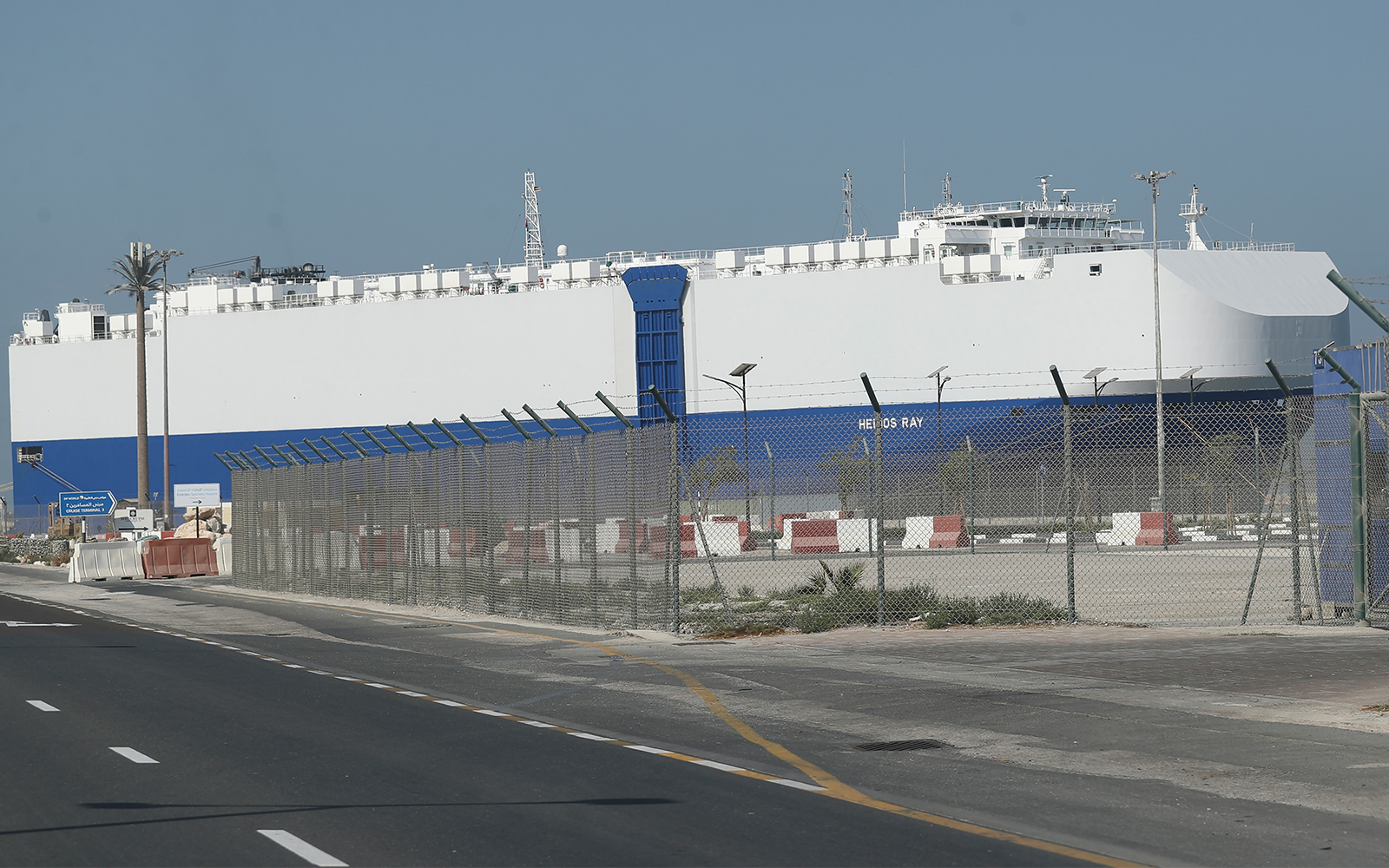
The Israeli-owned cargo ship, Helios Ray, sits docked in port in Dubai, United Arab Emirates, Feb. 28, 2021. (AP Photo/Kamran Jebreili)

The Wall Street Journal reported last month that Israel has targeted at least 12 ships bound for Syria, most of them transporting Iranian oil, with mines and other weapons.

Iran, whose leaders have repeatedly called for Israel’s demise, backs the Hezbollah terrorist group, as well as terror groups in the Gaza Strip.

The Israeli military has launched hundreds of airstrikes in Syria since the start of the civil war in 2011 against moves by Iran to establish a permanent military presence in the country and efforts to transport advanced, “game-changing” weapons to terrorist groups in the region, principally Hezbollah.

Iran has blamed Israel for a recent series of attacks, including a mysterious explosion last summer that destroyed an advanced centrifuge assembly plant at its Natanz nuclear facility and the killing of Mohsen Fakhrizadeh, a top Iranian scientist who founded the Islamic Republic’s military nuclear program two decades ago.

Tensions have heated in the Middle East in recent months, as Iran repeatedly violated the terms of its 2015 nuclear deal with world powers ahead of talks with the Biden administration.

The US and Iran opened indirect talks aimed at rescuing the deal on Tuesday in Vienna.
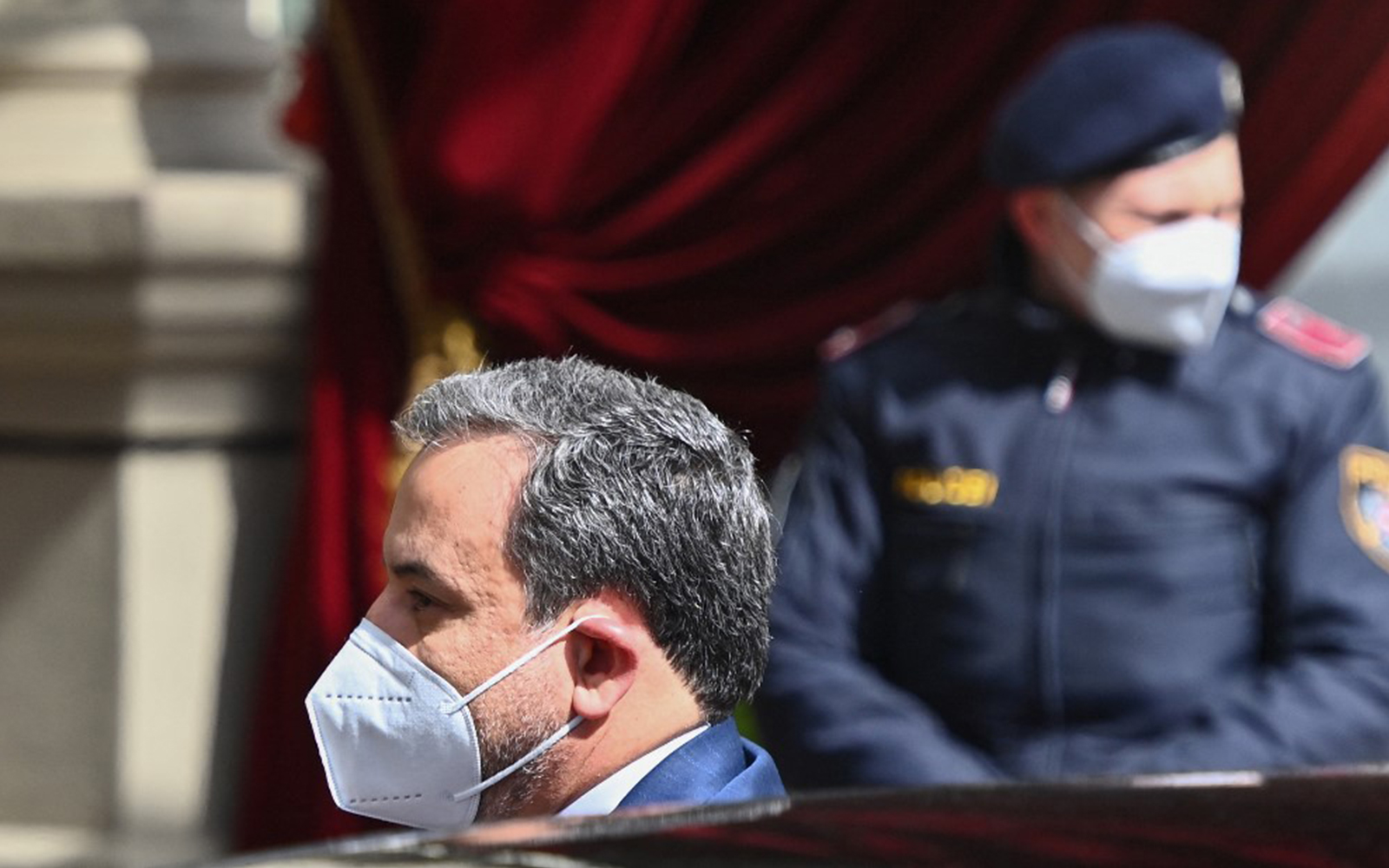
Abbas Araghchi, political deputy at the Ministry of Foreign Affairs of Iran, arrives at the Grand Hotel in Vienna on April 6, 2021, where diplomats of the EU, China, Russia and Iran held talks. (Joe Klamar/AFP)

The US, Iran and European intermediaries reported progress on reviving the deal following the Tuesday meeting, which saw the Biden administration and Iran hold indirect talks for the first time.

US President Joe Biden has said he is ready to reverse the decision of his predecessor Donald Trump to withdraw from the landmark 2015 agreement, negotiated to ensure that Iran did not develop a military nuclear program, but the White House has insisted that Iran first return to compliance. Tehran demands the US first lift sanctions, putting the sides at a stalemate.

Talks between the delegates from the remaining members of the 2015 agreement will continue Wednesday, a diplomat familiar with the discussions said.

Since Trump pulled the US out of the deal with Iran in 2018, re-imposing sanctions on Tehran, the remaining parties have been struggling to save the agreement, as Iran has gradually stepped up its nuclear activities, including by enriching uranium past the deal’s limits and barring inspectors from accessing sensitive sites.

Israel is strongly opposed to a return to the nuclear deal in its original form, and has communicated as much to Washington. The sides recently reestablished a bilateral group for cooperating in the effort to prevent Iran from acquiring nuclear arms, agreeing to set up a joint team for sharing intelligence about Iran’s nuclear program.


Iran, US to hold indirect nuclear talks in Vienna

Iran has steadily overstepped the accord’s limits on its nuclear program in response to Washington’s withdrawal from the accord in 2018.

US President Joe Biden speaks in the State Dining Room at the White House in Washington, US, March 15, 2021 (photo credit: REUTERS/KEVIN LAMARQUE/FILE PHOTO)
US President Joe Biden speaks in the State Dining Room at the White House in Washington, US, March 15, 2021
(photo credit: REUTERS/KEVIN LAMARQUE/FILE PHOTO)
Iran and the United States will hold indirect talks in Vienna on Tuesday aimed at bringing both countries back into full compliance with the 2015 nuclear deal that Washington abandoned three years ago.

Iran has steadily overstepped the accord’s limits on its nuclear program in response to Washington’s withdrawal from the accord in 2018 and its reimposition of sanctions that have crippled the Islamic Republic’s economy.

While Tehran has repeatedly rebuffed “direct and indirect negotiations” with its long-time foe, Washington said on Monday it expected indirect talks with Iran about reviving the deal to be difficult. Both Tehran and Washington did not foresee any early breakthrough.

A Western diplomat told Reuters on Friday that a shuttle-diplomacy approach would be adopted in Vienna.

“What other parties to the deal do is their business. Where and how they negotiate with the United States is up to them. The Iranian delegation will not have any talks with the US delegation in Vienna at any level,” Iranian media on Tuesday quoted Foreign Ministry spokesman Saeed Khatibzadeh as saying.

Adding fresh doubt to the chances of a breakthrough on Tuesday, an Iranian official told Reuters: “Our agenda during the meeting (in Vienna) will be removal of all US sanctions against Iran … as our supreme leader has said repeatedly, anything less than that will not be accepted by Tehran.”

Iran’s Supreme Leader Ayatollah Ali Khamenei, who has the last say on all state matters, has opposed any gradual easing of sanctions.

President Joe Biden’s administration wants to revive the accord but has said that this requires negotiations. Tehran has dismissed any engagement in talks with Washington about both sides resuming compliance with the deal.

“Iran will reverse its nuclear steps only after all US sanctions on Iran are lifted. After verifying it, which will take a few hours, Iran can quickly reverse its nuclear steps,” the official said.

The US State Department has said the focus of the Vienna talks will be on “the nuclear steps that Iran would need to take in order to return to compliance” with the nuclear accord.

Under the 2015 accord, US and other economic sanctions on Tehran were removed in return for curbs on Iran’s nuclear program to make it harder to develop a nuclear weapon – an ambition Tehran denies.


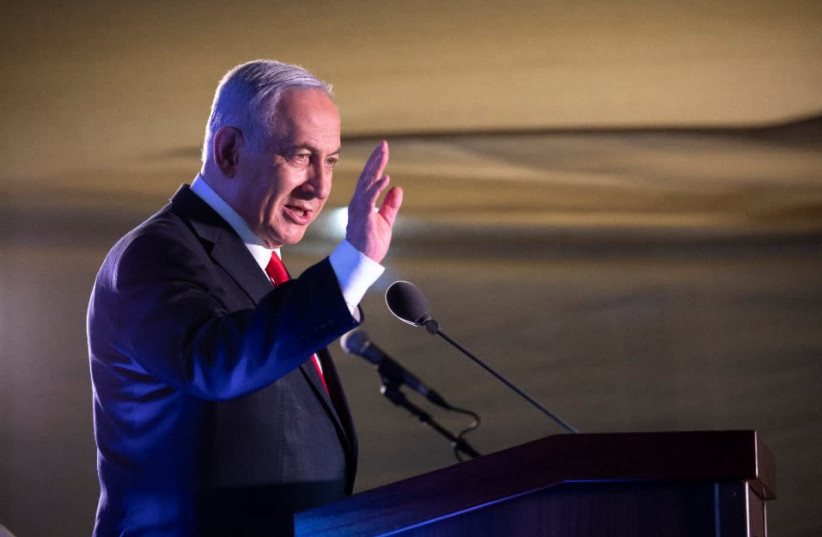
During his speech in Jaffa, Netanyahu spoke of the difficulty of relying on allies and friends, and the importance of self-defense.

Prime Minister Benjamin Netanyahu (photo credit: NADAV ABBAS)
Prime Minister Benjamin Netanyahu
(photo credit: NADAV ABBAS)
On the eve of talks to revive the Iran deal, Prime Minister Benjamin Netanyahu warned Tehran that it faced “grave danger” if it harmed Israel, as he recalled the battle for Jaffa in the 1948 War of Independence.
“Those who want to harm us, place themselves in grave danger. It was true in Jaffa in 1948 and it is true today, with all the differences, with respect to Iran and its proxies,” Netanyahu said.
He delivered his words at a special memorial ceremony for the Irgun fighters who fell in the 1948 campaign for the coastal city, but he mentioned Tehran, just as the world powers were about to gather in Vienna to discuss ways to reactivate the Iran nuclear deal, known as the Joint Comprehensive Plan of Action.
Netanyahu has been one of the chief opponents of the deal, which was designed to curb the Islamic Republic’s ability to produce nuclear weapons, but which Israel argued actually empowered it to become a nuclear power in the future.
The Trump administration had agreed with Netanyahu and withdrew from the deal in 2018. The other signatories to the deal – Russia, China, Great Britain, France and Germany – have maintained that the deal remained the best vehicle to prevent a nuclear Iran, even as Tehran increasingly stopped complying with its terms.
The Biden administration now wants to return to the agreement. It will participate Tuesday along with other signatories and the European Union in talks to allow the US to become part of the deal and to secure an agreement from Tehran that it would once again comply with its terms.
During his speech in Jaffa, Netanyahu spoke of the difficulty of relying on allies and friends, and the importance of self-defense.
Israel, he said, must have the ability to “defend itself by itself.” He recalled how in 1948 Israel could not rely on the British. “We know all our covenants and all our friends, but in the end, our future has been determined by our ability to defend ourselves by ourselves,” Netanyahu said.
In Washington, State Department spokesman Ned Price on Monday discussed the negotiations, noting that Special Envoy for Iran Rob Malley, a veteran of the Clinton and Obama administrations, will lead the US delegation to the talks.
At issue has been Tehran’s instance that Washington must first lift the crippling sanctions president Donald Trump imposed upon it after exiting the deal, and the US has demanded that Iran halt its violations of the agreement.
The talks between Washington and Tehran are expected to be indirect. They will be speaking to the other signatories to the deal, but not with each other. Tehran has ruled out face-to-face bilateral discussions.
Price told reporters that the United States did not expect any direct talks “at present” but remained open to the possibility.
“We don’t underestimate the scale of the challenges ahead,” Price said. “These are early days. We don’t anticipate an early or immediate breakthrough as these discussions, we fully expect, will be difficult.”
Price defended the Biden administration’s decision to try to return to the deal, noting that the US absence from the deal during the four years of Trump’s tenure had only brought Iran closer to the brink of producing a nuclear weapon.
At the end of the Obama administration, Iran was a year away from such production, but now, that time has dwindled.
Washington’s goal is to ensure Iran cannot obtain nuclear weapons, Price said, adding that “we are not seeking to draw the talks out,” explaining that the US was pursuing the matter with urgency.
Price said the US would not “entertain unilateral gestures and concessions,” but rather it would seek to set the stage for a mutual return to compliance of both Washington and Tehran.
The goal was to restore the deal, rather than to set new terms and conditions and to match US compliance once more with the deal with Tehran’s compliance with the agreement.
Reuters contributed to this report.