The Emerald is owned via a complex structure by the Malah family of Syria, according to information given by a private intelligence firm to Environmental Protection Ministry


A dog smells pieces of tar from an oil spill in the Mediterranean Sea, on a beach in the Gdor Nature Reserve near Michmoret, Israel, March 1, 2021. (AP Photo/Ariel Schalit)

A dog smells pieces of tar from an oil spill in the Mediterranean Sea, on a beach in the Gdor Nature Reserve near Michmoret, Israel, March 1, 2021. (AP Photo/Ariel Schalit)

Information collected by an Israeli-founded private intelligence firm has revealed the identity of the owners of the Emerald, the tanker suspected of spilling massive amounts of oil off the Israeli coast in February, the Environmental Protection Ministry said Sunday.

The investigation by the firm Black Cube found that Emerald – which is registered in the Marshall Islands – is owned by a company called Emerald Marine LTD. Black Cube claims to have found the ownership by using international shipping listings. It also said it recorded a senior captain working for Emerald Marine LTD and a brother of an Emerald Marine LTD owner. The ministry stressed in a statement that Black Cube conducted the investigation on its own.

The information Black Cube gave the ministry indicated further that a company names Oryx Shipping has ownership over the Emerald. Oryx Shipping is registered in Piraeus, Greece, and owned by the Syrian Malah family. Its ships are insured by The Islamic P&I Club, known as one of the only firms in the world willing to insure Iranian vessels.

The information provided by Black Cube indicates that the Malah group holds a number of shell companies in the Marshall Islands, Panama, and even one British company. All of these are registered to the same address in Piraeus. When representatives of Black Cube visited the address, they found an apartment there, with no signs indicating a business presence

More than 1,000 tons of tar are estimated to have washed onto Israel’s Mediterranean coastline last month, causing extensive environmental damage and forcing the closure of beaches to the public. Israel’s Nature and Parks Authority called the incident one of the country’s worst environmental disasters, and the cleanup is expected to take months.

Earlier this month, the Environmental Protection Ministry identified the Emerald as the ship it believed was responsible for the oil spill. Its investigation determined the ship was smuggling oil from Iran to Syria when the spill occurred in early February.

The homepage of Oryx Shipping’s website (screen capture)

Environmental Protection Minister Gila Gamliel has claimed that the oil spill was an intentional attack by Iran, but has provided no evidence for her claim.

Ministry officials investigating the incident said it was unclear whether the spill was deliberate or accidental, but said that they had received no warning about the incident until tar started washing up on the shore.

Defense officials have largely remained silent about the charge by Gamliel, a member of Prime Minister Benjamin Netanyahu’s Likud party.

But according to several news reports, the security establishment has so far found no evidence of the claim that the spill was deliberate “environmental terrorism.”


Elliott Abrams said that going back to the JCPOA in 2021 is not a simple prospect.

Servants of the holy shrine of Imam Reza carry the coffin of Iranian nuclear scientist Mohsen Fakhrizadeh, in Mashhad, Iran November 29, 2020.  (photo credit: REUTERS)
Servants of the holy shrine of Imam Reza carry the coffin of Iranian nuclear scientist Mohsen Fakhrizadeh, in Mashhad, Iran November 29, 2020.
(photo credit: REUTERS)
If Iran is “absolutely determined” to develop a nuclear weapon, the only way to stop the rogue regime may be militarily, according to Elliott Abrams.
If that assumption is correct, then “ultimately Israel and the United States will have to face that.”
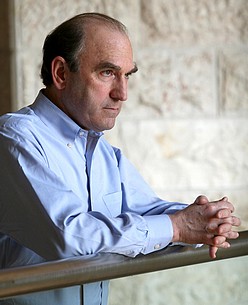
Elliott Abrams (Credit: Ariel Jerozolimski)Elliott Abrams (Credit: Ariel Jerozolimski)

Abrams, a senior fellow for Middle Eastern Studies at the Council for Foreign Relations, served as US President Donald Trump’s special representative for Iran and Venezuela. He told The Jerusalem Post that if military action against Iran became necessary, the US and Israel would be left to manage it alone – China, Russia nor the Europeans were likely to seek a military alternative to stopping Iranian nuclear proliferation.

When asked how soon the countries would know if such action were needed, he said, “it is up to the Iranians. Thus far, Iran has been incredibly careful, and since 2003 they have moved slowly. They threatened to enrich uranium up to 60% purity, which would be a very big step. But for now, that is just a threat. They have not done it.”
Abrams said that every country’s intelligence studies the question of “when” and each one has come up with a different answer – and in some cases, these numbers are classified. In his estimation, Iran could have a deliverable nuclear weapon in one-and-a-half years.
“But you never know when they will try to really move that down to being just a few months and that presents this grave, grave decision to the US and Israel,” Abrams said.
“Iran obviously claims it is not seeking a nuclear weapon, but we know how countries behave when they actually don’t seek a nuclear weapon,” he continued. “We know how countries behave when they want nuclear energy only.  It’s not how Iran behaves.”

Elliot Abrams and Arkansas Senator Tom Cotton will discuss America’s strategy against the Iranian threat on March 14 at Tikvah Fund’s Jewish Leadership Conference. Register here. $50 discount with code JPOST.

In the meantime, the new US administration under President Joe Biden has expressed interest in rejoining the Joint Comprehensive Plan of Action (JCPOA) deal signed in July 2015 by China, France, Germany, Russia, the United Kingdom and the United States.
Trump abandoned the Iranian nuclear deal in 2018. Abrams said going back to the JCPOA in 2021 is not a simple prospect.
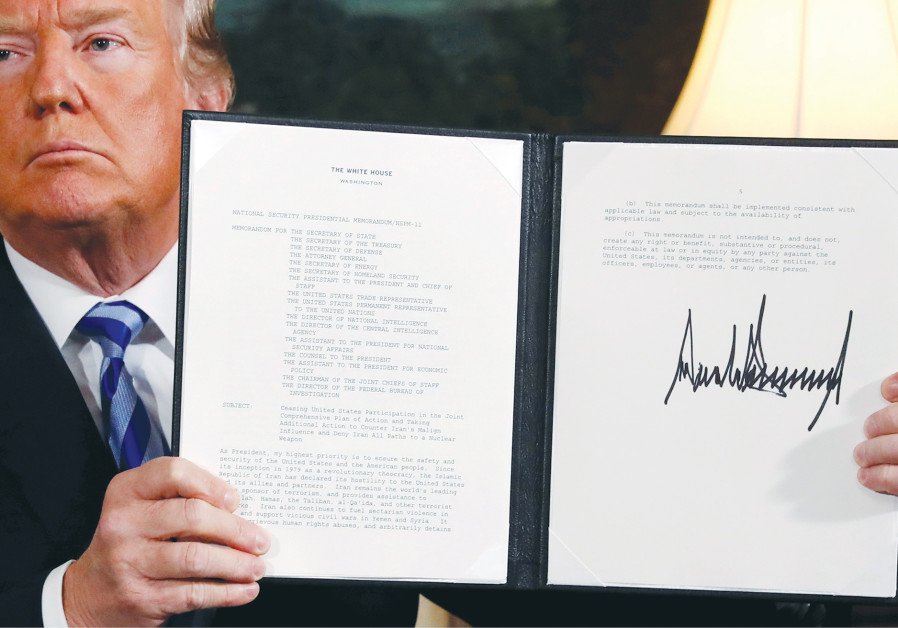
US president Donald Trump holds up a proclamation declaring his intention to withdraw the US from the JCPOA (Credit: JONATHAN ERNST / REUTERS)US president Donald Trump holds up a proclamation declaring his intention to withdraw the US from the JCPOA (Credit: JONATHAN ERNST / REUTERS)

“I think they are stuck,” he said. “They clearly want to join the deal, and if you asked them in November, they would have said that by February or March they would have rejoined after a few weeks of negotiations. But it has not happened.

Do you want to hear Abrams speak? Click here to register for the Jewish Leadership Conference. $50 discount with code JPOST.

“The US has not lifted any sanctions and Iran has been doing more and more terrible things,” he continued. “I wonder today if they really believe it is possible to rejoin the JCPOA. I don’t know what conclusions they have reached, but I think they are probably much less optimistic now.”
Neither the US nor Iran has shown a willingness to compromise, leaving the situation at a stalemate.
Abrams said many people have assumed that both sides want to get back to the JCPOA, so it is just a question of working out the arrangement. But he is not so sure that Iran’s supreme leader, Ali Khamenei, wants to get back to the JCPOA, much less negotiate further agreements.
“I don’t think the supreme leader cares about getting a good consumer economy in Iran, I don’t think that his goal is to make sure the Iranian economy is more prosperous, and that Iran looks more like the West,” Abrams said. “He prefers a resistance economy to a Western-style consumer economy… He will have to be persuaded.”
Moreover, while the Biden administration might have set its aspirations on a lengthened and strengthened Iranian deal, Abrams said that this goal might be unachievable without having to give up the leverage that the new administration was given by the Trump administration and would be needed to achieve other needed shifts in Iranian policy.
“There is a huge problem with the administration’s position,” Abrams said, explaining that to get back to the JCPOA, the administration would have to lift oil and financial sanctions on the rogue regime. If the US does so in order to get back to JCPOA, it will have effectively given up all its leverage to go beyond the current agreement, leaving little room for negotiations around the Iranian missile program or the country’s support for terrorism.

Abrams will be among a group of top-tier speakers addressing the questions most relevant to Israel and the Jewish people. It is not too late to register for the Jewish Leadership Conference. Click here to get your ticket – $50 discount with code JPOST.

He said a successful agreement would extend the JCPOA sunset clauses and make them stronger, curtail Iran’s missile program and halt the country’s financial support for Hamas, Hezbollah, the Houthis and Shiite militias – collectively known as the Popular Mobilization Forces – in Iraq.
Currently, Iran is considered the largest state sponsor of terrorism in the world.
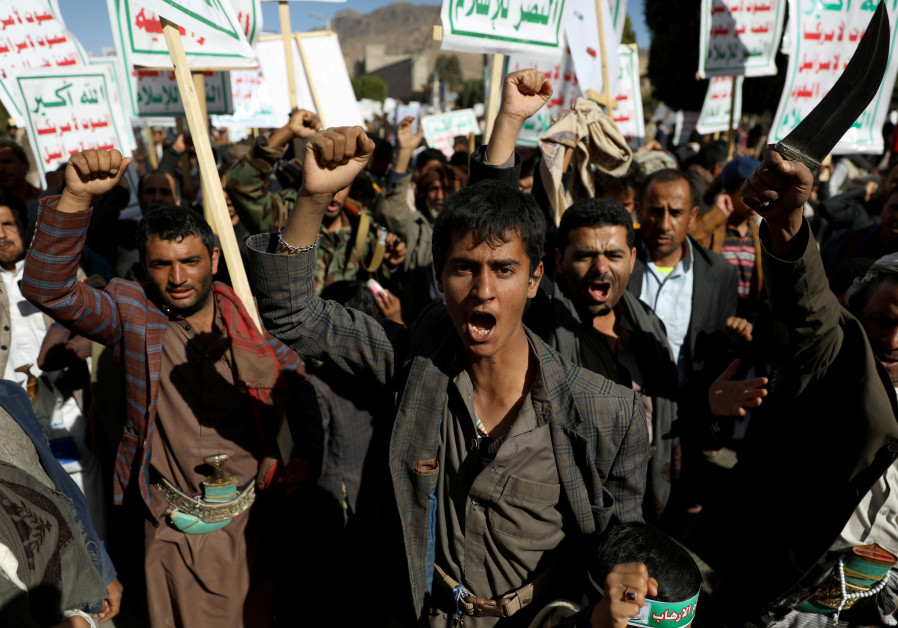
Houthi supporters shout slogans during a rally against the United States' designation of Houthis as a foreign terrorist organization, in Sanaa, Yemen January 25, 2021 (Credit: REUTERS/KHALED ABDULLAH)Houthi supporters shout slogans during a rally against the United States’ designation of Houthis as a foreign terrorist organization, in Sanaa, Yemen January 25, 2021 (Credit: REUTERS/KHALED ABDULLAH)

Abrams said that in the five years since the signing of the JCPOA Iran has failed to comply. In the last two years of the Trump administration, the US has implemented a significant sanctions program that includes not only nuclear sanctions but human rights and counterterrorism sanctions. The administration called it the “maximum pressure campaign,” and it was meant to pressure the country to desist from the above activities.
On the one hand, Abrams admitted, Iran moved closer toward developing a nuclear bomb. On the other hand, he said, “If you look at the finances of Hamas and Hezbollah, you see them getting quite a reduced amount from Iran.”
He said that last year the Trump administration thought there could be negotiations with Iran regardless of who became president, and that was always Trump’s aim. But Abrams said he believes that the Iranians were holding off to see who the president would be, because the Iranian regime “was hoping it would not have to negotiate with President Trump.”
He said that he believes Iran has reached the point where it knows it has to seek relief from sanctions soon. The questions really are how soon is soon, and what price they will have to pay.

This article was written in cooperation with the Tikvah Fund. Learn more about the organization’s upcoming conference.


The cancellation of Netanyahu’s flight to the UAE exposed Israel’s role in Amman’s and Riyadh’s battle for a foothold on Islam’s third holiest site.

Two events of religious and historical significance that very nearly took place over the last 24 hours point to a deeper layer in Jordan and Saudi Arabia’s struggle for guardianship of Islamic holy places on Jerusalem’s Temple Mount. Israel has now been dragged into this struggle against its will.

Jordanian Crown Prince Hussein, King Abdullah’s son, was about to enter the gates of the Temple Mount, Wednesday, to perpetuate Jordan’s formal status as the Muslim world’s guardian of the site. However, the visit was canceled at the last minute, supposedly due to a “disagreement over security arrangements.” From the Jordanians’ perspective, this public flag-raising was urgently necessary given the unrefuted reports another crown prince, from Riyadh, was engaged in negotiations with Israel on whether Bin Salman would meet with Prime Minister Benjamin Netanyahu. When it comes to talks with the Saudis, the Temple Mount is also a priority.

As an Islamic power that already controls Mecca and Medina, the two holiest sites in Islam, Saudi Arabia has shown increasing interest in gaining a significant foothold at the Al-Aqsa Mosque, Islam’s third holiest site. Riyadh is looking to create a new status quo at the site and is willing to invest tens of billions of dollars in Jerusalem and the Temple Mount and agree to some form of normalization of ties with Israel to this end.

In return, Saudi Arabia wants a senior role, alongside Israel, in running the mount, instead of or alongside Jordan, among other things. Riyadh is poised to reap huge dividends from such a move. It will gain the status of a religious power that controls the three holiest sites in Islam as well as ensure the defeat of President Recep Tayyip Erdogan’s Turkey, who has been unrelenting in his attempts to “liberate” the mount from Israel.

Jordan, for its part, is furious at the very notion Saudi Arabia could be given a role at the site. The Hashemite Dynasty lost its role as the keeper of Islam’s holy sites in Mecca and Medina after World War I. Secondary guardianship over Islam’s holy sites in Jerusalem was its consolation prize. This status was also reserved for Jordan within the framework of its ties with Israel following the 1967 Six-Day War.

Jordan continued to be involved in the religious management of the mount through the Jordanian Waqf. It earned recognition for its senior status on the mount through the framework of the peace treaty signed with Israel in 1994 and its active and opinionated involvement in a series of issues concerning the site, from the renovation of walls and joint exercises with Israeli rescue forces on the mount to a veto on Israeli plans for the area around the Temple Mount, including the replacement of the Mughrabi Bridge and the removal of construction debris from the “Little Western Wall.”

When then-Saudi King Khaled dispatched emissaries in the 1980s to offer Prime Minister Menachem Begin a fortune for the development of a new Middle East in return for a Saudi flag being installed on the Temple Mount, Begin responded by kicking them out. Things have changed. Netanyahu and his officials are involved in talks on the possibility of affording Riyadh status on the site. This began when plans were being made for former US President Donald Trump’s so-called “deal of the century” and continues to this very day.

Israel has become a kind of traffic cop on the mount. It tries, sometimes unsuccessfully, to look out for its own status as a sovereign, while at the same time, regulating the opposing interests of various Arab and Muslim figures.

For Jordan, which affords us a quiet eastern border and extensive bilateral economic and security ties, the mount isn’t just a historical symbol but the anchor that guarantees the stability of the kingdom’s rule; a rule against which radical Islamic forces often rise. And so, Israel finds itself straddling the divide, maneuvering in the inter-Islamic struggle between Amman and Riyadh, sometimes acting to please the Jordanians, at other times, looking to please the Saudis.

Until the time comes when another decision is required, and that day may be soon approaching, Jordan is still Israel’s preferred partner on the Temple Mount. This remains the case even though Amman needs Israel no less and maybe even more than Israel needs Amman.
