Israel and US to convene 1st strategic group meeting on Iran

Sessions will be led by national security advisers Ben-Shabbat and Sullivan; sides will seek to limit disagreements and keep discord behind closed doors
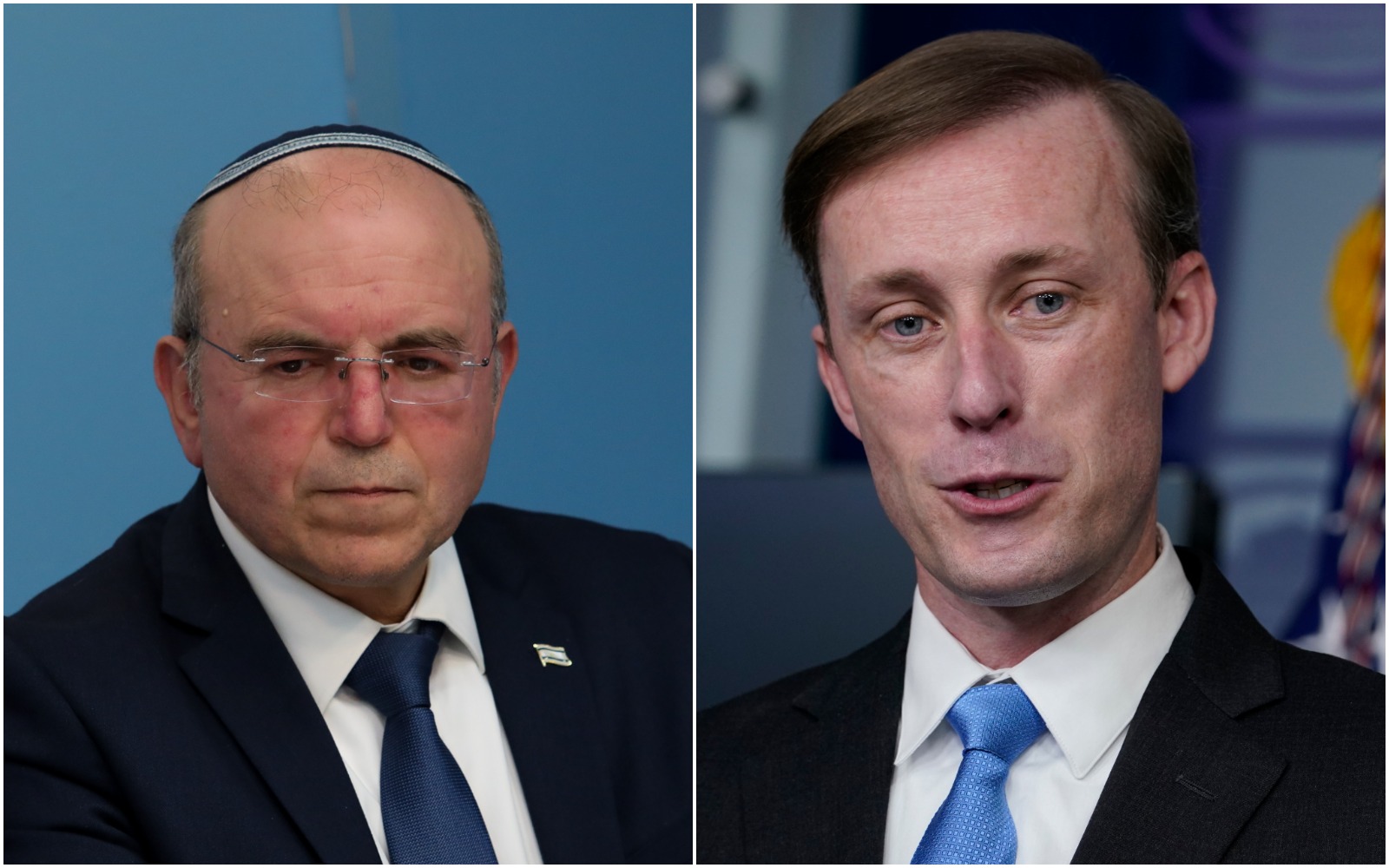
 

Collage: Israeli National Security Council chairman Meir Ben-Shabbat (right), and US National Security Adviser Jake Sullivan. (Flash90, AP)

Collage: Israeli National Security Council chairman Meir Ben-Shabbat (right), and US National Security Adviser Jake Sullivan. (Flash90, AP)

Israeli and Biden administration officials on Thursday will hold the first session of a bilateral strategic group aimed at collaborating in the effort to prevent Iran from obtaining a nuclear weapon, an official familiar with the matter told The Times of Israel.

A similar working group convened during former US president Barack Obama’s first term in office. Its existence was not public, and the sides used the meetings to share intelligence on Iran. However, the group ceased meeting as the Obama administration ramped up efforts to reach an agreement with Iran to curb its nuclear program in exchange for sanctions relief.

Prime Minister Benjamin Netanyahu fiercely and publicly opposed that deal — which was signed in 2015, when Biden was vice president — contributing to a famously acrimonious relationship between Netanyahu and Obama.

Seeking to avoid public spats this time around, Washington offered to re-establish the working group and Israel, after deliberation by Netanyahu with other senior officials, agreed to it, the official said.

The White House released a statement on Wednesday regarding the group’s meeting, with few details.

An Iranian technician works at the Uranium Conversion Facility just outside the city of Isfahan, Iran. February 3, 2007. (AP Photo/Vahid Salemi, File)

US National Security Council spokesperson Emily Horne called the collaborative the “US-Israel Strategic Consultative Group and said it would be led by US National Security Advisor Jake Sullivan and his Israeli counterpart Meir Ben-Shabbat.

“The discussion will focus on regional issues, building on the close consultations between the two sides over the past several months,” the statement said. Sullivan and Ben-Shabbat have spoken on the phone twice since the start of the new US administration.

“This meeting is part of the broader ongoing dialogue between the United States and Israel on the full range of issues of importance to the bilateral relationship, building on longstanding dialogues between our two nations under previous administrations,” the statement added.

US envoy on Iran Robert Malley told the Axios news site Wednesday that neither Washington nor Jerusalem wishes to see a return to the very public discord that existed between the countries’ leaderships during the run-up to the signing of the 2015 nuclear accord.

“We don’t always agree, but the talks are extremely open and positive. While we may have different interpretations and views as to what happened in 2015–2016, neither of us wishes to repeat it,” Malley said.
Robert Malley in 2018 (YouTube screenshot)

Biden and his administration have repeatedly said they will return to the JCPOA if Tehran first returns to compliance. Iran has insisted the US remove sanctions before it returns to the deal’s terms, putting the two sides at a stalemate.

In recent months, Iran has repeatedly taken steps to violate the deal and turn up the heat on the US, including by enriching uranium past the accord’s limits and barring UN inspections of its nuclear facilities.

Former US president Donald Trump withdrew from the deal in 2018 and put punishing sanctions on Iran. Trump’s Middle East policies were largely in line with Netanyahu’s.

Israeli officials, including Netanyahu, have already begun voicing opposition to the Biden administration’s desire to rejoin the deal, putting Jerusalem and Washington at odds on the issue. Some leading Israeli officials in recent months have warned of military action to halt Iran’s nuclear program.


Netanyahu may meet Saudi crown prince during UAE visit: report

Israeli public broadcaster says ‘advanced contacts’ underway to arrange sit-down in Abu Dhabi, after the two reportedly met in November


Left: Prime Minister Benjamin Netanyahu at a ceremony in Tel Aviv, Israel, Monday, March 8, 2021 (Miriam Alster/Pool via AP); Right: Saudi Arabia's Crown Prince Mohammed bin Salman attends a virtual G-20 summit held over video conferencing, in Riyadh, Saudi Arabia, Sunday, Nov. 22, 2020 (Bandar Aljaloud/Saudi Royal Palace via AP)

Left: Prime Minister Benjamin Netanyahu at a ceremony in Tel Aviv, Israel, Monday, March 8, 2021 (Miriam Alster/Pool via AP); Right: Saudi Arabia’s Crown Prince Mohammed bin Salman attends a virtual G-20 summit held over video conferencing, in Riyadh, Saudi Arabia, Sunday, Nov. 22, 2020 (Bandar Aljaloud/Saudi Royal Palace via AP)

Prime Minister Benjamin Netanyahu could meet with Saudi Arabian Crown Prince Mohammed bin Salman during his planned visit to the United Arab Emirates on Thursday, Israeli television reported Wednesday.

The Kan public broadcaster said there were “advanced contacts” on setting up the sit-down as part of Netanyahu’s expected meeting Thursday with Abu Dhabi Crown Prince Mohammed bin Zayed Al Nahyan. The report, which did not cite a source, didn’t provide further details.

Separately, Channel 13 news reported Netanyahu may meet with his Sudanese counterpart Abdalla Hamdok while in the UAE. The report said Israel is in talks to make the meeting happen, but didn’t give further details.

Netanyahu met last year in Uganda with Gen. Abdel-Fattah Burhan, the head of Sudan’s ruling sovereign council.

Sudan’s Prime Minister Abdalla Hamdok at a press conference in Khartoum, Sudan, August 21, 2019. (AP Photo, File)

The premier will only be at the airport in Abu Dhabi and Thursday’s trip isn’t expected to last more than a few hours, according to Channel 12 news. The network also reported that Defense Minister Benny Gantz was set to meet with the Abu Dhabi crown prince at the UAE arms fair last month before the Israeli delegation’s appearance was canceled over safety concerns.

Netanyahu flew to Saudi Arabia in November to meet with bin Salman, the first publicly reported meeting between the two. Israel and Saudi Arabia do not have diplomatic relations, but clandestine ties have strengthened in recent years, as the two countries have confronted a shared threat in Iran.

The meeting in November fueled frenzied speculation in Israel that a normalization deal might be close, following the US-brokered pacts Israel reached with the UAE, Bahrain and Sudan. In December, Morocco agreed to re-establish diplomatic relations with Israel.

From left to right: Prime Minister Benjamin Netanyahu, US President Donald Trump, Bahrain Foreign Minister Abdullatif al-Zayani and United Arab Emirates Foreign Minister Abdullah bin Zayed al-Nahyan are seen on the Blue Room Balcony after signing the Abraham Accords during a ceremony on the South Lawn of the White House in Washington, September 15, 2020. (AP Photo/Alex Brandon)

In the wake of those agreements, Trump officials said a deal with Saudi Arabia is “inevitable,” though Saudi officials have said a peace deal between Israel and the Palestinians must precede recognition of the Jewish state.

Officials said last week the US wants to broker a peace deal between Israel and Saudi Arabia, but only if Riyadh improves its human rights record. The remarks followed the release of a US intelligence report accusing the Saudi crown prince of green-lighting the murder of Saudi journalist and royal critic Jamal Khashoggi, as part of US President Joe Biden’s desire to “recalibrate” ties with Saudi Arabia.

Last month, Hebrew media reported that senior Israeli and Saudi officials recently held several phone calls to discuss the Biden administration’s plans to rejoin the Iran nuclear deal.

During the conversations, the Saudis expressed concern over the new US administration and lamented its focus on human rights violations in the kingdom.

According to a report last month, Israel was planning to lobby the Biden administration not to pressure regional allies Saudi Arabia, Egypt and the United Arab Emirates on matters related to human rights, fearing that doing so could imperil the Jewish state’s improved ties with some Arab countries and strengthen Iran.

Possible quarantine-free travel between Israel, UAE

Kan also reported Wednesday that Israel and the UAE have begun talks to allow entry to vaccinated travelers from the respective countries without quarantine.

The goal is to waive the quarantine requirement for those vaccinated in April, according to the report.

Currently, only Georgia recognizes Israel’s “Green Pass.” The US does not recognize it and Israelis who travel there must provide a negative virus test and spend time in quarantine.

Agreements over the past month with Greece and Cyprus that would allow “Green Pass” holders to travel between the countries without quarantine or taking virus tests have so far not been formally implemented.

Medical technicians test passengers for COVID-19 at the Ben Gurion International Airport near Tel Aviv on March 8, 2021 (Avshalom Sassoni/Flash90)

Diplomatic sources told the Ynet news site this week that the European Union, of which both Greece and Cyprus are members, strongly objects to any of its members individually signing agreements on travel for the vaccinated.

Germany in particular is against the idea, according to the report, because it sees the “vaccine passport” system as a form of discrimination against those who do not want to be vaccinated, as well as out of a desire to help boost internal tourism within the European bloc.

On Monday, a senior World Health Organization official said so-called “vaccine passports” for COVID-19 should not be used for international travel at this time because of numerous concerns, including ethical considerations that coronavirus vaccines are not easily available globally.

AFP contributed to this report.


Though the ayatollahs tried to complain that it was wrong for the IAEA to take sides and accept the Mossad information as valid over their denials, Grossi was unwilling to look the other way.

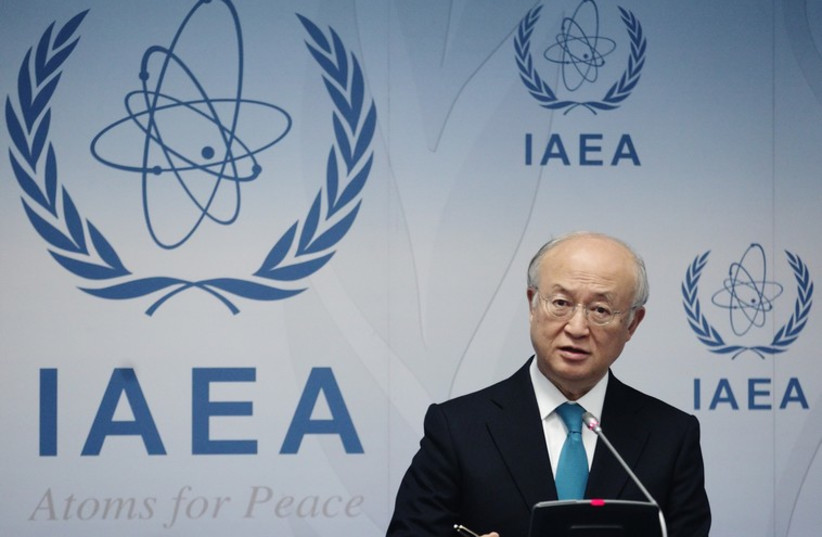
International Atomic Energy Agency (IAEA) Director General Yukiya Amano  (photo credit: REUTERS)
International Atomic Energy Agency (IAEA) Director General Yukiya Amano
(photo credit: REUTERS)
One of the most fascinating art forms in geopolitics and the spy world has got to be the IAEA dance with the Mossad and Iran.
In the last few years the IAEA’s approach to the Mossad and Iran has gone through at least three renditions: from “hear no evil, see no evil” to a readiness for confrontation to last week’s transition to some kind of a middle path.

In January 2018, the Mossad raided Iran’s secret nuclear archives, an operation announced to the world with unprecedented fanfare in April 2018.

This operation quickly put the IAEA, then led by director-general Yukiya Amano in an incredibly awkward position.

Amano’s legacy was wrapped up in the 2015 nuclear deal with Tehran and the ongoing inspection team he had policing the Islamic Republic’s nuclear facilities.

The former IAEA director-general had also signed off in 2015 on the idea that the Islamic Republic had come clean enough on past “possible military dimensions” of its nuclear program.

Suddenly, the Mossad was producing for the IAEA and for the general public not hearsay, but primary evidence, actual physical volumes of Iranian nuclear documents which proved otherwise.

If that was not enough, the Mossad used the nuclear documents it appropriated to check out other nuclear sites in Iran. Prime Minister Benjamin Netanyahu announced in September 2018 that Israel had found nuclear violations at Turquzabad and a year later he announced it had found violations in Abadeh.

The IAEA had no choice but to follow-up on the many blatant Iranian nuclear violations of Amano’s prized 2015 deal.
But the goal of the IAEA’s work at that time was to find a way to maintain the deal.

That meant the IAEA did not even bother to inspect Turquzabad until April 2019, six months after Netanyahu’s announcement.
Anytime Amano was questioned about this he said that the IAEA needed to take its time to extensively verify any information provided by third parties, and could not just suddenly swoop down into new areas for inspection without a comprehensive process.

Translation: He hoped the Iranians would remove anything that he would have to report that would set off alarm bells – though Tehran had actually been caught on satellite feeds burning probably much nuclear material in the summer of 2018.

This very slow dance between the Mossad, the IAEA and Iran continued throughout Amano’s term until his unexpected death in July 2019 and even beyond, until current IAEA Director-General Rafael Grossi took over his job in December 2019.

If Amano preferred a slow pace, Grossi’s instincts and high personal energy got the IAEA to start operating at a far faster pace.

He immediately started to confront the Islamic Republic both directly and in public statements to apply pressure to resolve questions about its undeclared nuclear activities revealed by the Mossad.

Though the ayatollahs tried to complain that it was wrong for the IAEA to take sides and accept the Mossad information as valid over their denials, Grossi was unwilling to look at a red light and pretend it was green.

He knew what the Mossad had brought him and was not going to stick his head in the sand.

The new IAEA director-general won plaudits from Intelligence Minister Eli Cohen, Mossad Director Yossi Cohen and former CIA officials.

In June 2020, Grossi even succeeded in getting the IAEA Board of Governors to condemn Iran’s lack of cooperation – the first such condemnations since before the 2015 deal.

In August 2020, he finally got access to the disputed sites and obtained new and more detailed explanations from Tehran regarding the nuclear deviations.

At this point, Grossi started a new dance with Iran and the Mossad – something in between Amano’s willingness to look the other way, even if a smoking gun sat on his desk, and Grossi’s own readiness for conflict when he started off.

The new dance meant claiming there was positive engagement to avoid a crisis which would give the Trump administration a pretext for attacking the Islamic Republic, while repeatedly and publicly discrediting aspects of Iran’s explanations.

He coined the phrase “not technically credible” to soften the blow that would have fallen if he had called the ayatollahs liars.
This seems to be where Grossi finds himself now.

Only a few weeks ago he held a victorious press conference, announcing that instead of ending all cooperation with the IAEA over disputes with the US over sanctions, Iran would “only” reduce its cooperation to around 70% of normal inspections.

Last week, Grossi spoke via Zoom to a group of mostly Harvard students.

This kind of group is where the very gregarious Grossi feels most comfortable and gives less formal and homogenized answers.

He used phrases like “they [the Iranians] won’t come clean” and “they tell us very little…that is the problem” in addressing Tehran’s explanation of undeclared nuclear items discovered by the Mossad (careful never to use its name.)

The IAEA chief even volunteered that he had made a proposal to Iran to resolve the issues, but when students asked what the proposal was, he smiled broadly and admitted it was nothing more concrete than “let’s talk.”

Shortly after speaking to Harvard students, he held a much more formal press conference where he was questioned repeatedly about evidence he received from the Israeli spy agency.

He responded, “There is an urban myth that we get information and I send inspectors running to check whether it is true or not. When we act on something like that, it’s when we have credible indications.”

Now Grossi was trying to put as much as distance as he could between himself and evidence that everyone knows he got from the Mossad.

The IAEA was back to not angering Iran and keeping its leaders calm enough to not limit inspections.

All of this was part of a dual announcement that the IAEA Board of Governors was backing down from condemning the Islamic Republic, and its failure to clarify its violations, in exchange for…more talks in April.

“It’s about opening doors…preventing doors from shutting,” said Grossi.

Asked in several different ways by journalists whether he was just engaging in “wishful thinking” given that Tehran was not giving any concrete sign that it would change its tune, he shrugged his shoulders and said, “I am an optimist.”

Though tougher on Iran than Amano, Grossi has realized that the critical issue for him is to keep the dance going. To do that he cannot get tied down to the Mossad or force a crisis with Iran to get the Islamic Republic to give real answers to the violations which the spy agency uncovered.