
Announcement could pave the way to the US rejoining the 2015 nuclear deal aimed at curbing Iran’s nuclear weapons program. By AP and ILH Staff Published on 02-19-2021 07:59 Last modified: 02-19-2021 08:03 Biden walks back Trump’s restoration of UN sanctions on Iran Iranian Supreme Leader Ayatollah Ali Khamenei speaks during a meeting with army’s air force and air defense staff in Tehran, Feb. 7, 2021 | File photo: Office of the Iranian Supreme Leader via AP The Biden administration on Thursday rescinded former US President Donald Trump’s restoration of UN sanctions on Iran, an announcement that could help Washington move toward rejoining the 2015 nuclear agreement aimed at reining in the Islamic Republic’s nuclear program. Follow Israel Hayom on Facebook and Twitter Acting US Ambassador Richard Mills sent a letter to the UN Security Council on behalf of President Joe Biden saying the United States “hereby withdraws” three letters from the Trump administration culminating in its Sept. 19 announcement that the United States had re-imposed UN sanctions on Tehran. Mills said in the letter obtained by The Associated Press that sanctions measures terminated in the 2015 council resolution endorsing the nuclear deal with six major powers, but restored by Trump in September, “remain terminated.” Trump pulled the United States out of the agreement, known as the Joint Comprehensive Plan of Action, or JCPOA, in 2018, accusing Iran of serious violations. Biden has said the United States wants to rejoin the pact and the State Department said Thursday the U. would accept an invitation from the European Union to attend a meeting of the participants in the original agreement − Britain, France, Germany, Russia, China and Iran. The Trump administration’s decision to invoke a provision in the 2015 council resolution allowing the “snapback” of sanctions because Iran was in “significant non-performance” with its obligations under the accord was ignored by the rest of the Security Council and the world. The overwhelming majority of members in the 15-nation council called Trump’s action illegal, because the US was no longer a member of the JCPOA. UN Secretary-General Antonio Guterres said the United Nations would not support re-imposing sanctions on Iran as the United States was demanding until he got a green light from the Security Council. He said there was “uncertainty” on whether or not former secretary of state Mike Pompeo had triggered the “snapback” mechanism. Subscribe to Israel Hayom’s daily newsletter and never miss our top stories!

Announcement could pave the way to the US rejoining the 2015 nuclear deal aimed at curbing Iran’s nuclear weapons program.


The Biden administration on Thursday rescinded former US President Donald Trump’s restoration of UN sanctions on Iran, an announcement that could help Washington move toward rejoining the 2015 nuclear agreement aimed at reining in the Islamic Republic’s nuclear program.

Follow Israel Hayom on Facebook and Twitter

Acting US Ambassador Richard Mills sent a letter to the UN Security Council on behalf of President Joe Biden saying the United States “hereby withdraws” three letters from the Trump administration culminating in its Sept. 19 announcement that the United States had re-imposed UN sanctions on Tehran.

Mills said in the letter obtained by The Associated Press that sanctions measures terminated in the 2015 council resolution endorsing the nuclear deal with six major powers, but restored by Trump in September, “remain terminated.”

Trump pulled the United States out of the agreement, known as the Joint Comprehensive Plan of Action, or JCPOA, in 2018, accusing Iran of serious violations.

Biden has said the United States wants to rejoin the pact and the State Department said Thursday the U. would accept an invitation from the European Union to attend a meeting of the participants in the original agreement − Britain, France, Germany, Russia, China and Iran.

The Trump administration’s decision to invoke a provision in the 2015 council resolution allowing the “snapback” of sanctions because Iran was in “significant non-performance” with its obligations under the accord was ignored by the rest of the Security Council and the world.

The overwhelming majority of members in the 15-nation council called Trump’s action illegal, because the US was no longer a member of the JCPOA.

UN Secretary-General Antonio Guterres said the United Nations would not support re-imposing sanctions on Iran as the United States was demanding until he got a green light from the Security Council. He said there was “uncertainty” on whether or not former secretary of state Mike Pompeo had triggered the “snapback” mechanism.

 Subscribe to Israel Hayom’s daily newsletter and never miss our top stories!
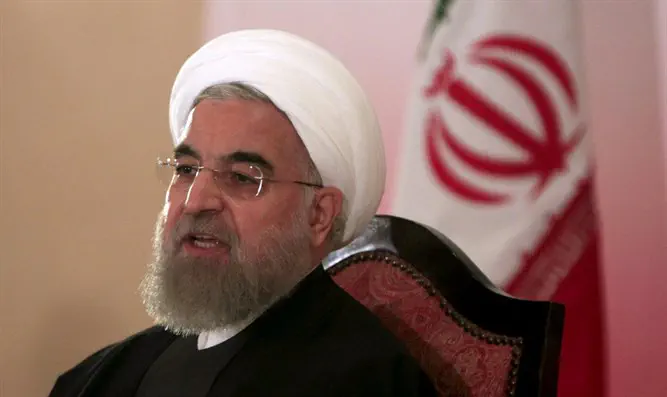

Iran: We will not compromise on the nuclear deal

Iranian President says his country will not agree to comply with 2015 deal when the other parties do not meet their obligations.

Dalit Halevi , Feb 18 , 2021 12:06 AM


Hassan Rouhani

Hassan Rouhani

Reuters

Iranian President Hassan Rouhani said on Wednesday that if Europe is really interested in maintaining the nuclear deal, it must prove it in deeds.

In a telephone conversation with German Chancellor Angela Merkel, Rouhani criticized Europe’s policy regarding its commitments under the nuclear deal and especially after the US unilaterally withdrew from it.

Rouhani stressed that no new issues could be added to the nuclear deal, which was approved by the UN Security Council after lengthy negotiations between Iran and the six major powers in 2015.

In this regard, Rouhani said that Iran would not agree to abide by the constraints of the agreement when the other parties do not meet their obligations, and added the only way to maintain the agreement was from the US to re-enter the deal.

Former US President Donald Trump withdrew from the 2015 agreement nearly three years ago and reimposed sanctions on Iran. The Islamic Republic, in turn, has gradually scaled back its compliance with the 2015 deal.

Current President Joe Biden has expressed a desire to return to the 2015 agreement but has stressed he would return to the 2015 agreement if Iran returned to compliance with it.

Iran has repeatedly made clear that it will not renegotiate the original agreement.

On Tuesday, Secretary of State Antony Blinken said that “the path to diplomacy is open right now” with Iran over the deal.


Iran could deploy 200 missiles in Iraq to attack Israel

Iranian rationale for missile deployment in Iraq: Launch against Israel to prevent direct IDF retaliation against targets in Iran territory

Iran holds military drills as tensions rise with US (photo credit: REUTERS)
Iran holds military drills as tensions rise with US
(photo credit: REUTERS)
With tensions rising with Iran, Israel is concerned that the Islamic Republic could deploy up to 200 long-range missiles in Iraq that could be used to attack the Jewish state. Iran is already believed to have hundreds of missiles that can reach Israel.
While the chances of a direct confrontation between Israel and Iran are deemed low, heightened tensions in the North amid the possibility of a confrontation in Syria or Lebanon, could also draw Iran to retaliate.
The rationale for Iran to deploy missiles in Iraq and launch them from there against Israel would be to try and prevent a direct IDF retaliation against targets within Iranian territory.
Israel has reportedly upped its attacks against Iranian infrastructure in Syria in recent weeks. On Monday morning, Israeli Air Force aircraft reportedly struck targets near Damascus, the second such strike within a week.
The airstrike came just as a surprise military drill covering Israel’s entire northern region was announced. Dubbed “Vered Hagalil”, the massive aerial drill, which started on Monday, was launched to help prepare the IAF for a future war with Hezbollah.
Israel does not currently believe that Hezbollah is interested in a new war, but military intelligence is of the opinion that there is a relatively high chance for a “few days of combat” between the IDF and the Iranian-backed guerilla organization.
This is believed to be the result of the group’s failure to avenge the killing of one of its operatives last summer in an airstrike in Syria, attributed to the IAF. An illustration of this was seen two weeks ago when Hezbollah fired a surface-to-air missile at an Israeli drone patrolling southern Lebanon. Had the drone been hit, Israeli officials said that the IDF would have been ordered to respond aggressively.