The Iranian nuclear scientist assassinated near Tehran in November was killed by a one-ton gun smuggled into Iran in pieces by Israel’s Mossad intelligence agency, according to a report by The Jewish Chronicle published on Wednesday.
Citing intelligence sources, the British weekly said a team of more than 20 agents, including Israeli and Iranian nationals, carried out the ambush on scientist Mohsen Fakhrizadeh after eight months of surveillance.
Reuters was not immediately able to confirm the report, which was published on the website of the London-based newspaper.
Iranian media said Fakhrizadeh died in hospital after armed assassins gunned him down in his car. Shortly after his death, Iran pointed the finger at Israel, Foreign Minister Javad Zarif writing on Twitter of “serious indications of (an) Israeli role.”
Israel declined to comment in November and on Wednesday night, an Israeli government spokesman responded to the latest report by saying: “We never comment on such matters. There has been no change in our position.”
The IDF Intelligence Division presented its annual intelligence forecast for 2021 on Tuesday in which it warned that Iran is about two years away from an atomic bomb and Hezbollah will probably attack Israel in the coming year.
Iran
In the Iranian arena, the Intelligence Division identified 2021 as a year of opportunity for pressure on Iran and the formation of an international coalition against it.
“Iran continues to make progress in violating the [2015 nuclear] agreement, and is making progress in accumulating fissile material and research and development measures, some of which are irreversible,” the report noted.
The Intelligence Division estimates that Iran is making progress on the nuclear program but is not yet breaking through to the nuclear bomb and is focusing on shortening the time to a bomb. The time from the moment of the decision to obtain a bomb in Iran until is finalizing it is about two years, the report estimated.
The Intelligence Division estimates that “Iran is at a historic low point due to the growing campaign against it, known in the IDF as the campaign between the wars, and due to the deep economic crisis in Iran and the exertion of pressure from the West.”
As for the IDF’s ongoing campaign against Iran’s establishment in Syria, the Intelligence Division estimates that Iran is not yet abandoning the idea of establishing itself militarily in Syria but is examining the nature of its establishment and scope.
The Intelligence Division warned against the opening of new fronts by Iran in Iraq and Yemen, which is a cheap and effective solution for carrying out operations against Israel or the US without risking war.
As for the normalization agreements with the Sunni countries in the Middle East like the United Arab Emirates and Bahrain, the Intelligence Division estimates that this is “a historic and systemic change in the Middle East that creates a significant counterweight to the Iranian-led Shiite bloc.”
Intelligence Division Commander General Tamir Heiman stated that “Iran is at an unprecedented low following our actions in recent years and not only because of the corona, but has not abandoned the nuclear program and even stepped up its efforts on the issue. In its current situation, Iran sees the agreement as the only way out and therefore, it strives to at least return to the agreement it signed in 2015.”
In Iran, the Intelligence Division recognizes that the assassination of Qasem Suleimani, commander of the Quds Force by the US in Iraq, is still a key factor and that the Iranians have not yet recovered from the assassination.
Iran’s Military Buildup in Syria
The Intelligence Division estimates that the Iranian presence in Syria is in some recession.
“Iranian personalities and their families are leaving Syria, there are fighting units that have withdrawn from Damascus. The Iranians have therefore placed long-range drones in Iraq and Yemen.
Hezbollah
The Lebanon-based Hezbollah terror organization is deterred from a war with Israel and is not interested in a full-scale war with it.
The Intelligence Division defines the series of blows inflicted on Iran, Hezbollah, and the Syrians as a “deterrent deficit” that could push them to act against Israel and this could degenerate into several days of fighting in the north.
Hezbollah has twice failed to retaliate against Israel for its operator it said was killed in July in Damascus during an Israeli Air Force strike and it is estimated that it is still determined to respond on the northern border, according to Hassan Nasrallah’s equations of response that any Hezbollah death must by answered by an Israeli death.
The Intelligence Division estimates that Nasrallah is ready to carry out an attack on the border fence, even at the cost of an unusual Israeli response that will lead to a day or days of fighting, and is also ready to down an Air Force drone in order to reach a balance in the equation for him.
Hezbollah’s accurate missiles capable of hitting a target with a precision of less than 50 meters are still estimated at only dozens of missiles.
The Intelligence Division believes that Israel has not reached the point where it must launch a pre-emptive strike on Hezbollah’s precision missiles, which are defined as a threat against it. The IDF has an effective response and therefore, the Intelligence Division does not recommend attacking Hezbollah’s precision weapons in Lebanon.
The report states that the intensification of Hezbollah and Hamas continues and they continue to accumulate high-quality Iranian weapons.
Heiman said that “we are working hard and deal with the threat on a regular basis and although it is not a threat to be taken lightly, we can provide a quality response by a variety of overt and covert means.”
“The Shiite axis continues its attempt to establish itself in Syria in order to harm Israel through the Golan Heights. Our many efforts succeed in harming and reducing this ability,” he added.
The Palestinian Authority
The Palestinian Authority has gone through a year of survival with the Palestinians believing they are being neglected by the Gulf States. The Intelligence Division warns that the relative silence in the territories is a false silence.
Gaza Strip
Hamas has stuck to an agreement with Israel and does not want a new campaign and is trying to keep quiet. The humanitarian situation in the Gaza Strip is stable. The Intelligence Division estimates that two routes could lead to a new campaign in Gaza in 2021. The first, the civilian route would be a result of the disappointment with the economic situation that will lead to escalation.
The second route is for Islamic Jihad operatives to blow up the relative calm in the Gaza Strip by firing rockets or carrying out attacks on the fence.
Main Factors in 2021
According to the Intelligence Division, the main determining factors on 2021 are the Coronavirus pandemic, the Middle East’s economy which is in deep change, Joe Biden’s new administration in the United States, and the normalization agreements as a historic change.
The Intelligence Division estimates that the Corona crisis did not harm the building of power and the intensification of the other side, Iran, Syria, Hamas and Hezbollah. The number of warnings and security incidents did not decrease during this past “corona year”.
The Intelligence Division recognizes that since May 2020, the Iranian-led Shiite axis has been seeking revenge on Israel, whether it be by drones or missiles, terror attacks abroad, cyber-attacks, or influencing traffic at sea, but they are failing.
Mahmoud Alavi: Our nuclear program is peaceful and the decree by the supreme leader has forbidden nuclear weapons, but if pushed in that direction, then it wouldn’t be Iran’s fault.
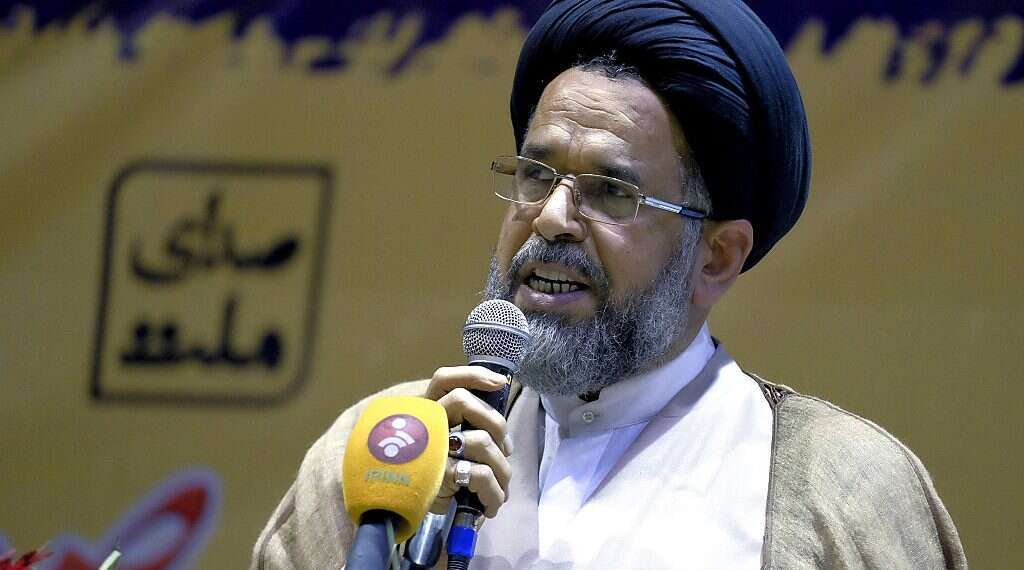
Iran’s Minister of Intelligence Mahmoud Alavi | File photo: Reuters/Raheb Homavandi/TIMA
Iran’s intelligence minister warned the West that his country could push for a nuclear weapon if crippling international sanctions on Tehran remain in place, state television reported Tuesday.
The remarks by Mahmoud Alavi mark a rare occasion that a government official says Iran could reverse its course on the nuclear program. Tehran has long insisted that the program is for peaceful purposes only, such as power generation and medical research.
A 1990s fatwa, or religious edict, by the country’s Supreme Leader Ayatollah Ali Khamenei, states that nuclear weapons are forbidden.
“Our nuclear program is peaceful and the fatwa by the supreme leader has forbidden nuclear weapons, but if they push Iran in that direction, then it wouldn’t be Iran’s fault but those who pushed it,” Alavi was quoted as saying.
“If a cat is cornered, it may show a kind of behavior that a free cat would not,” he said and added that Iran has no plans to move toward a nuclear weapon under current circumstances.
Israel has long accused Iran of trying to develop nuclear weapons, and the 2015 nuclear accord between Iran and world powers put strict limits on Iranian nuclear activities to prevent it from reaching weapons capabilities. In exchange, Iran was given sanctions relief.
Then-President Donald Trump withdrew from the deal in 2018, prompting Iran to resume some of its nuclear activities. The new Biden administration has signaled it would like to revive the deal, raising concerns in Israel.
The Israeli military estimates that Iran is still two years away from reaching the capability of producing a bomb. But in a briefing with reporters, a senior military official said the IDF believes Iran has made “significant progress” in collecting fissile material and research and development.
He said the IDF is especially concerned about “irreversible” progress, such as the knowledge it has gained from using sophisticated centrifuges. The official spoke on condition of anonymity because he was discussing an intelligence assessment.
The 81-year-old Khamenei, who has the final say on all matters of state in Iran, on Sunday urged the United States to lift all sanctions if it wants Iran to live up to commitments under its 2015 nuclear deal. However, President Joe Biden has said the US won’t be making the first move.
Iranian President Hassan Rouhani in comments aired on state TV on Tuesday reiterated the US must first take steps to honor nuclear deal agreements. “Any day that the US resumes implementing its commitments under the nuclear deal, we will fully implement our promises under the deal as well,” he said.
Following the November assassination of an Iranian scientist credited with spearheading the country’s military nuclear program, Iran’s parliament has approved a law to block international nuclear inspectors later this month – a serious violation of the accord.
Alavi, the intelligence minister, was also quoted as saying that a member of the Iranian armed forces “facilitated” the killing of the scientist, which Iran has blamed on Israel.
The minister did not expand on what he meant – and it was not clear if the soldier had carried out the explosion that killed the scientist, Mohsen Fakhrizadeh. Israel, which has been suspected of killing Iranian nuclear scientists over the last decade, has repeatedly declined to comment on the attack.
This was the first time that Iran acknowledged a member of its armed forces may have acted as an accomplice in the killing of Fakhrizadeh, who headed Iran’s so-called AMAD program, which Israel and the West have alleged was a military operation looking at the feasibility of building a nuclear weapon.
The International Atomic Energy Agency – the UN’s nuclear watchdog – says that the “structured program” ended in 2003. US intelligence agencies concurred with that assessment in a 2007 report.
In December, Rouhani vowed to avenge Fakhrizadeh’s killing, saying his country will decide time or venue of any retaliatory action.
In response to Trump’s so-called “maximum pressure” campaign against Iran, the country began to gradually violate its atomic commitments under the nuclear deal. It also threatened further provocations in a bid to increase its leverage and get Biden to prioritize a return to the deal as he moves to dismantle Trump’s legacy.
As part of those steps, Iran has begun enriching uranium closer to weapons-grade levels and said it would experiment with uranium metals, a key component of a nuclear warhead. Iran insists that all breaches of the pact are easily reversible.