Iran has often used the nuclear program to distract from its real desire: Regional hegemony
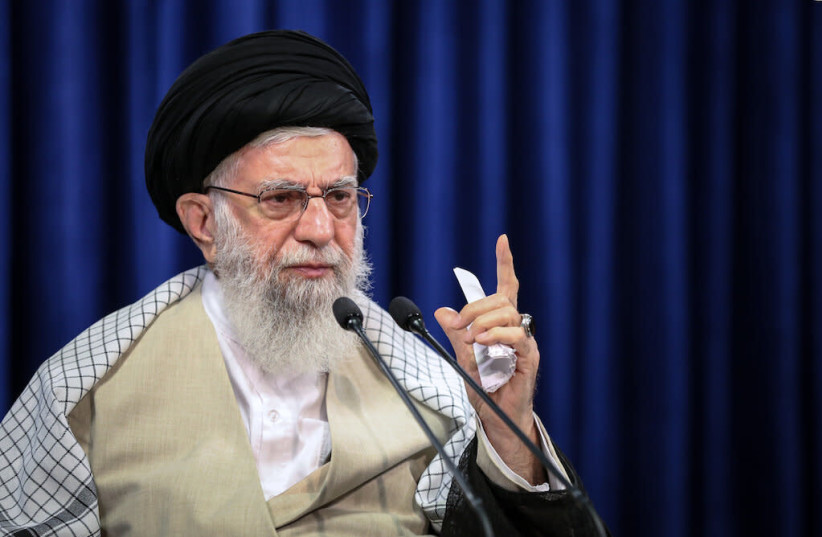
Iran Supreme Leader Ayatollah Ali Khamenei, July 2020
(photo credit: KHAMENEI.IR)
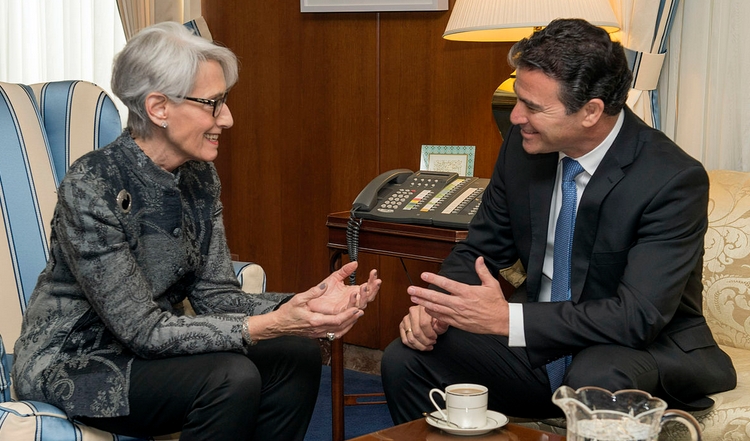
Israel is preparing a full-court press to discuss Iran’s threats with the new US administration, according to various media reports. National Security Adviser Meir Ben-Shabbat spoke on Saturday with Jake Sullivan, his counterpart in the Biden administration, and Mossad head Yossi Cohen is expected to travel soon to Washington to present Israel’s concerns to his counterparts in the intelligence community.
The discussions are expected to be wide-ranging. According to the report, they will likely include Iran stopping uranium enrichment, ending production of advanced centrifuges and stopping support for various terrorist proxies and militias. The proxies include Hezbollah in Lebanon, the Houthis in Yemen, as well as Iran’s threatening posture in Syria and Iraq. There are other concerns as well.
Sometimes in negotiations, one side outlines its ideal demands at the outset to get only some of them fulfilled at the end. This laundry list looks like that. Throw enough problems at the wall, and surely the US and Israel can work some of them out.
On the other hand, what Israel is sketching out also looks a lot more like an Iranian elephant in the room than just a nuclear problem. Iran has often used the nuclear program to distract from its real desire: to achieve regional hegemony.
The nuclear program is just one part of a vast military-industrial complex in Iran that involves advanced precision-guided ballistic missiles, sophisticated drones, new naval assets and a coterie of militias across the region.
Iran funds and arms Hezbollah, including secret production facilities for weapons. Iran has placed drones in Syria and even tried to put its Khordad air-defense system there. It has moved weapons to the T4 and Imam Ali bases and other centers in Syria. It is trying to move precision-guided munitions production to Lebanon or Syria, has moved drone and missile technology to the Houthis in Yemen, and in 2018, it moved ballistic missiles to western Iraq.
Never in history has a country taken such a multilayered approach so quickly to try to place a footprint across the region. In contrast to Western arms sales to countries in the Middle East, Iran has moved quickly to deploy its systems across the region. It has acted in contravention of international law, mining ships in the Gulf of Oman, attacking Saudi Arabia with drones in 2019 and moving weapons illegally across sovereign countries to illegal militias.
This is Iran’s method.
Iran’s nuclear program is, therefore, not sui generis and has wrongly been examined as its own entity instead of part of a larger Iranian game plan. Iran has often enjoyed letting the world talk about the nuclear program and the rate of enrichment and number of centrifuges, while it focused efforts on putting its first military satellite in orbit and improved its range of solid- and liquid-fueled missiles.
Iran turns the nuclear program on and off depending on how it wants to heat up negotiations. The program is a kind of bogeyman and form of blackmail all rolled into one.
Over the past several years, Israel’s focus shifted to deal with Iran’s entrenchment in Syria. With relative quiet in Lebanon and Hezbollah focused on the Syrian civil war, Israel has launched more than 1,000 airstrikes against Iran’s presence in Syria. Recent reports note Iran may have withdrawn some IRGC assets from Syria, and that some militias may be moving from Deir Ezzor and Albukamal in the northeast to across the border in Iraq.
However, reports have also noted increased threats from Yemen. The US designated the Houthis as terrorists, which the new administration is expected to review, and similarly designated militias in Iraq and key figures, including Abu Fadak of Kataib Hezbollah in Iraq.
US officials also pressed to enable Israel more operational freedom to confront Iran’s militia presence.
This happened, to some extent, after James Mattis left his role as secretary of defense in 2018. It is believed that James Jeffrey and others at the State Department pressed for more support for Israel in its campaign against Iran in Syria.
That means that between 2018 and the end of 2020 there was a kind of hand-in-glove approach: Israel was the fist that hammered the Iranians in Syria, and the US was the glove around the fist, encouraging and supporting it. For the US, this was a win-win because the administration could say it didn’t start any new foreign wars – it just outsourced them to Israel.
For defense experts, some of whom were reportedly skeptical about the abilities of the F-35, there has been a boon as well, with three joint training exercises between US and Israeli F-35 pilots last year. According to an Al Arabiya report last May, Israel has used the F-35 against Iranian targets in Syria. The first reports of the F-35 being used in combat date back to 2018.
Iraq’s government and its pro-Iranian militias blame Israel for carrying out airstrikes in July and August 2019 against Iranian militia targets in Iraq. This caused tensions between Iraq and US air operations. It has also caused the pro-Iran militias to look skyward.
An explosion in Iraq earlier this month led militias to spread rumors of another mysterious strike. That was proven to be false, but the initial blame game illustrates how Israel is viewed. In the fall of 2017, Qais Khazali, an Iraqi pro-Iran militia leader, went to Lebanon and said Iraq’s militias would support Hezbollah if a war broke out with Israel.
Current and future discussions with the Biden administration will focus on the larger Iranian octopus spreading its tentacles across the region. How to deal with that octopus and all its threats is the real hurdle. The nuclear program is just the kind of distracting dress that the octopus wears to distract from the larger looming problem.