
Few are paying attention to some very dramatic developments taking place in the Middle East involving Israel, the US, Iran and its proxies. But they should.
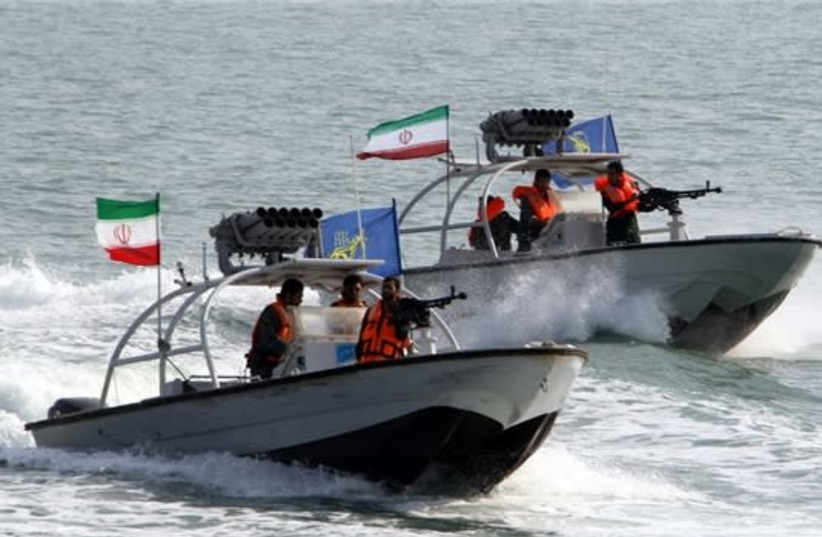
IRGC siezes ship near Bu Musa Island, Iran (photo credit: Wikimedia Commons)
IRGC siezes ship near Bu Musa Island, Iran
(photo credit: Wikimedia Commons)
With the world’s attention focused on COVID-19 and the staggering sequence of events in Washington – the mob invasion of the Capitol and the impeachment proceedings in Congress – few are paying attention to some very dramatic developments taking place in the Middle East involving Israel, the US, Iran and its proxies. But they should.

Consider the following:

On Tuesday night, 18 airstrikes took place deep inside Syria, near the Syrian-Iraqi border – which foreign reports attributed to Israel, and which reportedly killed more than two dozen Syrian soldiers and foreign fighters. The area serves as a key transit point from Iran to Hezbollah in Lebanon. This was the fourth attack on Syria in two weeks that has been attributed to the Jewish state. Jerusalem has remained mum.

US Secretary of State Mike Pompeo, who will be leaving office in a week, delivered a speech in Washington Tuesday night describing what he said was an Iran/al-Qaeda axis. He said that, contrary to popular opinion that Shi’ite Iran and the Sunni al-Qaeda do not get along and cooperate, they do work together – and do so closely.

“Al-Qaeda has a new home base: it is the Islamic Republic of Iran,” Pompeo said. “As a result, bin Laden’s wicked creation is poised to gain strength and capabilities. We ignore this Iran/al-Qaeda nexus at our own peril. We need to acknowledge it; we must confront it. Indeed, we must defeat it.”

What is worth remembering is that al-Qaeda remains a red flag for many Americans. By laying this out there now, Pompeo – a former CIA director – may be trying to make it more difficult for the incoming Biden administration to engage with the Iranians over re-entering the Iranian nuclear deal. But it is also worth remembering that a major pretext for the US invasion of Iraq in 2003 was its ties to al-Qaeda, and some are hearing echoes of the same in Pompeo’s words.

Within days of 9/11 in 2001, Congress passed the first of two Authorizations for Use of Military Force (AUMF) that allow the White House to take military action against any entity that aided or harbored al-Qaeda terrorists. This could conceivably be the legal basis for an attack on Iran, if a link was proven between them.

CONSIDER THIS as well: Israel recently stationed Iron Dome batteries in Eilat to protect the city from possible missiles coming from the Iranian-backed Houthis in Yemen.

The US has on three occasions over the last few weeks dispatched B-52 bombers to fly near the Iranian coast. It ordered a submarine outfitted with Tomahawk missiles to the Persian Gulf, and dispatched the aircraft carrier Nimitz to the Middle East, only to abruptly send it back home last week.

These moves were all interpreted as attempts to prevent the Iranians from attacking the US, Israel or other targets to avenge last January’s killing of Islamic Revolutionary Guard Corps Quds Force Gen. Qasem Soleimani, and the assassination in November of Mohsen Fakhrizadeh, head of Iran’s nuclear program.

Add into the mix recent Iranian announcements that they have stepped up uranium enrichment, as well as a report that Mossad head Yossi Cohen was spotted in Washington on Monday, and this accounts for a lot of dots that might be connected.

Some are looking at those dots, and wondering if when connected they may reveal the outline of a possible US strike on Iran before Trump formally leaves office at noon next Wednesday.

“Is there a chance that there will be an attack on Iran before the end of the Trump tenure?” Defense Minister Benny Gantz was asked during an interview on Channel 13 on Tuesday night.

“I can’t tell you whether there will be an American attack on Iran, and if I had concrete information I would not reveal it here, but I am saying something very simple: the Iranians are continuing to act throughout the Middle East, and we need to continue to wage a diplomatic, economic, intelligence and security campaign against them. And it is very possible that if there is an occurrence, things can develop,” he said.

“We are in a very critical period, and I don’t recommend that anyone test [the] IDF, or the capabilities of Israel or the US.”

In other words, things are tense, a lot is happening, and a miscalculation could set off a chain of events that could lead to a major conflagration.

ALREADY IN November, The New York Times reported that Trump had asked senior advisers what options existed for use against Iran’s nuclear sites in the coming weeks. According to the paper, the advisers, including Pompeo and Gen. Mark Milley, chairman of the Joint Chiefs of Staff – dissuaded Trump from such a move.

But that was then, before last Wednesday’s attack on the Capitol and the impeachment vote in Congress – and the likelihood that these events will now be Trump’s enduring legacy. An attack now on the Islamic Republic, however, could dramatically change that conversation.

Which is why some are hinting at the possibility, even as they agree that the chances of this happening are very slim. If Pompeo, Milley and Vice President Mike Pence and others dissuaded Trump from military action against Iran two months ago before last week’s toxic events in Washington, then it is likely they would oppose or try to thwart such a move even more so now.

As Trump’s tenure comes to a close, both the Israelis and Americans are on edge over a possible Iranian attack to avenge the deaths of Soleimani and Fakhrizadeh; the Iranians are on edge that Trump may strike in his waning days in office; and Israel – if the foreign reports are to be believed – is sending clear messages to the American through attacks on Iranian assets in Syria that regardless of who sits in the White House, Jerusalem will not let Tehran entrench itself in Syria.

Those are a lot of moving parts in a very volatile region, all of which increase the possibility of a misread or miscalculation by one side or the other that, as Gantz intimated, could lead to a dramatic chain of events.

Report: IDF drawing up plans to strike Iran’s nuclear program

Newspaper says IDF chief has asked for options to derail atomic production, day after Likud minister warned Israel could attack Islamic Republic if US rejoins nuclear deal

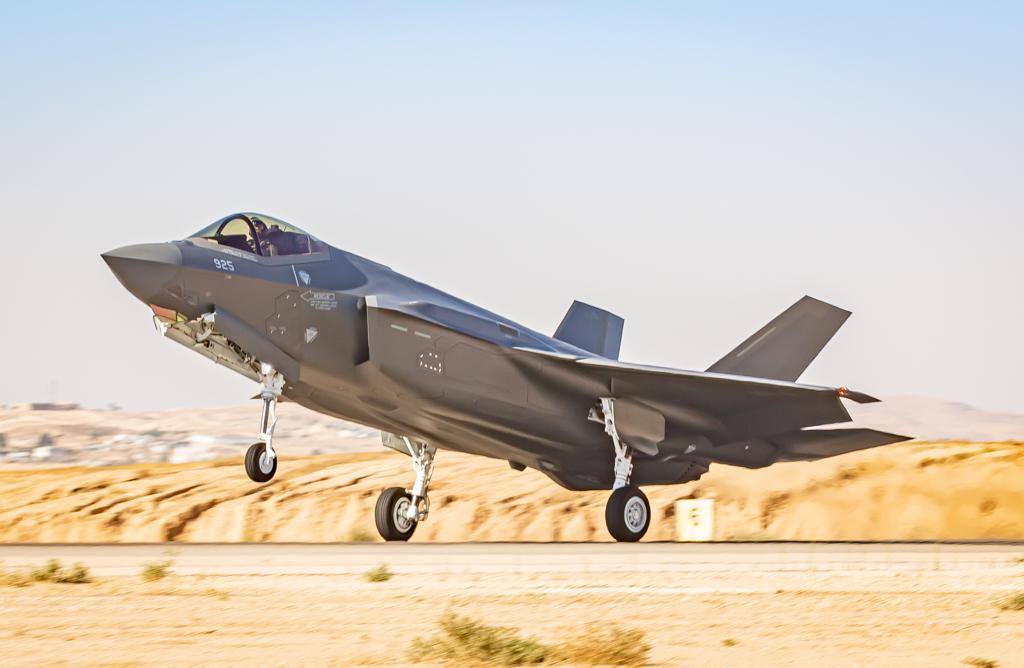
A new F-35 fighter jet at the Nevatim Air Base in southern Israel, on July 14, 2019. (Israel Defense Forces)
An F-35 fighter jet at the Nevatim Air Base in southern Israel from the United States on July 14, 2019. (Israel Defense Forces)

The Israel Defense Forces is drawing up plans for an attack on Iran’s nuclear program, the Israel Hayom daily reported Thursday in a front-page article.

The newspaper said that IDF Chief of Staff Aviv Kohavi has asked for three alternate proposals to derail Tehran’s program, without elaborating on them. It only indicated one of the proposals is a military strike, noting that such a plan would require a significant budgetary boost for the Israeli military.

Iran resumed enriching uranium to 20 percent last week, well in excess of the threshold set out in its landmark 2015 nuclear deal with world powers and a short technical jump from the 90% level of enrichment needed to produce weapons.

The Israel Hayom report came a day after Likud minister Tzachi Hanegbi, considered an ally of Prime Minister Benjamin Netanyahu, threatened that Israel could attack Iran’s nuclear program if the United States rejoined the nuclear deal, as US President-elect Joe Biden has indicated he plans to do.

Prime Minister Benjamin Netanyahu, left, speaks with Tzachi Hanegbi during a Likud Party faction meeting at the Knesset on February 8, 2016. (Yonatan Sindel/Flash90)

“If the United States government rejoins the nuclear deal — and that seems to be the stated policy as of now — the practical result will be that Israel will again be alone against Iran, which by the end of the deal will have received a green light from the world, including the United States, to continue with its nuclear weapons program,” Hanegbi said in an interview with Kan news.

“This of course we will not allow. We’ve already twice done what needed to be done, in 1981 against the Iraqi nuclear program and in 2007 against the Syrian nuclear program,” he said, referring to airstrikes on those two countries’ nuclear reactors.

Former US president Barack Obama, with incoming US President-elect Joe Biden as his vice president, signed the Iranian nuclear deal with world powers in 2015. The Trump administration withdrew from the accord in 2018 and pressured Iran with crippling economic sanctions and other measures.

Obama signed the agreement despite fierce protest from Israel, and had a rocky relationship with Jerusalem and Netanyahu, while the premier and Trump have been in lockstep on most Middle East policy issues.

Biden is expected to take a more conciliatory approach to Iran and has said that if Iran returns to the terms of the nuclear agreement, he too would rejoin, removing the crushing economic sanctions that have wreaked havoc on the Iranian economy over the past two years.

Then-US President Barack Obama, standing with then-Vice President Joe Biden, delivers remarks in the East Room of the White House in Washington, on July 14, 2015, after a nuclear deal with Iran is reached. (AP Photo/Andrew Harnik, Pool)

The US president-elect has indicated that he wants to negotiate more broadly with Tehran if Washington returns to the deal, notably over its missiles and influence across the Middle East. Iran has said it could welcome the return of the Americans to the agreement, but only after they lift sanctions. It has rejected negotiation on other issues.

Iran and the Trump administration have engaged in an ongoing exchange in recent months as the Trump administration draws to a close and Iran marked the one-year anniversary of the US assassination of its general Qassem Soleimani.

The back and forth has included threats, military maneuvers, legal action and escalating Iranian violations of the nuclear deal.

Further complicating the Biden administration’s plans to reengage with Tehran were two high profile assassinations this year in Iran that were attributed to Israel. Top Iranian nuclear scientist Mohsen Fakhrizadeh was gunned down outside Tehran in November in a hit Iranian officials blamed on Israel. In August, Israeli agents killed al-Qaeda’s second-in-command in Tehran at the behest of the US, according to a New York Times report.


i24NEWS

Members of the Falash Mura Jewish Ethiopian community attend morning prayers in the synagogue in Gonder, April 21, 2016, Ethiopia.
Miriam Alster/FLASH90Members of the Falash Mura Jewish Ethiopian community attend morning prayers in the synagogue in Gonder, April 21, 2016, Ethiopia.

‘I am extremely excited to see these new arrivals in Israel,’ Minister for Aliyah and Integration says

On Thursday morning, Israel welcomed another 162 Ethiopian Jews, members of the Falash Mura community, who landed in the Jewish state to make their aliyah — immigration.

The newly-made Israelis made their way into the Jewish state on the fifth flight conducted as part of the so-called “Rock of Israel” operation.

“I am extremely excited to see these new arrivals in Israel,”  Pnina Tamano-Shata, Israel’s Minister of Aliyah  and Integration, who is of Ethiopian origin herself, said.

“We have begun to correct this old wrong, and it gives me the strength to continue to act,” she added.

Under the restrictions imposed to curb the spread of COVID-19 coronavirus in Israel, the new immigrants will have to go for a two-week quarantine before reuniting with their families.

Under “Rock of Israel,” the Jewish state intends to fly in a total of some 2,000 Ethiopian Jews, Prime Minister Benjamin Netanyahu announced in October, unveiling the plan.

In early December, 316 Ethiopians of Jewish faith arrived in Israel as part of this initiative.

Comments
