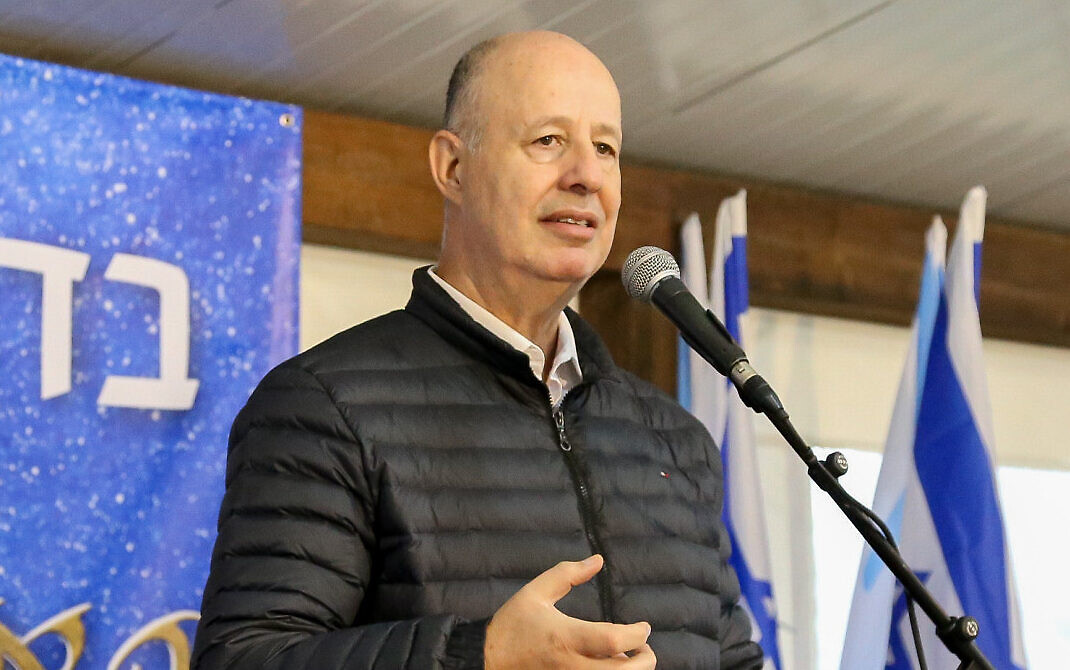
Likud ministers on Wednesday refrained from confirming whether Israel was behind a raid in Syria overnight, but said the incoming US administration must not “appease” Iran, and warned Tehran the Jewish state will not tolerate its military presence in Syria or its development of nuclear weapons.
In one of the most forceful statements made by an Israeli official, the Likud’s Tzachi Hanegbi, considered an ally of Prime Minister Benjamin Netanyahu, threatened that Israel could attack Iran’s nuclear program if the United States rejoined the nuclear deal, as US President-elect Joe Biden has indicated he plans to do.
“If the United States government rejoins the nuclear deal — and that seems to be the stated policy as of now — the practical result will be that Israel will again be alone against Iran, which by the end of the deal will have received a green light from the world, including the United States, to continue with its nuclear weapons program,” Hanegbi said in an interview with Kan news.
Get The Times of Israel’s Daily Edition by email and never miss our top storiesFREE SIGN UP
“This of course we will not allow. We’ve already twice done what needed to be done, in 1981 against the Iraqi nuclear program and in 2007 against the Syrian nuclear program,” he said, referring to airstrikes on those two countries’ nuclear reactors.
Asked about speculation that US President Donald Trump may conduct a large strike on Iran and its nuclear program before he leaves office next week, Hanegbi said this was not expected.
“The [Israeli] assessment is that nothing dramatic will happen during this week,” he said.
The massive airstrikes in eastern Syria reportedly targeted more than 15 Iran-linked facilities and were the fourth reported attack by Israel against Iranian targets in Syria in the past two and a half weeks, a significant increase from the normal rate of such strikes. The predawn attacks on Wednesday also struck a significant number of targets in Syria, more than 15 by most counts from Syrian media.
A US official said the strikes hit a series of warehouses near the Iraqi border that were being used in a pipeline to store and stage Iranian weapons. Syrian media outlets also reported that the targets were missiles that had been brought into the country in recent weeks.
“We don’t acknowledge this or other strikes,” Hanegbi said. “The Iranians want permission from Assad to act freely in Syria, to transform it into the model of Hezbollah [the Lebanon-based Iran-backed terror group]. This is all to deter us from acting against its nuclear program.”
Hanegbi also warned the incoming Biden administration against “appeasing” Iran.
“The most important thing is to convince the incoming American administration not to repeat the mistakes of the Obama administration — to appease the Iranians. This only increased Iranian aggression and defiance. They saw this as American weakness,” said Hanegbi.
Likud minister Yuval Steinitz, in an interview with Army Radio, said Israel was engaged in a “tremendous effort against Iran and its attempts to obtain nuclear weapons and establish itself [militarily] in Syria.”
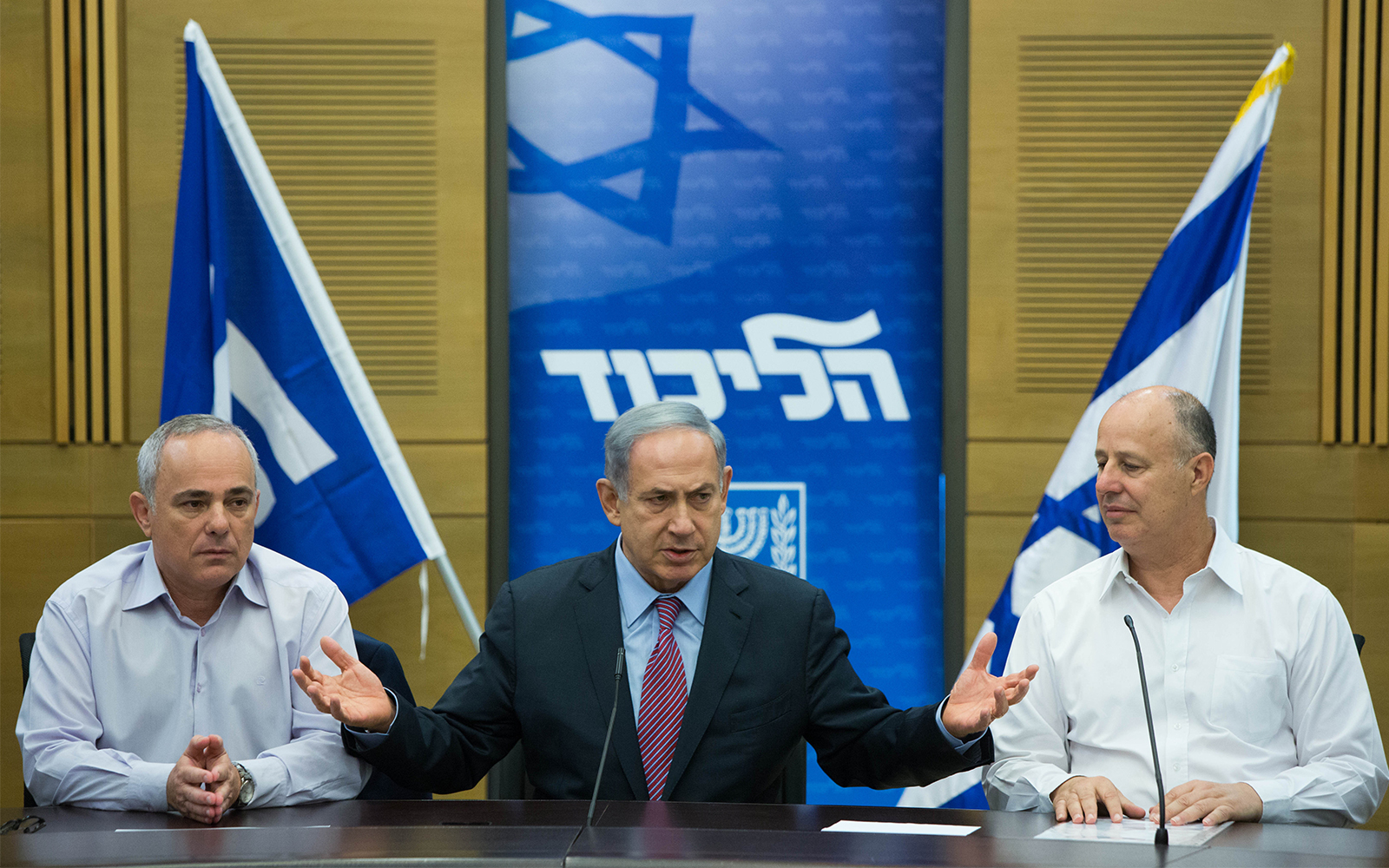
Prime Minister Benjamin Netanyahu, center, seen with Likud’s Tzachi Hanegbi, right, and Yuval Steinitz, left during a Likud faction meeting at the Knesset, July 27, 2015. (Yonatan Sindel/Flash90)
Former US president Barack Obama, with incoming US President-elect Joe Biden as his vice president, signed the Iranian nuclear deal with world powers in 2015. The Trump administration withdrew from the accord in 2018 and pressured Iran with crippling economic sanctions and other measures.
Obama signed the agreement despite fierce protest from Israel, and had a rocky relationship with Jerusalem and Netanyahu, while the premier and Trump have been in lockstep on most Middle East policy issues.
Biden is expected to take a more conciliatory approach to Iran and has said that if Iran returns to the terms of the nuclear agreement, he too would rejoin, removing the crushing economic sanctions that have wreaked havoc on the Iranian economy over the past two years.
The US president-elect has indicated that he wants to negotiate more broadly with Tehran if Washington returns to the deal, notably over its missiles and influence across the Middle East. Iran has said it could welcome the return of the Americans to the agreement, but only after they lift sanctions. It has rejected negotiation on other issues.
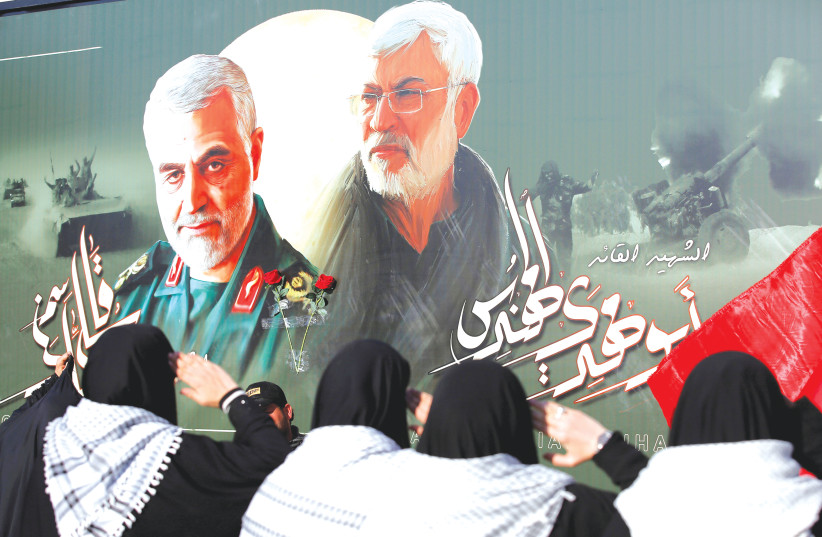
Iran and the Trump administration have engaged in an ongoing exchange in recent months as the Trump administration draws to a close and Iran marked the one-year anniversary of the US assassination of its general Qassem Soleimani.
The back and forth has included threats, military maneuvers, legal action and escalating Iranian violations of the nuclear deal.
A senior US intelligence official said the overnight airstrikes in Syria were carried out by Israel with intelligence provided by the US, marking a rare incidence of publicized cooperation between the two countries over choosing targets in Syria.
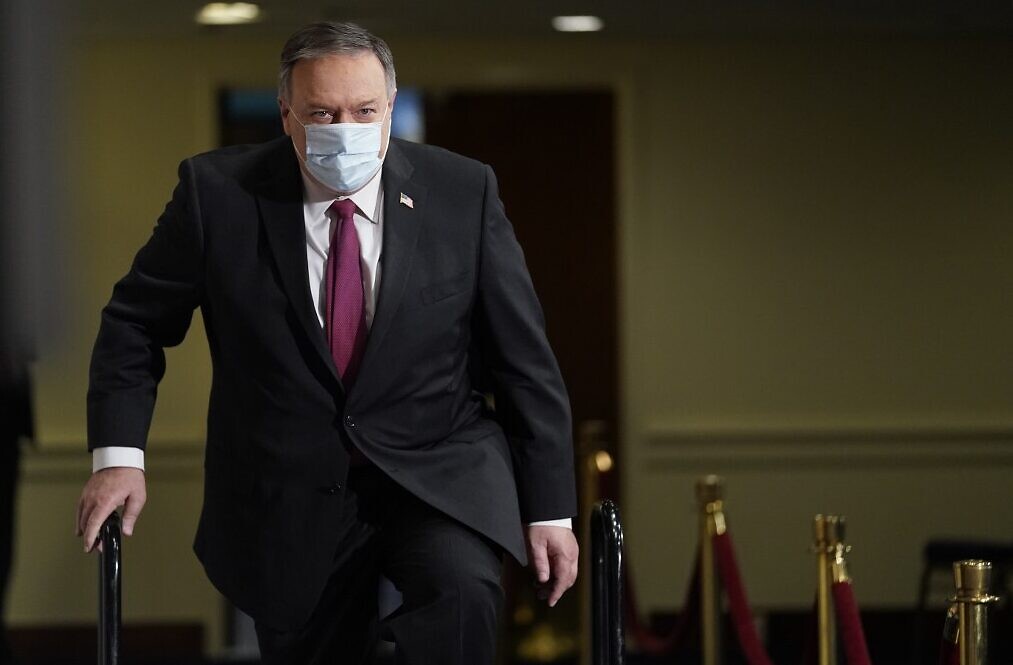
US Secretary of State Mike Pompeo arrives to speak at the National Press Club in Washington, on January 12, 2021. (Andrew Harnik/Pool/AFP)
US Secretary of State Mike Pompeo publicly accused Iran of harboring al-Qaeda on Wednesday.
Iran resumed enriching uranium to 20 percent last week, well in excess of the threshold set out in its landmark 2015 nuclear deal with world powers and a short jump from the level of enrichment needed to produce weapons.
Further complicating the Biden administration’s plans to reengage with Tehran were two high profile assassinations this year in Iran that were attributed to Israel. Top Iranian nuclear scientist Mohsen Fakhrizadeh was gunned down outside Tehran in November in a hit Iranian officials blamed on Israel. In August, Israeli agents killed al-Qaeda’s second-in-command in Tehran at the behest of the US, according to a New York Times report.
The strikes in Syria overnight targeted sites in the areas of Boukamal and Deir Ezzor in eastern Syria, where there is a major presence of Iranian-backed militias, according to Syria’s official SANA news agency
Though not unprecedented, alleged Israeli strikes on targets near the Syrian-Iraqi border are uncommon, due to the challenges of conducting such operations far from Israel, which likely accounts for the large numbers of targets struck in the raids.
But the latest reported attacks were massive, and unverified reports said 57 fighters were killed, which according to AFP would be the deadliest such strikes since the start of the conflict in Syria.
The Israel Defense Forces had no comment on the late-night strikes, in accordance with its policy to neither confirm nor deny its operations in Syria, save for those in retaliation for an attack from the country.
The area targeted has reportedly been repeatedly struck by Israel in recent years as it houses a number of bases used by Iranian-backed groups and is key to a land corridor for Tehran that links Iran across Iraq and Syria through Lebanon, which Iran uses to smuggle in weapons and rockets, mainly to the Hezbollah terror group.
The IDF has launched hundreds of strikes in Syria since the start of the civil war in 2011 against moves by Iran to establish a permanent military presence in the country and efforts to transport advanced, game-changing weapons to terrorist groups in the region, principally Hezbollah.