
IDF Spokesperson: Iranian retaliation likely to come from Iraq, Yemen

In an interview given to the Saudi news website Elaph, Brig.-Gen. Hadi Zilberman addressed Iran and the tactics deployed by the IDF in order to address the looming threat.
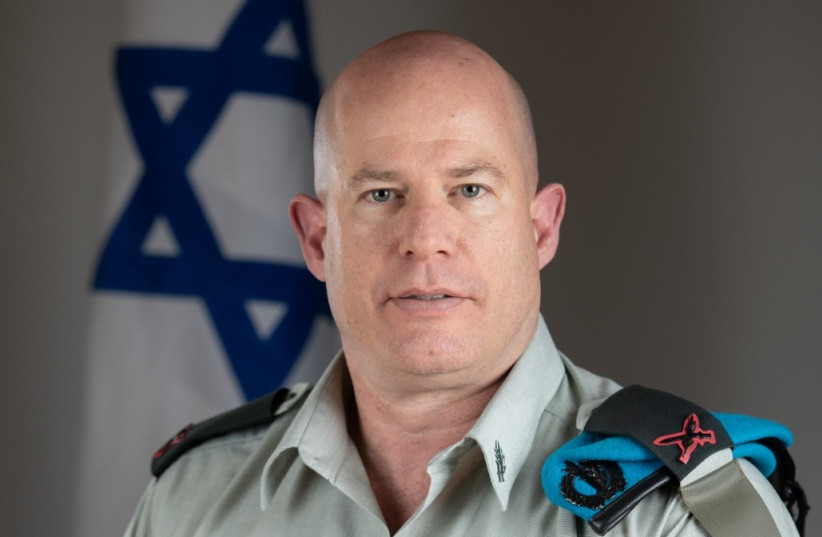
IDF spokesman Brig. Gen. Hadi Zilberman (photo credit: IDF)
IDF spokesman Brig. Gen. Hadi Zilberman
(photo credit: IDF)
Israel is monitoring Iran’s movement in the region and expects that the Iranian threat will likely come from Iraq and Yemen, IDF Spokesperson Brig.-Gen. Hadi Zilberman told the Saudi news website Elaph.
In an interview given to Elaph and published on Friday, Zilberman addressed Iran and the tactics deployed by the IDF in order to address the threat, which he said is likely to arise from Iraq and Yemen. Zilberman referred to Iraq and Yemen as Iran’s second circle after Lebanon and Syria, considered the first circle in its proxy conflict with Israel, and said that Israel has been monitoring the situation in both countries closely.
Zilberman noted that Iran has developed a wide range of capabilities in the area – and specifically in Iraq and Yemen – that include advanced drones and remote-guided missiles which they manage to operate without detection, indicating “a great Iranian ability In this area.”
He stressed that everyone should be on high alert regarding the Iranian threat, which he described as a “powder keg liable to explode,” considering the many blows Iran has received in the past year without being able to properly respond. These include the assassination of Maj.-Gen. Qasem Soleimani, its sites continuously being targeted in Syria, the mysterious explosions in several of its nuclear facilities, the assassination of its top nuclear scientist Mohsen Fakhrizadeh, international sanctions and the coronavirus pandemic, which has had a devastating effect on the country.
Nearing the one-year mark since the assassination of Soleimani that took place on January 3, 2020, Zilberman noted that Iran may use the occasion to launch an offense against Israel or the US, which are considered one in Iran’s eyes.
Asked about the incident of an Israeli Navy submarine being spotted crossing the Suez Canal earlier this week, Zilberman said that he could not confirm the report but noted that the IDF operates freely in the Middle East and that Israeli submarines sail to “different places, far and near.”
Addressing various unprecedented recent operations attributed to the IDF, Zilberman said he considers 2020 a year of “security par excellence for the State of Israel.” In this regard, Zilberman noted that Israel has proven its ability to carry out targeted and smart operations, considering that the IDF has led more operations in the past year than usual and has received close to no responds. He added that Israel has no intention of stopping its efforts of preventing Iran from taking hold of areas in Syria and Lebanon, and indicating that the extended array of anti-aircraft systems deployed in Syria is no obstacle for the IDF.
Asked about Israel’s involvement in Lebanon and the recent rising tension with Hezbollah, Zilberman avoided giving a direct answer but said that Israel knows about the current efforts being taken by Hezbollah and will know how to neutralize any weapon or technology of Hezbollah, by military means or otherwise.
Regarding recent cyber attacks carried out against Israel by Iranian hacker groups, Zilberman admitted that Iranian efforts on this front have increased and have succeeded somewhat, explaining that the Iranian hackers usually target civilian companies that work with the military, but stressed that the damage was insignificant. He did, however, hint at the possibility that 2021 will see even more attacks of this kind, as cyber-warfare replaces the modern battlefield.
“Any calculations known to us today could change for an unknown reason,” Zilberman told Elaph when asked about a looming war, adding that the current echelon leading the IDF is innovative in its thinking about the future and its unknown threats, and is working hard to ensure that Israel will always be prepared.
On Monday, IDF Chief of Staff Lt.-Gen. Aviv Kochavi addressed the Iranian threat during a ceremony for exemplary soldiers and said that Iran will pay a heavy price if any Israeli is targeted.
“We are hearing more and more threats against Israel coming from Iran,” he said. “If Iran and its partners… attack the State of Israel, they will [pay] a heavy price … I am simplifying things and describing the situation to our enemies as it is,” he added. “Our retaliation plans are prepared, and they have been practiced.”


IDF strikes Hamas targets in Gaza after rockets fired into Israel

Israeli aircraft hit rocket manufacturing facility, underground infrastructure belonging to terror group in response to 2 projectiles fired across border


Flames are seen following an Israeli air strike in the town of Khan Yunis, in the southern Gaza Strip, early on November 22, 2020. (Said Khatib/AFP)

Illustrative: Flames are seen following an Israeli air strike in the town of Khan Yunis, in the southern Gaza Strip, early on November 22, 2020. (Said Khatib/AFP)

Israel attacked the Hamas terror group in Gaza early Saturday morning in response to rockets fired from the Strip into Israel on Friday evening.

Israel Defense Forces aircraft attacked Hamas targets including a rocket manufacturing site, underground infrastructure and a military outpost, the IDF said in a statement.

“The attack was carried out in response to rockets fired from the Gaza Strip into Israeli territory this evening,” the statement said. “The Hamas terror organization is responsible for all acts in and emanating from the Gaza Strip, and it will bear the consequences of terrorist acts against Israeli civilians.”

The Hamas-affiliated Shehab news agency said the strikes were in the central part of the Strip.

Earlier, two rockets fired from Gaza were shot down by the Iron Dome anti-missile system. There were no reports of injuries or damage.

The Israeli military confirmed that the projectiles fired into Israel were intercepted by soldiers operating the air defense system.

Sirens warning of the incoming rockets blared in several southern Israeli communities near Gaza, sending residents into shelters. The Red Alert sirens sounded in Ashkelon, Zikim, Netiv Ha’asara and nearby towns in the Hof Ashkelon Regional Council.

Last month, two rockets fired from Gaza struck open areas along the coast — one near the city of Ashdod and the other on Palmachim Beach, south of Tel Aviv — causing no significant damage or injuries.

Soldiers operating the Iron Dome air defense system attempted to shoot down the rocket fired toward Palmachim Beach, firing at least two interceptor missiles at the projectile, but did not bring it down. Fragments of an interceptor missile landed in the nearby city of Bat Yam, causing minor damage.

The rocket fire last month came days after the one-year anniversary of the killing of Palestinian Islamic Jihad commander Baha Abu al-Ata.

Israel has fought three large campaigns against terror groups in the Strip since Hamas took control of the area in 2007, along with dozens of smaller exchanges of fire

.https://www.timesofisrael.com/idf-reportedly-strikes-gaza-after-rockets-fired-into-israel/


Netanyahu speaks to king of Morocco, invites him to visit Israel

In first call since normalization announcement, leaders congratulate one another, discuss ways to advance deal in coming weeks


Left: Israeli Prime Minister Benjamin Netanyahu in Jerusalem, Nov. 19, 2020; Right: Morocco's King Mohammed VI in Paris, May 2, 2017 (AP Photos/Maya Alleruzzo, Michel Euler)

Left: Israeli Prime Minister Benjamin Netanyahu in Jerusalem, Nov. 19, 2020; Right: Morocco’s King Mohammed VI in Paris, May 2, 2017 (AP Photos/Maya Alleruzzo, Michel Euler)

Prime Minister Benjamin Netanyahu spoke on the phone with Morocco’s King Mohammed VI on Friday for the first time since the two countries agreed to re-establish diplomatic relations earlier this month.

The two leaders congratulated one another on the agreement brokered by US President Donald Trump, which included the White House agreeing to recognize Moroccan sovereignty over the disputed Western Sahara region.

During the “warm and friendly” conversation, Netanyahu extended an invitation for King Mohammed VI to visit Israel and the two agreed to continue contacts in order to advance the normalization agreement in the weeks ahead, the Prime Minister’s Office said.

“The leaders congratulated each other over the renewal of ties between the countries, the signing of the joint statement with the US, and the agreements between the two countries,” according to the statement from Netanyahu’s office.

“In addition, the processes and mechanisms to implement the agreements were determined,” it added.

The Moroccan king’s royal office issued a statement saying that, in his conversation with Netanyahu, the monarch recalled “the strong and special ties” between the Jewish community in Morocco and the monarchy and reiterated “the consistent, unwavering and unchanged position of the Kingdom of Morocco on the Palestinian issue and the pioneering role of the kingdom in promoting peace and stability in the Middle East.”

On Wednesday, Morocco’s tourism minister announced that direct flights will begin operating between Israel and Morocco within two or three months,

A joint Israeli-American delegation visited Morocco on Tuesday to sign several bilateral agreements and a trilateral declaration to solidify the normalization agreement.

The group’s flight to Rabat was the first direct commercial flight from Israel to Morocco.

US Presidential adviser Jared Kushner, center, and National Security Adviser Meir Ben Shabbat, center-right, arrive at the Royal Palace in the Moroccan capital Rabat, December 22, 2020. (Fadel Senna/AFP)

The delegation held high-level talks with Moroccan officials, including King Mohammed VI, and Israel and Morocco announced they would move to swiftly reopen diplomatic missions in each country. The two countries previously operated liaison offices in each other’s lands which were closed some 20 years ago.

Jared Kushner, US President Donald Trump’s senior adviser and son-in-law, and Israeli National Security Adviser Meir Ben-Shabbat led the delegation.

Morocco was the third Arab state this year to normalize ties with Israel under US-brokered deals, joining the United Arab Emirates and Bahrain. Sudan has also announced plans to normalize ties with Israel, though no official agreements have been signed.

Morocco is home to North Africa’s largest Jewish community, which has been there since ancient times and grew with the arrival of Jews expelled from Spain by Catholic kings from 1492.

It reached about 250,000 in the late 1940s, 10 percent of the national population, but many Jews left after the creation of Israel in 1948, many fleeing local hostilities directed at them over the establishment of the Jewish state.

About 3,000 Jews remain in Morocco, and the Casablanca community is one of the country’s most active.

Israel, meanwhile, is home to 700,000 Jews of Moroccan origin.
