Russia and its close ally Belarus reached out to Venezuela’s embattled leader, Nicolas Maduro, on Thursday as US President Donald Trump ramps up pressure for his removal.

) Venezuelan President Nicolas Maduro (L) exchanges documents with Russian President Vladimir Putin (R) prior to the meeting with President of Russia, May 7, 2025 in Moscow, Russia
(photo credit: Contributor/Getty Images)
Russia and its close ally Belarus reached out to Venezuela’s embattled leader, Nicolas Maduro, on Thursday as US President Donald Trump ramps up pressure for his removal, raising the possibility he could seek refuge abroad.

Maduro told Trump in a phone call on November 21 that he was ready to leave Venezuela, provided that he and his family had full legal amnesty, sources have told Reuters.

Belarusian President Alexander Lukashenko on Thursday held his second meeting in 17 days with Jesus Rafael Salazar Velazquez, the Venezuelan ambassador to Moscow.

On Thursday, Belta quoted Lukashenko as reminding Velazquez they had agreed at the first meeting to “coordinate certain matters” with Maduro.

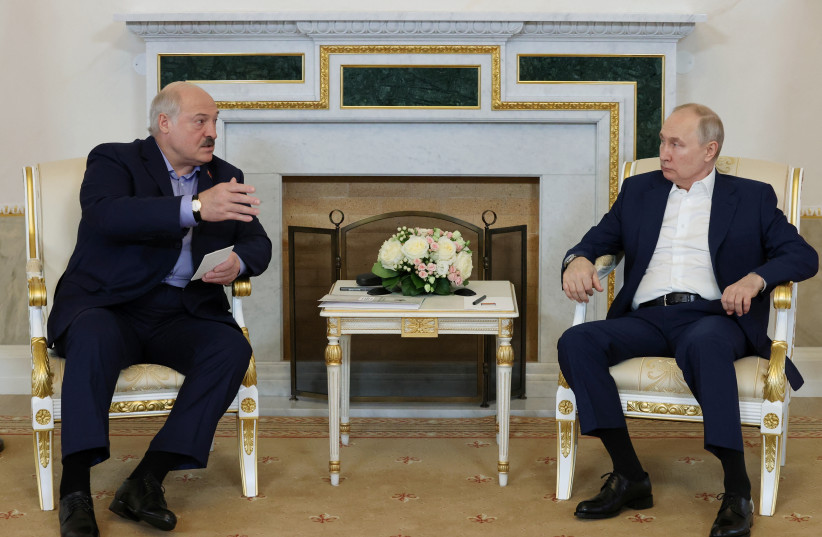
 Russian President Vladimir Putin and Belarusian President Alexander Lukashenko attend a meeting in Saint Petersburg, Russia July 23, 2023. (credit: SPUTNIK/ALEXANDER DEMYANCHUK/POOL VIA REUTERS)
Russian President Vladimir Putin and Belarusian President Alexander Lukashenko attend a meeting in Saint Petersburg, Russia July 23, 2023. (credit: SPUTNIK/ALEXANDER DEMYANCHUK/POOL VIA REUTERS)

“We agreed that, after resolving certain issues, you would find time to come to me and meet again so we could make the appropriate decision, which is within our competence. And if necessary, we will then involve the president of Venezuela.”

Reuters requested comment from Lukashenko’s office on the significance of the meetings and whether Belarus would be willing to offer sanctuary to Maduro if he stepped down. It did not respond.

The Kremlin said President Vladimir Putin, in a phone call to the Venezuelan leader on Thursday, “reaffirmed his support for the policy of N. Maduro’s government, aimed at protecting national interests and sovereignty in the face of growing external pressure.”

US carries out military build-up in Caribbean

The Trump administration has said it does not recognize Maduro, in power since 2013, as Venezuela’s legitimate president. He claimed to have won reelection last year in a vote dismissed as a sham by the US and other Western governments. Independent observers said the opposition had won overwhelmingly.

In recent months, Trump has intensified pressure on Venezuela, not least with a massive military build-up in the Caribbean.

In an interview with Politico this week, Trump said Maduro’s “days are numbered,” while declining to say whether he would be willing to send US troops into Venezuela.

Russian Foreign Ministry spokeswoman Maria Zakharova told reporters on Thursday: “We hope that the White House will manage to prevent a further slide into a full-scale conflict, which threatens to have unpredictable consequences for the entire Western Hemisphere.”

Lukashenko, the veteran authoritarian leader of Belarus, has friendly ties with Venezuela and has also this year entered a dialog with the Trump administration, after years of being shunned by Washington and other Western governments over his human rights record and support for Russia’s invasion of Ukraine.

Trump has started to ease US sanctions on Belarus and last month named a special envoy, John Coale, to pursue further negotiations with Lukashenko on the release of political prisoners.


US lawmakers demand Lebanon disarm Hezbollah without delay

Bipartisan US lawmakers urge Lebanon to disarm Hezbollah, warning that failure to act violates ceasefire commitments and risks renewed war under Iran-backed militia control.

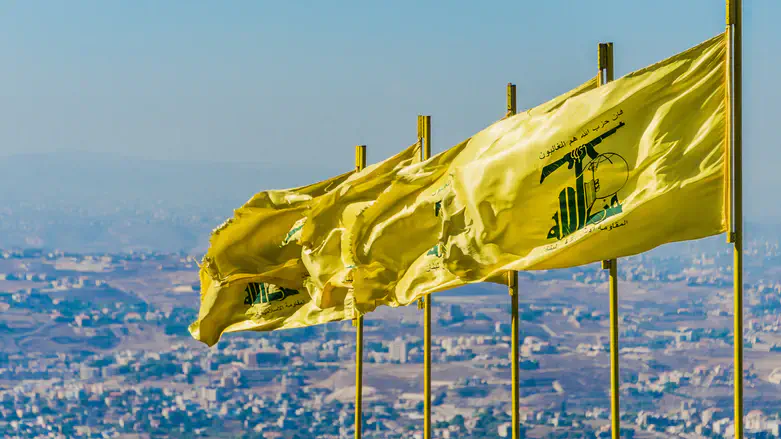
Hezbollah flags

Hezbollah flagsiStock

A bipartisan group of US lawmakers has called on Lebanon’s leadership to immediately disarm the Hezbollah terrorist organization, warning that failure to act could plunge the country into renewed conflict.

The letter, spearheaded by Reps. Josh Gottheimer (D-NJ) and Jefferson Shreve (R-IN), was addressed to Lebanese President Joseph Aoun and Prime Minister Nawaf Salam. The lawmakers charged that Beirut has failed to uphold its obligations under the November 2024 ceasefire agreement, which required Lebanon to “begin a staged process toward dismantling Hezbollah’s military infrastructure and restoring state authority across all Lebanese territory.”

“The consequences of allowing Hezbollah to rebuild are devastating for Lebanon’s security and peace in the region,” the lawmakers wrote. “Empty promises and partial measures that fall far short of disarming the group are clearly not enough.”

The members of Congress cited reports that Hezbollah has been rearming and rebuilding positions south of the Litani River, in violation of a United Nations Security Council resolution.

“The time for empty promises has passed,” they continued. “Every day your government fails to act in a meaningful way pushes Lebanon closer to renewed war and deeper into the grip of a terrorist organization loyal to Iran, not to the Lebanese people.”

“Lebanon’s obligations under the ceasefire are clear and so is the risk of continued delay,” the lawmakers warned. “As you work to implement your reform agenda and stabilize Lebanon’s economy, a prosperous Lebanon cannot coexist with an armed Hezbollah, nor can it thrive while its national army is sidelined by a militia acting as a state within a state.”

The letter was also signed by Reps. Don Bacon (R-NE), Gus Bilirakis (R-FL), Steve Cohen (D-TN), Don Davis (D-NC), Jared Golden (D-ME), Mark Messmer (R-IN), Tom Suozzi (D-NY), and Claudia Tenney (R-NY).

Facing heavy US pressure and fears of expanded Israeli strikes, Lebanon’s government has pledged to disarm Hezbollah. The Lebanese army is preparing to dismantle the group’s military infrastructure along the border by year’s end, before moving to other areas.

Israel has struck Hezbollah targets in Lebanon even after the ceasefire went into effect, due to the fact that the terrorist organization continues to rebuild its military infrastructure and maintain an armed presence near Israel’s northern border.


Hamas: No country will agree to disarm Gaza

A senior Hamas official says that “the weapons of Hamas and other Palestinian organizations will be part of the arsenal of the Palestinian state after its establishment.”

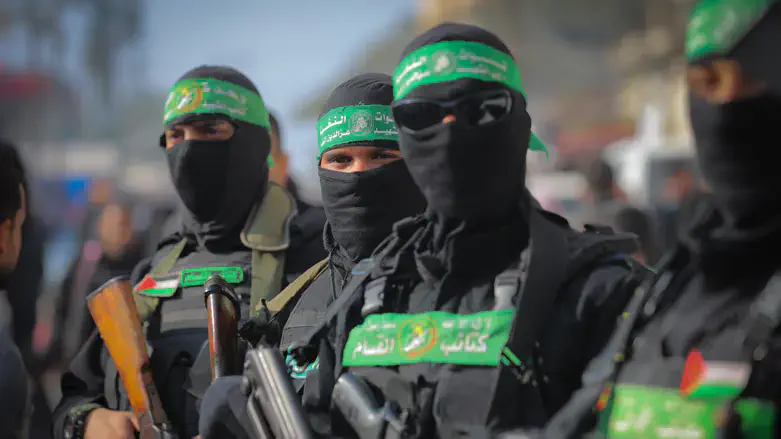
Hamas in Gaza

Hamas in GazaAli Hassan/Flash 90

Taher al-Nunu, a senior member of the Hamas terrorist organization, stated that reports of the removal of former British Prime Minister Tony Blair from the “Gaza Peace Board” reflect “a step in the right direction.”

In remarks quoted by Al Jazeera, al-Nunu noted that Hamas had repeatedly asked mediating countries to remove Blair due to his alleged “clear bias in favor of Israel.”

Al-Nunu added that “Hamas is ready to reach a long-term ceasefire agreement, provided that Israel fully commits to a ceasefire.”

He further stated that “the weapons of Hamas and other Palestinian organizations will, after the establishment of the Palestinian state, be part of its arsenal,” and firmly rejected any discussion of the possibility that an international force would forcibly disarm the resistance organizations.

Al-Nunu noted that Hamas has not yet received a clear outline regarding the composition, missions, and deployment of an international force in the Gaza Strip, and expressed confidence that no state would agree to send soldiers on a mission aimed at forcibly dismantling Palestinian Arab weapons.