TURKEY, IRAN AND RUSSIA UNITE TO SLAM US OIL DEAL SYRIA

Iran, Turkey and Russia are part of the Astana process and they frequently discuss Syria.

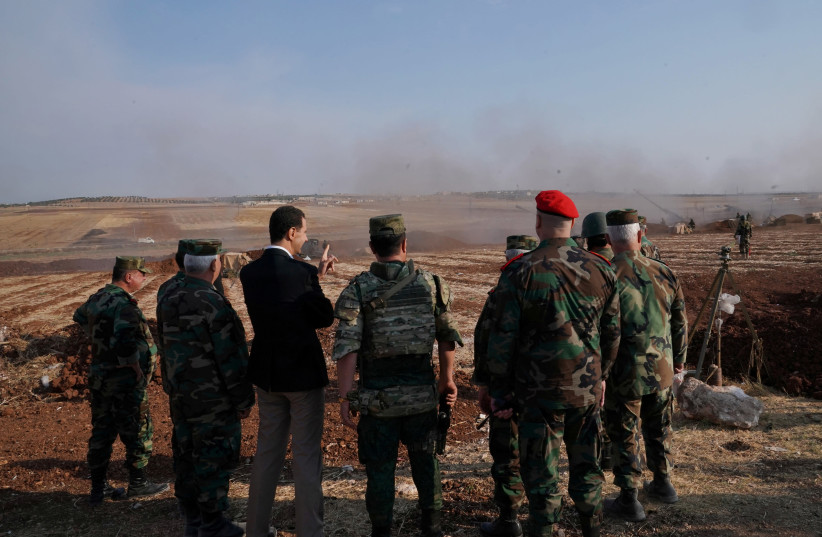
Syrian President Bashar al Assad visits Syrian army troops in war-torn northwestern Idlib province, Syria, October 22, 2019 (photo credit: SANA/HANDOUT VIA REUTERS)
Syrian President Bashar al Assad visits Syrian army troops in war-torn northwestern Idlib province, Syria, October 22, 2019
(photo credit: SANA/HANDOUT VIA REUTERS)
Turkey, Russia and Iran reaffirmed their commitment to Syrian “sovereignty” on August 26 and slammed an oil deal that a US company allegedly has with American-backed partners in eastern Syria. Turkey, Iran and Russia all agree that the US should leave Syria. Iranian-backed cells are trying to infiltrate tribal groups near Deir Ezzor to pressure the US while a Russian patrol collided with a US patrol this week and Turkey continues to threaten the US-backed Syrian Democratic Forces.

Iran, Turkey and Russia are part of the Astana process and they frequently discuss Syria, while sidelining the US. According to the Daily Sabah on August the three countries put out a statement that “expressed their opposition to the illegal seizure and transfer of Syria’s oil revenues.” They also “condemned the illegal oil deal between a US licensed company and the illegitimate entity as part of its separatist agenda.”
The US has worked with the SDF since 2015. However Turkey claims the SDF is linked to a group called the People’s Protection Units and both are linked to the Kurdistan Workers Party. Therefore Turkey calls them all “terrorists” even though there is no evidence of any terror attacks on Turkey by the SDF.
Turkey has used this as an excuse to invade Kurdish areas of Syria, ethnically-cleansing Afrin in 2018 by backing Syrian rebel extremist groups. In October 2019 Turkey threatened US forces and ordered the Trump administration to leave Syria.
Then Turkey attacked Tel Abyad and Turkish-backed groups murdered Syrian Kurdish activists such as Hevrin Khalaf. Since then Turkish-backed groups have terrorized women and minorities, kidnapping and killing numerous women and forcing Yazidis and Christians to flee.
Now Turkey, Iran and Russia are working closely to pressure the US. While the Trump administration wants to secure the oil in Syria and the Pentagon wants to continue to keep ISIS defeated, Ankara and its Iranian and Russian ally seek to undermine the US. Iran has agreed to take the Deir Ezzor file and pressure the US along the Euphrates while Turkey does the same in Tel Abyad by cutting off water to SDF-controlled areas and Russia uses patrols to harass the US.
Turkey cuts off the water at the Allouk water station and carries out drone strikes to harass areas where the SDF is. Meanwhile Turkey also sends intelligence agents to try to smuggle people out of Al-Hol camp where some ISIS affiliate families live.
The Iranian role in Deir Ezzor, seeking to use tribes to undermine the SDF, was reported by Asharq al-Awsat on August 27. Iran has bases from Albukamal to Al-Mayadeen in Syria where its affiliates, including Shi’ites from Pakistan and also local recruits, operate.
It can uses these to stir up trouble across the Euphrates. Russian backed mercenaries also operated here, attacking the SDF in February 2018. A Russian officer was recently killed by ISIS on the Syrian regime side of the river. The entire area thus appears to be insecure and unstable. Iran exploits this.
Slamming the US oil deal is just the latest way that Iran, Turkey and Russia seek to work together. They don’t agree on other issues in Syria. For instance Russia and Turkey conduct joint patrols in Idlib but Russia backs the Syrian regime and Turkey backs Syrian rebels. Turkey has sent Syrian rebels to fight in Libya in the last six months to keep them from focusing on Syria and Turkey’s work with Russia in Syria.


Is Turkey moving into northern Lebanon?

BEHIND THE LINES: First signs emerge that Sunni Islamist Ankara is seeking to fill the vacuum

Members of Turkey’s Humanitarian Relief Foundation (IHH) help a local Lebanese rescue team on August 5 at the site of the blast in Beirut’s port area. (photo credit: IHH/HANDOUT/ VIA REUTERS)
Members of Turkey’s Humanitarian Relief Foundation (IHH) help a local Lebanese rescue team on August 5 at the site of the blast in Beirut’s port area.
(photo credit: IHH/HANDOUT/ VIA REUTERS)
According to a report on the pro-Saudi Al Arabiya website published on August 19, officials in Lebanon are concerned at increased indications of Turkish efforts to build strength and influence in the country. The report quoted two sources in Lebanese intelligence, who mentioned recent Turkish efforts to bring weapons into northern Lebanon. “We are pretty worried about what’s going on. The Turks are sending an incredible amount of weapons into the north,” the website quoted its source as saying.

These reports await confirmation, and Al Arabiya is of course a media source linked to Saudi Arabia – a state rival of Turkey’s. But the evidence for a broader Turkish effort to build influence and allies in Lebanon in recent months is considerable, and solid. As are the indications of a Turkish-controlled infrastructure emerging in Sunni northern Lebanon. Both fit with the broader pattern both of Turkish behavior and of broader regional realities.

In terms of the former, Turkey is actively involved using both its own forces and proxies in the two fragmented Arab countries to Lebanon’s east – Syria and Iraq. The deployments in both countries already have the look of the long term about them, with clearly defined areas of control. Turkey is also active in Libya, where its backing of Fayez Sarraj’s government almost certainly prevented the fall of Tripoli to the forces of Gen. Khalifa Haftar earlier this year.

To these areas add Turkey’s aggressive naval stance in the Eastern Mediterranean, and its active backing of Hamas in Gaza and the West Bank and of Islamist organizations in Jerusalem. All these add up to a strategy in which Ankara is seeking to emerge as the main strategic beneficiary of the chaos and fragmentation that has gripped much of the region over the last decade.

Regarding broader regional realities, Iraq, Syria, Libya – and Lebanon – today are geographical spaces rather than states in the sense traditionally understood. Within these spaces, rival regional and global powers are competing for ascendancy. Turkey is a central player in the first three countries named. It would be surprising if it were not active in the fourth.

Other regional players are paying close attention to Turkey’s belligerent stance. The Times this week reported Mossad head Yossi Cohen as telling Arab intelligence chiefs that “Iranian power is fragile… but the real threat is from Turkey.”

In the countries mentioned above, Turkey seeks to leverage both its Sunni Islamist credentials to appeal to Sunni Arab populations, and where relevant its Turkic ethnicity to appeal to Turkic remnant populations in the Levant. Available evidence suggests that in Lebanon, a similar pattern is being followed. Turkey has been working slowly and assiduously, via NGOs and government relief organizations such as the Turkish Cooperation and Coordination Agency – TIKA – (also active in Jerusalem), to establish its foothold in the country.

A recent article by Mohanad Hage Ali at the Carnegie Middle East Center noted the arrest on July 4 of two Turkish and two Syrian citizens on a flight to Lebanon from Turkey. The four attempted to smuggle $4 million into the country. Lebanese Interior Minister Mohammed Fahmi claimed that the money was intended to finance street-level protests against the Lebanese government.

Turkey’s activities appear to be taking place at the grassroots level, and to be centered around the northern city of Tripoli, an urban center for the Lebanese Sunni population. It is a conservative, religious place and a stronghold of Sunni political Islam. As such, the area is a natural focus for Turkey. The Akkar Governorate, home to Lebanon’s tiny Turkmen minority, is also an area of interest.

A July 12 article by Nahla Nasir al-Din on the Asas website of former Lebanese interior minister Nohad Machnouk, accused Turkey of seeking to “occupy Tripoli,” and included details of alleged Turkish activities in these areas. The article contains a welter of detail on alleged Turkish activities in northern Lebanon.

It named Gen. Ashraf Rifi, former head of the Internal Security Forces and former justice minister, as a collaborator with Turkish intelligence in Ankara’s efforts in this area. Nasir al-Din also names Bahaa Hariri, eldest son of murdered prime minister Rafik Hariri, as engaged in the Turkish intelligence’s project to create a network of grassroots religious and political organizations among Lebanese Sunnis in Tripoli. The purpose of the network would be for it to act as a tool for the advancement of Turkish influence in Lebanon, available to be mobilized and brought to the streets at the appropriate time.

Nasir al-Din further claimed that direct links are maintained in Beirut between representatives of the ruling Turkish party, the Justice and Development Party (AKP), and the local Lebanese Muslim Brotherhood party, Jamaa Islamiya.

A July 13 article by Firas al-Shoufi in the pro-Hezbollah Al Akhbar newspaper summed up the situation in the following terms: “Turkish activity in Lebanon takes many forms, all leading in one direction, which is to strengthen Turkish influence among the Sunni Muslims in Lebanon, specifically in the north, and to confront the already eroding Saudi-Emirati influence in the war of leadership of the ‘Sunni world’ raging between Saudi Arabia and its allies on the one hand, and Turkey and its allies on the other hand.”

Shoufi named specific social welfare projects undertaken by TIKA in the Tripoli and Akkar areas, such as “opening roads, digging wells for drinking and irrigation water and providing food aid.” He further notes that “General-Director of the Sûreté Générale [Lebanon’s main internal security organization] Maj.- Gen. Abbas Ibrahim made a series of observations about the Turkish performance during a meeting of the Supreme Council of Defense, on the basis of the need for the Lebanese state to monitor what foreign parties do inside Lebanon. Ibrahim also contacted the Turkish ambassador in Beirut, Hakan Cakil, and asked him about Turkey’s relationship with groups carrying flags and engaging in social activism in the north, who carry out actions that threaten security and block roads.’

Shoufi’s identification of the Turks moving into a vacuum left by the relative absence of the Saudis and Emiratis is of particular note. All the evidence cited in the various Arabic outlets cited above should be treated with some caution. It is not yet possible to draw a definitive picture of the details of Turkish activity in northern Lebanon. But the very fact that the issue appears able to raise the joint concerns of channels affiliated with or supportive of Saudi Arabia (Al Arabiya) and Iran/Hezbollah (Al Akhbar) indicates that something does appear to be going on.

The fragile Lebanese sectarian balance has been shattered over the last decade by the entry of around one million overwhelmingly Sunni Syrian refugees. Their presence has reversed the previous sense of an inexorable rise of the Shia to ascendancy in Lebanon. Until now, however, no force has proven able to harness the potential Sunni power in Lebanon to its cause. The Saudi-supported March 14 Movement was vanquished on the streets of West Beirut by Hezbollah and Amal in May-June 2008. The Gulf Arabs appeared to have more or less conceded the country to the Iranians, content to allow Iran and its local franchise to deal with a collapsing economy and infrastructure.

As of now, however, the first signs are emerging that Sunni Islamist Turkey is seeking to fill the vacuum, and to recruit the Lebanese Sunni street to its banner. Something is happening in northern Lebanon.

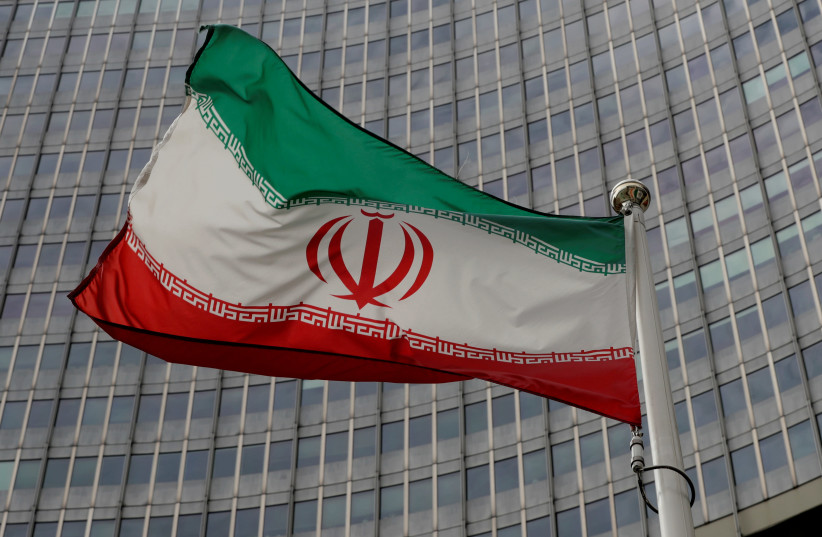
Iran’s regime has used German territory for surveillance and assassination operations targeting Iranian dissidents, pro-Israel advocates and Israeli and Jewish institutions.

plane crash at the Boryspil… REUTERS 19/01/2020 12:16 IRAN-NUCLEAR/IAEA FILE PHOTO: An Iranian flag flutters in front of the IAEA headquarters in Vienna REUTERS Link copied to clipboard. (internationalbox) FILE PHOTO: An Iranian flag flutters in front of the IAEA headquarters in Vienna 19/01/2020 12 (photo credit: REUTERS/ LEONHARD FOEGER)
plane crash at the Boryspil… REUTERS 19/01/2020 12:16 IRAN-NUCLEAR/IAEA FILE PHOTO: An Iranian flag flutters in front of the IAEA headquarters in Vienna REUTERS Link copied to clipboard. (internationalbox) FILE PHOTO: An Iranian flag flutters in front of the IAEA headquarters in Vienna 19/01/2020 12
(photo credit: REUTERS/ LEONHARD FOEGER)
The domestic intelligence agency for the German state of Saarland added new weight to intelligence reports from its sister states that previously confirmed the Islamic Republic of Iran sought technology for weapons of mass destruction and missile carrier systems during time period of 2019.

The Jerusalem Post reviewed the 112-page intelligence report, which was released last week, titled “Overview of the situation” that addresses security threats faced by the small West German state Saarland.

“Iran, Pakistan and, to a lesser extent Syria, made efforts to procure goods and know-how for the further development of weapons of mass destruction and their delivery systems,” wrote the intelligence officials for the Saarland.

“Delivery system” is typically defined as the capability to launch missiles. Israel, the United States and many Gulf nations believe Iran’s clerical regime seeks to develop nuclear weapons.

The Post contacted the Saarland domestic intelligence agency regarding the nature of the illicit proliferation material that Iran sought in 2019. Katrin Thomas, the spokemwoman  for the domestic intelligence agency wrote the the Post by email on Friday that “the Protection of the Constitution in Saarland does not pass on any information on the activities of groups or individuals.The Protection of the Constitution is the formal name of the Saarland domestic security service.”

The report said that “The intelligence services of these countries are present with varying staffing levels at the respective official and semi-official representations in Germany and maintain so-called legal residencies there. This refers to the operational bases of a foreign intelligence service, disguised in an official (e.g. embassy, ​​consulate general) or semi-official (e.g. press agency, airline) representation in the host country as a starting point for intelligence activities.”

According to the Saarland intelligence document, “The intelligence staff there, supposedly working as diplomats or journalists, conduct open or covert information gathering themselves or provide support in intelligence operations that are carried out directly by the headquarters of the intelligence services in their home countries. In addition, intelligence services also carry out operations without their legal residences being involved. The focus of their respective procurement activities is based on current political requirements or economic priorities.”

The intelligence officials noted that China and Iran replicate Russia’s brutal tactics in targeting dissidents and opponents within the federal republic. “The Iranian and Chinese intelligence services are also active in this field.”

The report says that for Iran to achieve its goal, “selected people from the opposition movement are approached with the aim of a commitment to intelligence cooperation. In the event of rejection, the persons concerned or their relatives living in their home country are often threatened with reprisals.”

Iran’s regime has used German territory for surveillance and assassination operations targeting Iranian dissidents, pro-Israel advocates and Israeli and Jewish institutions.

Germany’s 16 federal states have their own local domestic intelligence service. Each state releases an annual report documenting threats to the democratic order of the state.

The Saarland noted the apparent illicit nuclear weapons activities of Pakistan in Germany and elsewhere abroad. “Pakistan also operates an extensive nuclear and carrier technology program and continues to endeavor to expand and modernize, in order to retain a serious deterrent potential against the ‘Arch enemy’ India.”

The report stated that “Although Pakistan is largely technically self-sufficient, it needs some key components (including control technology) that are procured abroad.”

Counter-terrorism experts have long accused Pakistan of sponsoring and protecting terrorist movements such as the Taliban.

Multiple German intelligence reports from various states have established Iran’s illicit nuclear and missile procurement activities covering 2019. In a section titled “Proliferation,” the 181-page Baden-Württemberg state intelligence agency document reviewed by the Post states that Iran, Pakistan, North Korea and Syria are “still pursuing” such efforts.

“They aim to complete existing arsenals, perfect the range, applicability and effectiveness of their weapons and develop new weapon systems,” the report said. “They try to obtain the necessary products and relevant know-how, among other things, through illegal procurement efforts in Germany.”

“The term ‘proliferation,’” the report continued, “refers to the further spread of atomic, biological, and chemical weapons of mass destruction –­ or the products and know-how required to manufacture them –­ and corresponding delivery systems.”

The federal German domestic security agency disclosed in its July report that “the BfV [federal domestic intelligence service] was only able to find occasional indications of Iranian proliferation-related procurement attempts for its nuclear program. Such indications arise when the methodological approach to the procurement of goods, [and] their application also in a nuclear program and/or available knowledge about the final recipient respective to the inquiring point indicate a potential procurement background relevant to proliferation.”

Former US acting director of intelligence Richard Grenell authored a stinging indictment of Germany’s government for its failure to vote in favor of an extended weapons embargo against Iran’s regime, a deadly adversary of the United States, Israel and the West.

Writing in his The Hill column in August, Grenell, a former ambassador to Germany, said: “This was a particularly troubling decision by Germany, which recently took the bold step of circumventing EU policy by designating the entirety of Hezbollah as a terrorist organization. Germany also regularly reaffirms its special commitment to the security of Israel, the country most threatened by Iranian arms.

“Germany’s decision not to prevent Iran from importing Chinese and Russian weapons systems is so consequential for Hezbollah’s resourcing capacities that it effectively neutralizes the positive step Berlin had taken by revising its Hezbollah policy,” he wrote.