Notably, this is the same language as is used in the US-backed Gaza plan. However, this is the first time a Palestinian state was mentioned in the main body of the resolution and not in the annex.
ByAMICHAI STEIN, REUTERSUpdated: For the first time, a reference to a Palestinian state was seen in a draft to the UN Security Council regarding the International Security Force that is meant to govern Gaza, a document seen by The Jerusalem Post on Thursday shows.
“After the PA reform program is faithfully carried out and Gaza redevelopment has advanced, the conditions may finally be in place for a credible pathway to Palestinian self-determination and statehood.
The United States will establish a dialogue between Israel and the Palestinians to agree on a political horizon for peaceful and prosperous coexistence,” the new clause in the draft seen by the Post read.
ussia proposes its own UN resolution on Gaza in challenge to US draft
Russia on Thursday proposed its own draft of a UN resolution on Gaza in a challenge to a US effort to pass its own text at the Security Council that would endorse President Donald Trump’s Gaza peace plan, according to a copy of the draft seen by Reuters.
The US formally circulated the draft resolution to the 15 Council members last week and has said it has regional support for its resolution that would authorize a two-year mandate for a transitional governance body and international stabilization force.
Russia’s UN mission said in a note to Security Council members on Thursday afternoon, seen by Reuters, that its “counter-proposal is inspired by the US draft.”
“The objective of our draft is to enable the Security Council to develop a balanced, acceptable, and unified approach toward achieving a sustainable cessation of hostilities,” the note said.
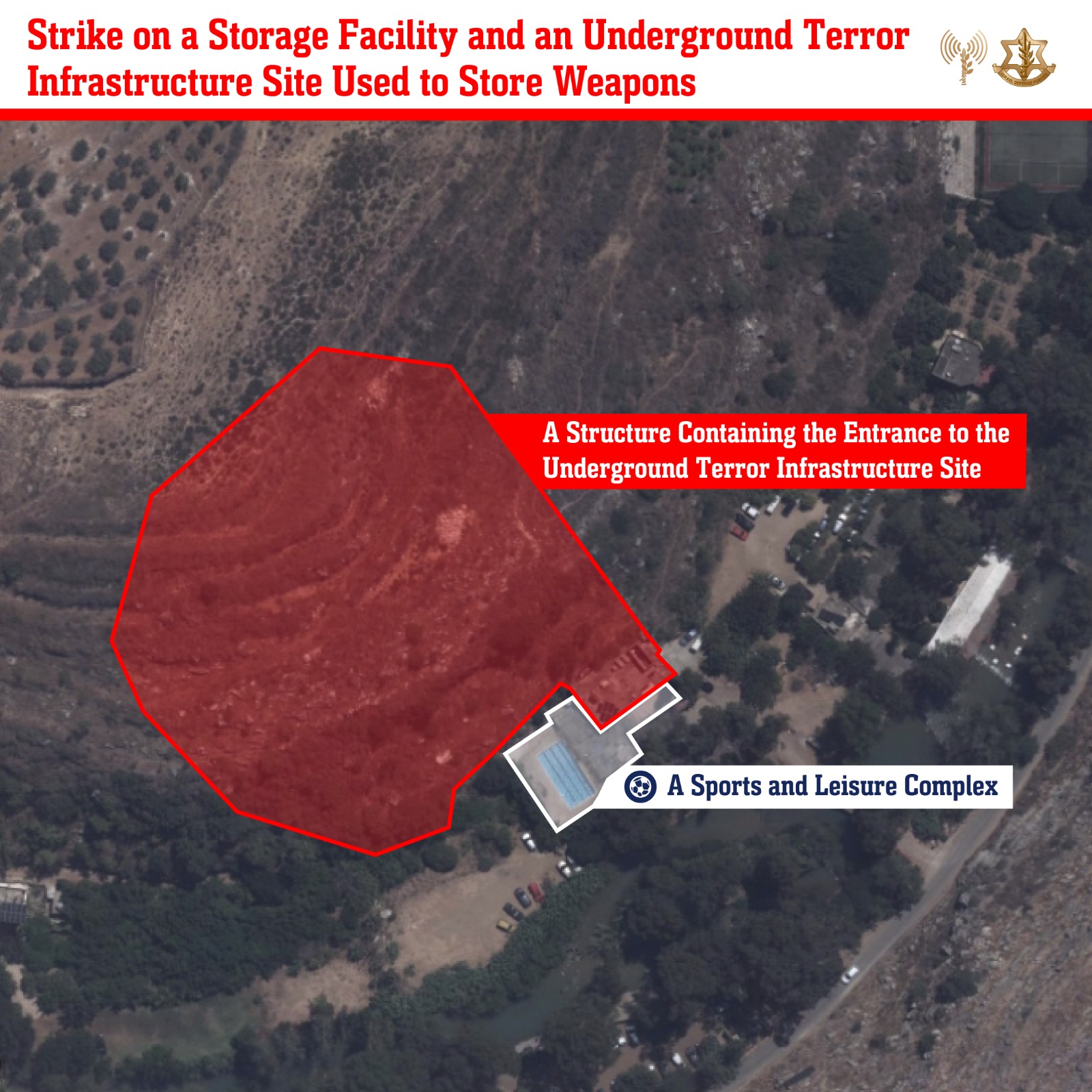
Earlier Thursday morning, the IDF, guided by intelligence, struck a weapons storage facility and an underground terror infrastructure site used by Hezbollah in southern Lebanon.
These terror infrastructure sites were located near the civilian population, serving as yet another example of Hezbollah’s cynical use of Lebanese civilians as human shields for its operations conducted from within civilian areas.
Later, the IDF also struck an additional Hezbollah terror infrastructure site.
The Hezbollah terrorist organization continues its attempts to reestablish terror assets throughout Lebanon. The presence of these terror infrastructure sites and Hezbollah’s activity in the area constitutes a violation of the understandings between Israel and Lebanon.
The IDF will continue to operate to remove any threat and defend the State of Israel.
Top US diplomat says proposed mission ‘shouldn’t be a fighting force,’ calls for parties to hold up ‘commitments’ on Hamas disarmament, though it’s unclear if such commitments were made
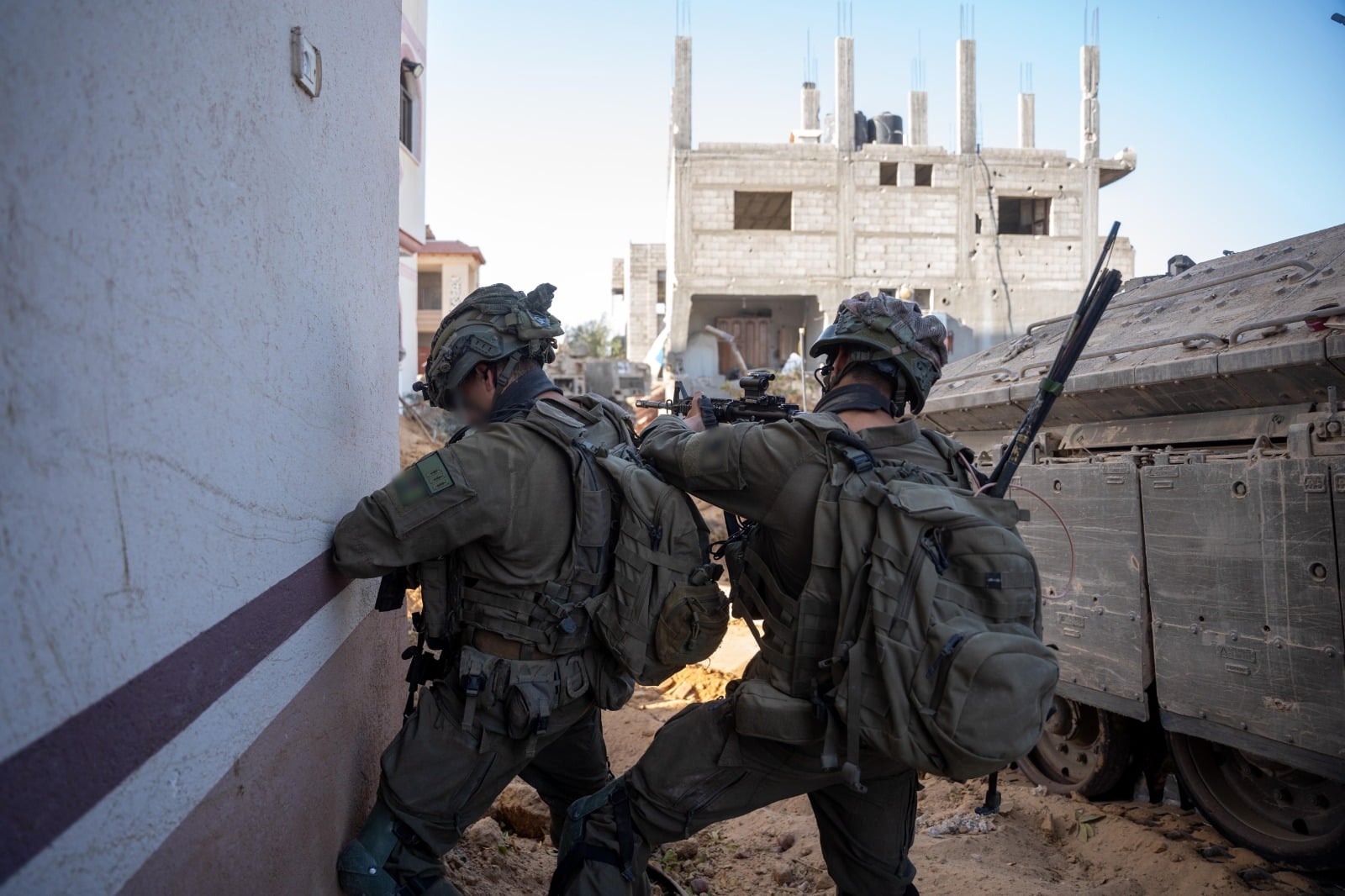
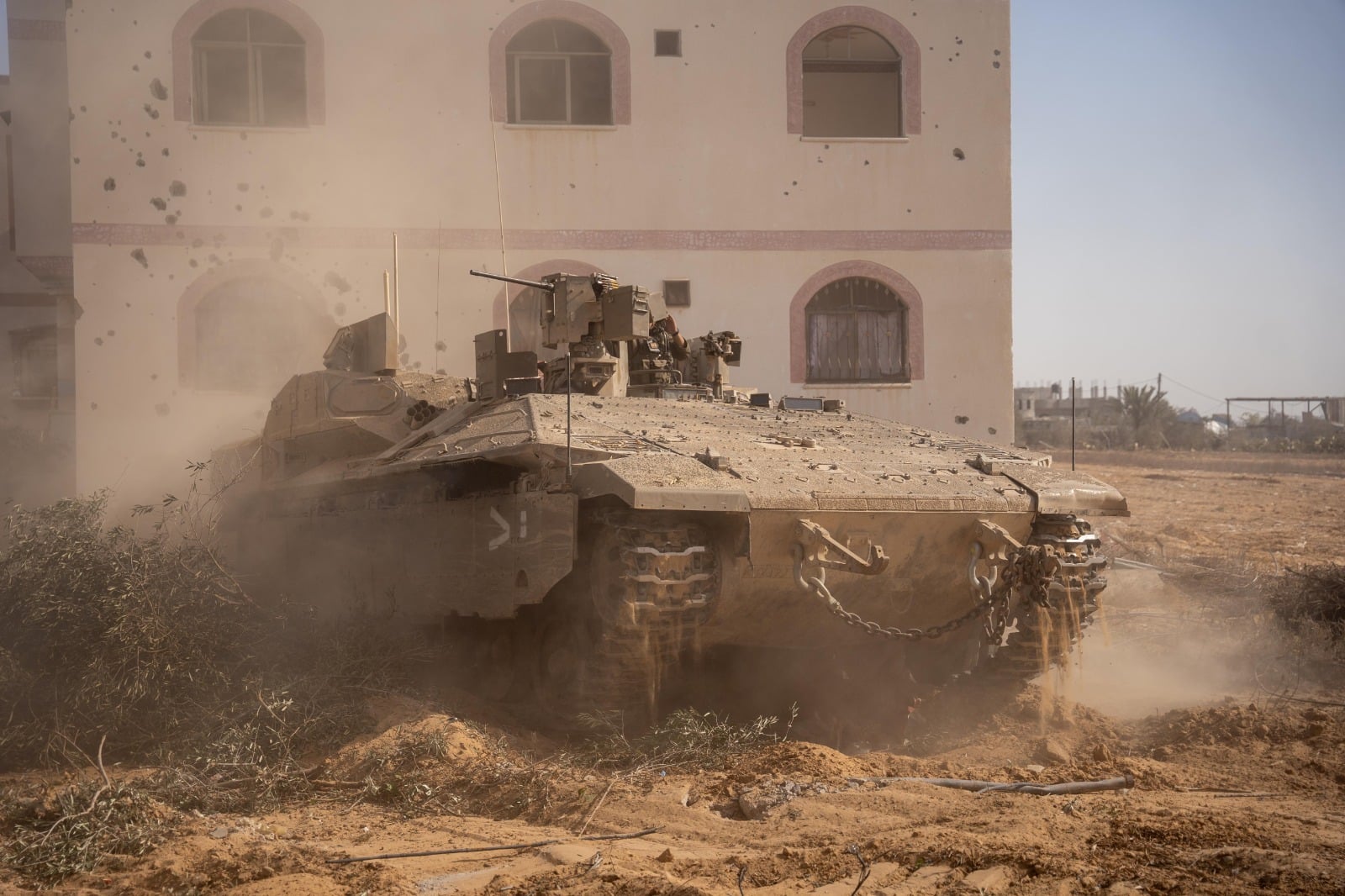
IDF troops operate on the eastern side of the Yellow Line in southern Gaza’s Khan Younis, in a handout photo issued on November 9, 2025. (Israel Defense Forces)
US Secretary of State Marco Rubio said Wednesday that Washington is “optimistic” about the chances of establishing the International Stabilization Force in Gaza and is working on advancing a new draft through the UN Security Council to create the unit.
“We’re making good progress on the language of the resolution, and hopefully we’ll have action on it very soon. We don’t want to lose momentum on this,” Rubio told reporters in Canada, where he attended a G7 summit.
The US is looking to bring the resolution creating the international mandate for establishing the ISF to a vote in the coming days so that force can deploy by the beginning of 2026, a Western diplomat told The Times of Israel.
Whether or not the US can convince countries to contribute troops to the force will be a separate endeavor, with many privately indicating that they don’t want to send soldiers into a war zone where they’d be expected to use force to disarm Hamas.
The latest draft of the resolution obtained by The Times of Israel on Wednesday indicates that the ISF could be tasked with such operations.
The force will “stabilize the security environment in Gaza by ensuring the process of demilitarizing the Gaza Strip, including the destruction and prevention of rebuilding of the military, terror, and offensive infrastructure, as well as the permanent decommissioning of weapons from non-state armed groups,” the draft resolution states.
US Secretary of State Marco Rubio speaks to traveling journalists at the John C. Munro Hamilton International Airport in Hamilton, Ontario, Canada, on November 12, 2025, after the G7 foreign ministers meeting. (Mandel Ngan/Pool Photo via AP)
The resolution grants the ISF a two-year mandate during which a Trump-chaired “Board of Peace” would oversee “a transitional (Palestinian) governance administration… until such time as the Palestinian Authority has satisfactorily completed its reform program… and can securely and effectively take back control of Gaza.”
Asked whether the ISF will be a peace enforcer, rather than just a peacekeeping force, Rubio said, “It shouldn’t be a fighting force.”
He claimed that the “agreement that was signed and that all parties agreed to calls for the demilitarization of Hamas,” apparently referring to US President Donald Trump’s 20-point plan for ending the Gaza war. Except that agreement was not signed by any country. Dozens of countries did indeed provide varying levels of verbal support, and Prime Minister Benjamin Netanyahu verbally accepted it in September.
However, the deal actually signed by Israel and Hamas on October 9 only dealt with an initial ceasefire, IDF pullback, hostage-prisoner swap and humanitarian aid provisions.
US officials have claimed that Hamas leaders pledged to disarm during a meeting they held with Trump’s top aides on the eve of the ceasefire signing. For its part, Hamas has publicly and repeatedly rejected the notion that it will disarm.
“As far as demilitarization is concerned. That’s a commitment Hamas made. That’s a commitment all of our partners on this deal made, and we expect that those countries… bring about pressure on Hamas to live up to that commitment,” Rubio said.
IDF troops operate on the eastern side of the Yellow Line in southern Gaza’s Khan Younis, in a handout photo issued on November 9, 2025. (Israel Defense Forces)
“The question is, who’s going to be standing on that line and beyond it to provide security? Because you’re going to need security if you want to really flood Gaza [with aid], particularly in that red area that’s not in Israeli control. If you really want to see a huge uptick, not just in humanitarian assistance but redevelopment, you’re going to need to have security, and that can’t be Hamas,” Rubio said.
The secretary of state was then asked whether the ISF will be deployed on the side of the western side of the Yellow Line currently controlled by Hamas. Rubio said the goal is for there eventually to be no Yellow Line, meaning that Israel withdraws from the entire Strip and that Hamas is no longer in control of any of it.
“Eventually, none of it should be under Hamas control. There should be a civilian Palestinian organization that runs Gaza, and the goal is to stand that organization up, give it capacity, allow it to grow in both capability and credibility, and ultimately, it will govern Gaza,” he continued.
“The Israelis don’t want to govern Gaza, we don’t want to govern Gaza, and no country in the Middle East wants to govern Gaza. But it’ll take some time to build up that capability, and in the interim, someone has to provide security,” Rubio said, referring to the ISF.