Primary target of strike in Kfar Roummane is logistics chief in terror group’s Radwan Force, military says; Katz says Lebanese president ‘dragging his feet’ on disarming Hezbollah

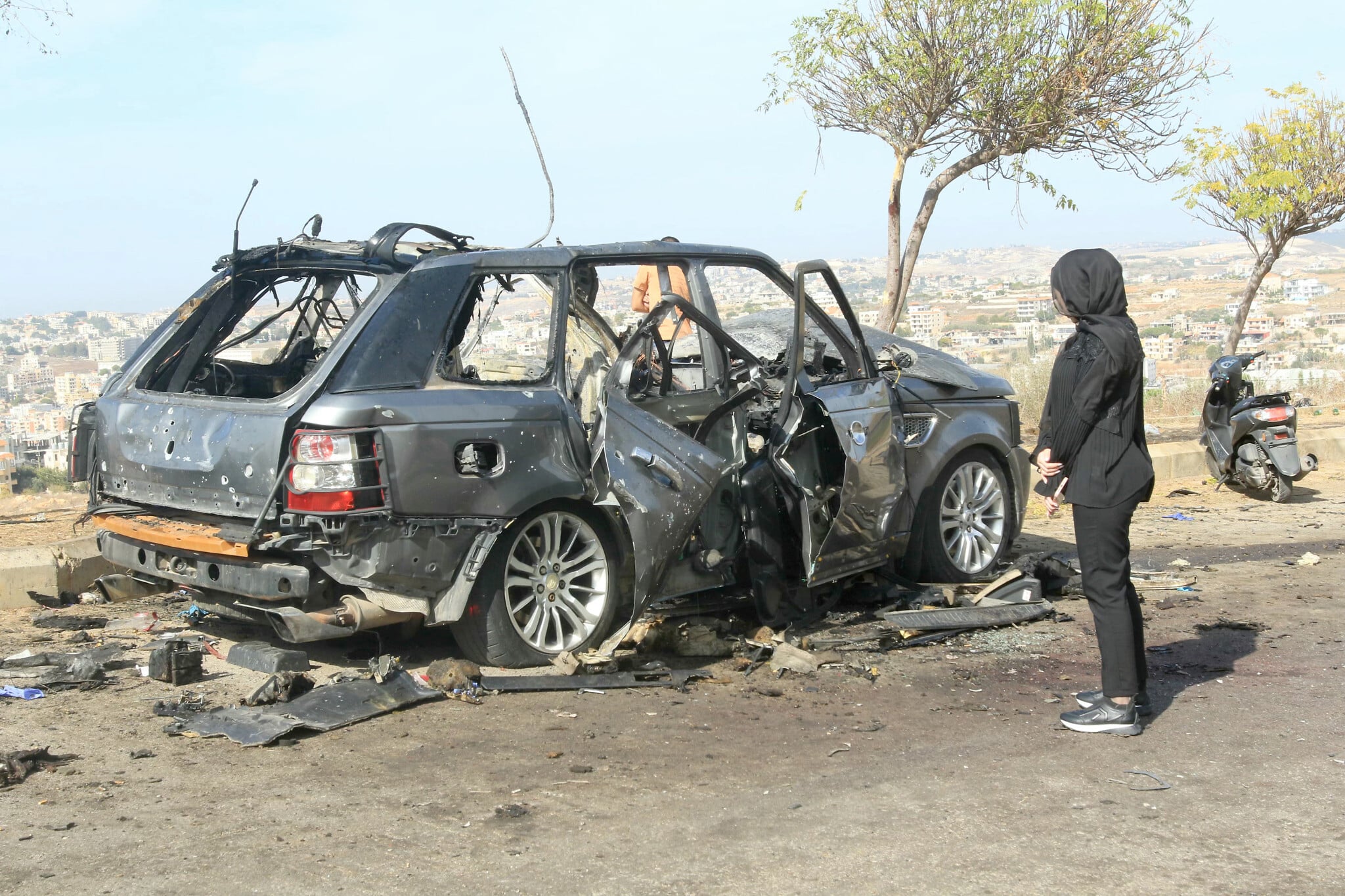
A woman stops to look at the wreckage of a vehicle, a day after an Israeli airstrike that killed its occupants, in the southern Lebanese village of Kfar Roummane in the Nabatiyeh district, on November 2, 2025.  (Mahmoud ZAYYAT / AFP)

A woman stops to look at the wreckage of a vehicle, a day after an Israeli airstrike that killed its occupants, in the southern Lebanese village of Kfar Roummane in the Nabatiyeh district, on November 2, 2025. (Mahmoud ZAYYAT / AFP)

Four members of Hezbollah’s elite Radwan Force were killed in an Israeli airstrike in southern Lebanon on Saturday night, the military said, with Lebanese authorities also confirming four dead in the attack.

The military said the primary target of the strike in Kfar Roummane, close to Nabatieh, was the logistics chief of the Radwan Force.

The military did not name the man, but said he was involved in transferring weapons and “attempts to restore terror infrastructure” in southern Lebanon.

Lebanon’s health ministry said that the strike “killed four persons and wounded three in a preliminary toll.”

The three other men killed in the strike were also members of the Radwan Force, the IDF said, adding that their activities constitute a violation of the ceasefire.

The Radwan Force was previously tasked with invading Israel in a future war, and the IDF said the elite unit had worked on the terror group’s “Conquer the Galilee” plan for years, until the 2023-2024 war saw most of Hezbollah’s leadership eliminated.

On Sunday, Defense Minister Israel Katz said that Lebanese President Joseph Aoun was stalling in efforts to disarm Hezbollah, and warned Israel would act if Beirut does not.

“Hezbollah is playing with fire and the Lebanese president is dragging his feet,” Katz said in a post on X after the IDF confirmed it carried out the strike in south Lebanon.

“The Lebanese government’s commitment to disarm Hezbollah and remove it from southern Lebanon must be realized,” Katz said, adding that “maximum enforcement will continue and deepen – we will not allow a threat to the residents of the [Israeli] north.”

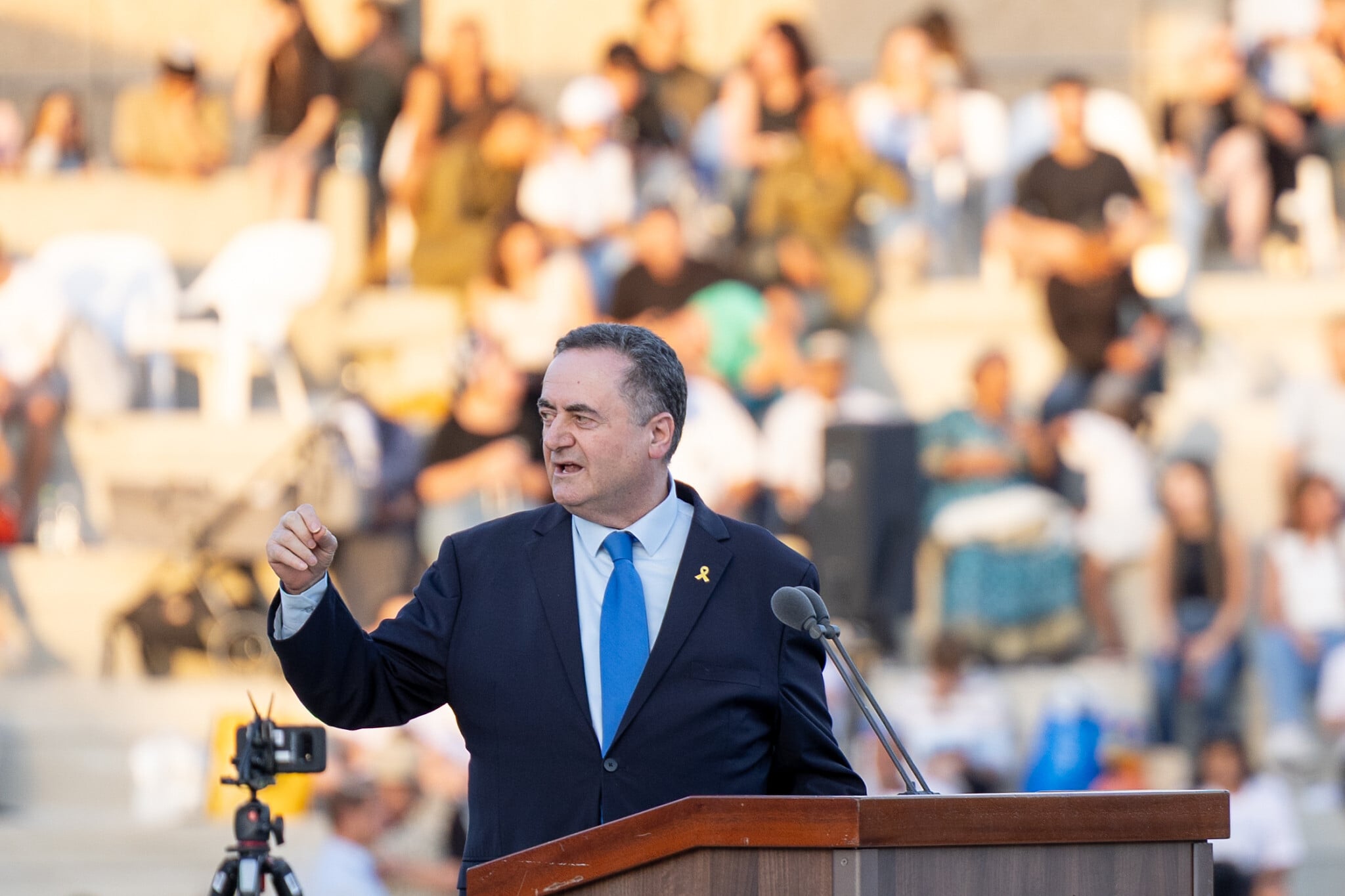
Defense Minister Israel Katz at the graduation of an IDF officers’ course, October 30, 2025. (Noam Revkin Fenton/FLASH90)

Hezbollah began attacking Israel on October 8, 2023, a day after fellow Iran-backed terror group Hamas invaded southern Israel, sparking the war in Gaza. After nearly a year of cross-border fire, Israel launched an intensive campaign against the terror group in September 2024, massively degrading its forces and eliminating most of its top leadership. A ceasefire was declared in November of that year.

The ceasefire required both Israel and Hezbollah to vacate southern Lebanon, to be replaced by the Lebanese armed forces. Israel has withdrawn from all but five strategic posts along the border, and regularly strikes what it says are Hezbollah’s attempts to rearm.

Since the ceasefire, the IDF says it has killed over 330 Hezbollah operatives in strikes, hit hundreds of Hezbollah sites, and conducted over 1,000 raids and other small operations in southern Lebanon in response to violations by the terror group.

In recent weeks, the IDF appears to have stepped up the rate of attacks on Hezbollah.

Weakened by the war and still facing regular Israeli strikes, Hezbollah is under internal and international pressure to hand over its weapons, and the Lebanese army has drawn up a plan to disarm it. However, the latter has reportedly expended so much ordnance to blow up Hezbollah stockpiles that it has run out of explosives. Hezbollah, which is backed by Iran, has vowed not to lay down its arms.

But despite those efforts, Israel reportedly believes Hezbollah has managed to amass some new weapons, raising the possibility of renewed conflict. Meanwhile, Lebanon claims that Israel rejected its overture to begin talks last month on an IDF withdrawal.

Agencies and Times of Israel staff contributed to this report.


October 31, 2025 3:17 pm

by Ailin Vilches Arguello


Turkey’s President Recep Tayyip Erdogan speaks during a joint statement to the media in Baghdad, Iraq, April 22, 2024. Photo: AHMAD AL-RUBAYE/Pool via REUTERS

Turkey is rapidly expanding its regional and global influence — strengthening ties with Syria, Lebanon, Iran, and the Gulf states, while pressing for a role in post-war Gaza — a trend that is raising alarm bells in Israel and the broader region amid shifting Middle East power dynamics.

As part of its push to expand regional influence and strengthen strategic partnerships, Turkey has recently signed a memorandum of understanding with Syria, expanding their military cooperation to cover training, advisory support, and access to weapons systems and logistics.

On Thursday, Turkey’s Defense Ministry announced that Syrian armed forces have begun training at Turkish facilities and will also attend the country’s military academies, as both nations seek to deepen their defense ties.

Turkey’s push to expand its ties with Syria comes as the latter is reportedly in the final stages of negotiations with Israel over a security agreement that could establish a joint Israeli–Syrian–American committee to oversee developments along their shared border and uphold the terms of a proposed deal.

Ankara has also been working to establish closer diplomatic and military relations with Israel’s other northern neighbor, Lebanon, at a time when the country stands on the brink of renewed conflict with the Jewish state.

Amid mounting international pressure, the Lebanese government is intensifying efforts to meet the ceasefire deadline to disarm the terrorist group Hezbollah, while trying to avoid plunging the nation into a civil war.

As the Iran-backed terrorist group continues to refuse disarmament, Turkey is leveraging the opportunity to bolster its regional influence and expand its alliances.

Last week, Turkey’s Defense Ministry confirmed that the country’s peacekeeping forces would continue to support the Lebanese army in its mission to restore stability and peace.

“Ongoing efforts will focus on enhancing security in the region, promoting stability, and supporting the development of the Lebanese armed forces, with the goal of fostering and sustaining peace in Lebanon,” Turkish officials announced, following the approval of a two-year extension to their mission in Beirut.

Turkish President Recep Tayyip Erdogan – who has been openly hostile toward the Jewish state for years – has repeatedly condemned Israeli offensives targeting the Iranian proxy and its terrorist operations in Lebanon.

He has previously said that Israel’s “genocidal” and “expansionist” policies remain the biggest threat to regional peace.

Ankara has also been working to expand its regional influence in the Gaza Strip, which borders Israel to the south, positioning itself to play a pivotal role in post-war developments under the US-backed peace plan.

However, experts warn that Turkey’s growing involvement in the enclave’s reconstruction efforts could potentially strengthen Hamas’s terrorist infrastructure and undermine the fragile ceasefire.

As one of the biggest backers of Hamas, Turkey could potentially shield the Islamist movement in Gaza or even bolster its power, especially as the Palestinian terrorist group continues to reject disarmament — a key element of US President Donald Trump’s peace plan.

In the past, Ankara has provided refuge to Hamas leaders, granted diplomatic access, and allowed the group to fundraise, recruit, and plan attacks from Turkish territory.

Under Trump’s plan, Turkey has sought to join a multinational task force responsible for overseeing the ceasefire and training local security forces.

Erdogan declared that the country is “ready to provide all kinds of support to Gaza,” and insisted that the Turkish Armed Forces “could serve in a military or civilian capacity as needed.”

However, Israeli officials have repeatedly rejected any involvement of Turkish security forces in post-war Gaza.

Israeli Prime Minister Benjamin Netanyahu has stated that Turkey’s participation in the International Stabilization Force would be out of the question, labeling it a “red line.”

Gulf states have also raised concerns about Turkish and Qatari involvement in Gaza’s post-war reconstruction and governance efforts.

While the Trump administration has ruled out sending US soldiers into the war-torn enclave, Washington has also considered involving Indonesia, the United Arab Emirates, Egypt, and Azerbaijan in the international peacekeeping efforts.

US officials have confirmed that any participating countries in the international task force will be selected in close coordination with Israel, ensuring that no foreign troops will be included without Israel’s consent.

Despite Turkey’s efforts to advance its regional ambitions in the enclave and secure a role in post-war Gaza, Erdogan continues to attack Israel while defending the Palestinian terrorist group, as he has repeatedly in the past.

He has frequently defended Hamas terrorists as “resistance fighters” against what he describes as Israeli occupation of Palestinian land. He has even gone so far as to threaten an invasion of the Jewish state and called on the United Nations to use force if Jerusalem fails to halt its military campaign against Hamas.

On Thursday, Erdogan reiterated his anti-Israel rhetoric, targeting Germany for its alleged indifference to what he called Israel’s “genocide, famine, and attacks” in Gaza.

In a joint press conference with his German counterpart, the Turkish leader said that it is the international community’s duty to end what he described as famine and massacres in Gaza.

Ankara’s regional ambitions have led the country to expand bilateral ties with Iran, seeking closer cooperation on political, economic, and security matters.

This week, Iranian and Turkish officials pledged to deepen their ties during high-level talks in Tehran — a move likely to raise further alarm bells, given both countries’ longstanding role of supporting Islamist terrorists and their hostile stance toward the West.

In a message to his Turkish counterpart, Iranian President Masoud Pezeshkian stressed the importance of deepening mutual cooperation to strengthen security, development, and stability for both countries and the region.

Ankara has also engaged with Saudi Arabia in an effort to strengthen bilateral ties and secure Riyadh as a regional partner amid shifting power dynamics in the Middle East.

On Wednesday, Turkey’s ambassador to Saudi Arabia, Emrullah Isler, praised the growing defense cooperation between the two countries, including joint training and other initiatives, amid the signing of new agreements.

Turkey and Saudi Arabia “are key regional actors that share a commitment to peace, stability, and international law,” Isler wrote in a post on X.

“As reaffirmed by both countries during various high-level meetings, we are confident that our military cooperation will continue to grow in terms of both scope and depth,” he continued.

As part of Turkey’s push to expand its influence across the Middle East, Erdogan set out last week on a diplomatic tour to Qatar, Kuwait, and Oman.

During this official tour, he aimed to secure new trade, investment, energy, and defense deals, while also seeking regional support for his proposal to deploy Turkish troops in Gaza.

But Turkey’s efforts to boost its regional influence have also extended beyond the Middle East.

On Thursday, when Erdogan met with German Chancellor Friedrich Merz, they discussed regional developments and exploring opportunities to strengthen their bilateral cooperation.

At a joint press conference, Merz described Turkey as a key partner for the European Union, noting that Berlin aims to help Ankara expand its relationships with other EU member states.

“I personally, and the German government, see Turkey as a close partner of the European Union. We want to continue smoothing the way to Europe,” the German leader said.

Alongside US general helping oversee truce, PM says ‘we’re working in stages’ to demilitarize Strip, declares ‘we’ll achieve what we are determined to achieve’

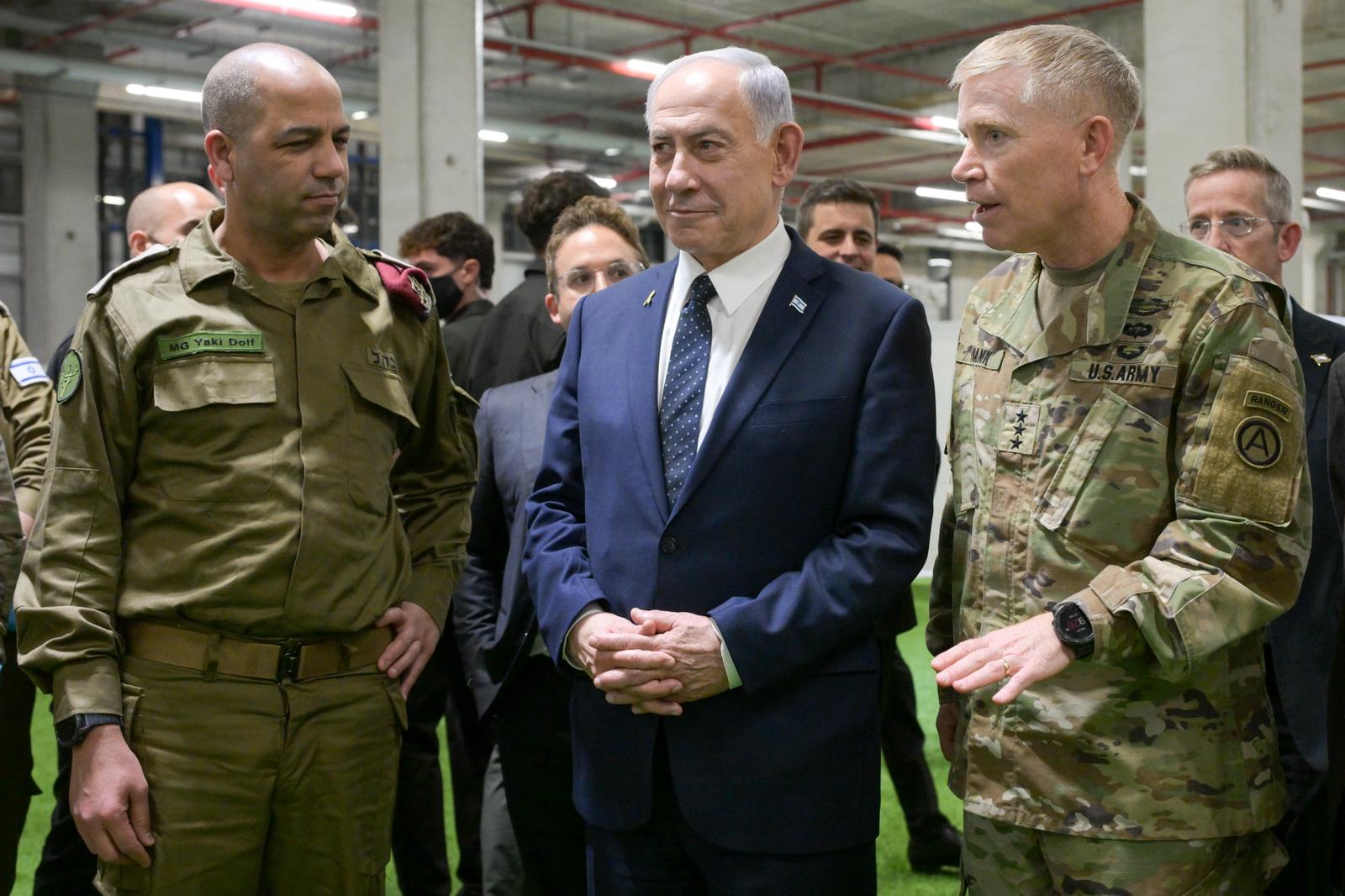
Prime Minister Benjamin Netanyahu visits the Civil-Military Coordination Center in Kiryat Gat on October 29, 2025, meeting  IDF Maj. Gen. Yaki Dolf (left) and US Lt. Gen. Patrick Frank (right). (Maayan Toaf/GPO)

Prime Minister Benjamin Netanyahu visits the Civil-Military Coordination Center in Kiryat Gat on October 29, 2025, meeting IDF Maj. Gen. Yaki Dolf (left) and US Lt. Gen. Patrick Frank (right). (Maayan Toaf/GPO)

Prime Minister Benjamin Netanyahu on Wednesday said Israel’s “security responsibility for our forces and our freedom of action” in Gaza is accepted by the country’s partners, as he toured the Kiryat Gat US-Israeli headquarters of the multinational force overseeing the Israel-Hamas ceasefire.

The visit came amid ongoing Hamas violations of the current ceasefire and Israel’s response Tuesday, during which it carried out strikes across the Gaza Strip after a cell of Palestinian terror operatives killed a reservist soldier in the Rafah area.

US President Donald Trump later expressed support for the Israeli response while declaring “nothing is going to jeopardize” the ceasefire.

Standing alongside visiting US CENTCOM Commander Adm. Brad Cooper, who is one of the key American figures overseeing the ceasefire and hostage release deal’s implementation, Netanyahu said Israel “wants to ensure that the goal agreed upon by President Trump and myself, with the consent of others — the disarmament of Hamas and the demilitarization of Gaza — will be achieved.”

“We are working toward this in stages, together with other components of the plan,” he said.

The premier was referring to Trump’s full 20-point plan for ending the Gaza war, which calls for “a process of demilitarization of Gaza under the supervision of independent monitors.” However, this was included in the second phase of the plan and was not part of the Israel-Hamas agreement that was signed on October 9. That latter text only focused on the initial ceasefire, hostage-prisoner swap, IDF pullback and humanitarian aid provisions, with thornier issues pertaining to the post-war management of Gaza and Hamas’s disarmament kicked down the road.

While Trump has claimed that Hamas officials told his top envoys that it would disarm, the terror organization has repeatedly said otherwise.

“There is a real joint effort here, maintaining our security in our own hands, to achieve results that perhaps no one believed we could reach — but we are determined to try,” Netanyahu said at the Civil-Military Coordination Center. “President Trump said it simply: We will either achieve this the easy way — as we hope — or the hard way. But we will achieve what we are determined to achieve.”

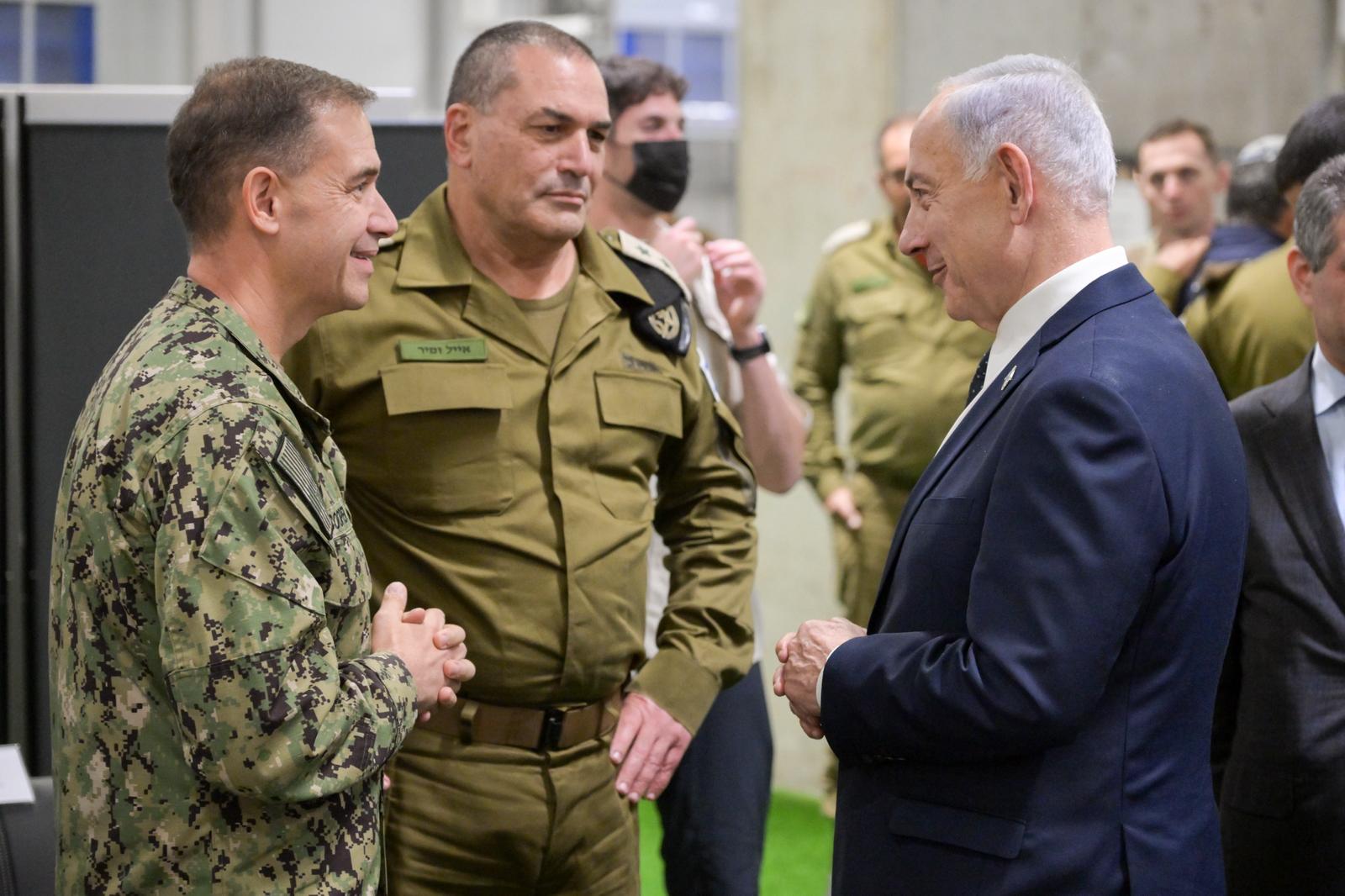
Prime Minister Benjamin Netanyahu visits the Civil-Military Coordination Center in Kiryat Gat on October 29, 2025, meeting IDF chief Lt. Gen. Eyal Zamir (center) and CENTCOM chief Adm. Brad Cooper (left). (Maayan Toaf/GPO)

Netanyahu was joined on his tour of the facility by IDF Chief of Staff Lt. Gen. Eyal Zamir, the IDF’s liaison to the Civil-Military Coordination Center Commander Maj. Gen. Yaki Dolf, Shin Bet director David Zini and senior IDF officers. He also met with US Lt. Gen. Patrick Frank, the American’s pointperson at the CMCC.

There was no immediate US statement on Netanyahu’s first visit to the Civil-Military Coordination Center, which began operations this month to coordinate humanitarian, logistical, and security assistance into Gaza while helping oversee the postwar stabilization phase.

Roughly 200 American military personnel were dispatched to set up the center, which also hosts troops from several other countries, though the CMCC’s precise structure, command hierarchy, and legal status remain undefined. It is also unclear which countries, if any, will agree to send peacekeeping troops into Gaza as part of a future UN-mandated stabilization force, among whose main challenges will be to oversee the disarmament of Hamas and the destruction of the remaining terror tunnels under the Strip.

Idea of exanding IDF hold in Gaza ‘on ice’

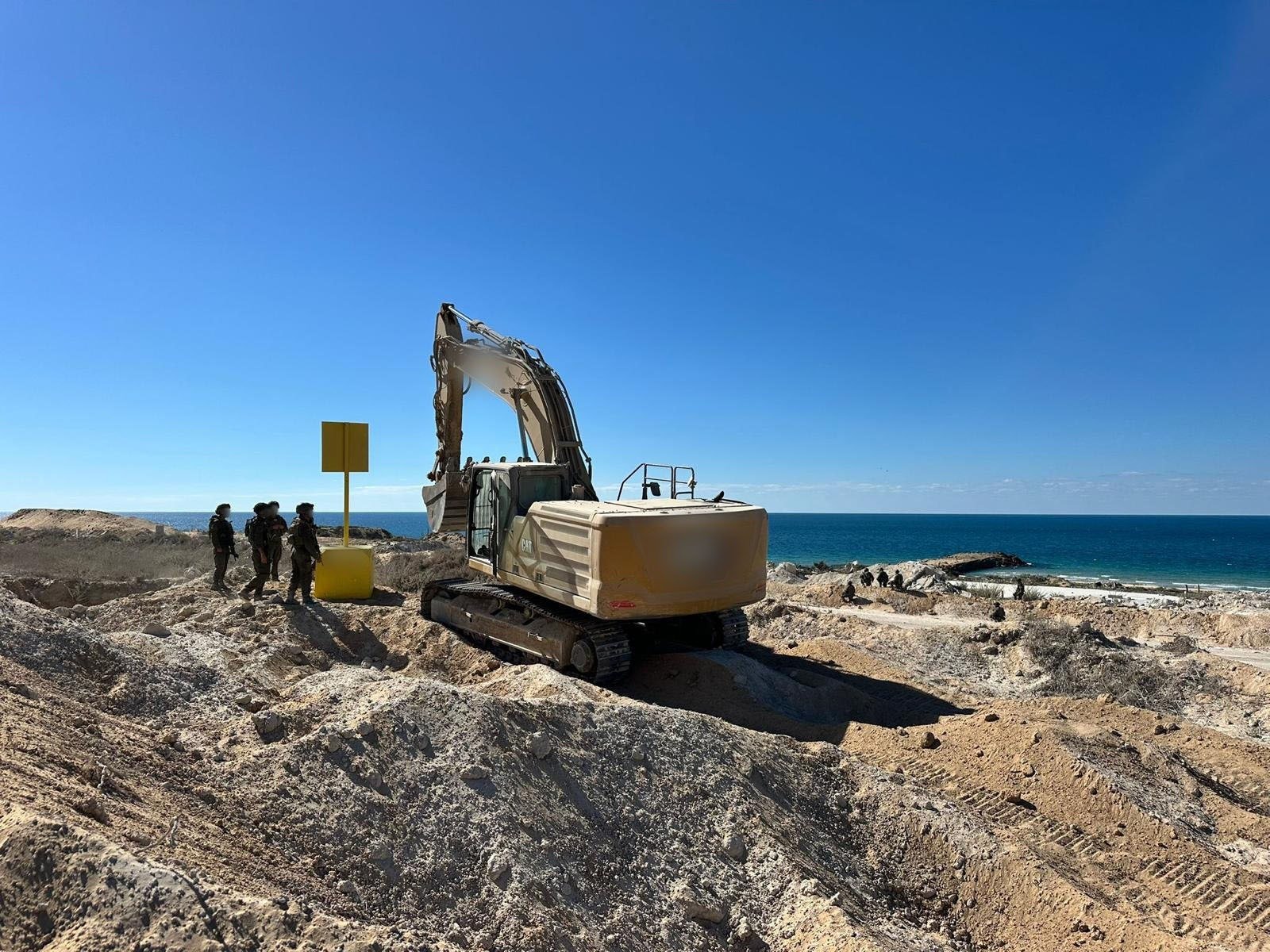
Also Wednesday, Hebrew media reported that Netanyahu is backing away from plans to expand the military’s “Yellow Line” of control inside Gaza after initially approving them as part of Israel’s response to the deadly attack on the soldier in Rafah.

According to the Kan public broadcaster, Netanyahu discussed the matter with senior Trump administration officials, who were unenthused, with an Israeli source saying the plans would be put off. The Ynet news site in an unsourced reported said the plans were “put on ice.”

IDF troops set up a physical marker on the Yellow Line in the Gaza Strip, October 20, 2025. (Israel Defense Forces)

On Tuesday, Channel 12 news reported that even before the incident in Rafah, discussions had been held between the Prime Minister’s Office and the White House on potential Israeli military action against Hamas amid growing anger in Israel over the terrorist group’s failure to return the bodies of the remaining 13 deceased hostages it is holding.

That anger was compounded earlier in the day, when the military released footage showing Hamas staging the fake recovery of Ofir Tzarfati’s partial remains in eastern Gaza City in front of the Red Cross, before handing them over on Monday night instead of the promised body of one of the remaining slain hostages.