
Putin cites Egypt talks on Gaza as reason for pushing back Moscow confab, but report says Saudi, UAE, Egyptian leaders had never confirmed they’d attend the event
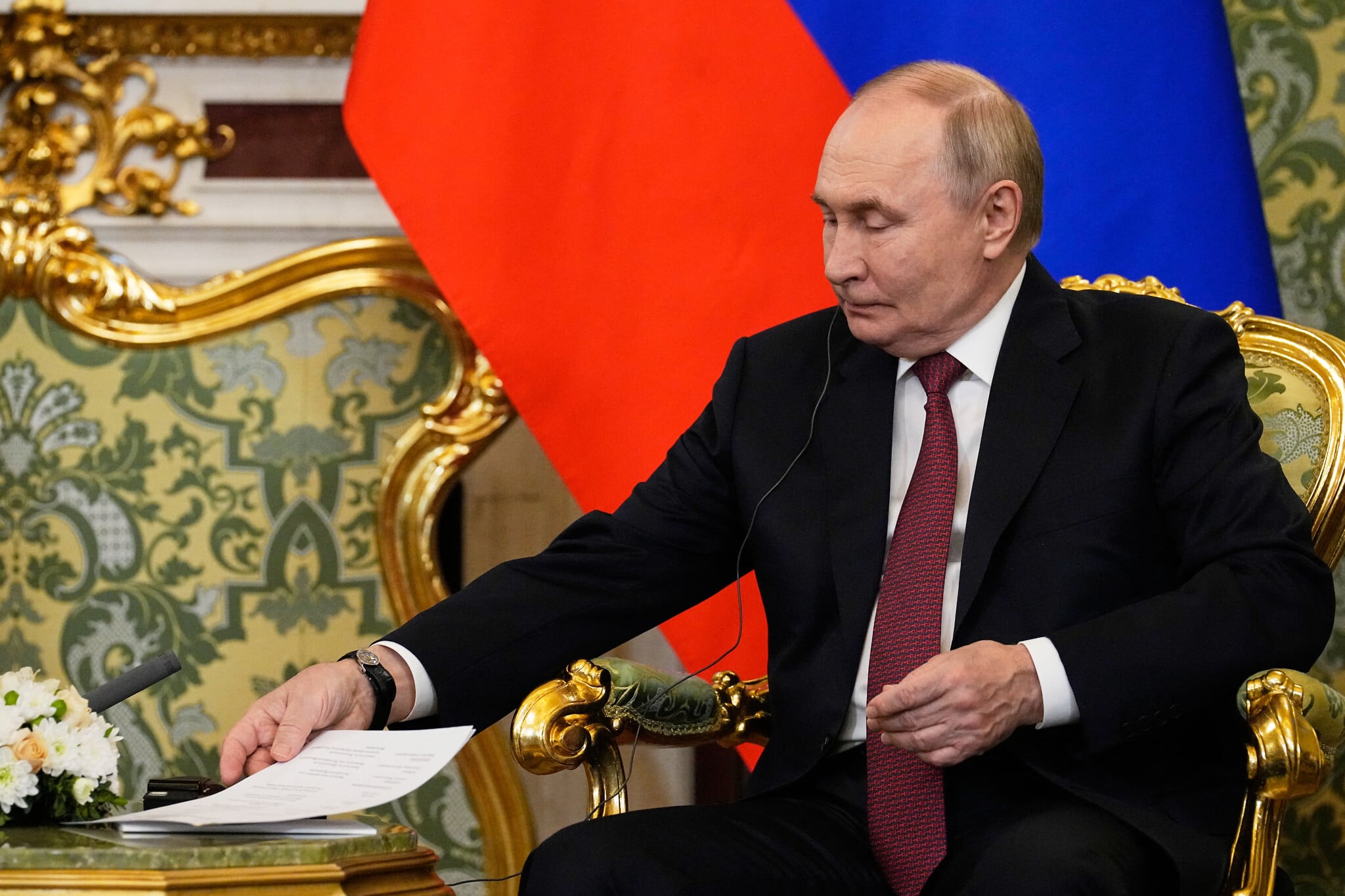
Russian President Vladimir Putin attends a meeting with Syrian President Ahmed al-Sharaa at the Grand Kremlin Palace in Moscow on October 15, 2025. (Alexander Zemlianichenko / POOL / AFP)

Russian President Vladimir Putin attends a meeting with Syrian President Ahmed al-Sharaa at the Grand Kremlin Palace in Moscow on October 15, 2025. (Alexander Zemlianichenko / POOL / AFP)

The date for a planned Moscow summit on Arab politics came and went on Wednesday, after the Kremlin pushed off the event reportedly due to a paucity of commitments from Mideast leaders to attend it.

The failure to rally Arab leaders marked a decline in Russia’s influence in the region, amid a larger hit to Russian President Vladimir Putin’s clout following his 2022 invasion of Ukraine.

When calling off the meeting, Putin cited Monday’s confab in Sharm el-Sheikh, Egypt, on a postwar governance plan for the battered Gaza Strip.

“I did this because I don’t want to interfere with the process that, as we hope, has now been set in motion,” he said on Friday, referring to the then-upcoming peace summit.

The conference in Egypt drew scores of leaders from the Arab and Muslim worlds and Europe, as well as US President Donald Trump.

Put together on short notice, the Egypt summit contrasted with Putin’s effort, which failed to secure the pledged attendance of more than a smattering of Arab heads of state.
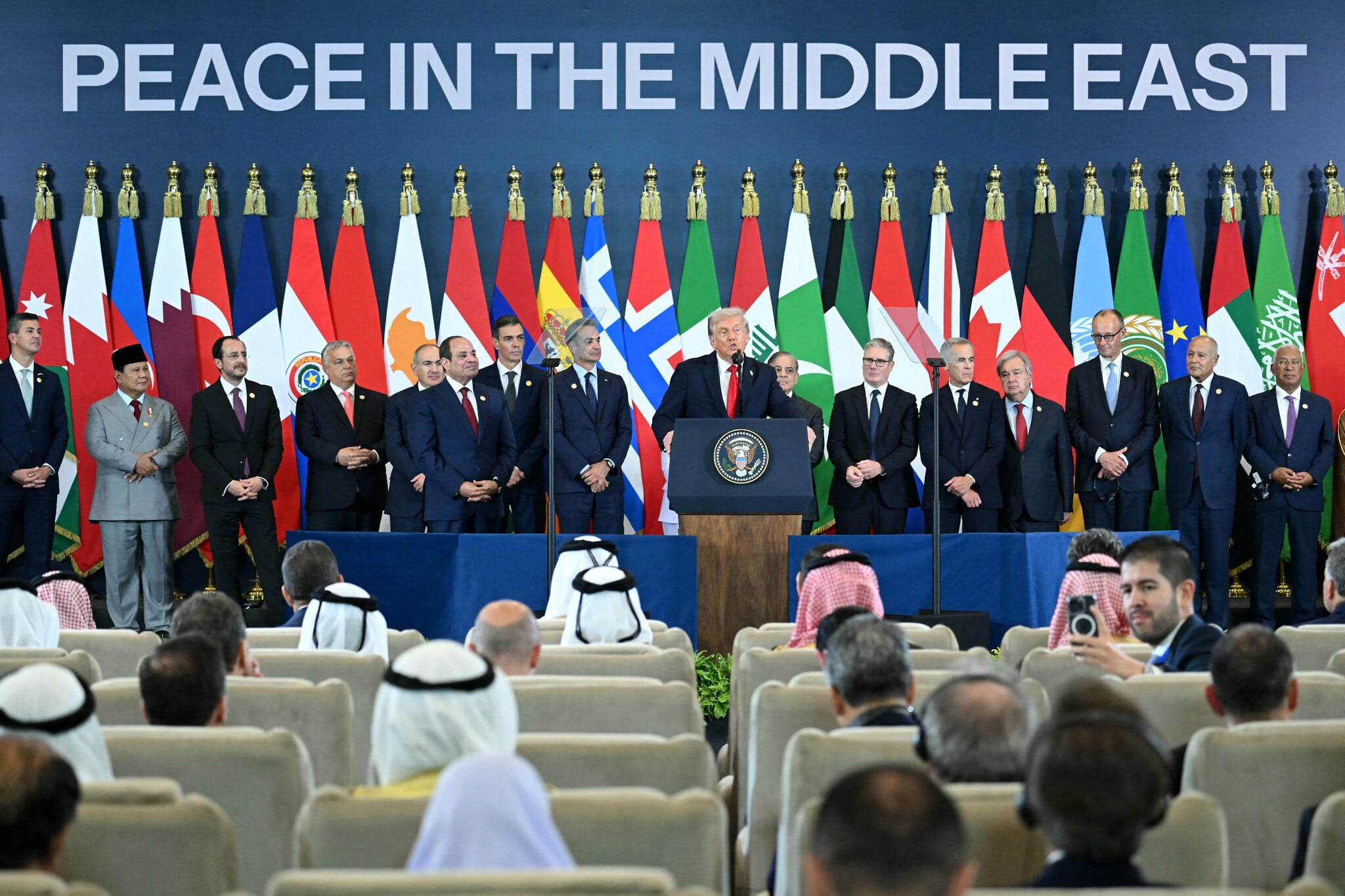
US President Donald Trump (C) speaks during the Sharm El-Sheikh Peace Summit in the Egyptian Red Sea resort town of Sharm el-Sheikh on October 13, 2025. (Photo by SAUL LOEB / AFP)

Syrian President Ahmed al-Sharaa had confirmed he’d participate, as had the head of the Arab League. But the leaders of Saudi Arabia, the United Arab Emirates, and Egypt still had not signed on as of Tuesday, October 7, Bloomberg reported.

Sharaa traveled to Moscow on Wednesday anyway to meet with Putin, who secured significant influence in the Middle East through his 2015 intervention in the Syrian civil war. Russia supported longtime Syrian dictator Bashar al-Assad, who was overthrown last December by insurgents led by Sharaa’s Islamist forces.

Though the Assad regime has been toppled, Russia maintains military bases in Syria.

The resources Russia used to entrench its influence there, however, have been strained since it invaded Ukraine in 2022, starting a bloody ongoing war that has brought condemnations and sanctions from the West.

It’s also weakened close diplomatic ties with countries in Central Asia and the Caucasus, which distanced themselves from Russia after the Ukraine invasion, amid concerns over their own security going forward.
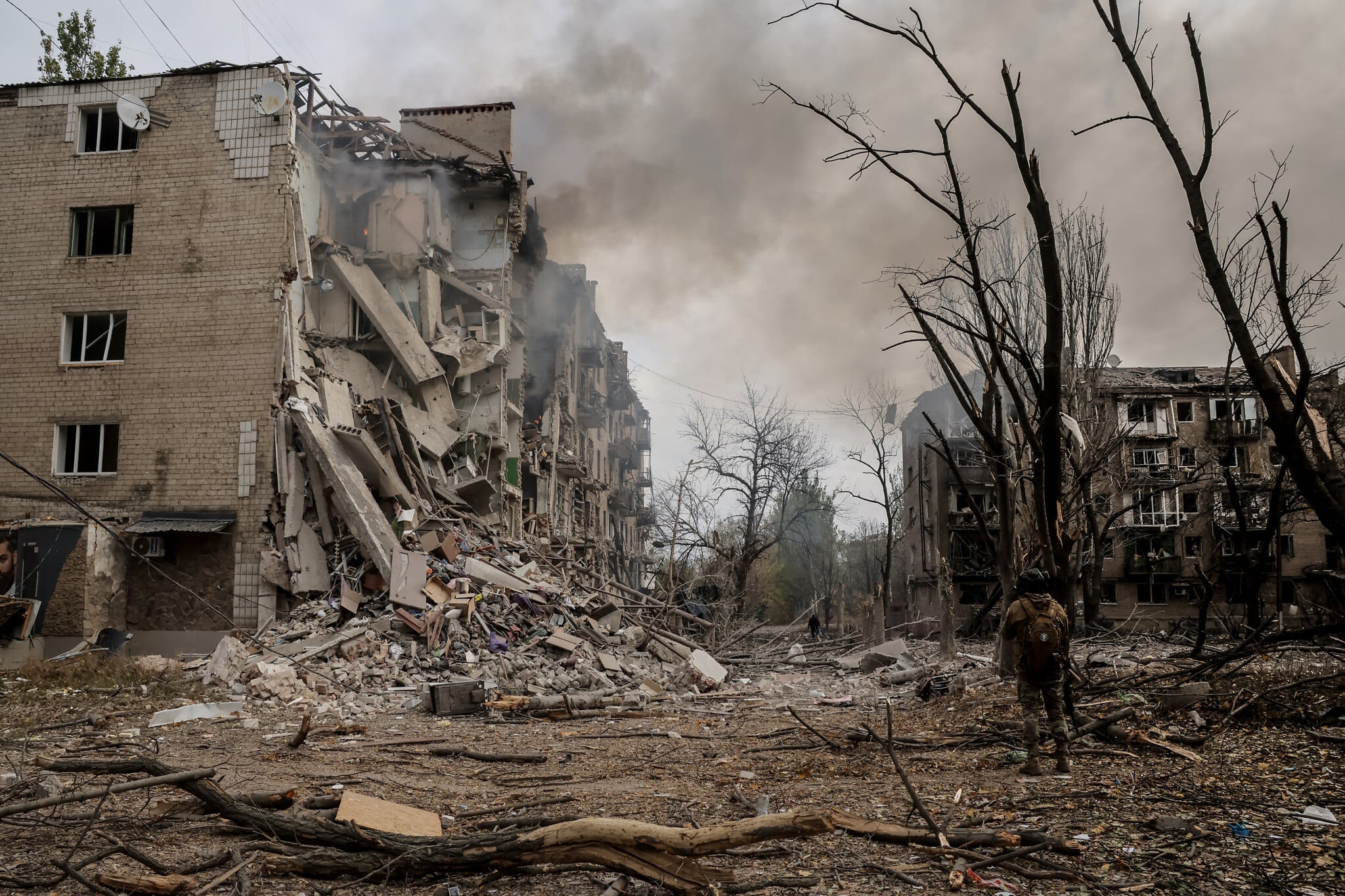
In this handout photograph taken by the press service of the 24th Mechanized Brigade of Ukrainian Armed Forces on October 12, 2025 and released on October 14, 2025, a Ukrainian serviceman stands among the rubble in the courtyard of destroyed residential buildings in the frontline town of Kostyantynivka, Donetsk region, amid the Russian invasion of Ukraine. (OLEG PETRASIUK / 24th Mechanized Brigade of Ukrainian Armed Forces / AFP)

Russia may yet hold the Arab summit, which the Kremlin described as postponed rather than canceled and indicated may be held in November instead.

The delay also came as Trump appears to be losing patience with Moscow over the war in Ukraine and is renewing efforts to end that conflict now that he’s secured a ceasefire in Gaza and the return of the living hostages to Israel.

“Interestingly we made progress [on Ukraine] today, because of what’s happened in the Middle East,” Trump said Wednesday evening.

On Friday, the US leader is scheduled to host Ukrainian President Volodymyr Zelensky. In advance of the meeting, Trump has suggested the US may finally sell Kyiv Tomahawk missiles, which would allow Ukraine to strike deeper into Russian territory than it’s been able to so far.
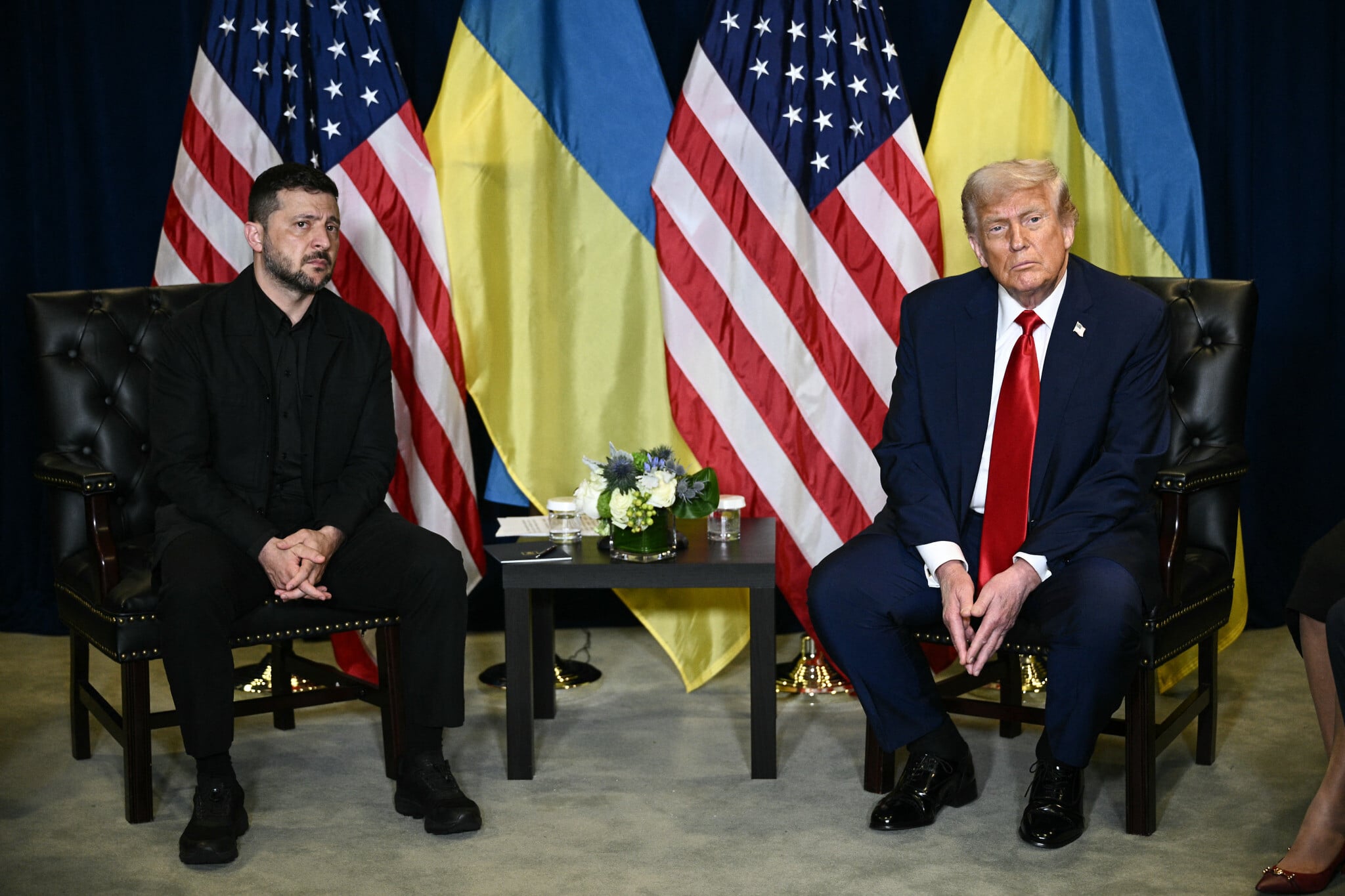
US President Donald Trump (right) holds a bilateral meeting with Ukraine’s President Volodymyr Zelensky on the sidelines of the United Nations General Assembly in New York City on September 23, 2025. (Brendan SMIALOWSKI / AFP)

Trump also said on Wednesday that he’d convinced Indian Prime Minister Narendra Modi to stop buying Russian oil, though India itself neither confirmed nor denied the White House claim.

The US had levied a 25 percent tariff on Indian goods — in addition to another 25% tariff — as a punitive measure for New Delhi’s support of the Russian economy.

“Now I’ve got to get China to do the same thing,” Trump said, of India’s purported plan to stop buying Russian crude.

Agencies contributed to this report.


Egypt proposed an initial deployment of 1,000 security personnel trained in Jordan or Egypt, aiming to gradually expand the effort to enforce post-ceasefire security.

U.S. President Donald Trump and Egyptian President Abdel Fattah el-Sisi meet ahead of a world leaders' summit on ending the Gaza war, amid a U.S.-brokered prisoner-hostage swap and ceasefire deal between Israel and Hamas, in Sharm El-Sheikh, Egypt, October 13, 2025.
U.S. President Donald Trump and Egyptian President Abdel Fattah el-Sisi meet ahead of a world leaders’ summit on ending the Gaza war, amid a U.S.-brokered prisoner-hostage swap and ceasefire deal between Israel and Hamas, in Sharm El-Sheikh, Egypt, October 13, 2025.
(photo credit: REUTERS)
Negotiations between Israel and Hamas have entered a new stage, with Egypt proposing the deployment of up to 10,000 Palestinian security personnel in Gaza as part of the second phase of President Donald Trump’s 20-point peace plan, according to The Wall Street Journal.

For more stories from The Media Line go to themedialine.org


The force would initially consist of around 1,000 officers trained in Egypt and Jordan to help stabilize the Strip and enforce security following the ceasefire. Egyptian officials hope to expand the contingent over time, but Israel is expected to oppose any arrangement involving the Palestinian Authority or a sizable armed Palestinian presence in Gaza.

Phase two of Trump’s plan

The discussions mark the next step in the implementation of Trump’s plan, which in its first phase required Hamas to release all hostages, living and deceased. The current stage focuses on postwar governance, new security arrangements under Arab supervision, and the gradual disarmament of Hamas

Several logistical issues remain unresolved, including the reopening of the Rafah crossing between Gaza and Egypt, which was supposed to resume operations after the first phase of the agreement. Israeli officials say the continued closure gives them leverage in negotiations over the return of additional hostage remains.

Trucks carry aid for Palestinians, amid a ceasefire between Israel and Hamas in Gaza, in Khan Younis, in the southern Gaza Strip, October 14, 2025. (credit: REUTERS/Ramadan Abed)

So far, Hamas has returned seven bodies, though one was later identified as Palestinian. Israel has returned 45 Palestinian bodies in exchange for three deceased hostages. 

Humanitarian aid continues to flow through the Kerem Shalom crossing, with up to 600 trucks entering Gaza daily as stipulated in the ceasefire agreement. Another transfer of hostage remains is expected on Wednesday, while Egyptian and Turkish teams continue recovery operations based on Israeli-provided coordinates.

Officials familiar with the talks say that while progress is steady, finalizing the security arrangements, and defining Gaza’s postwar administration will take time.


The handover follows the IDF’s full repositioning over the weekend, a key condition for activating the first tranche of the agreement.

Matan Angrest at Re'im, October 13, 2025.
Matan Angrest at Re’im, October 13, 2025.
(photo credit: IDF SPOKESPERSON’S UNIT)
All 20 of the living Israeli hostages held by Hamas have returned to Israeli territory, the IDF announced.

The remaining live hostages held by Hamas were all in IDF custody as of 11:42 a.m.

The first seven hostages to be released were named as: Matan Angrest, Alon Ohel, Eitan Mor, Gali and Ziv Berman, Omri Miran, and Guy Gilboa-Dalal. The second round of returned hostages, which are the other 13, included: Bar Abraham Kupershtein, Evyatar David, Yosef-Chaim Ohana, Segev Kalfon, Avinatan Or, Elkana Bohbot, Maxim Herkin, Nimrod Cohen, Matan Zangauker, Eitan Horn, Rom Braslavski, Ariel Cunio, and David Cunio.

Despite earlier IDF estimates that the hostages would be returned in three rounds, in the end it took only two rounds, with Hamas seeming to want to have all hostages over to Israeli custody before US President Donald Trump was soon expected to speak to the Israeli Knesset.

Guy Gilboa-Dalal at Re'im, October 13, 2025. (credit: IDF SPOKESPERSON'S UNIT)
Guy Gilboa-Dalal at Re’im, October 13, 2025. (credit: IDF SPOKESPERSON’S UNIT)

The three expected locations for the transfers were Gaza City, central Gaza, and Khan Yunis in southern Gaza.

Earlier Monday at 9:10 a.m., the IDF had already received seven out of the 20 remaining live hostages back from Hamas via the International Red Cross (ICRC).

By 8:10 a.m., the ICRC had already received those hostages from Hamas.

Late Sunday night, the IDF had said that if the live hostages were stable, they would move from Red Cross custody to IDF special forces custody, then to the Reim base, and then to the three hospitals: Shiba, Ichalov, and Beilinson.

However, if a live hostage was in immediate medical danger, a helicopter would be sent to rush them to Soroka Medical Center or to Barzilai Medical Center.

All of the first round hostages were stable enough medically that they did not require an emergency evacuation.

The IDF expects that some deceased hostages will be returned on Monday, but has no set numbers about how many, and is prepared for that part of the process to be drawn out over multiple days or longer. The deceased hostages will be transferred to Israel in coordination with further Red Cross-supervised exchanges, under the same verification and transfer protocols

Part of the process will also involve identifying the remains with specific hostages.

According to the IDF, Hamas is bound to assist a joint mechanism associated with the Trump ceasefire to help locate other deceased hostages, where finding them may be less of an exact science.

The ICRC will also transfer around 2,000 Palestinian security prisoners held in Israeli prisons to the Gaza Strip, West Bank, and locations outside of Israel, such as Qatar and Turkey.

Already after the transfer of the second round of Israeli hostages, buses of the Palestinian prisoners left Ofer Prison for their release in Beitunia in the West Bank and left Ketziot Prison for their release in Gaza, respectively.

The carrying out of the releases by both sides makes it more likely than ever that the ceasefire between Israel and Hamas will hold. However, there are still many open questions about the mechanisms for governing Gaza politically and for whatever amount of disarmament Hamas may eventually undertake.

Since no timeline was made for those “second phase” issues, it is also unclear when they will be settled.

However, the IDF has already withdrawn from around 50% of Gaza, including all areas where the Palestinian population is residing.

Already, Hamas has fanned out with an estimated 7,000 or more of its forces to retake control of Gaza, pending the negotiations over the Strip’s future with the US, other world powers, various moderate Arab states, and Israel.

Only four of 28 deceased hostages to be returned, Hostage Forum expresses outrage

The Hostage and Missing Families Forum expressed outrage as only four of the 28 deceased hostages are to be returned on Monday.

“This is a blatant violation of the agreement by Hamas,” the forum said. “We expect the Israeli government and the mediators to act immediately to correct this terrible injustice.

Gaza hostage releases come amid IDF withdrawals, Trump visit

The handover follows the IDF’s full repositioning over the weekend, a key condition for activating the first tranche of the agreement. The government had simultaneously prepared a parallel list of Palestinian prisoners for release, with final approvals confirmed just ahead of implementation. Disputes over specific names and timing were resolved in recent days as part of finalizing the schedule.

Monday’s release marks the beginning of a rolling process expected to continue over the coming days.

The releases coincide with a high-profile visit to Israel by US President Donald Trump, who is expected to land later on Monday and speak at the Knesset.

Liran Haroni contributed to this report.