
Post-War Plan Sees US Administering Gaza for at Least a Decade

by Reuters and Algemeiner Staff  

August 31, 2025 1:48 pm

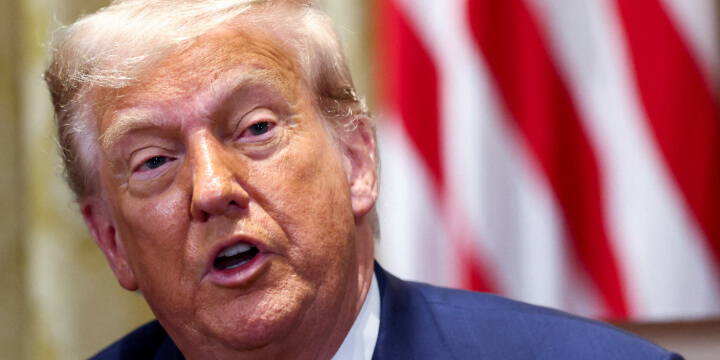
U.S. President Donald Trump speaks during a cabinet meeting at the White House in Washington, D.C., U.S., July 8, 2025. Photo: Kevin Lamarque via Reuters Connect.

A post-war plan for Gaza is circulating within President Donald Trump’s administration that would see the US administer the war-torn enclave for at least a decade, the relocation of Gaza’s population and its rebuilding as a tourist resort and manufacturing hub, the Washington Post reported on Sunday.

The Washington Post said that according to a 38-page prospectus it had seen, Gaza’s 2 million population would at least temporarily leave either through “voluntary” departures to another country or into restricted areas within the territory during reconstruction.

Reuters previously reported there is a proposal to build large-scale camps called “Humanitarian Transit Areas” inside – and possibly outside – Gaza to house the Palestinian population. That plan carried the name of the US-backed Gaza Humanitarian Foundation, or GHF, a controversial US-backed aid group.

Anyone who owns land would be offered a “digital token” in exchange for rights to redevelop their property, the Post reported, adding that each Palestinian who left would be provided with $5,000 in cash and subsidies to cover four years of rent. They would also be provided with a year of food, it added.

The Post said the plan is called the “Gaza Reconstitution, Economic Acceleration and Transformation Trust, or GREAT Trust,” and was developed by the GHF.

GHF coordinates with the Israeli military and uses private US security and logistics companies to get food aid into Gaza. It is favored by the Trump administration and Israel to carry out humanitarian efforts in Gaza as opposed to the U.N.-led system which Israel says lets terrorists divert aid.

The White House and State Department did not immediately respond to a request for comment, but the plan to rebuild Gaza appears to fall in line with previous comments made by Trump.

On February 4, Trump first publicly said that the US should “take over” the war-battered enclave and rebuild it as “the Riviera of the Middle East” after resettling the Palestinian population elsewhere.

Trump’s comments angered many Palestinians and humanitarian groups about the possible forced relocation from Gaza.

Israeli forces pounded the suburbs of Gaza City overnight from the air and ground, destroying homes and driving more families out of the area as Prime Minister Benjamin Netanyahu’s security cabinet was set on Sunday to discuss a plan to seize the city.

The Israeli military has gradually escalated its operations around Gaza City over the past three weeks. On Friday it ended temporary pauses in the area that had allowed for aid deliveries, designating it a “dangerous combat zone.”

On Sunday, the head of the World Food Program said Israel’s designation would impact food access and put humanitarian aid workers in danger.

“It’s going to limit the amount of food that they have access to,” WFP executive director Cindy McCain said on CBS News’ “Face the Nation” program.

A report released earlier this month by the global hunger monitor, Integrated Food Security Phase Classification (IPC), said that approximately 514,000 people – nearly a quarter of Gaza’s population – are facing famine conditions in Gaza City and surrounding areas.

Israel has dismissed the IPC’s findings as false and biased, saying it had based its survey on partial data largely provided by Hamas, which did not take into account a recent influx of food.

IDF strikes and eliminates Hezbollah terrorist in southern Lebanon

The IDF Spokesperson’s Unit announced that on Sunday, the IDF struck and eliminated a terrorist from the Hezbollah terrorist organization. The terrorist was identified at a significant site belonging to the organization, which was targeted in the Nabatieh area of southern Lebanon.

“The terrorist’s actions constituted a violation of the understandings between Israel and Lebanon. The IDF will continue to act to remove any threat to the State of Israel,” the IDF stated.


When West condemned Iran it would escalate nuke violations. Now the West imposed its worst measure and Tehran has not countered yet.

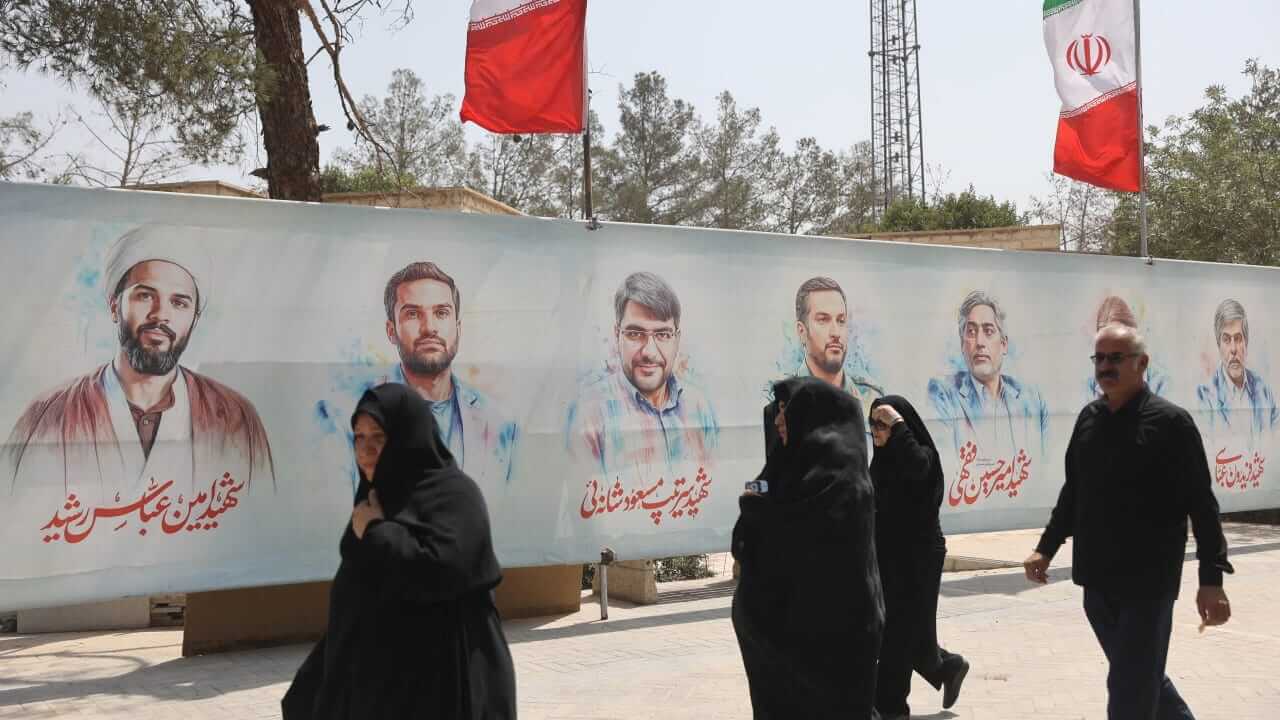
Pictures of Iranian military commanders, nuclear scientists and others killed in Israeli strikes are displayed in Behesht Zahra Cemetery in southern Tehran, Iran, July 11, 2025
(photo credit: Majid Asgaripour/WANA/via Reuters)
Last Thursday, Germany, UK, and France, the E3, started a 30-day countdown to activating the snapback of global sanctions against Iran.

Iran had vowed to retaliate by pulling itself out of the Non-Proliferation of Nuclear Weapons Treaty (NPT). It has not.

In fact, four days after the initial E3 snapback move, Tehran has not retaliated in any way.

Iran Supreme Leader Ayatollah Ali Khamenei always thought it was crucial to retaliate even for many small insults by the West – an eye for an eye – to show Iran’s strength and to deter the West from this specific moment and action.

So, why is Iran silent?

 REMAINS OF a ballistic missile fired from Iran in the recent war, June 29, 2025. (credit: FLASH90)
REMAINS OF a ballistic missile fired from Iran in the recent war, June 29, 2025. (credit: FLASH90)

n truth, it is not silent.

There are lots of complaining and high-minded false claims of victimhood and being treated unfairly. But given that Khamenei is used to being the bully, why has he been silent regarding any practical consequences?

Probably because Khamenei has little with which to retaliate against the West at this point due to his eviscerated nuclear program.

If before the Israel-Iran war in June, he could activate more centrifuges and enrich more uranium, Jerusalem’s and Washington’s attacks reduced those facilities to rubble.

So, Tehran could pull out of the NPT, but then what? Pulling out of the NPT is only a scary threat when made by a pre-June Iran. Then it could have tried to break out to a nuclear weapon using its fleet of about 20,000 centrifuges, including advanced ones, with many final-stage nuclear-weapons activities completed.

Another time-honored trick by Khamenei would be to kick out the International Atomic Energy Agency (IAEA) nuclear inspectors. He has done that in successive stages over the past three years.

Sure, Iran let some IAEA inspectors back into their country last week to check out the entire civilian nuclear reactor in Bushehr. But until Khamenei gives the IAEA access to military nuclear facilities and the remaining enriched uranium it has, any cooperation has little more than symbolic value.

And that is what Iran is used to doing: stonewalling real concessions, threatening the other side, and providing just enough symbolic cooperation for the E3 to ask the US and Israel to restrain themselves to give diplomacy more time.

e jig is up after 10 years

Iran misjudged Israel’s and the US’s readiness to attack. It has now misjudged the E3’s determination to receive concrete nuclear concessions – and not just the old-school symbolic ones.

The Islamic Republic seems to be irrationally holding on for dear life to the futile hope that support from Russia, China, and other non-Western countries will help keep it humming in spite of global sanctions.

On that front, the situation has improved for Iran.

Before 2015, when international sanctions were imposed on Iran, China and Russia played according to the rules, because they and the world were more dependent on the US and the West. Since Moscow invaded Ukraine in 2022, Russia and China have decoupled much of this.

But global sanctions do not need to shutter Iran completely. They just need to push it further into the economic abyss that it has already been close to from certain sanctions that have remained on it since 2018, when the Mossad proved to the US that Iran was cheating on aspects of the nuclear deal.
In a rational world, Khamenei would have cut a new deal by now, either making real concessions or at least agreeing to extend the E3’s snapback tool for another six months to buy time for more negotiations.

But Tehran seems to be making decisions now out of anger and illusions of grandeur it aspired to just before the June war.

If the Islamic Republic does not opt for a new nuclear deal by around September 27, it will face new levels of economic pain, just as it is trying to pull itself up from the damage of the June war.

In that case, it may continue to fester, operating at lower threat levels. But it will not be able to progress again toward a nuclear weapon or the regional hegemony it so desired.

And if the festering goes on long enough, it is even possible that Israel may strike again, even without an immediate new threat – simply because Khamenei would be considered weaker, and the opportunity to push the Iranians even further away from posing a serious threat might be too hard to pass up.