“Despite countless warnings by the international community, Iran is totally determined to complete its nuclear weapons program,” the PMO said.

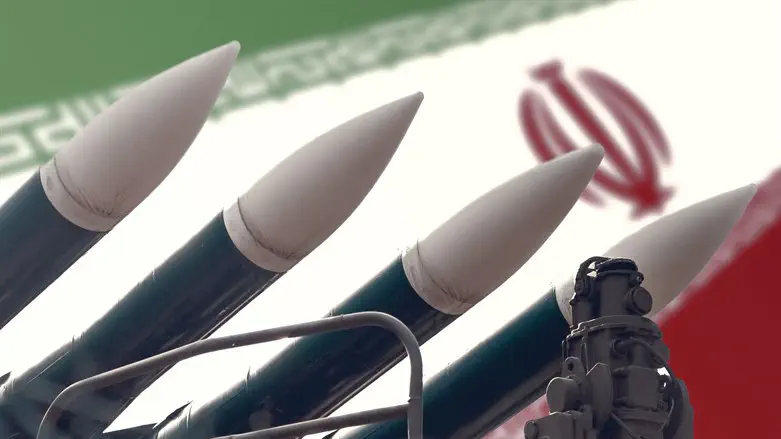
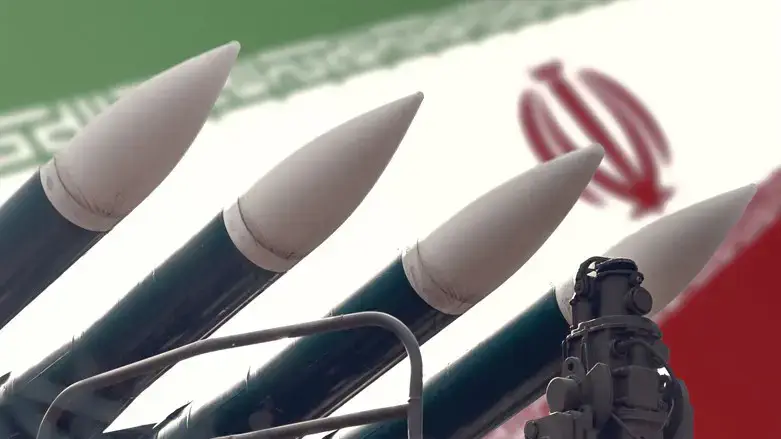
 An Iranian missile system is displayed next to a banner with a picture of Iran's Supreme Leader Ayatollah Ali Khamenei, during Iranian defence week, in a street in Tehran, Iran, September 24, 2024. (photo credit: MAJID ASGARIPOUR/WANA (WEST ASIA NEWS AGENCY) VIA REUTERS)
An Iranian missile system is displayed next to a banner with a picture of Iran’s Supreme Leader Ayatollah Ali Khamenei, during Iranian defence week, in a street in Tehran, Iran, September 24, 2024.
(photo credit: MAJID ASGARIPOUR/WANA (WEST ASIA NEWS AGENCY) VIA REUTERS)
Iran carried out secret nuclear activities with material not declared to the UN nuclear watchdog at three locations that have long been under investigation, the watchdog said in a wide-ranging, confidential report to member states seen by Reuters.

The findings in the “comprehensive” International Atomic Energy Agency report requested by the agency’s 35-nation Board of Governors in November pave the way for a push by the United States, Britain, France, and Germany for the board to declare Iran in violation of its non-proliferation obligations.

A resolution would infuriate Iran and could further complicate nuclear talks between Tehran and Washington.

Using the IAEA report’s findings, the four Western powers plan to submit a draft resolution for the board to adopt at its next meeting the week of June 9, diplomats say. It would be the first time in almost 20 years that Iran has formally been found in non-compliance.

Tehran says it wants to master nuclear technology for peaceful purposes and has long denied accusations by Western powers that it is seeking to develop nuclear weapons.

Satellite images obtained by Fox News on May 8, 2025 of an Iranian nuclear weapons facility. (credit: Amichai Stein, screenshot)Enlrage image
Satellite images obtained by Fox News on May 8, 2025 of an Iranian nuclear weapons facility. (credit: Amichai Stein, screenshot)

Iran said that a report by the UN nuclear watchdog on Saturday is “politically motivated and repeats baseless accusations”, state media reported.

Iran said it will “implement appropriate measures” in response to any effort to take action against Tehran at the IAEA governors’ meeting.

While many of the findings relate to activities dating back decades and have been made before, the IAEA report’s conclusions were more definitive. It summarized developments in recent years and pointed more clearly towards coordinated, secret activities, some of which were relevant to producing nuclear weapons.

It also spelled out that Iran’s cooperation with IAEA continues to be “less than satisfactory” in “a number of respects.” The IAEA is still seeking explanations for uranium traces found years ago at two of four sites it has been investigating. Three hosted secret experiments, it found.

The IAEA has concluded that “these three locations, and other possible related locations, were part of an undeclared structured nuclear program carried out by Iran until the early 2000s and that some activities used undeclared nuclear material,” the report said.

Nuclear material and/or heavily contaminated equipment from that program was stored at the fourth site, Turquzabad, between 2009 and 2018, it said.

“The Agency concludes that Iran did not declare nuclear material and nuclear-related activities at three undeclared locations in Iran, specifically, Lavisan-Shian, Varamin, and Turquzabad,” the report said.

At Lavisan-Shian in Tehran, a disc made of uranium metal was “used in the production of explosively-driven neutron sources” at least twice in 2003, a process designed to initiate the explosion in a nuclear weapon, the report said, adding that it was part of “small-scale” tests.

The report is likely to lead to Iran being referred to the UN Security Council, though that would probably happen at a later IAEA board meeting, diplomats said.

More immediately, it is likely to lead to Iran again accelerating or expanding its rapidly advancing nuclear program, as it has done after previous rebukes at the board. It could also further complicate talks with the United States aimed at reining in that program.

Secret uranium stock enrichment continues

A separate IAEA report sent to member states on Saturday said Iran’s stock of uranium enriched to up to 60% purity, close to the roughly 90% of weapons grade, had grown by roughly half to 408.6 kg. That is enough, if enriched further, for nine nuclear weapons, according to an IAEA yardstick.

Both IAEA reports said enrichment to such a high level was “of serious concern” since it is the only country to do so without producing nuclear weapons.

The Prime Minister’s Office (PMO) called the IAEA report on Iran’s nuclear program grave and clear, saying it proves Iran is fully committed to developing nuclear weapons.

The PMO stressed that Iran is violating the Non-Proliferation Treaty and blocking IAEA inspections. It urged the international community to act now to stop Iran’s nuclear progress.

“The IAEA has reported a grave and unequivocal report on Iran’s nuclear program. The agency presents a stark picture that serves as a clear warning sign. Despite countless warnings by the international community, Iran is totally determined to complete its nuclear weapons program,” the PMO began.

“The report strongly reinforces what Israel has been saying for years: The purpose of Iran’s nuclear program is not peaceful. This is evident from the alarming scope of Iran’s uranium enrichment activity. Such a level of enrichment exists only in countries actively pursuing nuclear weapons and has no civilian justification whatsoever.”

“The report clearly indicates that Iran remains non-compliant with its fundamental commitments and obligations under the Non-Proliferation Treaty (NPT), and continues to withhold cooperation from IAEA inspectors. The international community must act now to stop Iran,” the PMO concluded.


Findings include 2003 tests of detonator for nuclear bomb; UN watchdog also says Tehran now has enough uranium, if enriched further, for 9 bombs; Netanyahu’s office urges world to ‘act now to stop Iran’

Iran's Supreme Leader Ayatollah Ali Khamenei (front) visits an exhibition of the country's nuclear industry achievements in Tehran, June 11, 2023, accompanied by the head of the Atomic Energy Organization of Iran Mohammad Eslami (L). (Khamenei.ir/AFP)

Iran’s Supreme Leader Ayatollah Ali Khamenei (front) visits an exhibition of the country’s nuclear industry achievements in Tehran, June 11, 2023, accompanied by the head of the Atomic Energy Organization of Iran Mohammad Eslami (L). (Khamenei.ir/AFP)

VIENNA — Iran carried out secret nuclear activities with material not declared to the UN nuclear watchdog at three locations that have long been under investigation, the watchdog said in a wide-ranging, confidential report to member states seen by Reuters.

The findings in the “comprehensive” International Atomic Energy Agency report, requested by the agency’s 35-nation Board of Governors in November, pave the way for a push by the United States, Britain, France and Germany for the board to declare Iran in violation of its non-proliferation obligations.

A resolution would infuriate Iran and could further complicate nuclear talks between Tehran and Washington.

Using the IAEA report’s findings, the four Western powers plan to submit a draft resolution for the board to adopt at its next meeting the week of June 9, diplomats say. It would be the first time in almost 20 years that Iran has formally been found in non-compliance.

Iran’s foreign ministry rejected the report as “politically motivated” and said Tehran will take “appropriate measures” in response to any effort to take action against the country at the Board of Governors meeting, state media reported, without elaborating.

Tehran, which openly seeks Israel’s destruction, claims it wants to master nuclear technology for peaceful purposes and has long denied accusations by Western powers that it is seeking to develop nuclear weapons. But it has been enriching increasing quantities of uranium to levels that can only be used for nuclear weaponry.

While many of the findings relate to activities dating back decades and have been made before, the IAEA report’s conclusions were more definitive. It summarized developments in recent years and pointed more clearly towards coordinated, secret activities, some of which were relevant to producing nuclear weapons.

It also spelled out that Iran’s cooperation with IAEA continues to be “less than satisfactory” in “a number of respects.” The IAEA is still seeking explanations for uranium traces found years ago at two of four sites it has been investigating. Three hosted secret experiments, it found.

The IAEA has concluded that “these three locations, and other possible related locations, were part of an undeclared structured nuclear program carried out by Iran until the early 2000s” and that “some activities used undeclared nuclear material,” the report said.

Nuclear material and/or heavily contaminated equipment from that program was stored at the fourth site, Turquzabad, between 2009 and 2018, it said.

The Turquzabad site became known publicly in 2018 after Israeli Prime Minister Benjamin Netanyahu revealed it at the United Nations and called it a clandestine nuclear warehouse hidden at a rug-cleaning plant.

Iran denied this, but in 2019, IAEA inspectors detected the presence of manmade uranium particles there.

Benjamin Netanyahu addresses the United Nations General Assembly on September 27, 2018, in New York City, and holds up a picture of what he said was a secret Iranian nuclear warehouse. (John Moore/Getty Images/AFP)

“The Agency concludes that Iran did not declare nuclear material and nuclear-related activities at three undeclared locations in Iran, specifically, Lavisan-Shian, Varamin, and Turquzabad,” the report said.

At Lavisan-Shian in Tehran, a disc made of uranium metal was “used in the production of explosively-driven neutron sources” at least twice in 2003, a process designed to initiate the explosion in a nuclear weapon, the report said, adding that it was part of “small-scale” tests.

The report is likely to lead to Iran being referred to the UN Security Council, though that would probably happen at a later IAEA board meeting, diplomats said.

More immediately, it is likely to lead to Iran again accelerating or expanding its rapidly advancing program, as it has done after previous rebukes at the board. It could also further complicate talks with the United States aimed at reining in that program.

Enough for nine bombs

A separate IAEA report sent to member states on Saturday said Iran’s stock of uranium enriched to up to 60% purity, close to the roughly 90% of weapons grade, had grown by roughly half to 408.6 kg. That is enough, if enriched further, for nine nuclear weapons, according to an IAEA yardstick.

Approximately 42 kilograms of 60% enriched uranium is theoretically enough to produce one atomic bomb, if enriched further to 90%, according to the watchdog.

The IAEA report raised a stern warning, saying that Iran is now “the only non-nuclear-weapon state to produce such material” — something the agency said was of “serious concern.”

There was no immediate comment from Tehran on the new IAEA report.

A worker rides a bicycle in front of the reactor building of the Bushehr nuclear power plant, just outside the southern city of Bushehr, Iran, Oct. 26, 2010. (Majid Asgaripour/Mehr News Agency via AP)

Netanyahu: Act now

In a rare statement on a Saturday, the Jewish Sabbath, Netanyahu’s office said the report showed that Iran’s nuclear program was not peaceful and that Tehran remained determined to complete its nuclear weapons plans.

“The international community must act now to stop Iran,” Netanyahu’s office said in a statement, adding that the level of uranium enrichment Iran had reached “exists only in countries actively pursuing nuclear weapons and has no civilian justification whatsoever.”

Iran has maintained its nuclear program is for peaceful purposes only, but the IAEA chief, Rafael Mariano Grossi, has previously warned that Tehran has enough uranium enriched to near-weapons-grade levels to make “several” nuclear bombs if it chose to do so.

Rafael Mariano Grossi, the director-general of the International Atomic Energy Agency, speaks to journalists attending a weeklong seminar at the agency in Vienna, Austria, on May 28, 2025. (AP Photo/Jon Gambrell)

Iranian officials have increasingly suggested that Tehran could pursue an atomic bomb.

US intelligence agencies assess that Iran has yet to seriously begin a weapons program, but has “undertaken activities that better position it to produce a nuclear device, if it chooses to do so.”

Call for Iranian cooperation

Grossi said Saturday that he “reiterates his urgent call upon Iran to cooperate fully and effectively” with the IAEA’s years-long investigation into uranium traces discovered at several sites in Iran.

In Saturday’s report, the IAEA said that the “lack of answers and clarifications provided by Iran” has led the agency to conclude that the secret locations, and other possible related locations, were part of an undeclared structured nuclear program carried out by Iran until the early 2000s and that “some activities used undeclared nuclear material.”

It specifically noted Tehran’s lack of progress in explaining nuclear material found at undeclared sites.

“In particular, Iran has repeatedly either not answered or not provided technically credible answers to the agency’s questions and has sanitized locations as listed in this report, which has impeded agency verification activities.”

US President Donald Trump has said he told Netanyahu to hold off on a potential strike on Iran’s nuclear sites to give the US administration more time to push for a new deal with Tehran.

US President Donald Trump speaks during a news conference with Elon Musk in the Oval Office of the White House, May 30, 2025, in Washington. (AP Photo/Evan Vucci)

The US president said on Friday that he still thinks a deal could be completed in the “not too distant future.”

“They don’t want to be blown up. They would rather make a deal,” Trump said of Iran. He added, “That would be a great thing that we could have a deal without bombs being dropped all over the Middle East.”

White House press secretary Karoline Leavitt said later on Saturday that Trump’s special envoy Steve Witkoff “has sent a detailed and acceptable proposal to the Iranian regime, and it’s in their best interest to accept it.” She declined to provide further details.

On Thursday, senior Iranian officials dismissed speculation about an imminent nuclear deal with the United States, emphasizing that any agreement must fully lift sanctions and allow the country’s nuclear program to continue.

Iran, which avowedly seeks Israel’s destruction, has consistently denied seeking to acquire nuclear weapons. However, it has been enriching uranium to levels that have no peaceful application, has obstructed international inspectors from checking its nuclear facilities and expanded its ballistic missile capabilities, and its officials have increasingly warned that they could pursue the bomb.

According to the IAEA, Iran is the only country in the world that enriches uranium up to 60%, a level that has no civilian use. That rate is still just below the 90% threshold required for a nuclear weapon, but far above the 3.67% limit set under a 2015 agreement with world powers.


City’s mayor says relationship ‘unviable’; council also votes to end institutional ties with Israeli government

Protesters hold banners and wave Palestinian flags during a n anti-Israel, pro-Palestinian rally  in Barcelona on January 20, 2024 (LLUIS GENE / AFP)

Protesters hold banners and wave Palestinian flags during a n anti-Israel, pro-Palestinian rally in Barcelona on January 20, 2024 (LLUIS GENE / AFP)

Barcelona’s city council voted Friday to cut institutional ties with the Israeli government and suspend its friendship agreement with the city of Tel Aviv, citing alleged violations of international law and the rights of Palestinians.

The motion, supported by the governing Socialist party along with far-left and leftist pro-independence groups, called for an end to all official relations with Israel “until respect for international law” and the “basic rights of the Palestinian people” are restored.

Barcelona will also suspend a 1998 friendship agreement with the liberal coastal city of Tel Aviv-Jaffa, and it urged the trade fair organizer Fira de Barcelona not to host Israeli government pavilions or companies involved in the arms trade or profiting from the conflict in Gaza.

A similar recommendation was made to the Port of Barcelona.

“The suffering and death in Gaza over the past year and a half, and recent attacks by the Israeli government, make any relationship unviable,” Barcelona’s Mayor Jaume Collboni said during the council session.

It was not the first time Barcelona had moved to suspend ties with Israel.

A cafe on Rothschild Boulevard in Tel Aviv, May 21, 2024 (Miriam Alster/FLASH90)

In 2023, then-mayor Ada Colau took similar steps, which were later reversed when Collboni won local elections.

While the move has little practical impact, the decision by Spain’s second-largest city — a top tourist destination and home to one of the world’s best-known football clubs — adds to a growing list of critics of Israel amid the devastating war in Gaza.

People eat a paella and drink sangria at Las Ramblas in Barcelona, on May 11, 2022 (LLUIS GENE / AFP)

Barcelona’s move came a year after Spain, Ireland and Norway officially recognized a Palestinian state in a coordinated decision slammed by Israel.

Spanish Prime Minister Pedro Sanchez is one of the most outspoken critics in the European Union of Israel’s military operations in Gaza amid the war sparked by the Hamas terror group’s devastating attack on October 7, 2023.

Times of Israel staff contributed to this report.