
CENTCOM says it sought ‘to degrade’ Iran’s ability to attack ships traversing Persian Gulf; Iran attacks Bahrain, Kuwait, Jordan, Oman in response, says strait ‘is our territory’
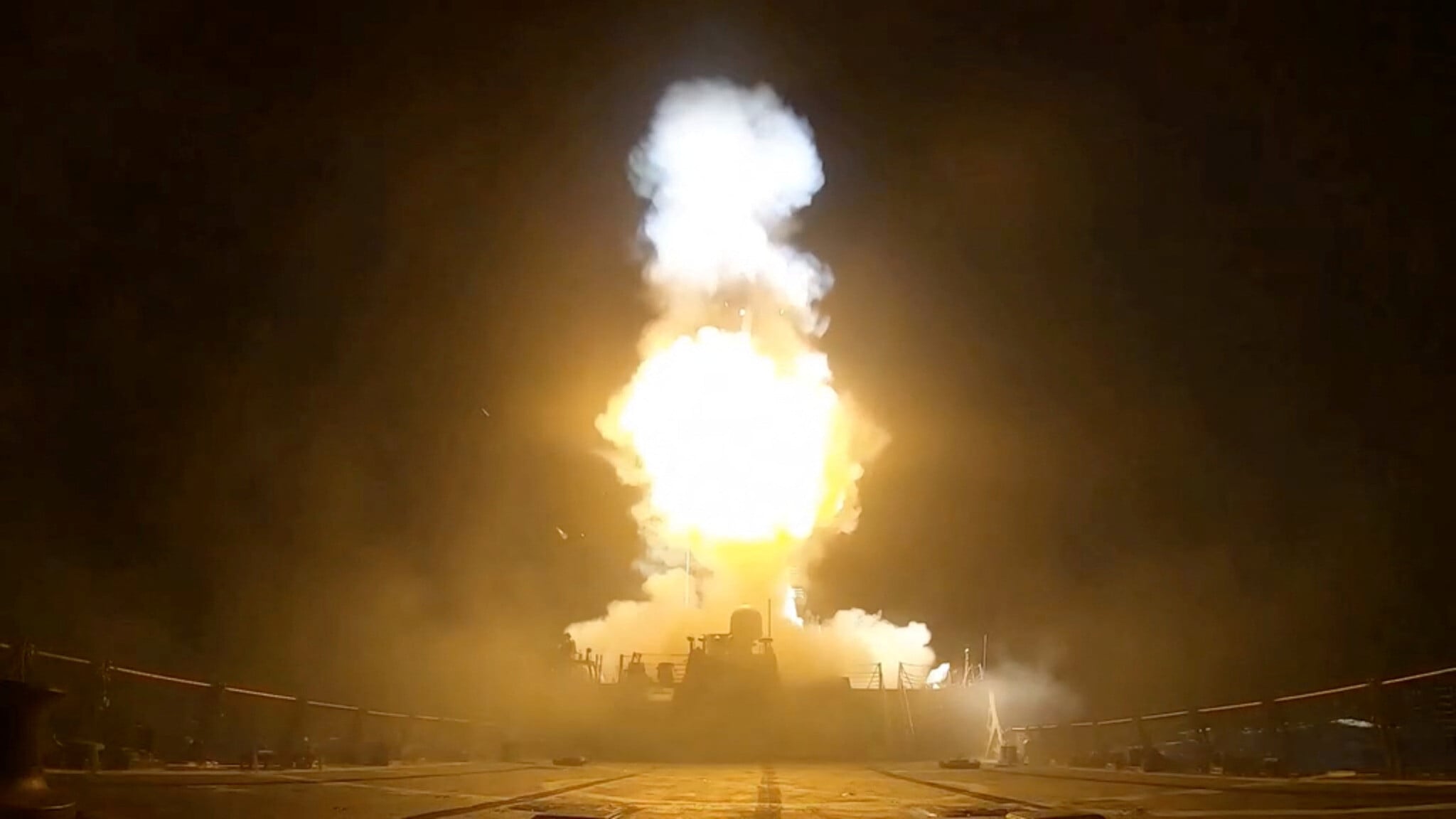
A projectile is fired during what the US Central Command (CENTCOM) said was a third round of strikes this week against Iran, in this screen grab taken from a handout video released on July 11, 2026. (US Central Command/Handout via REUTERS)

A projectile is fired during what the US Central Command (CENTCOM) said was a third round of strikes this week against Iran, in this screen grab taken from a handout video released on July 11, 2026. (US Central Command/Handout via REUTERS)

The United States launched a new wave of strikes on Iran into Monday morning, following an Iranian attack on a container ship in the Strait of Hormuz that set it ablaze and left a crew member missing over the weekend. Tehran retaliated with further strikes on countries across the region.

The fresh US strikes came hours after US President Donald Trump said the American military had “hit them hard,” and claimed that Iran had agreed to a diplomatic deal before it attacked a ship in the Strait of Hormuz. With rhetoric and tensions sky high, an Iranian foreign ministry statement suggested in the wake of the latest strikes that the time for diplomacy was now over.

Despite the escalation in violence, Israel still remained on the sidelines of the fighting as of early Monday morning, without joining the US strikes in Iran nor so far becoming a target for Tehran’s retaliatory bombing. Israel had no part in negotiating the Iran-US memorandum of understanding, which sought to reopen the strait and launch talks as part of a deal that now appears shakier than ever.

In a statement amid a third round of strikes late Sunday night and into Monday in Iran, following separate Iranian strikes on ships in Hormuz, the US military said it was seeking “to degrade” Iran’s “ability to attack commercial ships freely transiting” the strait.

Later announcing that the latest wave of strikes had ended, CENTCOM said it had used fighter jets, ships, aerial drones and naval drones to hit Iran’s air defense systems, radar sites, missile and drone equipment and small boats.

“The Strait of Hormuz is a vital maritime corridor for global trade,” US Central Command said. “Iran does not control it.” It added: “US forces are postured and prepared to ensure that freedom of navigation remains available to commercial shipping despite Iran’s continued unwarranted aggression, harassment, threats and arbitrary declarations.”

Iranian state media acknowledged the latest attacks on its soil early Monday, describing explosions in several locations with at least one person being killed and four reported wounded at a water pumping station in the southwest city of Mahshahr. State media reported strikes targeting large areas across southern and western Iran, including Qeshm island and Bandar Abbas near the strait, and in Khuzestan province bordering Iraq.

Iran’s paramilitary Revolutionary Guard, a key power center in the country’s theocracy that controls its ballistic missile arsenal, sharply rejected the American statement.

“The Strait of Hormuz is our territory, and we will not allow a rogue and child-killing army from the other side of the world to continue its illegal interference in it,” the Guard said.

It added that its forces had targeted US military facilities in Bahrain and Kuwait, destroyed radar systems in Oman, and struck fuel tanks and ammunition depots at Prince Hassan Air Base in Jordan.

Missile alert sirens sounded three times Monday in Bahrain, home to the US Navy’s 5th Fleet, and Kuwait said it was intercepting hostile fire. There was no immediate word on damage in either country.

In Jordan, the kingdom’s military said it shot down four Iranian missiles in an incident that “resulted in zero casualties or material damage.” Jordan also hosts US military forces and aircraft.

Meanwhile Monday, a base belonging to the armed wing of the Kurdistan Freedom Party, an Iranian Kurdish opposition group based in Iraq’s semiautonomous northern Kurdistan region, came under drone attack. Rebaz Sharifi, commander of the Kurdistan Militia Corps, said the strikes targeted the group’s Chamshar base, without giving details on casualties or damage. No group immediately claimed responsibility.

The Strait of Hormuz, the narrow mouth of the Persian Gulf, which once saw a fifth of all oil and natural gas pass through it, has become the key issue challenging an interim deal between the US and Iran. Iran and the US are nearly at the midway point of the 60-day period of that deal, which was supposed to set up talks for a permanent end to the war. Instead, it has devolved into a series of attacks over the strait and its future, worrying world leaders the Iran war could resume.

In an interview on Sunday, Trump claimed Iran “agreed to a deal” on Saturday before striking a ship in the Strait of Hormuz with a drone.

“We had meetings with them. They agreed to a deal yesterday. A perfect deal for us. No nuclear… They gave up everything, and then… within an hour, they launched a drone at a ship,” Trump told NBC’s “Meet the Press.” It was not immediately clear what deal Trump was referring to.

“I said, ‘You people are sick, and so it’s one of those things,’” Trump added of Iran. He insisted that the Strait of Hormuz remained open — despite Iran’s claims to the contrary — and that the US “bombed the hell out of them last night.”
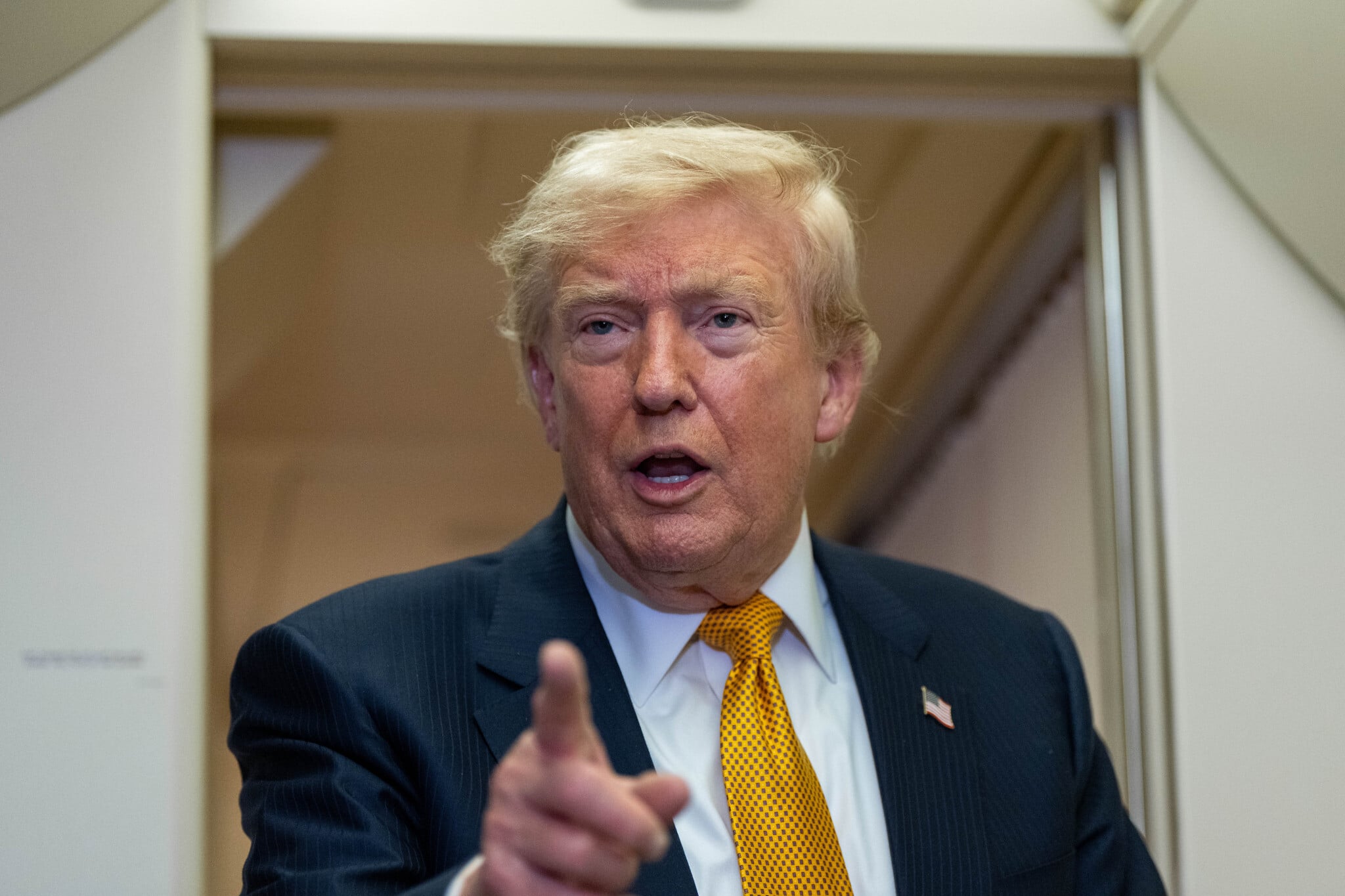
US President Donald Trump speaks with reporters in flight on Air Force One after landing at US Air Force Base at RAF Mildenhall, in Suffolk, England, July 8, 2026. (AP/Alex Brandon)

Iran early Monday condemned the latest wave of US attacks on its territory, saying they have “rendered futile” all the diplomatic efforts of the last few months.

“The US regime has also caused the return of insecurity in the Strait of Hormuz and disruption of international commercial shipping by openly interfering in the process of Iran implementing the necessary arrangements in the Strait of Hormuz,” a foreign ministry statement said.

The governor of Qeshm Island near the strait told Iran’s state-run IRNA news agency that projectiles were fired at military targets, with no casualties. Explosions were also heard in the coastal city of Bandar Abbas and Hajiabad city to the north.

A US official said a few strikes targeted missile and air defense systems and paramilitary Revolutionary Guard boats. The official spoke on condition of anonymity because they were not authorized to publicly discuss military operations.

The US military earlier Sunday said it hit some 140 targets, including missile and drone launch sites, ammunition dumps, communication equipment and other sites.

“A return to full-scale hostilities would have catastrophic consequences,” United Nations Secretary-General António Guterres said in a statement.

The attacks were heavier than in recent days. The US has launched three rounds of airstrikes targeting Iran in the past week over attacks on ships heading through the strait using a route off Oman, seeking to avoid the Islamic Republic’s territorial waters.
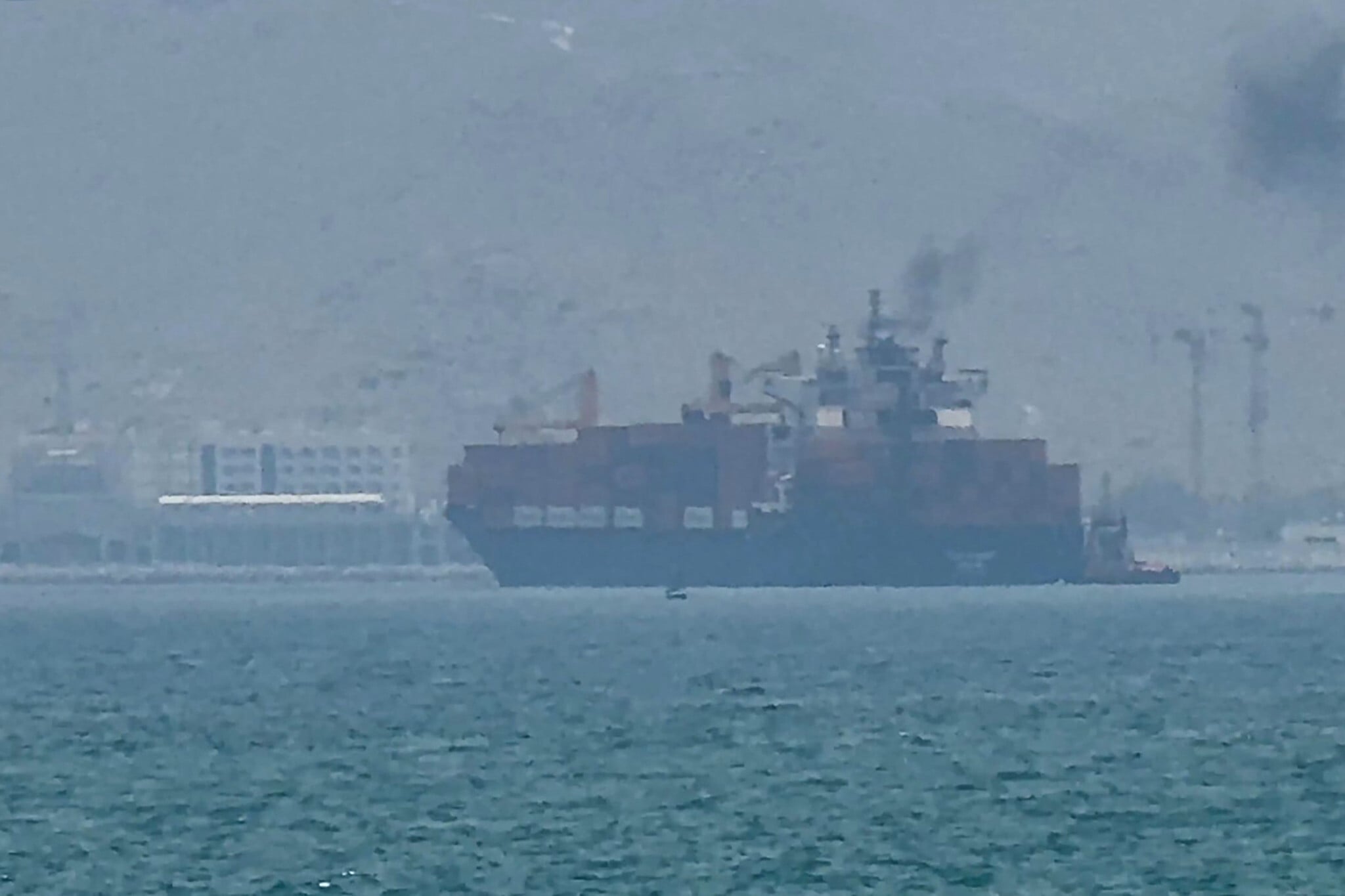
This frame grab taken from AFPTV video footage on July 12, 2026 shows a cargo ship anchoring near the Strait of Hormuz off the eastern coast of the United Arab Emirates at Khor Fakkan. (AFPTV/AFP)

Semiofficial Iranian news agencies reported that a navy officer was killed. Iran retaliated by attacking nations in the region hosting US military forces, while insisting it alone must control the strait and potentially charge vessels for traveling through it.

“The era of one-sided deals is OVER,” Mohammad Bagher Ghalibaf, the speaker of Iran’s parliament and a main negotiator, wrote. “We told you: keep your word or pay the price. Reality is knocking.”

Iran said the strait was closed until calm is restored, and Tehran would consider targeting “additional enemy bases in the region” if it faced more attacks. The US military and Trump asserted that the strait remained open.

The US military said more than 140 ships had transited over the past week. A multinational body overseen by the US Navy said traffic continued “at reduced levels” off both Oman and Iran, and that nearly 140 vessels transited daily before the war.

The top diplomat for Pakistan, which has been mediating, called for “deescalation” on Sunday during a phone call with his Iranian counterpart, Islamabad said.

“Dialogue and diplomacy remain the only viable path to resolving disputes and achieving lasting peace,” said Foreign Minister Ishaq Dar.
WATCH: CENTCOM strikes dozens of targets across Iran

July 13, 2026

CENTCOM launched a major new wave of strikes on Iran, hitting dozens of targets, including air defenses, radar sites, missile capabilities, small boats, and one-way attack aerial and sea drones for the first time.


DIPLOMATIC AFFAIRS: Netanyahu’s campaign against selling F-35s to Ankara reflects a growing conviction in Jerusalem that Turkey is shaping up to be Israel’s principal long-term challenge.

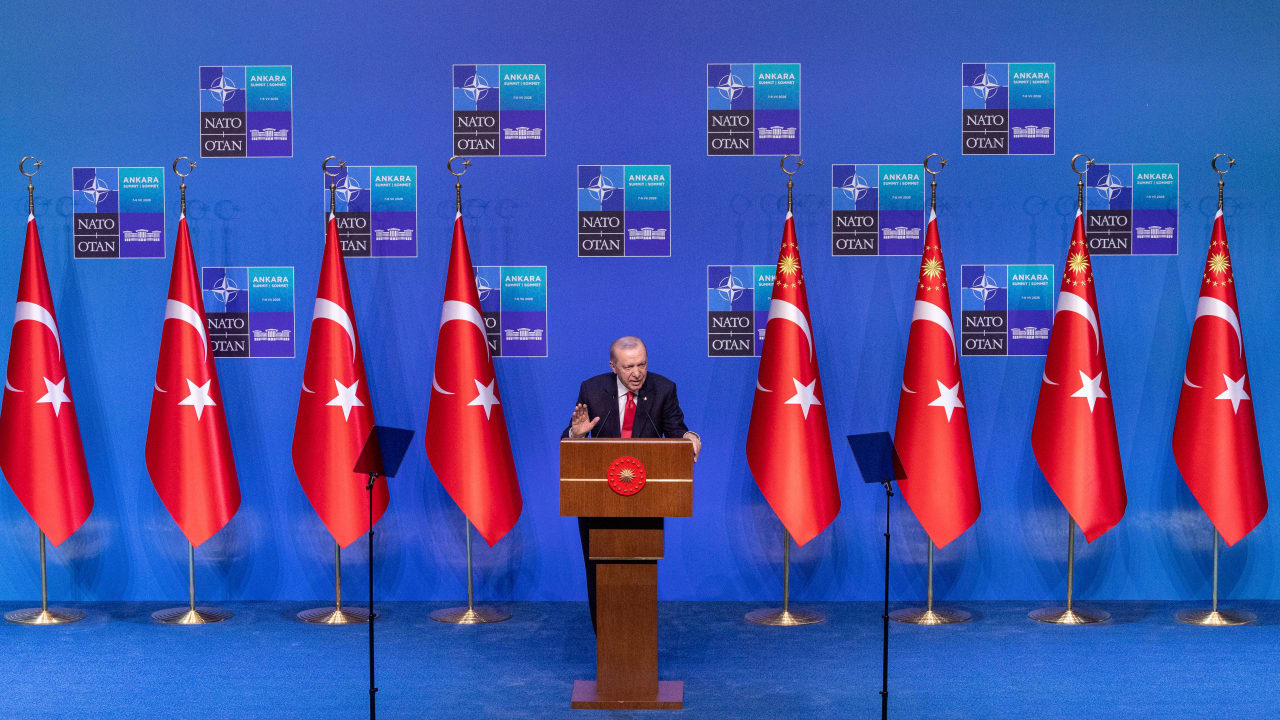
Recep Tayyip Erdogan, President of Turkey holds a press conference at Beştepe Presidential Compound during the NATO Summit on July 8, 2026 in Ankara, Turkey.

Recep Tayyip Erdogan, President of Turkey holds a press conference at Beştepe Presidential Compound during the NATO Summit on July 8, 2026 in Ankara, Turkey.(photo credit: Sedat Suna/Getty Images)Why is Netanyahu fighting Trump on F-35s?➤What does Trump think of Erdogan?➤What is Turkey’s regional ambition?➤Why did Israel recognize Armenian Genocide now?➤

ByHERB KEINON

JULY 10, 2026 12:40

History, Prime Minister Benjamin Netanyahu said in a recent Channel 14 interview, “teaches that when one regional power declines, another rises. Our task is to make sure Israel continues rising faster than anyone else.”

This explains why Netanyahu launched a public campaign in the US this week against President Donald Trump’s apparent willingness to sell the state-of-the-art F-35 fighter to Recep Tayyip Erdogan’s Turkey, the state now furiously jockeying to replace Iran as the region’s dominant power.

Indeed, with the sun setting on Iran’s regional hegemony, despite diplomatic missteps that let Tehran off the ropes before a knockout blow, its military capabilities and web of regional proxies have been severely degraded, the sun is rising on Turkey’s ambitions.

Already entrenched in Syria, steadily expanding an indigenous defense industry capable of producing sophisticated drones, naval vessels, and eventually advanced fighter aircraft, and seeking a foothold in Gaza, Ankara increasingly appears intent on filling the regional vacuum Iran leaves behind.

PRIME MINISTER Benjamin Netanyahu told CNN that Turkey ‘has aggressive aspirations,’ ‘is not a force for peace and security,’ and F-35 planes in its hands would ‘destroy the power balance’ in the region.
PRIME MINISTER Benjamin Netanyahu told CNN that Turkey ‘has aggressive aspirations,’ ‘is not a force for peace and security,’ and F-35 planes in its hands would ‘destroy the power balance’ in the region. (credit: SAUL LOEB / AFP via Getty Images)

Turkey is interested in surrounding Israel with a Sunni ring of fire

As former national security adviser Giora Eiland observed this week, Iran sought to surround Israel with a Shi’ite ring of fire. Turkey, he warned, increasingly appears interested in building a Sunni one.

That explains why Netanyahu went on American television networks to lobby publicly against an administration policy still under consideration. If Iran’s decline is creating a regional vacuum, Israel fears Turkey is positioning itself to fill it, and that American F-35s, coupled with Trump’s embrace of Erdogan, might help it do so.

Trump, however, sees matters much differently.

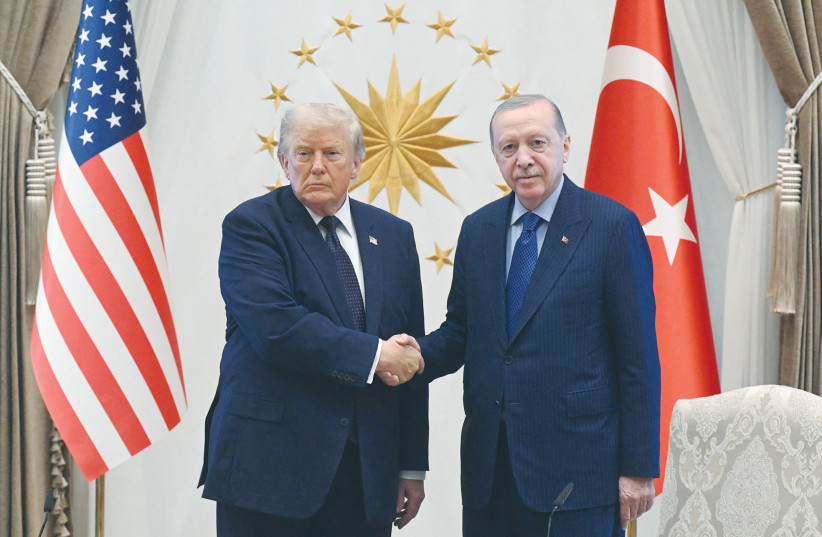
Standing beside Erdogan during the NATO summit, the president again spoke warmly of the Turkish leader. “I like Erdogan,” Trump said. “He’s an extraordinary leader.”

Netanyahu, on CNN, disputed that assessment. Erdogan’s Turkey, he said, “has aggressive aspirations,” “is not a force for peace and security,” and F-35 planes in its hands would “destroy the power balance” in the region.

A day later, Trump appeared to temper his remarks, saying no final decision had yet been made regarding the aircraft.

The fact that Trump appeared to soften his position only a day later suggests the proposal may already have encountered headwinds in Washington. Netanyahu’s intervention appears designed not to create those headwinds, but to make them considerably stronger. If the decision is still reversible, now is the moment to mobilize opposition.

The issue is sufficiently important for Netanyahu to do something he has generally avoided doing with Trump as president: publicly take issue with one of the president’s policies in an attempt to get it overturned. This is no trifling matter.

Trump has repeatedly emphasized his close relationship with Erdogan.

Indeed, he has gone even further, portraying himself as the man who prevented Turkey from entering the recent war against Iran on the opposite side.

“He could have gone into the war,” Trump said. “He didn’t because of me.”

Why the president would want to sell state-of-the-art weaponry to a leader who he himself said had contemplated joining a war against the United States and Israel is almost beside the point. The point is that Trump has made clear both where he stands and what he wants.

Netanyahu willing to take on ‘the boss’

Netanyahu “knows who the boss is,” Trump said on Saturday. That might be the case, but Netanyahu showed this week that he is willing to take on “the boss” over an issue that he deems cardinal to Israel’s security: preserving qualitative military superiority over any potential regional rival.

“Turkey is a great country, but it is governed by a man who openly calls for the annihilation of Israel,” Netanyahu said on Fox News, adding that it occupies half of Cyprus and regularly threatens Greece.

Netanyahu continued: “[Erdogan’s] foreign minister, his number two, has said that the Jewish state has no place among humanity and, essentially, has to be wiped out. His interior minister has said that he looks forward to becoming the governor of Jerusalem. This is a regime infected by the Muslim Brotherhood, an extremist movement that hates America and chants ‘Death to America’ from that side [the Sunni side] of the [Islamic] ideological spectrum.”

Selling them the F-35s or engines for their own fighter planes, he argued, would upset the balance of power in the Middle East, which is “ultimately guaranteed by Israel’s air superiority.”

Those are fighting words. Not so much against Erdogan, Netanyahu has minced no words in the past when it came to what he thinks of Turkey’s president, but against a Trump foreign policy objective.

But here Netanyahu, at least at the start of the battle, appears to be doing what military strategists caution against: fighting the current war with the playbook from the last one.

In previous clashes over US foreign policy, Israel’s strategy was to appeal over the administration’s head to Congress and the American public, where for decades it could count on broad bipartisan support.

When Yitzhak Shamir battled President George H.W. Bush over loan guarantees in the early 1990s, he sought to take his case directly to Congress. When Netanyahu fought Barack Obama’s nuclear agreement with Iran two decades later, he again appealed over the administration’s head, making his case directly to the American public and to lawmakers on Capitol Hill.

Neither effort ultimately succeeded. Shamir lost the loan guarantee battle. Netanyahu failed to stop the Iran nuclear agreement, and that was when public opinion and Congress were more favorably disposed toward Israel than they are today.

At first glance, Netanyahu appears to be returning to a familiar tactic: use American television to appeal directly to the US public, hoping to build enough political opposition on Capitol Hill to block, or at least complicate, the administration’s plans.

But this time there is one crucial difference. Although Israel no longer enjoys the level of public and congressional support it could count on during those earlier battles, it may not have to fight this battle alone.

Why not? Because Turkey’s ambitions are hardly viewed with alarm only in Jerusalem.

Israeli Air Force F-35s seen arriving to an Israeli base, on March 15, 2025
Israeli Air Force F-35s seen arriving to an Israeli base, on March 15, 2025 (credit: IDF SPOKESPERSON’S UNIT)

Turkey threatens regional, Mediterranean, stability

For Greece, Ankara’s increasingly assertive posture is reflected in repeated airspace violations over the Aegean and long-running disputes over maritime boundaries. For Cyprus, it is embodied in Turkey’s continued occupation of half of the island. For Armenians, opposition to a stronger Turkey is rooted in the national trauma of the Armenian Genocide and Ankara’s continued refusal to acknowledge it.

The reasons differ. The conclusion does not: Turkey should not emerge from the current regional upheaval significantly stronger militarily.

That convergence matters because Washington is influenced not only by governments but also by constituencies.

The American Israel Public Affairs Committee is by no means the only influential lobby in Washington. Greek-American organizations have spent decades mobilizing congressional opposition to Turkish policies toward Greece and Cyprus. Armenian-American organizations have done the same over the Armenian Genocide.

With characteristic arrogance, Erdogan, at the closing press conference ending the two-day NATO summit, dismissed objections to the sale registered by Netanyahu and Greek Prime Minister Kyriakos Mitsotakis. These objections, he said, “have no place in my world.”

They should. The question is not whether Israel can defeat the sale alone. It is whether several different constituencies, approaching the issue from entirely different directions, can together create sufficient political resistance to scuttle the sale.

Interestingly, but by no means coincidentally, Netanyahu’s offensive against the sale comes just a couple of weeks after the cabinet voted to recognize the Turkish slaughter of Armenians at the onset of World War I as a genocide.

Why now, after so many years? many asked.

The conventional answer was that relations with the Israel-baiting Erdogan had deteriorated to such a low point that there was no realistic prospect of salvaging them. If that was the case, Israel had nothing left to lose by recognizing the genocide and little reason to remain concerned about Turkish sensitivities.

Seen within the context of the F-35 debate, however, there may be another layer to the timing of the Armenian Genocide recognition: what diplomats sometimes call “weaponizing history,” using historical memory in pursuit of political or military objectives.

The target audience here was not Erdogan. This was not Israel trying to get back at the Turkish leader for his implacably hostile rhetoric and actions. The audience was Washington.

Whether that was the government’s intention or merely a by-product, recognizing the Armenian Genocide has the effect of placing Israel alongside one of Washington’s oldest and best-organized ethnic lobbying communities. By recognizing the genocide, Israel is aligning itself with a powerful domestic constituency, most notably Armenian-American organizations, that have long opposed strengthening Turkey militarily.

The move also reinforces efforts by Israel and organizations already opposed to the sale to portray Turkey as an erratic, unrepentant human rights violator that cannot be trusted with fifth-generation stealth technology.

In addition, Congress has already passed a legally binding law barring Turkey from receiving F-35s due to its purchase of the Russian S-400 missile system, and the powerful Greek lobby can help use this to deflate the sale. It is unlikely to be a coincidence that a joint resolution to block a $700 million sale of jet engines for Turkey’s homemade fighter plane was introduced last month by Dina Titus, a prominent Greek-American lawmaker from Nevada and a leading voice in the Hellenic Caucus.

Netanyahu has spent years developing an alliance in the Eastern Mediterranean with Greece and Cyprus as a way to counterbalance Turkey. Cooperation between the countries also translates into cooperation between lobbying organizations in Washington.

Clearly, Israel is increasingly worried about Turkey’s strength and ambitions. But, as Eiland said this week in his radio interview, “complaining is not a work plan.”

His point was that Israel cannot simply warn about Erdogan’s ambitions and hope Washington reaches the same conclusion. It needs partners. And in this case, it actually has some.

If Netanyahu is right that the Middle East is entering a post-Iran era, then stopping the F-35 sale is not the end of the story. It is merely the opening battle in what could become Israel’s defining strategic competition over the next d