
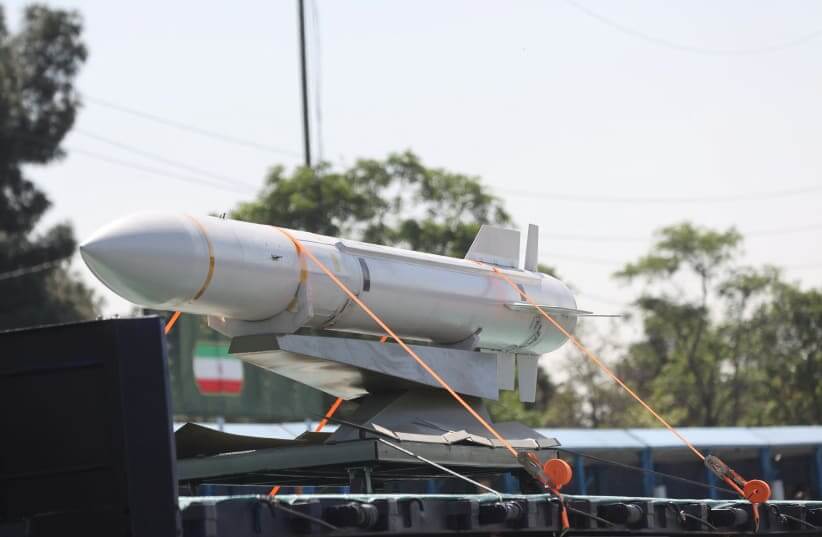
Sources estimated that if delivered, the materials could produce around 800 missiles.
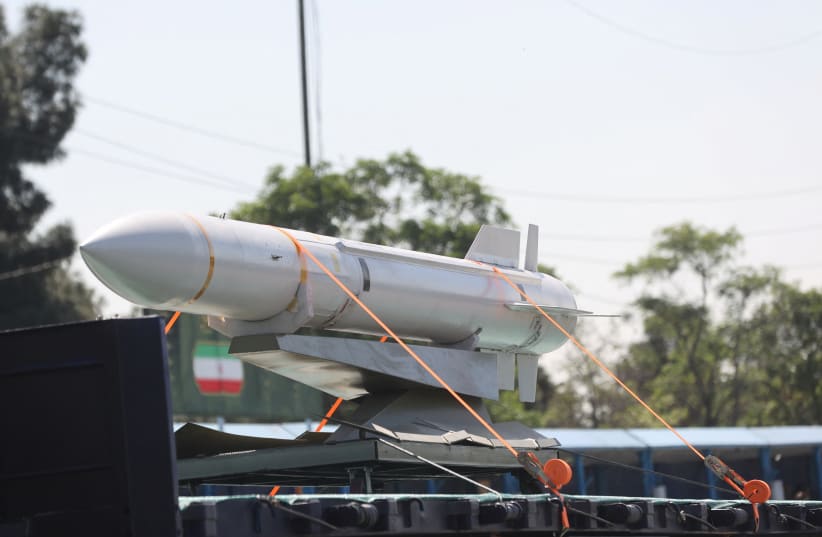
An Iranian missile is displayed during the National Army Day parade ceremony in Tehran, Iran, April 18, 2025.
(photo credit: MAJID ASGARIPOUR/WANA/REUTERS)
Iran has ordered thousands of tons of ballistic missile ingredients from China as part of an effort to rebuild its military capabilities while navigating ongoing nuclear talks with the United States, according to a Wall Street Journal report on Thursday, citing sources familiar with the transactions.

The shipments, which are expected to reach Iran in the coming months, include ammonium perchlorate, a key component in the solid propellant used for ballistic missiles. Sources indicated that these materials could potentially fuel hundreds of missiles.

Some of the ammonium perchlorate is expected to be sent to militias aligned with Iran, including the Houthis in Yemen, one of the sources revealed. This move aligns with Iran’s broader strategy to strengthen its regional influence and rebuild its missile arsenal while continuing to negotiate with the Trump administration over the future of its nuclear program.

Iran has been expanding its stockpiles of uranium enriched to just below weapons-grade levels, despite calls from the US to curb its nuclear activities. At the same time, Iran has made it clear that it has no intention of negotiating limits on its missile program, a point that has remained a major sticking point in international discussions.

According to sources, the order for the missile ingredients was placed in recent months by an Iranian entity, Pishgaman Tejarat Rafi Novin Co.. The material was sourced from Hong Kong-based Lion Commodities Holdings Ltd., a company that did not respond to requests for comment. The Iranian mission to the United Nations also declined to comment on the matter.

 (Illustrative) Iranian FM Abbas Araghchi and US President Donald Trump. (credit: Caitlin Ochs, Canva, Carl Court/Pool via REUTERS, REUTERS/DADO RUVIC/ILLUSTRATION)Enlrage image
(Illustrative) Iranian FM Abbas Araghchi and US President Donald Trump. (credit: Caitlin Ochs, Canva, Carl Court/Pool via REUTERS, REUTERS/DADO RUVIC/ILLUSTRATION)

In a statement, a Chinese Foreign Ministry spokesperson denied knowledge of the deal, asserting that China has “always exercised strict control over dual-use items in accordance with China’s export control laws and regulations and its international obligations.”

Part of rebuilding Iran’s ‘Axis of Resistance’

The shipment of ammonium perchlorate is part of Iran’s broader efforts to rebuild its so-called “Axis of Resistance” network, which includes a number of terror proxies across the region.

These groups have faced significant setbacks over recent years, as well as the ongoing war. These setbacks include  Israeli strikes on Hezbollah in Lebanon and the assassination of key leaders such as Iranian General Qassem Soleimani, former Hezbollah secretary general Sayyed Hassan Nasrallah, and multiple Hamas leaders.

While US and Israeli strikes have damaged the Houthis’ capabilities in Yemen, they continue to periodically launch missiles at Israel.

Beyond supporting regional militias, Iran has also reportedly transferred ballistic missiles to Shia militia groups in Iraq, which have previously targeted both US and Israeli forces in the region.

Earlier shipments of missile ingredients

Earlier this year, Iranian ships docked in China to load over 1,000 tons of sodium perchlorate, a precursor for ammonium perchlorate. The material was delivered to Iranian ports in mid-February and late March, according to shipping trackers. This quantity of sodium perchlorate is said to be enough to fuel around 260 short-range missiles.

The new order for ammonium perchlorate, which was placed months before President Trump’s proposed nuclear talks with Iran’s Supreme Leader, Ayatollah Ali Khamenei, in early March, could supply Iran with enough material to produce approximately 800 missiles, one official estimated.

In response to Iran’s missile activities, the US Treasury Department sanctioned six individuals and six entities from both Iran and China on April 29 for their involvement in procuring ballistic missile propellant ingredients.

Two weeks later, the Treasury expanded these sanctions to include additional Chinese and Hong Kong entities. The US Department of the Treasury also added sodium perchlorate to the list of materials it believes are being used in Iran’s military, nuclear, or ballistic missile programs.

Iran’s reliance on foreign material for missile production is due, in part, to domestic production bottlenecks. Fabian Hinz, a military analyst at the International Institute for Strategic Studies, noted that Iran’s defense industry struggles to meet its needs without the continued importation of missile propellant materials.

The storage and handling of these materials, however, come with significant risks. A deadly explosion at the Shahid Rajaee port in April, which killed dozens, was reportedly caused by the mishandling of explosive materials by a unit of Iran’s Islamic Revolutionary Guard Corps. Some of the sodium perchlorate imported earlier this year was lost in that explosion, an official confirmed.

“These substances are a major fire and explosive hazard,” said Hinz. “Iran’s defense industrial complex does not have a strong track record in ensuring safety standards.”
One official told Axios that Israel made it clear to the US that they wouldn’t surprise the Trump administration with any attacks on Iran without informing the US first.

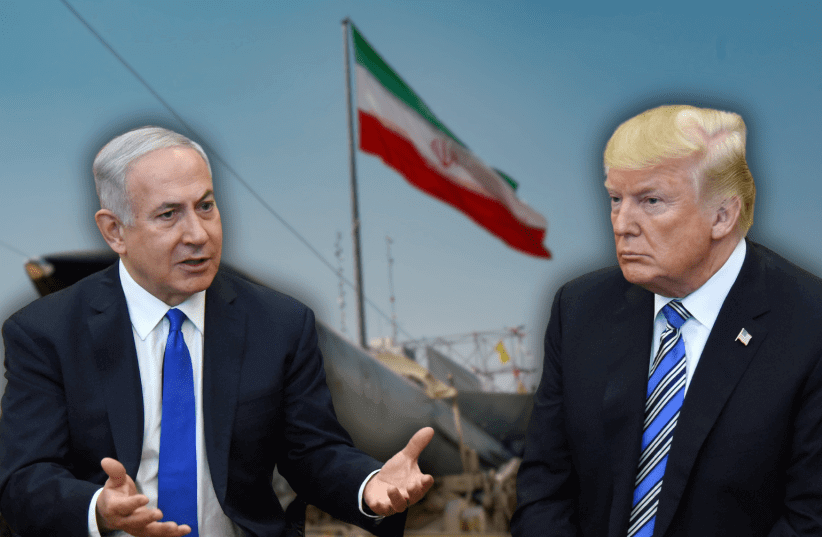
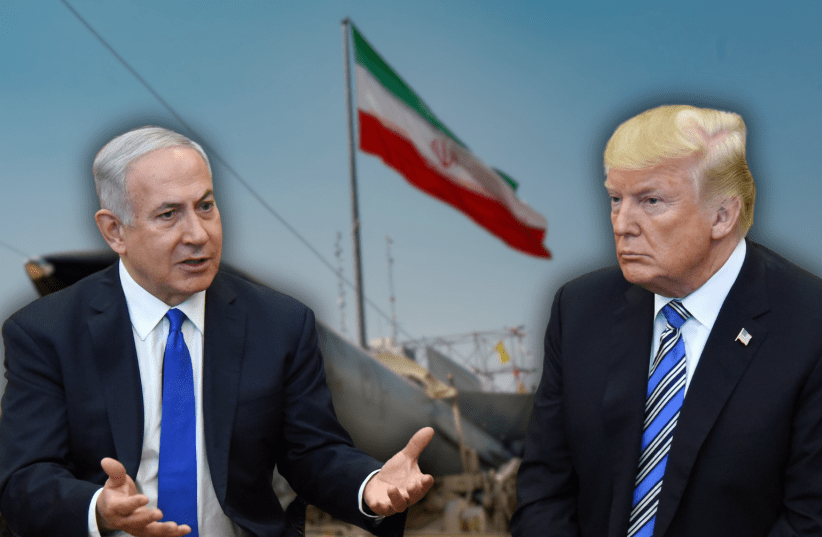
L to R: Israeli Prime Minister Benjamin Netanyahu, US President Donald Trump against backdrop of Iranian flag (illustration).
(photo credit: Hossein Beris/Middle East Images/AFP via Getty Images, Olivier Douliery-Pool via Getty Images)
Israel assured the White House it won’t launch an attack against Iran’s nuclear facilities unless US President Donald Trump signals that negotiations with Iran have failed, two Israeli officials told Axios on Friday.

According to the officials, the message was delivered during a visit to Washington last week by Strategic Affairs Minister Ron Dermer, Mossad director David Barnea, and National Security Council Head Tzachi Hanegbi, Axios reported.

One official told Axios that Israel made it clear to the US that they wouldn’t surprise the Trump administration with any attacks on Iran without informing the US first.

“We calmed the Americans and told them there is no logic in launching an attack if a good diplomatic solution can be found. This is why we are going to give it a chance and wait with any military action until it is clear that negotiations were exhausted and Steve Witkoff has given up,” a second Israeli official said.

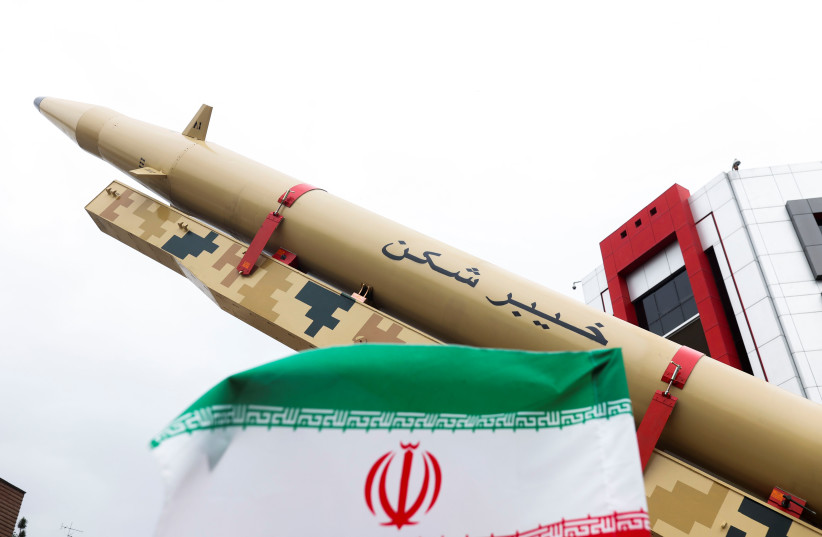
 An Iranian missile is displayed during a rally marking the annual Quds Day, or Jerusalem Day, on the last Friday of the holy month of Ramadan in Tehran, Iran April 29, 2022. (credit: MAJID ASGARIPOUR/WANA (WEST ASIA NEWS AGENCY) VIA REUTERS)Enlrage image
An Iranian missile is displayed during a rally marking the annual Quds Day, or Jerusalem Day, on the last Friday of the holy month of Ramadan in Tehran, Iran April 29, 2022. (credit: MAJID ASGARIPOUR/WANA (WEST ASIA NEWS AGENCY) VIA REUTERS)

US believed Israel was preparing to strike Iran

In late May, multiple US officials revealed intelligence to CNN that Israel was preparing to strike Iranian nuclear facilities, The Jerusalem Post reported.

Any Israeli strike on Iran would be “a brazen break with President Donald Trump,” the officials told CNN. They added that it could also risk triggering a broader regional war.

However, a senior Israeli official told Axios that while the IDF is training for a possible strike against Iran, the US and other countries misread measures the IDF took ahead of strikes against the Houthis in Yemen as preparations for an imminent strike against Iran.


Brig. Gen. Effie Defrin reveals Hamas is losing its grip on Gaza as Israel steps up aid distribution — despite terrorists firing on their own civilians to block the help. ‘We will not rest until the last hostage is home.’

“Over the past week, the IDF has launched precise activities throughout the Gaza Strip,” Defrin said, targeting Hamas infrastructure hidden within civilian areas. “Efforts are constantly being made to avoid harm to Gazan civilians, while dozens of terrorists are being successfully eliminated.”

He also reaffirmed that the military campaign is focused on two goals: “the return of our hostages and the decisive defeat of Hamas.”

A major component of Israel’s strategy involves humanitarian aid.

“Tens of thousands of food packages are being distributed daily by a US-based civilian company,” he noted, describing the opening of new distribution centers in southern Gaza. “Gazan residents understand that Hamas is not taking care of them — on the contrary, Hamas is actively trying to prevent them from receiving aid.”

Defrin revealed that Hamas has responded violently, attempting to sabotage the aid initiative and even firing on civilians at distribution sites, noting, “We operate nearby and do whatever is necessary to ensure the aid does not fall into the hands of Hamas.”

Meanwhile, at the Kerem Shalom crossing, “Over 450 trucks are waiting, but the organization responsible for distribution is not acting.”

Defrin also dismissed accusations that the IDF had targeted civilians at these centers, stressing, “Those claims are entirely false and serve Hamas propaganda. Earlier today, IDF forces fired warning shots about half a kilometer from the site in response to a potential threat. We are not preventing access to the aid.”

Concluding his statements, Defrin promised, “We will continue until every hostage is brought home and our objectives in Gaza are fully achieved. The IDF remains ready on all fronts to secure the citizens of Israel.”