US president says it would jeopardize national security to let university keep hosting international students, trying new legal method after judge blocked earlier effort
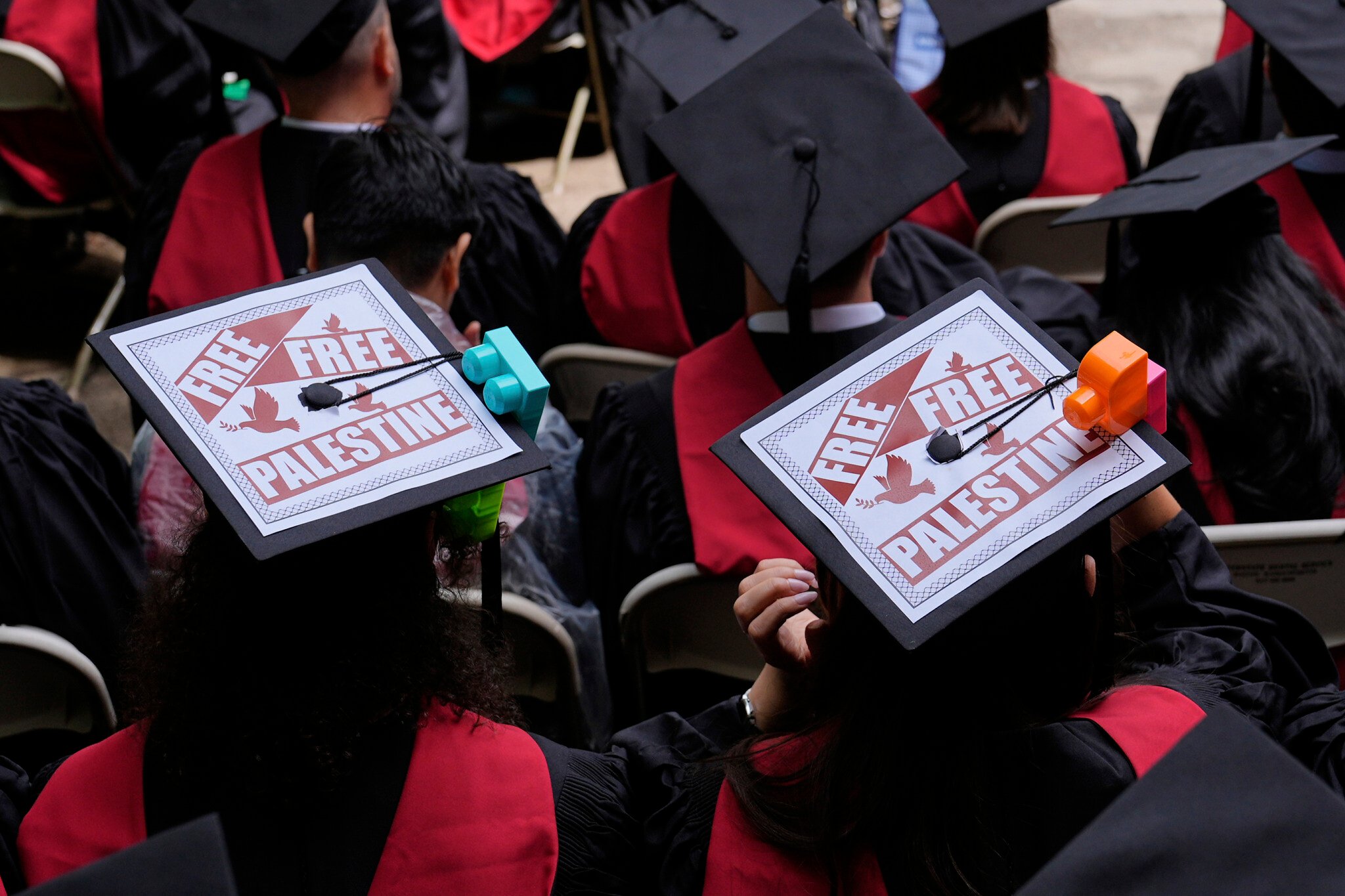
Graduates listen to speakers while displaying 'Free Palestine' signs on their mortarboards during commencement ceremonies at Harvard University, on May 29, 2025, in Cambridge, Massachusetts. (AP Photo/Charles Krupa)

Graduates listen to speakers while displaying ‘Free Palestine’ signs on their mortarboards during commencement ceremonies at Harvard University, on May 29, 2025, in Cambridge, Massachusetts. (AP Photo/Charles Krupa)

WASHINGTON — US President Donald Trump on Wednesday moved to block nearly all foreign students from entering the US to attend Harvard University, amid the ongoing row between his administration and the university over issues that include its handling of anti-Israel protests that have often included open support for terror groups.

In an executive order, Trump declared that it would jeopardize national security to allow Harvard to continue hosting foreign students on its campus in Cambridge, Massachusetts.

“I have determined that the entry of the class of foreign nationals described above is detrimental to the interests of the United States because, in my judgment, Harvard’s conduct has rendered it an unsuitable destination for foreign students and researchers,” Trump wrote in the order.

It’s a further escalation in the White House’s fight with the nation’s oldest and wealthiest university. A federal court in Boston blocked the Department of Homeland Security from barring international students at Harvard last week. Trump’s order invokes a different legal authority.

Trump invoked a broad federal law that gives the president authority to block foreigners whose entry would be “detrimental to the interests of the United States.”

On Wednesday, he cited the same authority when announcing that citizens of 12 countries would be banned from visiting the US and those from seven others would face restrictions. Trump connected the policy to the recent violent attack in Colorado against rally-goers calling for the release of hostages held by Hamas in Gaza.
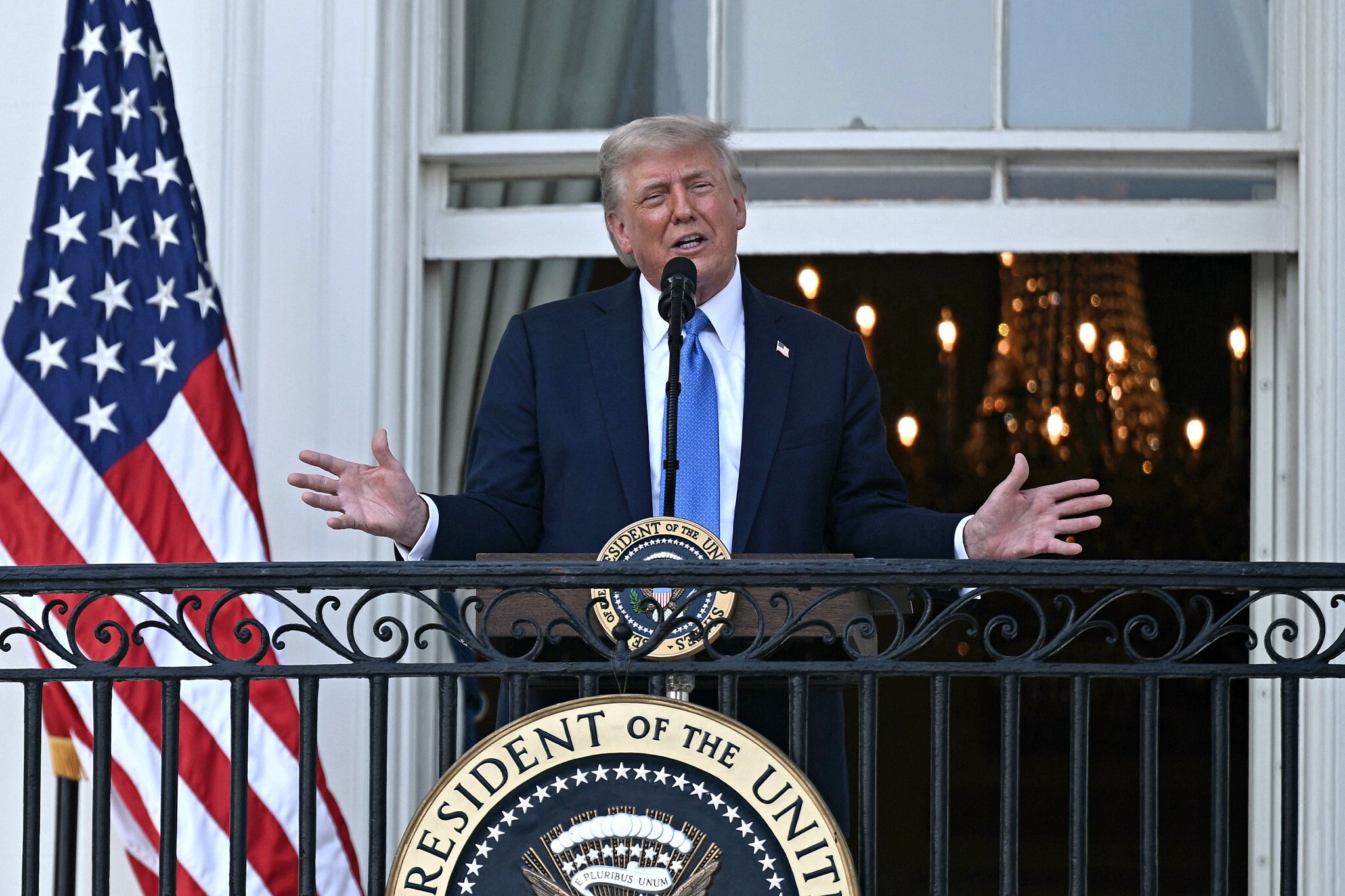
US President Donald Trump participates in a Summer Soiree on the South Lawn of the White House in Washington, DC, on June 4, 2025. (Brendan SMIALOWSKI / AFP)

Trump’s Harvard order cites several other laws, too, including one barring foreigners associated with terrorist organizations.

In a statement Wednesday night, Harvard said it will “continue to protect its international students.”

It stems from Harvard’s refusal to submit to a series of demands made by the federal government. It has escalated recently after the US Department of Homeland Security said Harvard refused to provide records related to misconduct by foreign students.

Harvard says it has complied with the request, but the government said the school’s response was insufficient.

The dispute has been building for months after the Trump administration demanded a series of policy and governance changes at Harvard, calling it a hotbed of liberalism and accusing it of tolerating anti-Jewish harassment. Harvard defied the demands, saying they encroached on the university’s autonomy and represented a threat to the freedom of all US universities.

The administration’s effort comes in the wake of widespread anti-Israel and in some cases antisemitic protests on campuses across the US last year that saw frequent expressions of support for the Hamas terror group and its October 7, 2023, attack, as well as violations of school rules and local law. It also echoes decades of criticism by conservatives citing a lack of “viewpoint diversity” and controversial speech at colleges and universities.
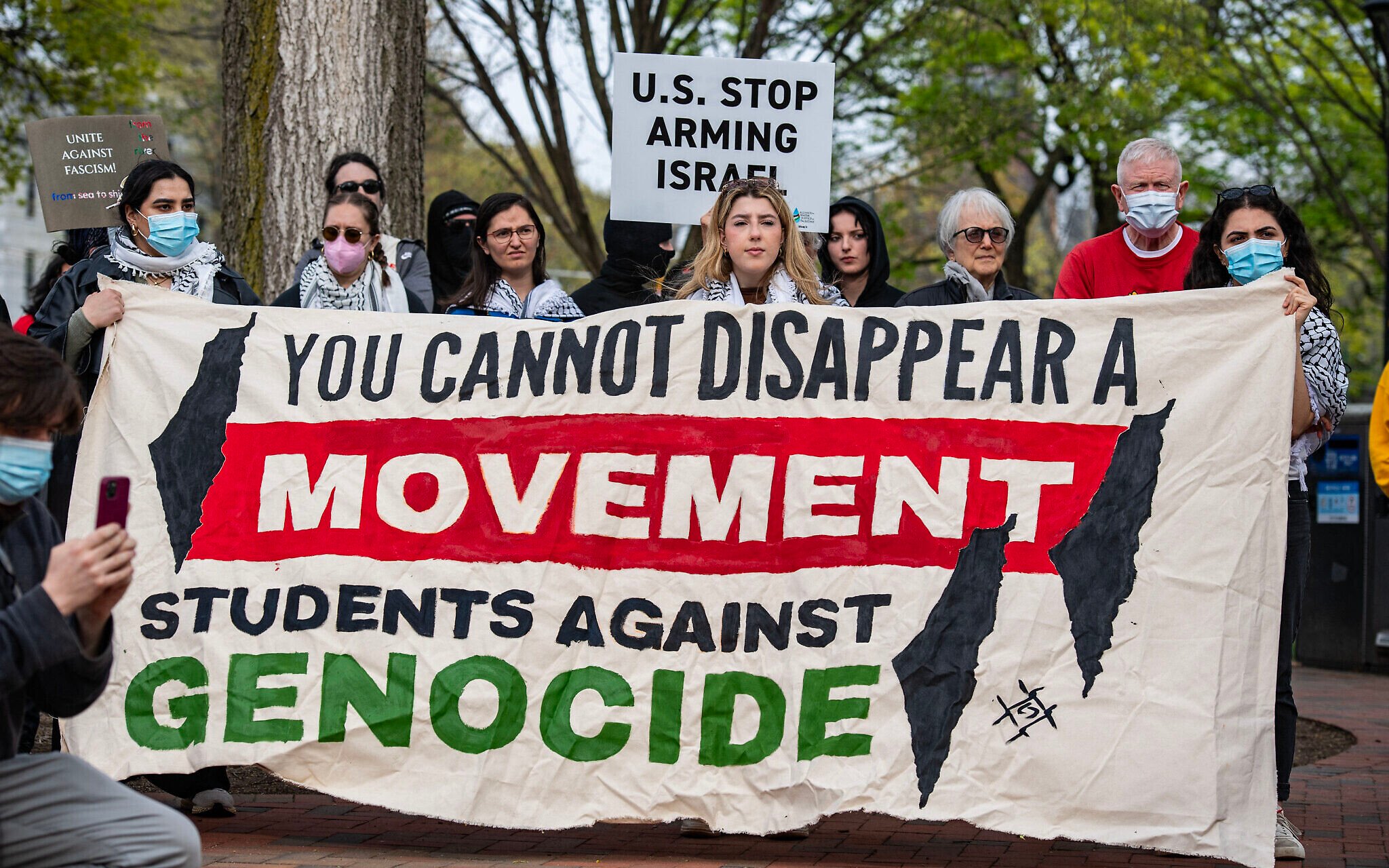
Anti-Israel demonstrators gather on Cambridge Common to protest Harvard’s stance on the Israel-Hamas war in Gaza and show support for the Palestinian people, outside Harvard University in Cambridge, Massachusetts, April 25, 2025. (Joseph Prezioso/AFP)

Trump officials have repeatedly raised the stakes and sought new fronts to pressure Harvard, cutting more than $2.6 billion in research grants and moving to end all federal contracts with the university. The latest threat has targeted Harvard’s roughly 7,000 international students, who account for half the enrollment at some Harvard graduate schools.

US Rep. Pramila Jayapal, a Democrat from Washington state, called the measure ridiculous and said it has nothing to do with national security.

“It’s a thinly veiled revenge ploy in Trump’s personal feud with Harvard, and continued authoritarian overreach against free speech,” Jayapal said on the social media site X.

The order applies to all students attempting to enter the United States to attend Harvard after the date of the executive order. It provides a carve-out to allow students whose entry would “benefit the national interest,” as determined by federal officials.

Trump’s order alleges that Harvard provided data on misconduct by only three students in response to the Homeland Security request, and it lacked the detail to gauge if federal action was needed. Trump concluded that Harvard is either “not fully reporting its disciplinary records for foreign students or is not seriously policing its foreign students.”
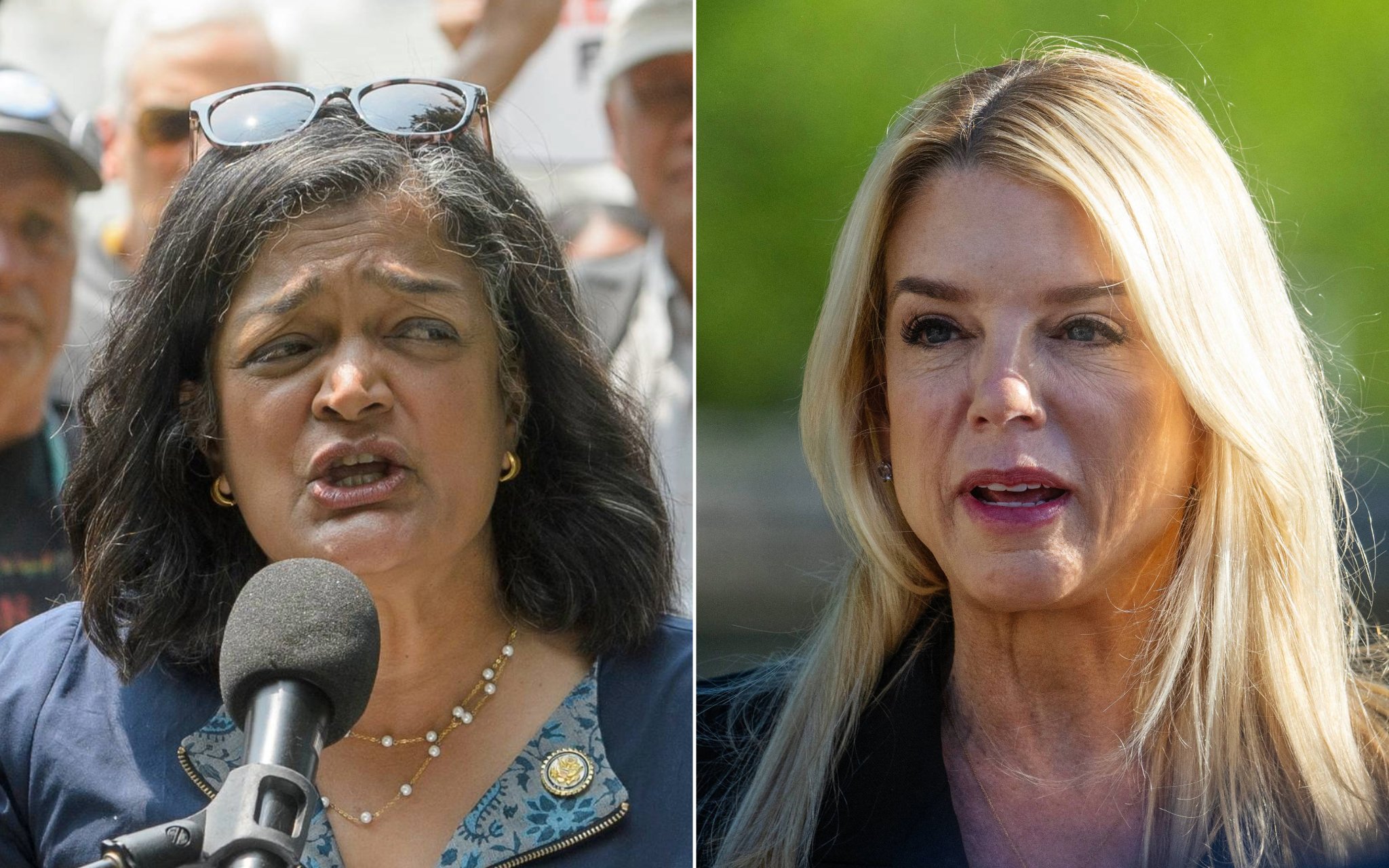
L: US Rep. Pramila Jayapal at the Capitol in Washington on June 3, 2025. (AP Photo/Rod Lamkey, Jr.); R: US Attorney General Pam Bondi outside the White House in Washington on May 7, 2025. (Jim WATSON / AFP)

“These actions and failures directly undermine the Federal Government’s ability to ensure that foreign nationals admitted on student or exchange visitor visas remain in compliance with Federal law,” the order said.

For foreign students already at Harvard, Secretary of State Marco Rubio will determine if visas should be revoked, Trump wrote.

The order is scheduled to last six months. Within 90 days, the administration will determine if it should be renewed, the order said.

A State Department cable sent last week to US embassies and consulates said federal officials will begin reviewing the social media accounts of visa applicants who plan to attend, work at or visit Harvard University for any signs of antisemitism.

In a court filing last week, Harvard officials said the Trump administration’s efforts to stop Harvard from enrolling international students have created an environment of “profound fear, concern, and confusion.” Countless international students have asked about transferring from the university, Harvard immigration services director Maureen Martin said in the filing.

Times of Israel staff contributed to this report. 
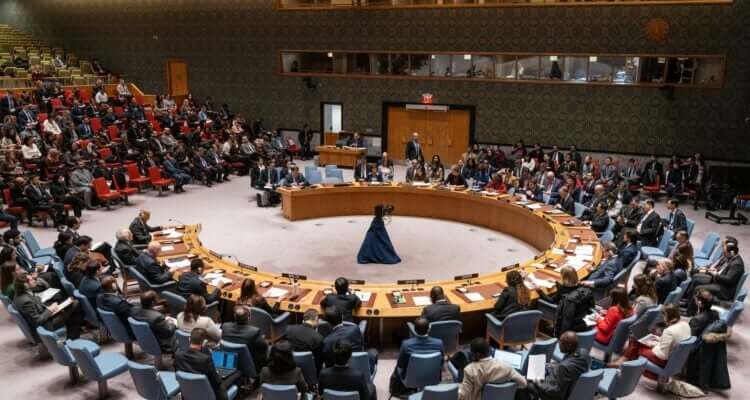

US blocks UN attempt to force Gaza ceasefire

By David Rosenberg, World Israel News

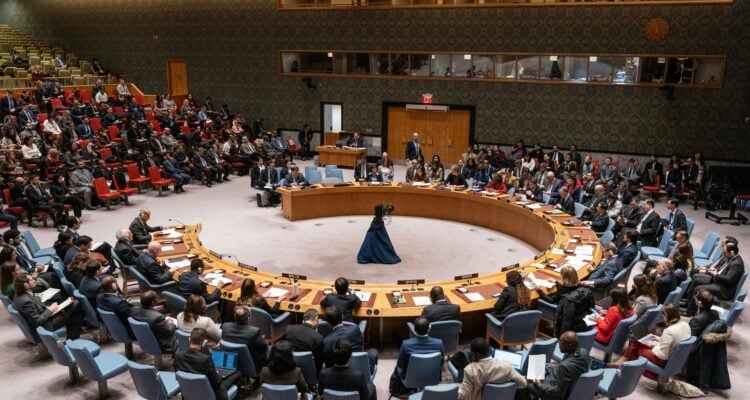
The United States on Wednesday blocked a resolution in the United Nations Security Council demanding an immediate ceasefire in the Gaza Strip and removal of Israel’s limits on the entry of humanitarian aid into the coastal enclave.

The draft resolution, S/2025/353, was put together by Slovenia, Guyana, and Algeria, three of the UNSC’s 10 non-permanent, rotating , and was cosponsored by the seven other rotating member states, including Sierra Leone, Mozambique, South Korea, Japan, Ecuador, Malta, and Switzerland.

Fourteen of the 15 UNSC members voted in favor of the resolution, including Russia, China, France, and the United Kingdom.

If passed, the resolution would have ordered that Israel and Hamas observe “an immediate, unconditional and permanent ceasefire in Gaza,” effectively ending the current war.

In addition, the measure called for the “immediate and unconditional lifting of all restrictions” on the entry of aid into the Gaza Strip, and expressed concern over what it dubbed the “catastrophic humanitarian situation” in the coastal enclave.

  Trump: Iran must surrender nuke program or ‘get bombed’

The resolution also called on Gaza terror groups to agree to the “immediate, dignified and unconditional release of all hostages held by Hamas and other groups.”

However, the U.S. acting Ambassador to the United Nations, Dorothy Shea, utilized America’s veto power on the council, after she called the measure “unacceptable.”

“U.S. opposition to this resolution should come as no surprise – it is unacceptable for what it does say, it is unacceptable for what it does not say, and it is unacceptable for the manner in which it has been advanced,” she said.

“We would not support any measure that fails to condemn Hamas and does not call for Hamas to disarm and leave Gaza.”

“We cannot allow the Security Council to award Hamas’ intransigence.”

After the vote, the World Jewish Congress lauded the U.S. veto of the measure.

“Today’s proposed UN Security Council resolution demanding an immediate ceasefire could not have been more detached from reality. On October 7, Hamas—with backing from Iran—launched a barbaric terrorist assault on Israel. It still holds 58 hostages and has made clear it would strike again,” said WJC President Ronald Lauder.

Wednesday’s vote marks the first time the U.S. has employed its veto power in a UNSC vote on the Middle East since President Donald Trump took office on January 20th.


The countries affected are Afghanistan, Myanmar, Chad, Congo, Equatorial Guinea, Eritrea, Haiti, Iran, Libya, Somalia, Sudan and Yemen.

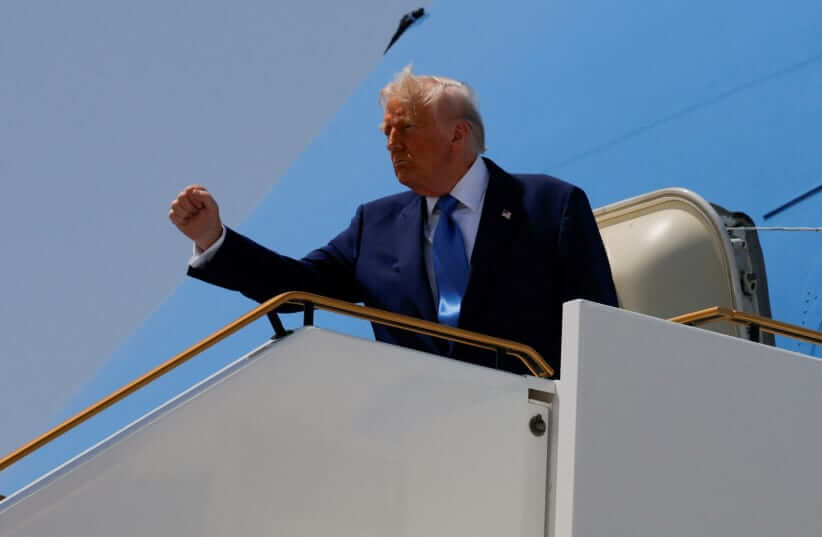
 US President Donald Trump gestures, while he boards Air Force One, in Abu Dhabi, United Arab Emirates, May 16, 2025. (photo credit:  REUTERS/Brian Snyder)
US President Donald Trump gestures, while he boards Air Force One, in Abu Dhabi, United Arab Emirates, May 16, 2025.
(photo credit: REUTERS/Brian Snyder)
US President Donald Trump signed a proclamation on Wednesday banning the nationals of 12 countries from entering the United States, saying the move was needed to protect against “foreign terrorists” and other security threats.

The countries affected are Afghanistan, Myanmar, Chad, Congo, Equatorial Guinea, Eritrea, Haiti, Iran, Libya, Somalia, Sudan and Yemen.

The entry of people from seven other countries: Burundi, Cuba, Laos, Sierra Leone, Togo, Turkmenistan and Venezuela, will be partially restricted. The travel restrictions were first reported by CBS News.

“We will not allow people to enter our country who wish to do us harm,” Trump said in a video posted on X. He said the list could be revised and new countries could be added.


 Sam King crosses the street after affixing an Israeli flag to a street light near the scene of an attack that injured multiple people, in Boulder, Colorado, US June 1, 2025.  (credit: MARK MAKELA / REUTERS)Enlrage image
Sam King crosses the street after affixing an Israeli flag to a street light near the scene of an attack that injured multiple people, in Boulder, Colorado, US June 1, 2025. (credit: MARK MAKELA / REUTERS)

The proclamation is effective on June 9, 2025 at 12:01 am EDT. Visas issued before that date will not be revoked, the order said.

During his first term in office, Trump announced a ban on travelers from seven majority-Muslim nations, a policy that went through several iterations before it was upheld by the Supreme Court in 2018.

Former President Joe Biden, a Democrat who succeeded Trump, repealed the ban in 2021, calling it “a stain on our national conscience.”

Trump said the countries subject to the most severe restrictions were determined to harbor a “large-scale presence of terrorists,” fail to cooperate on visa security and have an inability to verify travelers’ identities, inadequate record-keeping of criminal histories and high rates of visa overstays in the United States.

“We cannot have open migration from any country where we cannot safely and reliably vet and screen those who seek to enter the United States,” Trump said.

Boulder incident is example of why the restrictions are needed

He cited Sunday’s incident in Boulder, Colorado in which a man tossed a gasoline bomb into a crowd of pro-Israel demonstrators as an example of why the new restrictions are needed.

An Egyptian national, Mohamed Sabry Soliman, has been charged in the attack. Federal officials said Soliman had overstayed his tourist visa and had an expired work permit – although Egypt is not on the list of countries facing travel limits.

Somalia immediately pledged to work with the US to address security issues.

“Somalia values its longstanding relationship with the United States and stands ready to engage in dialog to address the concerns raised,” Dahir Hassan Abdi, the Somali ambassador to the United States, said in a statement.

Trump’s directive is part of an immigration crackdown that he launched at the start of his second term. He previewed his plan in an October 2023 speech, pledging to restrict people from the Gaza Strip, Libya, Somalia, Syria, Yemen and “anywhere else that threatens our security.”

Trump issued an executive order on January 20 requiring intensified security vetting of any foreigners seeking admission to the US to detect national security threats. That order directed several cabinet members to submit a list of countries from which travel should be partly or fully suspended because their “vetting and screening information is so deficient.”

In March, Reuters reported that the Trump administration was considering travel restrictions on dozens of countries.