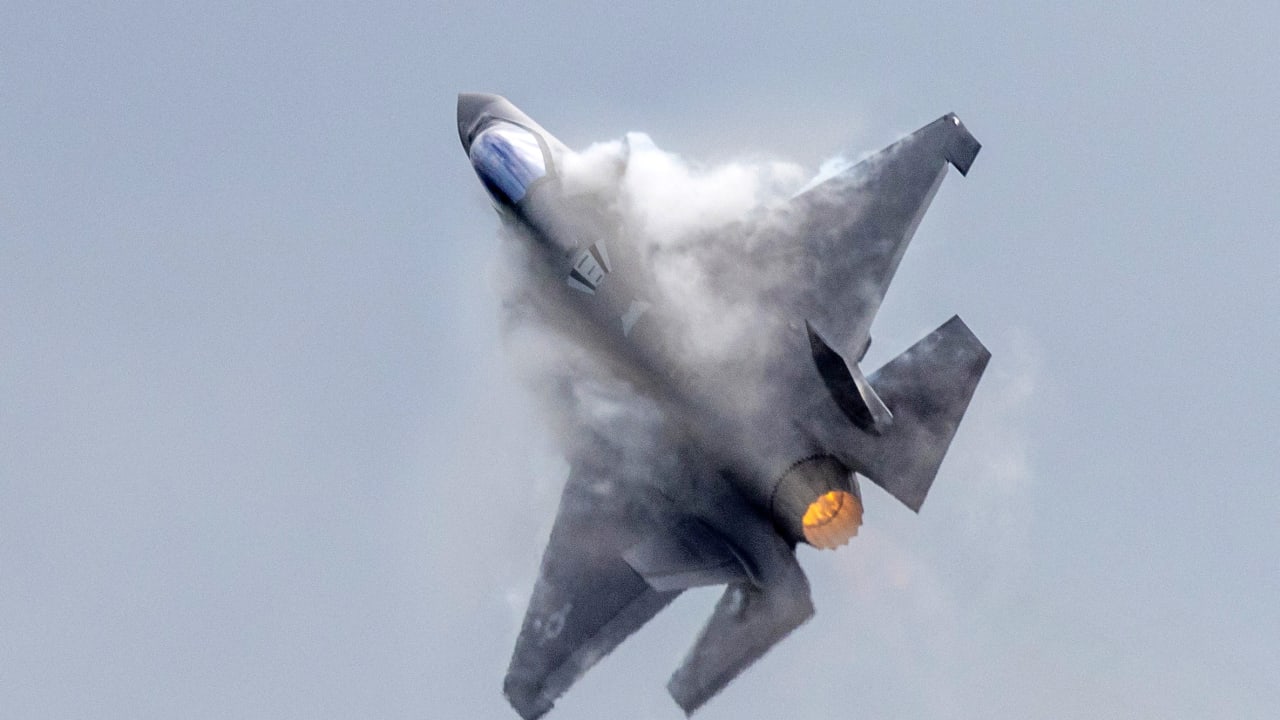
Updated: As US President Donald Trump meets Turkey’s president, Recep Tayyip Erdogan, to talk F-35s, Israel is bracing for Turkey to become its next great threat. In the last Deep Dive episode, the host, Jacob Laznik, was joined by Or Horvitz, head of the American program at the JPPI, who pushed back against the panic: Turkey “is not Iran.”
It craves a place in the Western world as much as regional dominance, and that ambition is exactly the leverage Washington and Jerusalem still hold. He doesn’t downplay the danger either; with Turkish disapproval of Israel above 96%, this is no longer just a quarrel with Erdogan, and if Iran keeps unraveling, a rising Sunni power could inherit the role of Israel’s chief rival.
On Gaza, he’s blunt. Hamas’s move to dissolve its governing committee is “only a charade”; the group may cede visible control, but it will never give up its weapons, because the guns are its reason to exist. He explains why Qatari and Turkish influence over any “Board of Peace” is Israel’s quiet nightmare, and why finishing Hamas requires both military pressure and moderate voices most assume can’t be found.
Most revealing is his read on the growing daylight between Israel and Washington. He’ll call the F-35 sale “bad, but not a disaster,” a fight not worth waging in public, while insisting the real red line is the enriched uranium still sitting in Iran.
US officials believe the conflict could last from several days to weeks, depending on whether Iran continues attacks on commercial shipping in the Strait of Hormuz, Axios reported.
US President Donald Trump speaks to reporters mid-flight in the press cabin of the new, Qatari-gifted Air Force One after changing planes to return to Washington from RAF Mildenhall, Britain, July 8, 2026.(photo credit: REUTERS/JONATHAN ERNST)BySHOSHANA BAKERThe White House is preparing for what could turn into a multi-day or even multi-week exchange of fire with Iran over the Strait of Hormuz, US officials told Axios on Thursday.
The duration and intensity of the new campaign depend entirely on Iran’s upcoming actions, according to US officials who spoke with Axios. They noted that the current escalation could last anywhere from one day to a month, depending on whether Iran continues its attacks on commercial ships in the Strait of Hormuz.
“We’re going to slap them a bit so they understand we’re not f***ing around,” One official said, referring to recent US strikes on Iranian targets.
US officials also told Axios that the White House believes it has more room to escalate because hundreds of oil tankers have successfully navigated through the Gulf via the strait in recent weeks.
“That has eased concerns within the administration that a renewed clash would immediately trigger a major oil price spike,” the officials said.
Smoke and flames rise after an explosion in Bandar Abbas, Hormozgan Province, Iran, in this screengrab obtained from a social media video released on July 8, 2026. (credit: Social Media/ via REUTERS)
“Iran saw its leverage in Hormuz slipping as hundreds of ships transited through the southern route close to the Omani coast,” they added.
Another US official source claimed that the current escalation stems from frustration among more radical members of Iran’s fractured leadership, who believe the Memorandum of Understanding (MoU) has not delivered any real benefits for Tehran.
“They started shooting, and we decided it’s time to slap them back hard. It’s a process. We have patience. If we don’t feel we’re getting the deal we want, we are not going to do it,” the official said.
End of MoU, US strikes on Iran
The US military completed its latest round of retaliatory strikes against Iran on Thursday morning, as confirmed by US Central Command (CENTCOM).
This latest escalation follows comments from US President Donald Trump, who stated on Wednesday that he felt the MoU with Iran was nullified after overnight strikes occurred between the US and Iran in the Strait of Hormuz.
“To me, I think it’s over,” he said at the NATO summit in Ankara, Turkey, during a press conference. Trump also remarked that he felt the US had “wasted a lot of time” negotiating with Iran and that he did not wish to continue talks.
“I don’t want to deal with them [Iran] anymore. They’re scum. They’re sick people.”
Shortly after this, Trump indicated that the US was open to de-escalation, telling reporters on Air Force One that Iranian officials had “called a little while ago” and “want to make a deal.”
“I just don’t know if they’re worthy of making a deal. I don’t know if they’ll honor the deal,” Trump added. “They’re sort of crazy, to be honest.”
Iran has not yet publicly responded to the President’s claims. However, Iran’s chief negotiator, Mohammad Bagher Ghalibaf, accused the United States of “bullying and breaking promises” and warned that the Strait of Hormuz would only be reopened on Iran’s terms.
Ghalibaf stated on X, “Let me put it plainly: If you strike, you’ll get hit. The Strait of Hormuz will only open with ‘Iranian arrangements,’ not American threats.”
Tzvi Jasper, Jonah Davidov, Shir Perets, Esther Davis, and Jerusalem Post Staff contributed to this report.
While Trump dangles sanctions relief and fighter jets in Ankara, the more revealing story about what Turkey does with advanced military technology is already unfolding on Libya’s coast
(illustrative) A Lockheed Martin F-35 fighter jet performs during the International Aerospace Exhibition ILA on the opening day at Schoenefeld Airport in Berlin, Germany June 5, 2024.(photo credit: AXEL SCHMIDT/REUTERS)
ByAMINE AYOUBUpdated: Prime Minister Benjamin Netanyahu went on Fox News this week to make an urgent argument, just before US President Donald Trump sat down with Turkish President Recep Tayyip Erdogan at the NATO summit in Ankara. Asked about Turkey’s push to rejoin the F-35 program, the Israeli prime minister didn’t hedge. Turkey, he said, is “a regime influenced by the Muslim Brotherhood,” and arming it with F-35s or F110 engines would tip a balance of power that he says rests on Israeli air superiority and the American military presence in the region.
Trump, sitting beside Erdogan on Tuesday, signaled he was already leaning the other way. He told reporters his administration would lift the CAATSA sanctions imposed after Turkey bought the Russian S-400 missile system in 2019, and that restoring Ankara’s access to the F-35 was “certainly something we will consider.” For a Turkish leader who has chased both outcomes since his air force was expelled from the program seven years ago, it was the closest thing to a green light he has received from Washington.
The F-35 story will dominate coverage out of Ankara this week. But for Israeli security planners trying to gauge what Turkey would actually do with expanded access to advanced Western technology, the more useful case study isn’t playing out at the summit. It’s in Libya, where Turkey has spent seven years turning a civil war into a live demonstration of exactly the kind of regional power projection Netanyahu was warning about.
Seven years in Libya’s skies
Turkey’s Bayraktar TB2 drones entered the Libyan war in 2019, and within months they broke the momentum of Khalifa Haftar’s assault on Tripoli. Precision strikes on Haftar’s armored columns, combined with Turkish electronic warfare systems that jammed his Russian-supplied air defenses, turned a collapsing position for the UN-recognized government into a stalemate that has held, in various forms, ever since.
The drones were followed by troops, trainers, and a permanent footprint: a naval presence at Misrata and an airbase at Al-Watiya that still serve as maintenance depots and command nodes for Turkish-supplied platforms. In December, Turkey’s parliament voted to extend that deployment for another two years. Few Turkish military commitments outside its own borders have lasted this long.
Libya’s army chief of staff Mohammed Ali Ahmed Al-Haddad attends a ceremony at a medical training camp on a military base in Al-Khums, Libya, December 21, 2025 (credit: General Staff of the Libyan Army via Facebook/Handout via REUTERS )
Independence as leverage
What separates Libya from an ordinary arms relationship is what it reveals about Turkey’s underlying strategy. Ankara has spent the past decade building an indigenous defense base: Baykar’s drone families, Aselsan’s Koral electronic warfare suite, the TAI KAAN fighter program, the MILGEM corvette line. The point has always been to escape the political conditions that come attached to Western exports.
In Libya, that independence converts directly into influence. Units trained on Turkish equipment inherit Turkish maintenance contracts and Turkish doctrine, a dependency that outlasts any single arms shipment and that rival powers have struggled to dislodge.
That is what makes this week’s F-35 discussion different from earlier rounds of the same fight. Turkey is no longer negotiating from a position of pure dependency on American hardware. An F-35 sale would not hand Ankara a new capability so much as validate and extend one it has already built, tested, and exported on someone else’s battlefield.
Hedging toward Haftar
Turkey’s position has also grown more opportunistic. For most of the past six years, Ankara backed only the Tripoli government against Haftar’s forces in the east. That began to shift in 2025. Ibrahim Kalin, head of Turkey’s intelligence service, met Haftar and his son Saddam in Benghazi last August. By the following summer, satellite imagery reviewed by Reuters suggested Turkish TB2s had reached an airbase controlled by Haftar’s forces for the first time, a reversal that would have been unthinkable during the 2020 siege of Tripoli.
The apparent price of admission is ratification, by the eastern-based House of Representatives, of the 2019 maritime boundary memorandum Ankara signed with Tripoli, an agreement that cuts across Greek and Cypriot claims in the Eastern Mediterranean and that Israeli officials have watched warily given their own offshore gas fields, chiefly the Leviathan and Tamar reservoirs that anchor Israel’s energy exports to Europe.
As of this spring, ratification still hadn’t happened. But the direction of travel is clear: Turkey is now willing to arm both sides of a Libyan civil war if doing so protects its maritime and energy claims.
It is a familiar playbook. Turkey has hedged this way before, selling TB2s to Morocco and then armed Anka-S drones to Algeria to manage the fallout, treating rival buyers as parallel revenue streams rather than a strategic contradiction.
The real proliferation risk
For Israel, the concern was never really the hardware itself. It’s who ends up holding it. Turkey’s record in Libya shows a consistent pattern: favoring factions and personalities aligned with Erdogan’s own political networks, some with documented Muslim Brotherhood sympathies, over the development of a unified, professional Libyan military.
Advanced drones and electronic warfare systems sitting with ideologically aligned militias, rather than an accountable state, is precisely the proliferation risk Israeli officials have raised about Turkish exports elsewhere in the region.
It sits uneasily next to the wider regional picture Israel has spent the past five years building. The Abraham Accords rest on a bet that Gulf states, Sunni governments wary of political Islam among them, will keep aligning with Israel against Iran and its proxies. A Turkey that arms Muslim Brotherhood-linked networks while also sitting inside NATO complicates that bet without ever declaring itself Israel’s enemy outright.
It’s also why Netanyahu’s F-35 intervention this week wasn’t really about a single aircraft. Turkey’s Libya record suggests that once Ankara gains a technological edge, it uses that edge to advance a political and ideological project, not just a national defense one.
Congress isn’t united behind Trump’s decision either. Republican Senator John Cornyn said on Tuesday that he hoped the move would prove to be a mistake, even as other members of the bipartisan delegation in Ankara called lifting the sanctions good news for NATO cohesion. That split tracks a question Israeli officials have pressed for years: whether Turkey’s value as a NATO ally outweighs what Ankara has already done with the arsenal it built outside NATO’s framework, in places like Libya.
Erdogan has had seven years and two Libyan factions to demonstrate what he does with sophisticated technology once he has it. Jerusalem’s task now is convincing Washington that the F-35 question and the Libya question are, in substance, the same question, asked in two different theaters. Ankara has already given its answer. Washington is still deciding whether it was listening.
Amine Ayoub, a fellow at the Middle East Forum, is a policy analyst and writer based in Morocco. Follow him on X: @amineayoubx