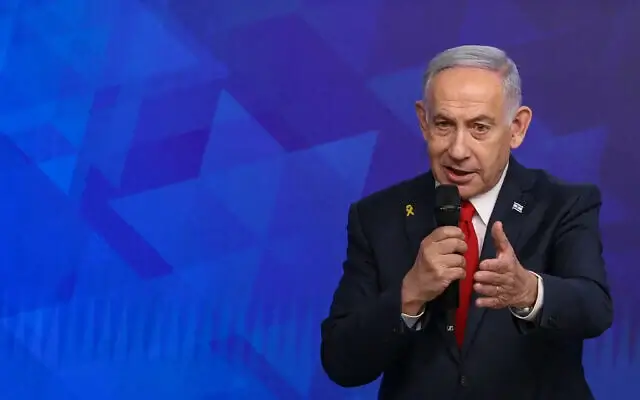
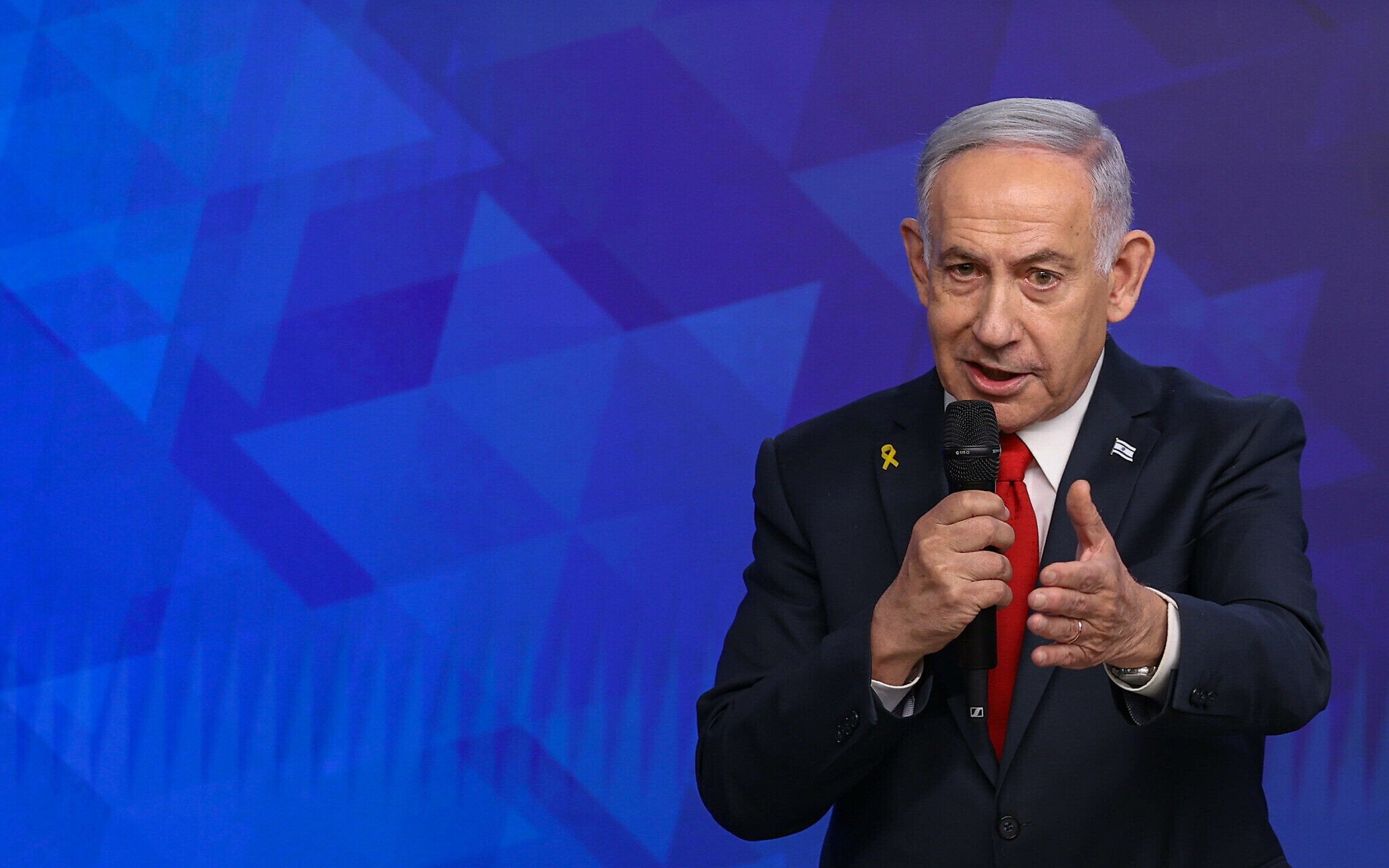
During his first press conference in five months, Prime Minister Benjamin Netanyahu on Wednesday named the implementation of US President Donald Trump’s “revolutionary” plan to relocate Gaza’s civilians as a condition for ending the conflict, the first time he has made such a demand. He called Trump’s plan “brilliant,” and said it had the potential to change the face of the Middle East.
The fledgling Operation Gideon’s Chariots — the IDF’s expanded ground operation in Gaza that began over the weekend— is meant to “complete the war, the work” in the enclave, the premier told reporters and live TV cameras at the Prime Minister’s Office in Jerusalem.
Israel has a “very organized” plan to achieve its war aims in Gaza, he insisted, saying its aims are “To defeat Hamas, which carried out the atrocities of October 7; to bring back all of our hostages; and to ensure that Gaza does not present a threat to Israel.”
“Our forces are landing powerful blows that will get stronger against Hamas strongholds that still exist in Gaza,” he explained, promising that by the end of the operation, “all the territory of Gaza will be under Israeli security control, and Hamas will be totally defeated.”
While “ready to end the war,” Netanyahu said he would only agree to do so “under clear conditions that will ensure the safety of Israel: All the hostages come home, Hamas lays down its arms, steps down from power, its leadership is exiled from the Strip… Gaza is totally disarmed; and we carry out the Trump plan. A plan that is so correct and so revolutionary.”
The US and Israel share a determination to ensure that Iran cannot get the bomb and that Hamas is booted out of Gaza, he said. And “we want to ensure that Trump’s plan” for Gaza comes to fruition, he added. “It’s a brilliant plan,” he said, “that truly can bring change not only here… but can change the face of the Middle East. Change once and for all what we have been through from Gaza for decades.”
He also said that if there is a possibility for a “temporary ceasefire” that will return more hostages, he would agree to that, but repeated that this would only be temporary.

IDF Chief of Staff Lt. Gen. Eyal Zamir visits the Gaza Strip, May 20, 2025. (Israel Defense Forces)
“We will win — and it won’t take another year and a half. I don’t want to reveal the plans, but it will happen. We will reach a decisive outcome and a different future for Gaza,” said Netanyahu.
Psays Qatar ‘not a friendly country,’ but didn’t fund Oct. 7
Asked about the ongoing Qatargate scandal, Netanyahu stated he “didn’t know anything” about his aides allegedly getting money from Qatar to boost the Gulf nation’s image, and that he “still doesn’t know” what happened.

Demonstrators stage a scene depicting Prime Minister Benjamin Netanyahu holding money received from Qatar outside the District Court in Tel Aviv, on April 9, 2025, where Netanyahu is testifying in the trial against him. (Jack GUEZ / AFP)
Netanyahu claimed that he publicly attacked Qatar — one of the main mediators between Israel and Hamas in hostage talks — while others praised them, and that Israel is primarily using them to help get the hostages out.
“Qatar is not a friendly country,” he said, noting that Doha still supports Hamas, and that he is allowing a Knesset bill defining Qatar as a “terror-supporting state” to advance.
“Maybe the time has come to say the things in the clearest way possible, to our American friends as well. We are saying it,” he said, adding that maintaining contact with Qatar on the hostage issue must be included as an exception within the bill.
Netanyahu also claimed money controversially transferred by Qatar to Hamas was given “on the recommendation of the Shin Bet and the Mossad,” though the head of the former security agency at the time has said he opposed the funds. The prime minister denied that this money, transferred at his urging, enabled the October 7, 2023, terror onslaught, which marked the deadliest attack in Israel’s history and day for Jews since the Holocaust.
Seeming to downplay the lethal capabilities of Hamas, Netanyahu said members of the terror group “attacked us in flip-flops and with AK-47s and pickup trucks, which cost scraps.” He said no tunnels that Hamas might have built with the money penetrated Israel because he had ordered an underground barrier built. Hamas did not have F-35s or tanks, he also said.
Thousands of Hamas members and other terrorists who breached the border on October 7 were highly trained and heavily armed, reports have shown, and operated within the 24 battalions of Hamas’s Qassem Brigades military wing. They held prior exercises, attacked in coordinated waves, and broke through the border in dozens of locations using anti-tank missiles, encrypted communications, naval commando units, and hang-gliders.
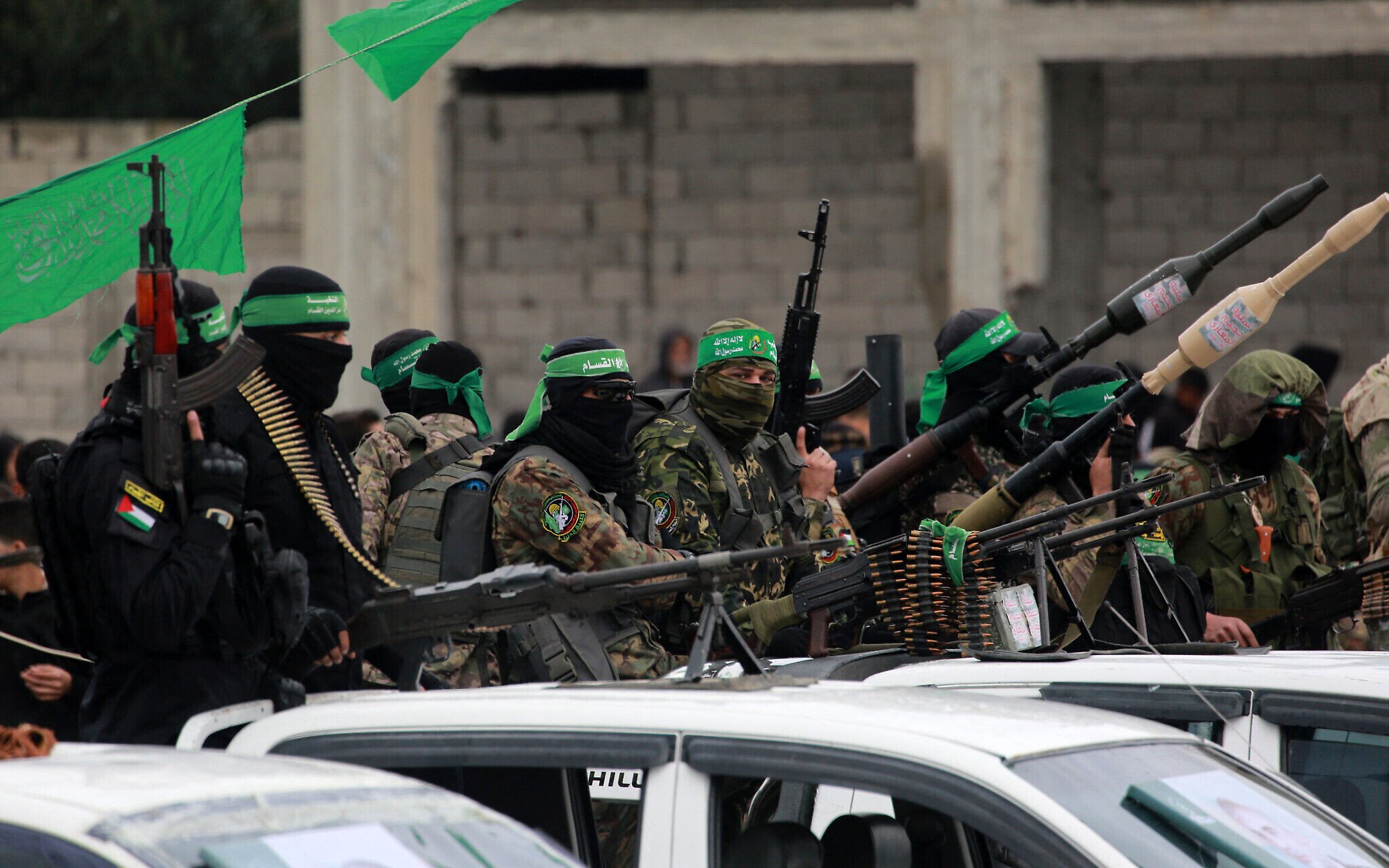
Illustrative: Hamas terrorists carry their guns in Nuseirat in the central Gaza Strip, ahead of the release of Israeli hostages on February 22, 2025. (Bashar Taleb/AFP)
Falsely claims that Kibbutz Ein HaShlosha was not attacked
Netanyahu agreed that the failures of October 7 must be investigated and fully examined —“Everyone will bear the true responsibility. We need an objective commission, unbiased.”
“How did it happen that there was no one next to the fence. How did it happen that there was a directive not to be next to the fence,” he asked. “How did it happen that the Air Force received orders to operate only hours after the attack. How did it happen?”
He claimed there was one kibbutz, Ein HaShlosha, where that directive was not given, “and nothing happened there — the community was not invaded, and the terrorists were killed.”
Members of the Gaza border kibbutz later expressed shock at Netanyahu’s claim that “nothing” happened there on October 7; in fact, four members were murdered. “We were surprised and shocked by the prime minister’s blatant inaccuracy as if ‘nothing happened in Ein Hashlosha.’ This is an outrageous and grave remark that harms the memory of those murdered and the entire community.”
“On the most difficult morning in the state’s history, members of the security squad and residents heroically faced dozens of terrorists who breached the kibbutz,” the statement added. “This was also presented in the IDF’s probe. During the battle, four of our beloved residents were murdered: Rami Negbi, Noa Glazberg, Silvia Mirensky and Marcelle Taljah. They aren’t ‘nothing.’”
The kibbutz residents demanded a correction and invited Netanyahu to Ein Hashlosha “to meet the community and hear the story of Kibbutz Ein Hashlosha.”
Netanyahu’s office attempted damage control, claiming in a statement later Wednesday that his remarks about Kibbutz Ein Hashlosha were misunderstood, and avoiding admitting Netanyahu misspoke. The statement asserted that what he meant was that the kibbutz not receiving a directive to not act caused the kibbutz’s people to spring into action, adding that the local security squad “fought bravely and prevented the takeover of the kibbutz and a big massacre.”
“There was no intention to say no residents were murdered at all. The prime minister grieves with the four families whose loved ones were murdered on October 7, along with the rest of the families whose loved ones were murdered and hurt in the massacre in all communities.”

Damage done to Kibbutz Ein HaShlosha during the October 7, 2023, massacre. (Facebook/ used in accordance with Clause 27a of the Copyright Law/ via Zman)
The government has not formed any commission of inquiry into the events surrounding October 7, 2023, for 19 months, and opposes a state commission of inquiry, which successive polls show is the preferred option for most Israelis.
“This will be examined, and I will give answers, just like everyone else,” he said, after he was asked why he has not resigned because of the October 7 failures or called elections to seek a renewed mandate from the public. But I am already being held accountable by the public every day. Every week there’s the possibility of a no-confidence vote. And once a no-confidence vote passes — the public has already made its decision. That will also happen in elections, when the time comes,” he said.
“Do you want elections now? he asked. “Do you want me to list what we’re up against right now? Is that what we need — a commission of inquiry right now — when all our soldiers and commanders will be running around dressing up as lawyers instead of arming themselves with artillery shells and tank munitions?”
Now, “in the middle of a war,” is not the time, argued the premier.
Trump’s ‘absolute commitment’
Asked about reports of a growing rift between him and Trump, Netanyahu asserted that Israel’s relations with the United States are positive, and that the US president’s warming relations with Arab states in the Middle East do not worry him.
Netanyahu said he was assured by Trump and US Vice President JD Vance in recent days that America has Israel’s back.
“A few days ago — I think around 10 days ago, maybe a little more — I spoke on the phone with President Trump. And he said to me, literally: ‘Bibi, I want you to know — I have absolute commitment to you. I have absolute commitment to the State of Israel,” said the premier.
He added that “Just a few days ago, I spoke with Vice President Vance. He said to me… ‘Listen, don’t pay attention to all this fake news about this rupture between us… It’s all spin. This isn’t the truth, you know it’s not true, and I’m telling you, from our side, it’s not true’.”

US Vice President JD Vance (left) shakes hands with Israeli President Isaac Herzog (left) while both attending Pope Leo XIV’s inauguration in Rome on May 18, 2025. (Maayan Toaf/GPO)
“We’re coordinated with the [Trump] administration,” continued Netanyahu, “We speak with each other. We respect their interests, and they respect ours — and they overlap. I won’t tell you they align completely, obviously not, but they align almost completely.”
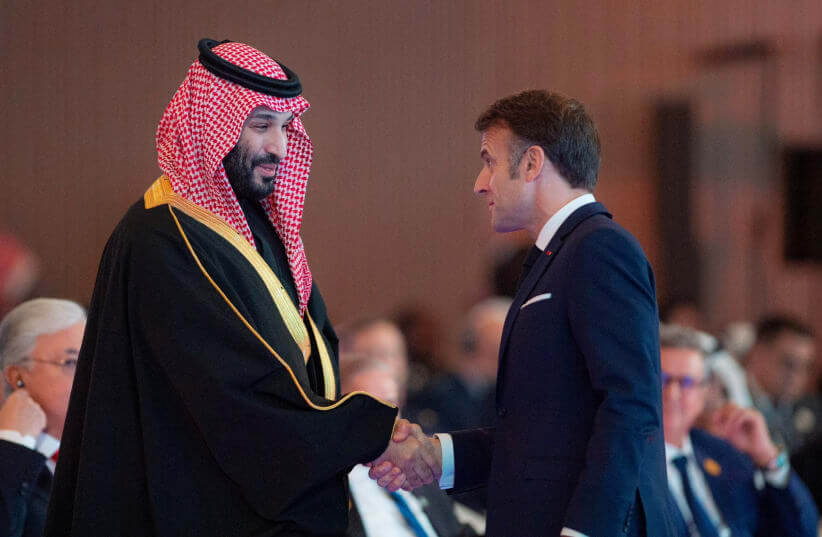
Netanyahu expressed support for Trump’s objectives of tightening relations with Gulf nations in the Middle East, demonstrated by the president’s visit to Saudi Arabia, Qatar, and the United Arab Emirates last week, saying his American counterpart’s moves could serve Israel by facilitating additional Abraham Accords normalization agreements.
“I have no objection to the United States deepening its ties in the Arab world. That’s absolutely fine. And I’ll tell you even more — I believe that can actually help expand the Abraham Accords, which I’m very invested in. I’m interested in that.”
During the roughly two-and-a-half years in which he and Trump’s first administration prepared the Abraham Accords — which saw Israel normalize ties with Bahrain, the UAE, and Morocco — Gulf states were speaking very harshly about Israel, said Netanyahu.
“But beneath the surface, something very different was happening. And I think there’s a possibility that this could happen again. I would be very happy if it does, because it’s one of my goals,” he said.
Saudi Arabia was in advanced talks on joining the Accords in 2023, backed by then-president Joe Biden’s administration, before the October 7 onslaught by Hamas against Israel that same year sparked the ongoing war and disrupted the normalization process.
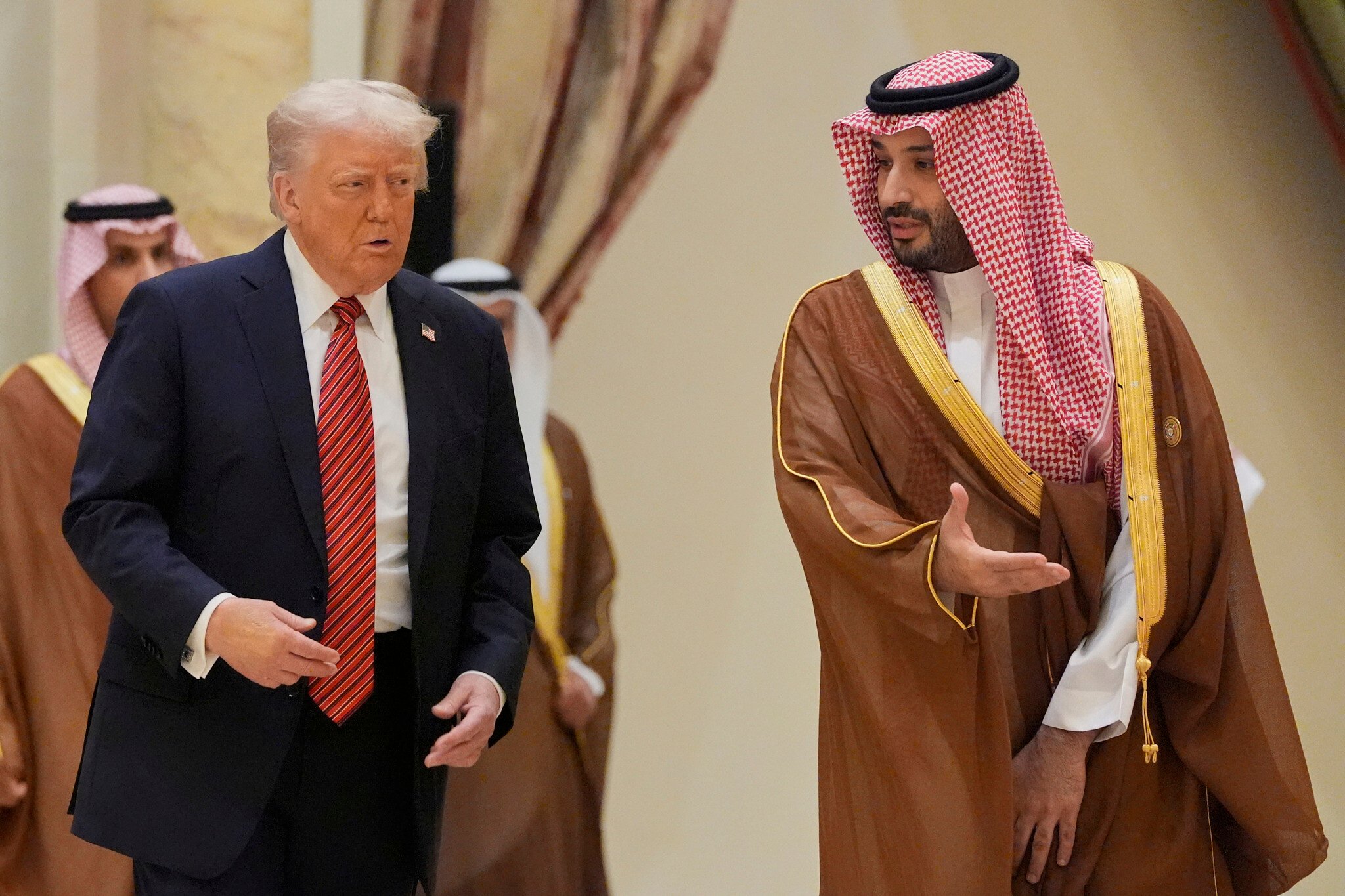
US President Donald Trump arrives with Saudi Crown Prince Mohammed bin Salman for the group photo with Gulf Cooperation Council leaders during the GCC Summit in Riyadh, Saudi Arabia, May 14, 2025. (Alex Brandon/AP)
“I’ve always wanted to expand the circle of peace, to extend a hand to our friends and push back the sword of our enemies. I’m very determined in this, and I’m focused on it,” said Netanyahu.
Europe ‘will not influence us’
Addressing Jerusalem’s relations with Europe, Netanyahu said that harsh rhetoric and punitive actions, including sanctions, from European nations demanding an end to the war in Gaza “will not influence” Israel’s national security policies.
“European countries will not influence us and they will not cause us to abandon our core objectives — ensuring the security of Israel and the future of Israel,” said Netanyahu in response to a question on how he plans to respond to severe condemnation of Israel’s actions in Gaza by European allies.
In recent days, European nations have called on Israel to halt its expanded military campaign in the Strip and lift restrictions on humanitarian aid for Gazan civilians.
In his opening remarks at the press conference, Netanyahu said that his decision to resume aid deliveries to the Strip on Sunday, a move deeply unpopular among right-wing Israelis, was made to prevent a humanitarian catastrophe in Gaza and maintain support from Israel’s allies.
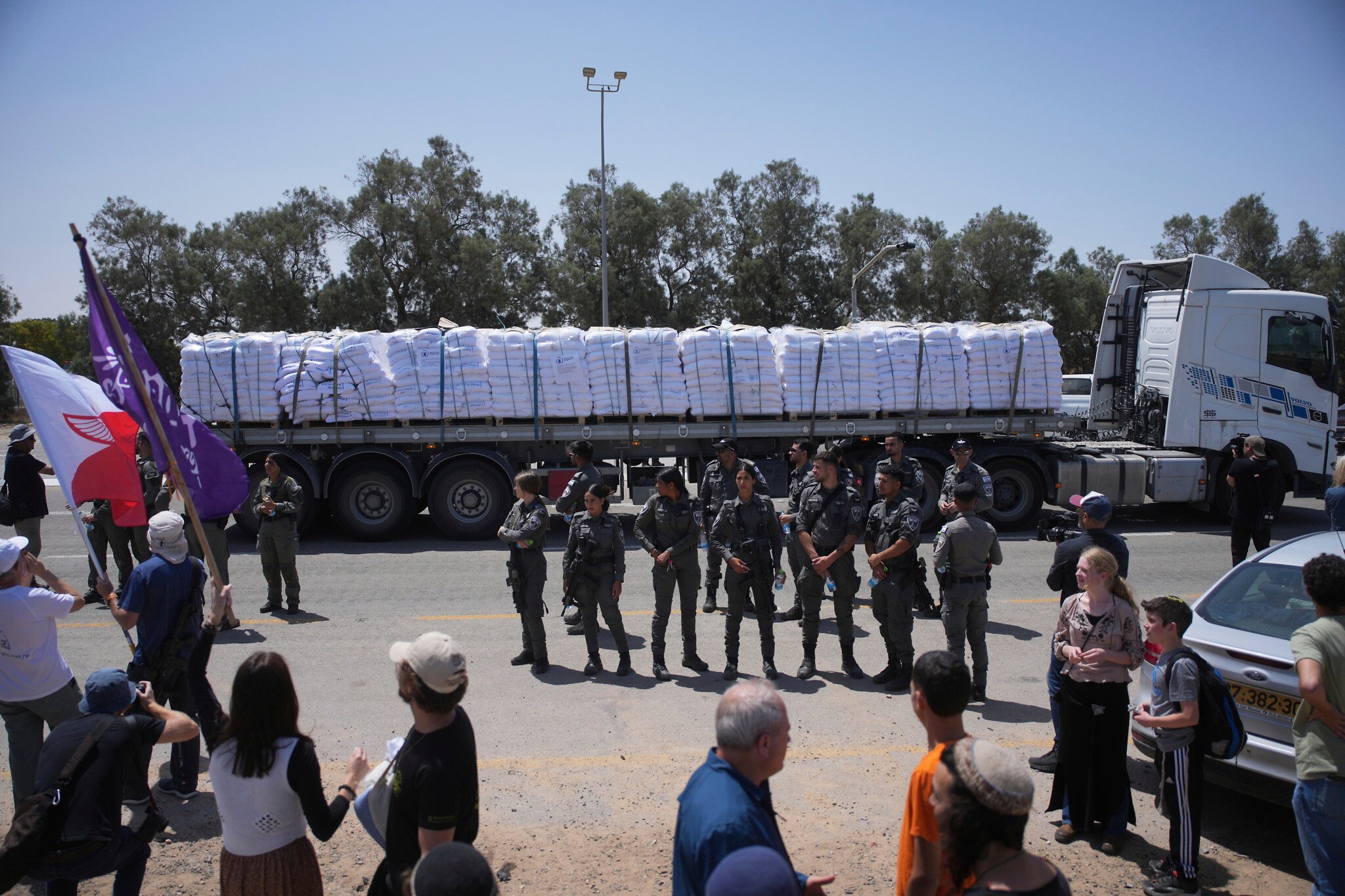
A truck loaded with humanitarian aid for the Gaza Strip makes its way to the Kerem Shalom crossing as Border Police officers prevent activists from blocking the road in southern Israel, May 21, 2025. (AP/Ohad Zwigenberg)
Stressing that Hamas loots aid shipments and sells the supplies at exorbitant prices to fund its military activities, Netanyahu said that Israel developed along with the US a humanitarian aid plan to bypass Hamas members. US Ambassador Mike Huckabee earlier this month claimed it was an American plan, not an Israeli plan.
Netanyahu said the plan has three stages – the entry of “basic food now” into Gaza to prevent a humanitarian crisis; opening aid distribution points in the coming days by private US companies; and creating a “sterile zone” in southern Gaza for the civilian population to shelter in.
“In this zone, which will be totally free of Hamas, residents of Gaza will receive full humanitarian aid,” he explained.
On Monday evening, British Prime Minister Keir Starmer, French President Emmanuel Macron and Canadian Prime Minister Mark Carney threatened in a joint statement to take “concrete actions” against Israel if it refuses to halt its military campaign and address the need for aid in Gaza, as well as pause the expansion of West Bank settlements and work toward a two-state solution. The leaders called the minimal supplies Israel permitted on Sunday “wholly inadequate.”
On Tuesday, the United Kingdom announced a pause in free trade talks with Israel and imposed sanctions on West Bank settlers, while the European Union agreed to review its cooperation deal with Israel, citing alleged human rights abuses in Gaza.
“We will do what is necessary to complete the war,” said the premier when asked if Israel is prepared to accept such threats and sanctions from Europe in pursuit of its war goals.
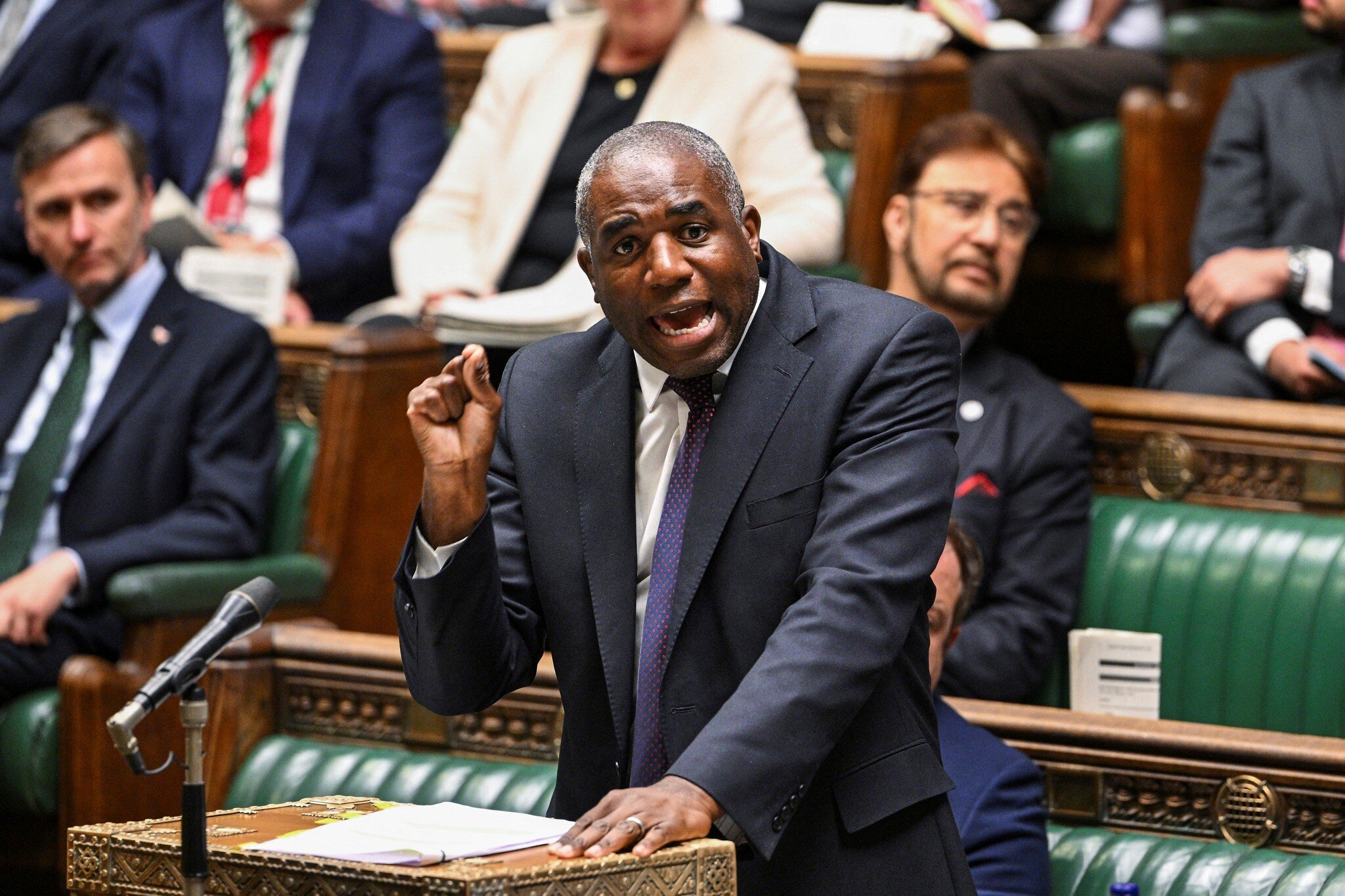
Britain’s Foreign Secretary David Lammy speaks to MPs during a statement on Israel and the war in Gaza in the House of Commons, in London, on May 20, 2025. (House of Commons / AFP)
“It is a badge of shame that Britain, instead of imposing sanctions on Hamas, is imposing sanctions on a woman who is threatened daily on the roads of Judea and Samaria by Hamas terrorists,” Netanyahu said, likely referring to veteran settler leader Daniella Weiss, who was among those sanctioned by the UK.
“All those images — the hunger, the claims that ‘44,000 children are about to die’ — all of that false propaganda echoes over there, and they cave to it,” said the premier, possibly referring to a debunked UN claim earlier this week that 14,000 babies in Gaza would soon die if proper nutrition doesn’t reach them.
“It’s a total loss of moral direction. These countries are under pressure — from the Islamic minority within them, and from public opinion shaped by Hamas’s false propaganda,” the premier said.
“The sanctions that are truly concerning,” said Netanyahu, would be imposed by the United Nations Security Council. “Binding sanctions — a resolution we will not allow,” he emphasized.
According to Netanyahu, as a condition for a deal releasing hostages and ending the war, Hamas would demand that the Security Council pass binding sanctions to damage Israel’s economy and national security were it to resume fighting the terror group at a later time — thus necessitating that Israel finish the job now.
Such an agreement would require a guarantee from the US, a crucial mediator in the hostage-ceasefire talks between Israel and Hamas, not to veto such sanctions in the initial vote.
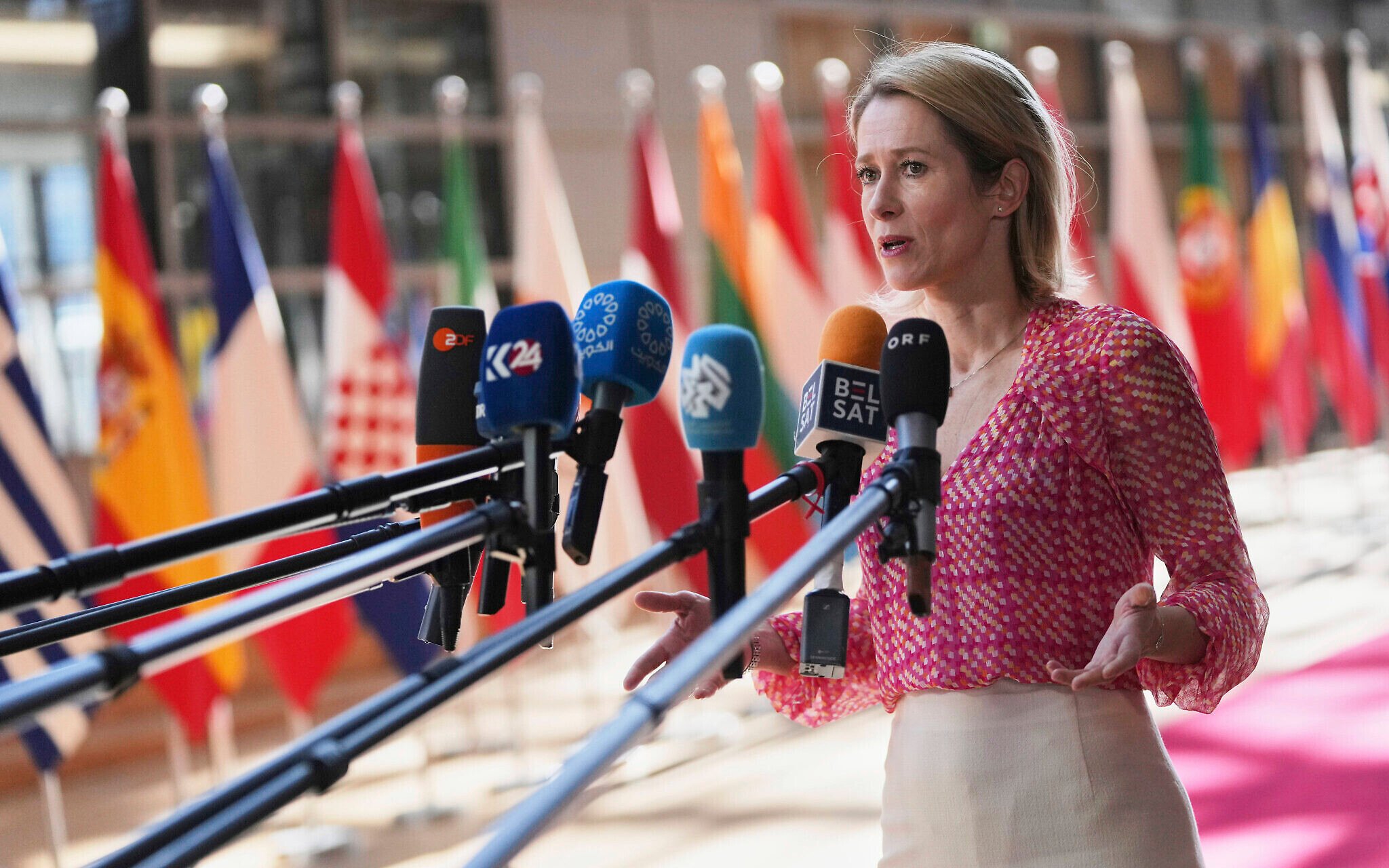
European Union foreign policy chief Kaja Kallas speaks with the media as she arrives for a meeting of EU defense ministers at the European Council building in Brussels, Belgium, May 20, 2025. (AP Photo/Virginia Mayo)
“This is Hamas’s goal,” he said. “They want to stop the war, end it, and push through a binding Security Council resolution — one that would compel 180 countries to impose sanctions on us.”
He said those who argue for Israel to end the war on Hamas’s terms “forget that it won’t come for free. You’d have to evacuate the entire Gaza Strip. There would be a binding resolution in the Security Council that would crash Israel’s economy completely, and also our security systems. It’s insane. Simply insane,” he continued.
Netanyahu also rejected the prospect of European nations unilaterally recognizing a Palestinian state.
“We strongly oppose their intention to give Hamas the ultimate prize — to recognize a Palestinian state. After October 7 — after we saw what a de facto Palestinian state looks like — it was called Gaza. Hamas’s Gaza. Hamastan. And now they want to create another one? There is no greater reward for terror,” he said.
Slams Yair Golan, who threatens to sue him
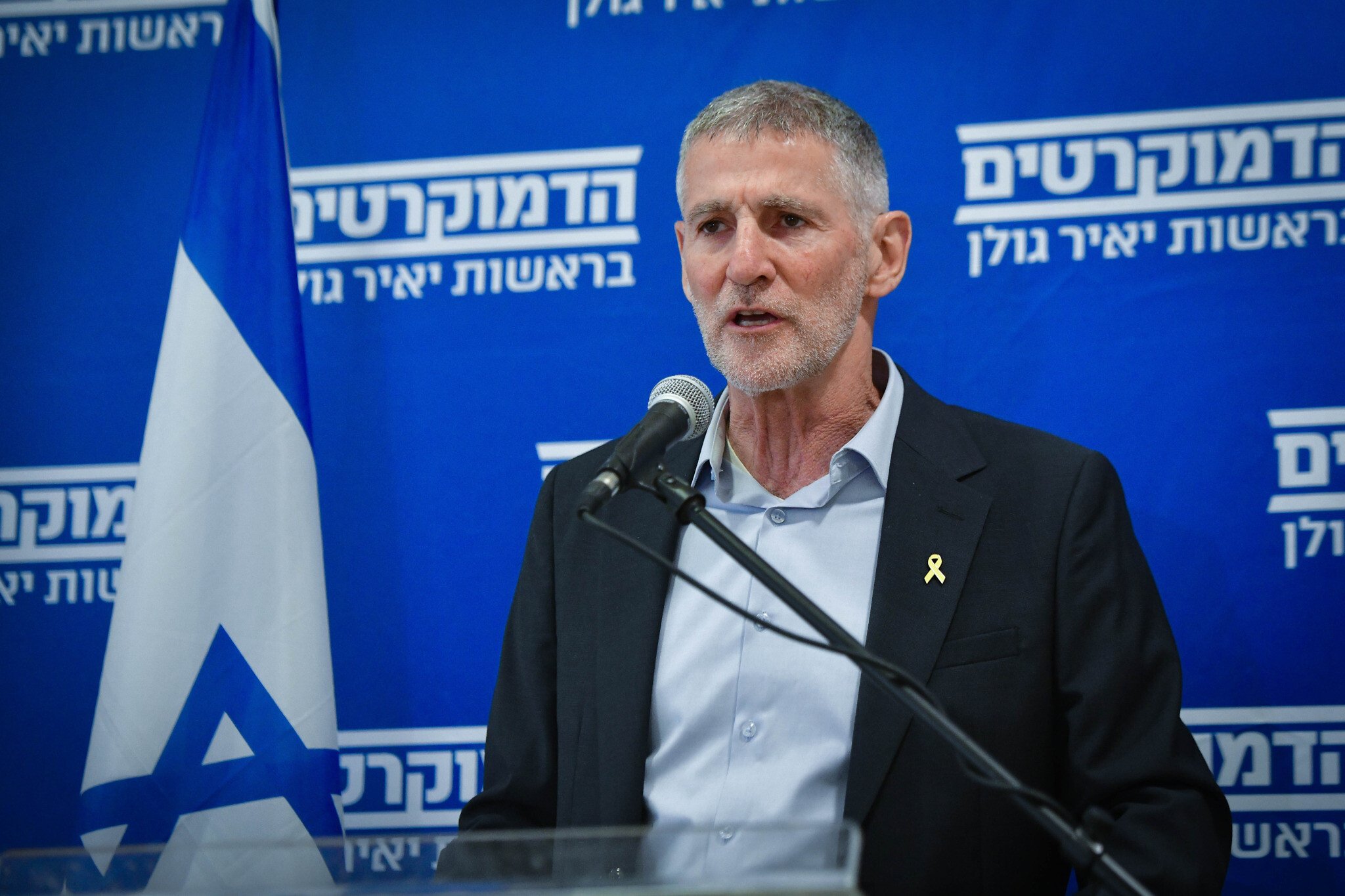
Addressing former IDF deputy chief of staff and current Democrats party leader Yair Golan’s much-panned accusation on Tuesday that Israel is killing Palestinian children for sport, Netanyahu called the statement “appalling.”
“While our heroic soldiers are risking their lives in the Gaza Strip, in order to protect our country and to bring our hostages back, Yair Golan accuses them of war crimes,” he said, adding that it reminded him of medieval blood libels.
It is Hamas that kills children as a hobby, while Israeli soldiers are doing everything they can to avoid civilian casualties, insisted Netanyahu. “There is no army that is more moral than the IDF in the world.”
Netanyahu said that those who defend Golan and repeat such charges fuel antisemitism and back Golan so as to bring down his government. They are willing to do anything to achieve that goal, he argued, including losing the ongoing war.
In response, Golan said: “I saw a display by a lying, anxious and troubled man who slings mud at everyone and doesn’t take responsibility for anything.
“I have two promises to Netanyahu this evening: I will sue you for defamation for the lies you spread against me, and we will beat you in elections very soon and send you to the pages of history,” vowed Golan.
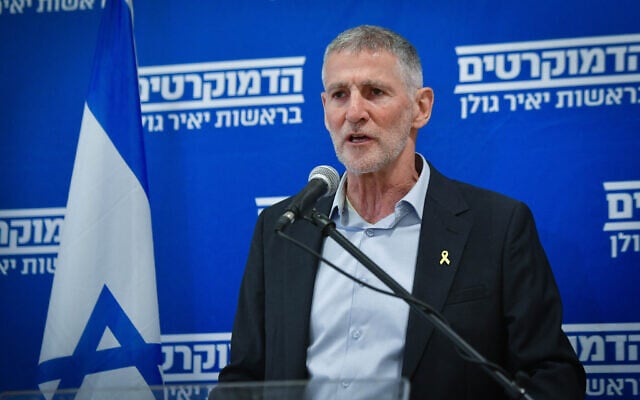
The Democrats party chairman Yair Golan holds a press conference in Tel Aviv, May 20, 2025. (Avshalom Sassoni/Flash90)
Opposition Leader Yair Lapid slammed Netanyahu for the vision for the Gaza war he laid out at the press conference.
“The meaning of Netanyahu’s words is military rule over Gaza for many years,” Lapid said, adding that soldiers will continue to die in battle and Israeli taxpayers will have to pay for education, healthcare and other services in Gaza.
“Netanyahu lied today when he said he is fully coordinated with the American administration,” Lapid also contended. “He has lost Trump’s support and attention.”