
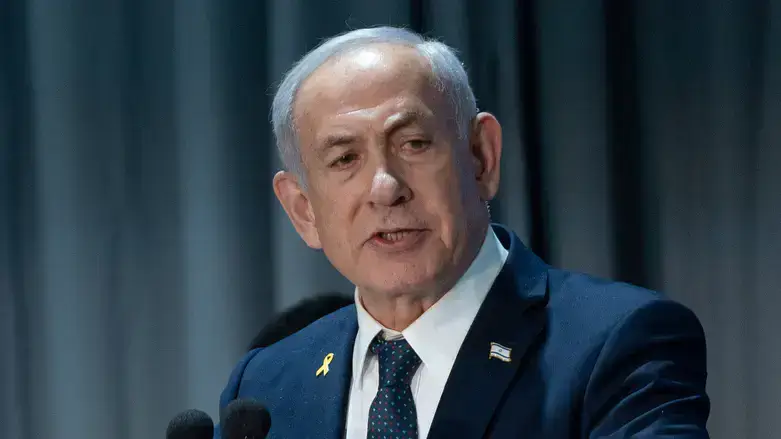
Prime Minister Benjamin Netanyahu speaks with US Attorney General Pam Bondi following antisemitic murder in Washington, DC, condemning the attack as the deadly result of incitement and ordering heightened security at Israeli missions worldwide.
Benjamin NetanyahuYonatan Sindel/Flash90
Israeli Prime Minister Benjamin Netanyahu spoke Thursday morning with US Attorney General Pam Bondi, following the antisemitic attack in Washington, DC, which resulted in the murder of two Israeli Embassy employees who were about to announce their engagement.
A statement from Netanyahu’s office stressed that he is “outraged by the horrifying antisemitic murder of two Israeli Embassy employees in Washington, DC.”
“The Prime Minister has spoken with Israeli Ambassador to the US Yechiel Leiter, who updated him on the details of the incident. The Prime Minister offered his support to the Ambassador and the embassy employees.”
“US Attorney General Pam Bondi spoke with Prime Minister Netanyahu and detailed everything that is known at this time about the identity of the murderer and the two embassy employees,” the statement added. “The Attorney General told the Prime Minister that she is sorry to the depths of her heart and that US President Donald Trump is involved in managing the event, and that the US will bring the murderer to justice.”
Attorney General Bondi “asked to convey her condolences to the families of the young couple who were due to become engaged soon,” it added. “Prime Minister Netanyahu thanked her and President Trump for their clear stand against antisemitism.”
Netanyahu stressed: “We are witness to the terrible cost of the antisemitism and wild incitement against the State of Israel. Blood libels against Israel have a cost in blood and must be fought to the utmost.”
“My heart grieves for the families of the young beloveds, whose lives were cut short in a moment by an abhorrent antisemitic murderer.
“I have directed that security be increased at Israeli missions around the world and for the state’s representatives.”

The suspect, who was arrested, chanted, “Free, free Palestine,” police said.
This is a developing story.
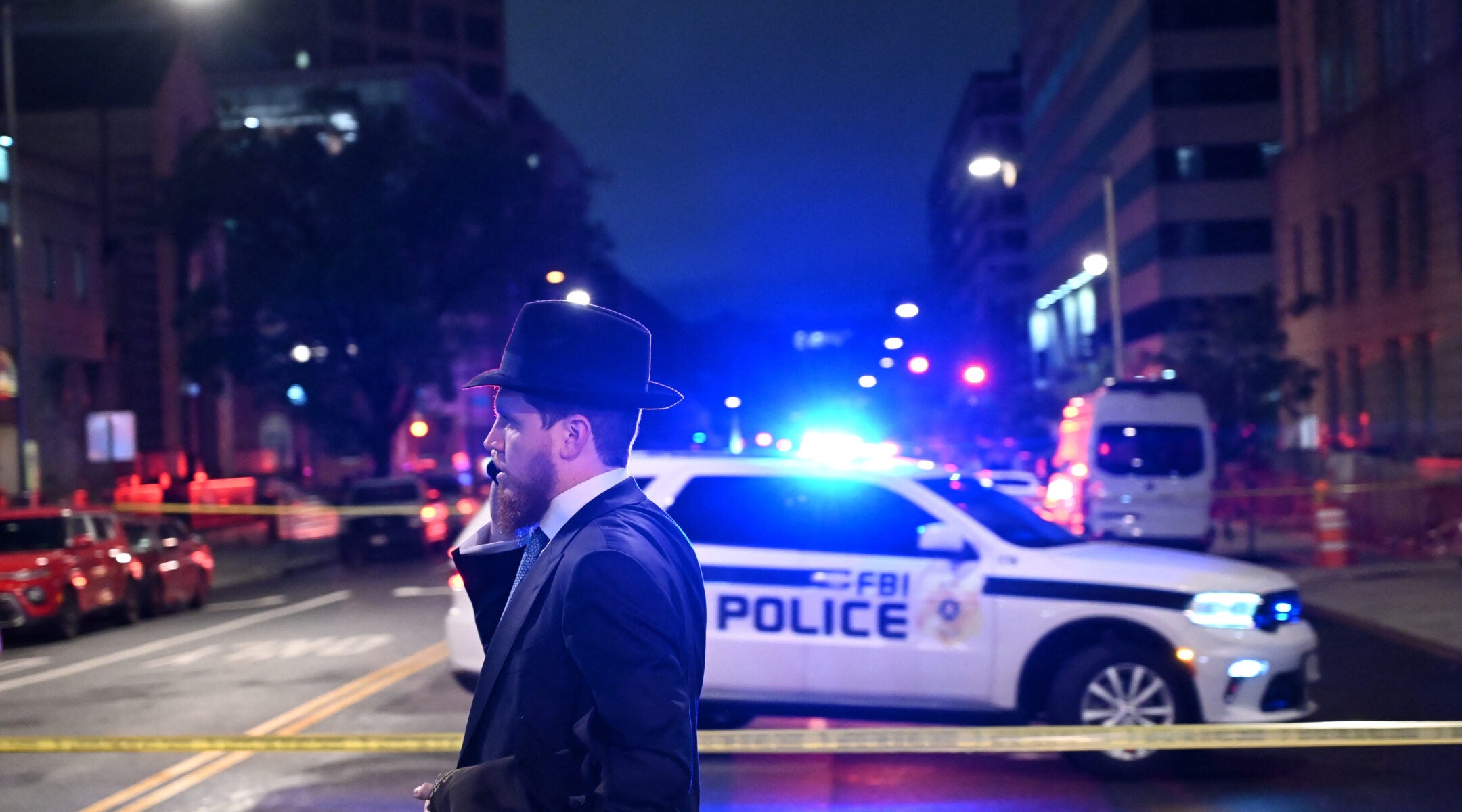
Two people were shot dead outside the Capital Jewish Museum in Washington, D.C., where the American Jewish Committee was hosting an event.
Both of the people killed were staffers at the Israeli embassy in Washington, according to Jewish and public officials. One was identified as Yaron Lischinsky, a researcher in the embassy’s political department who moved to Israel from Germany as a teenager.
The shooting took place after 9 p.m. on Wednesday and the victims were a man and a woman who were about to be engaged, Israeli ambassador Yechiel Leiter said at a press conference Wednesday night.
Police are questioning a suspect they identified as Elias Rodriguez, who they believe was solely responsible. Rodriguez, 30 and a resident of Chicago, approached a group of people and fired shots, according to police. He then entered the museum, where he was detained.
Rodriguez chanted, “Free, free Palestine,” after being detained, D.C. Police Chief Pamela Smith said at a press conference. Video from inside the museum showed a handcuffed man shouting the chant while being led away.
Smith said there was no intelligence ahead of the event indicating that there would be an attack. She also said Rodriguez was unknown to D.C. police. The FBI is investigating whether the shooting is a hate crime and an act of terrorism.
The event was held by the American Jewish Committee, which had advertised a cocktail event for young Jewish professionals and diplomats on Wednesday. Its website said the location would be provided to those who registered, a practice that many Jewish groups have adopted at a time of high alert, including over the threat of protests against the war Israel is fighting against Hamas in Gaza.
“We are devastated that an unspeakable act of violence took place outside the venue,” AJC CEO Ted Deutch said in a statement. “At this moment, as we await more information from the police about exactly what transpired, our attention and our hearts are solely with those who were harmed and their families.”
The shooting comes amid reports of surging antisemitism following Hamas’ Oct. 7, 2023, attack on Israel that initiated the war in Gaza. American Jewish leaders and Israeli officials connected the shooting to that surge.
“People who think that they’re going to address whatever issues they have about Israel through violent behavior directed at Jewish audiences, Jewish people — this is just pure antisemitism,” Eric Fingerhut, the president and CEO of Jewish Federations of North America, said in an interview.
“There’s no question that especially since Oct. 7, the outrageous anti-Israel activities that have occurred across this country have contributed to an incitement of antisemitic violence,” Fingerhut added. “This is clearly evidence of it.”
The Israeli ambassador to the United Nations, Danny Danon, called the shooting “a depraved act of anti-Semitic terrorism” in a statement.
“Harming the Jewish community is crossing a red line,” he said. “We are confident that the US authorities will take strong action against those responsible for this criminal act. Israel will continue to act resolutely to protect its citizens and representatives – everywhere in the world.”
The shooting represents the first fatal attack at an American Jewish institution in several years. The worst antisemitic attack in U.S. history occurred in 2018, when a gunman killed 11 Jews in a Pittsburgh synagogue. The following year saw three more fatal attacks on a synagogue in California, a kosher supermarket in New Jersey and a rabbi’s house in New York.
Since then, and including over the last 19 months since Oct. 7 and the start of the war in Gaza, Jewish institutions have bolstered their security. The Capital Jewish Museum, which opened in 2023, had just gotten a security grant from Washington, D.C. this week. Mayor Muriel Bowser said the city would consult with local Jewish institutions to ensure that they are safe after the shooting.
Attorney General Pam Bondi tweeted that she was “on the scene of the horrible shooting” along with U.S. Attorney Jeanine Pirro. The Trump administration has called fighting antisemitism a top priority.
“We’ll be doing everything in our power to keep all citizens safe, especially tonight our Jewish community,” Bondi said at the press conference. “We will follow the facts, we will follow the law and this defendant, if charged, will be prosecuted to the full extent of the law.”
Fingerhut said his organization would also continue to find ways to strengthen security. “The security of the Jewish community has been and remains the top priority of the Jewish federation system,” he said. “The risks have continued to rise as antisemitism has risen and as anti-Israel behavior in America has risen and our security teams have worked so hard to keep up with that. They obviously didn’t succeed tonight but we will not stop until we’ve ensured the security of our community.”
Lischinsky wrote on what appears to be his LinkedIn profile that he supported “expanding the circle of peace with our Arab neighbors” and added, “To this end, I advocate for interfaith dialogue and intercultural understanding.”
Scofield Biblical Institute and Theological Seminary Copyright 2010 – 2020