
The United States has acquired new intelligence indicating that Israel is preparing for a strike on Iranian nuclear facilities, according to CNN, citing multiple US officials familiar with the matter. This development follows the Trump administration’s continued pursuit of a diplomatic agreement with Tehran.
Those officials caution that it remains unclear whether Israel has made a final decision to move forward. Any Israeli strike would likely hinge on how the Netanyahu government assesses the progress and outcome of US negotiations with Tehran over its nuclear program.
One person familiar with US intelligence on the issue told CNN that “the chance of an Israeli strike on an Iranian nuclear facility has gone up significantly in recent months, and the prospect of a Trump-negotiated US-Iran deal that doesn’t remove all of Iran’s uranium makes the chance of a strike more likely.”
In April, The New York Times reported that Israeli officials had drawn up plans to strike Iranian nuclear sites as early as May. According to officials briefed on the proposals, Israel was prepared to carry them out and, at times, expressed optimism that the United States might approve the operation. The objective of the proposed strikes was to delay Tehran’s ability to develop a nuclear weapon by at least a year.
According to the Times, Israel’s planned strike on Iranian nuclear sites was ultimately set aside at the direction of President Trump, who opted instead to pursue a diplomatic agreement with Tehran aimed at curbing its nuclear program. The report cited administration officials and others familiar with the internal discussions.
Trump reached his decision after months of internal debate over whether to back diplomatic efforts or support an Israeli strike aimed at delaying Iran’s nuclear capabilities. The discussions exposed deep divisions within the administration, particularly between traditionally hawkish cabinet officials and others who were more skeptical that military action could effectively halt Iran’s nuclear ambitions without triggering a broader conflict. For now, the prevailing consensus within the administration is to avoid military action, provided Iran remains open to negotiations.
But is Iran open to negotiations? On Tuesday, Iran’s Supreme Leader, Ayatollah Ali Khamenei, firmly stated that the Islamic Republic would not seek permission from anyone to enrich uranium. He also criticized US negotiators involved in indirect talks with Tehran, urging them to refrain from making what he called “absurd comments,” underscoring the regime’s defiant stance amid ongoing diplomatic efforts.
Speaking at the first anniversary of the death of former Iranian President Ebrahim Raisi and his entourage, Khamenei further emphasized that the aim of “the other side’s” insistence on direct negotiations was to create the perception that Iran had surrendered. He added that, “Of course, indirect negotiations took place” during Raisi’s term, similar to what’s happening now. Needless to say, there was no result. We don’t think these will yield results now either. We don’t know what will happen.”
President Trump has publicly threatened military action against Iran should diplomatic efforts to reach a new nuclear agreement fail. He also imposed a time limit on those negotiations. He sent a letter to Khamenei in mid-March, setting a 60-day deadline for diplomacy to yield results. That deadline has now passed—more than 60 days since the letter was delivered and 38 days since the first round of talks began, raising questions about the administration’s next steps.
Iran is currently in its weakest military position in decades, following Israeli airstrikes in October that targeted its missile production facilities and air defenses. This, combined with a struggling economy under heavy sanctions and the severe weakening of Iran’s most powerful regional proxies by Israel, has created what US officials describe as a potential window of opportunity for Israeli action.
According to a senior US official who spoke to CNN, the United States is increasing its intelligence collection efforts to be prepared in the event that Israel decides to strike. However, a source familiar with the Trump administration’s thinking said the US is unlikely to assist Israel in carrying out strikes on Iranian nuclear sites at this time—unless Tehran provokes a significant escalation.
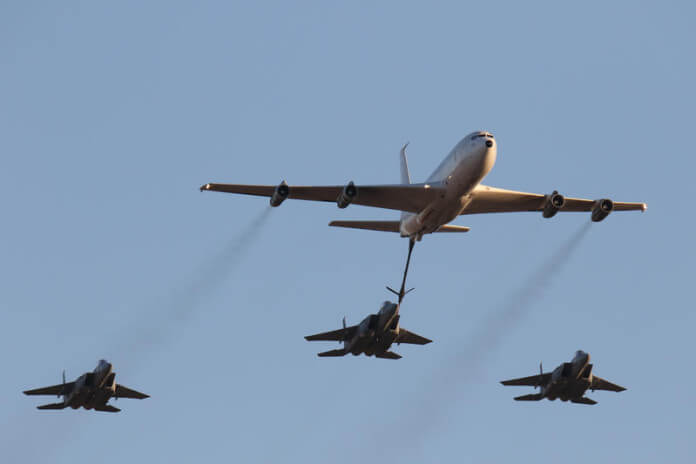
Israel has demonstrated its military reach and capability through repeated long-range airstrikes against Houthi targets in Yemen, at a distance comparable to Iran’s nuclear facilities, and through successful attacks on heavily fortified Hamas tunnel networks deep underground. These operations, Israeli officials argue, prove that Israel possesses the necessary assets, including midair refueling and bunker-busting munitions, to carry out a strike on Iran’s nuclear infrastructure without American support.
An Israeli source told CNN that Israel is prepared to act alone if the United States agrees to what the source described as a “bad deal” with Iran—one that Israel considers unacceptable.