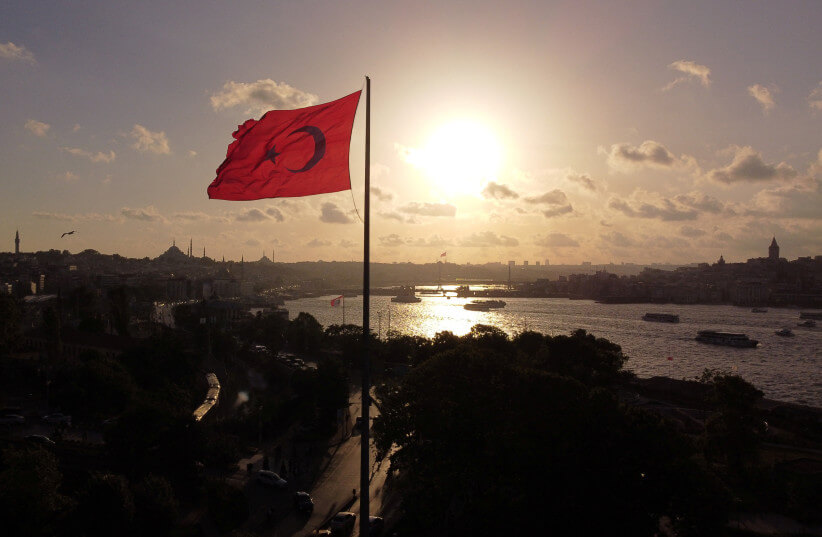
Turkey is repositioning itself as a key regional and global power by mediating conflicts, strengthening ties across the Middle East, and aligning with the Trump administration’s goals.
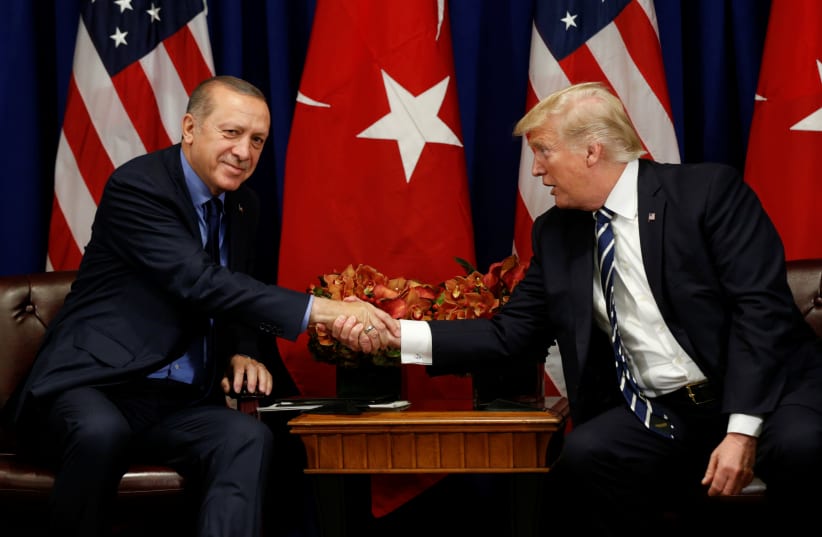
He has made this clear in a previous public meeting with Israel’s Prime Minister Benjamin Netanyahu, and it became clearer when Trump met with Syria’s new president, Ahmed al-Shara’a. Shara’a is backed by Turkey. Saudi Arabia’s crown prince helped lay the groundwork for the Shara’a-Trump meeting.
Turkey is now able to work with countries that it previously had problems with, such as Saudi Arabia. It is also involved in global outreach. For instance, it has positioned itself as a mediator between Russia and Ukraine, while also being seen as a friend of both Russia and Ukraine. Ankara is also able to work with Iran, Pakistan, and many other countries.
Turkey is one of the country’s major policy achievements. It has rushed to shore up the new Syrian government and positioned itself as an early investor in the new government’s initiatives. This will make Syria more dependent on Turkey and also enable Turkey to get in on the ground floor in terms of infrastructure development and possible defense ties.
Turkish intelligence chief Ibrahim Kalin met Monday with Syrian President Ahmed al-Sharaa during a visit to Damascus, according to reports. Andolu media in Turkey also noted that Kalin met with Syria’s foreign ministry and the head of Syria’s intelligence apparatus. Hussein al-Salama is Kalin’s counterpart in Syria.


“The meeting focused on the normalization of bilateral relations, with both parties underlining Syria’s territorial integrity, national sovereignty, and political stability as core priorities. Türkiye reiterated its readiness to support the Syrian government during the country’s post-conflict recovery phase,” Kurdistan24 noted. Ankara is concerned about how Damascus intends to integrate the US-backed Syrian Democratic Forces into the security forces. Ankara views the SDF as linked to the YPG and PKK, which Turkey views as terrorists.
For Turkey, there are many files in the region that it wants to play a role in. Turkey is aware that it has support among some Sunni Arabs in Lebanon. It also has a role to play in Libya, where there have been recent clashes. Ankara also has ties with the Gulf, primarily via Qatar. It also has close relations with Azerbaijan.
The Trump administration’s focus
Most important for the Trump administration is the fact that Ankara has offered to play a role in talks between Russia and Ukraine.
Solving this crisis is important to Trump, and Turkey may have a better chance of helping than European countries. This is because Russia’s President Vladimir Putin is interested in Turkey. These ties include trade and the fact that Ankara acquired the S-400 air defense system from Russia.
Turkey always seeks to balance its affairs so that it has ties with both sides. It is both part of Europe and linked to Central Asia. It works with other Turkic countries and also supports Islamic causes. Ankara finds that playing both sides can result in both trusting it and becoming dependent on it as a broker. This is also the Qatar model, which is how Doha is able to be friends with Iran and also host a US military base.
Turkey is the same; it is a NATO member and also supports Hamas. It has sought to position itself in the past to be essential to the Trump administration’s policies. It sought to do this during the first Trump administration, despite tensions over how Turkey conducted itself in the Eastern Mediterranean and the fact that Ankara detained an American pastor. Sometimes Ankara uses these methods to wring concessions.
On Russia and Ukraine, Turkey is trusted by both sides. The US has so far been unable to get the ceasefire that Trump wants. It’s possible Ankara may have a way to get a deal done or at least help lay the foundation for face-to-face meetings between Trump, Putin, and Ukraine’s president, Volodymyr Zelensky. It’s worth noting that Saudi Arabia had also tried to help with these talks.
It remains to be seen what next steps Turkey may take. Israel has been wary of Ankara’s role in Syria. However, Turkey is likely to want to provide Damascus with more security and defense assistance. Ankara also has another potential win-up in its sleeve. The PKK has said it will dissolve itself, ending 40 years of war with Turkey. This could enable Ankara to reduce its forces in Syria and Iraq. However, Turkey is addicted to this conflict, and it may find it hard to suddenly reverse course. That is why Turkey is still telling Damascus that it is wary of Syria working with “terrorists” in eastern Syria.