As Azerbaijan’s regional influence grows, Iran sees a threat to its strategic axis from the Levant to the Caucasus.

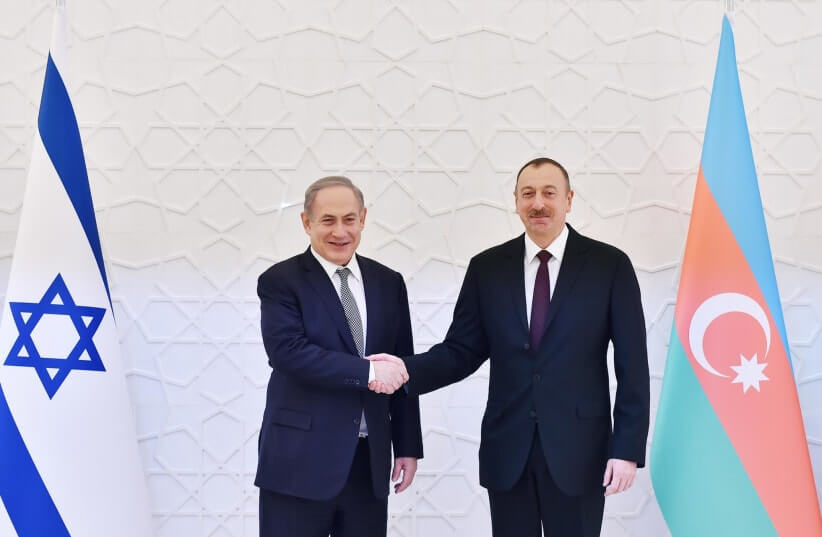
Israel and Azerbaijan (photo credit: courtesy of Presidency of Azerbaijan)
Israel and Azerbaijan
(photo credit: courtesy of Presidency of Azerbaijan)
The anticipated visit of Israeli Prime Minister Benjamin Netanyahu to Baku underscores a significant shift in the regional balance of power. Although the date has not yet been announced, official sources confirm that the visit is imminent.

This move highlights Azerbaijan’s emerging role as a strategic bridge between Israel and Turkey, particularly in relation to Syria, and signals new geopolitical dynamics with far-reaching implications.

For Iran, this development is deeply unsettling. Tehran views Baku’s mediation between Jerusalem and Ankara as a direct threat to its ability to project power in both the Levant and the Caucasus. The collapse of the Assad regime—enabled, in part, by the sustained weakening of Hezbollah through Israeli strikes—has already deprived Iran of its primary stronghold in Syria. Turkey’s growing presence in the region further diminishes the chances of an Iranian resurgence.

Iran has long invoked the specter of “Pan-Turkis”, accusing Ankara and Baku of attempting to undermine Iranian interests. Though not a clearly defined ideology, Tehran uses the term to describe coordinated Azerbaijani-Turkish efforts that counteract Iran’s’s disruptive actions across multiple fronts Baku’s increasing involvement in the Levant signals a shift: Israel and Azerbaijan are no longer merely reactive players defending against proximate threats but are increasingly capable of targeting Iranian interests through indirect and strategic means Tehran’s hope to entangle its adversaries with local proxy threats has weakened.

A recent report by Asharq Al-Awsat outlines Israel’s evolving post-Assad strategy in Syria, focused on dismantling Tehran’s military presence with the help of regional partners. As Assad’s grip loosens and Russian influence declines due to its ongoing war in Ukraine, Azerbaijan, a Muslim-majority country and strongly aligned with both Israel and Turkey, has emerged as a potential mediator.
 Azerbaijani and Israeli flags. (credit: Wikimedia Commons)Enlrage image
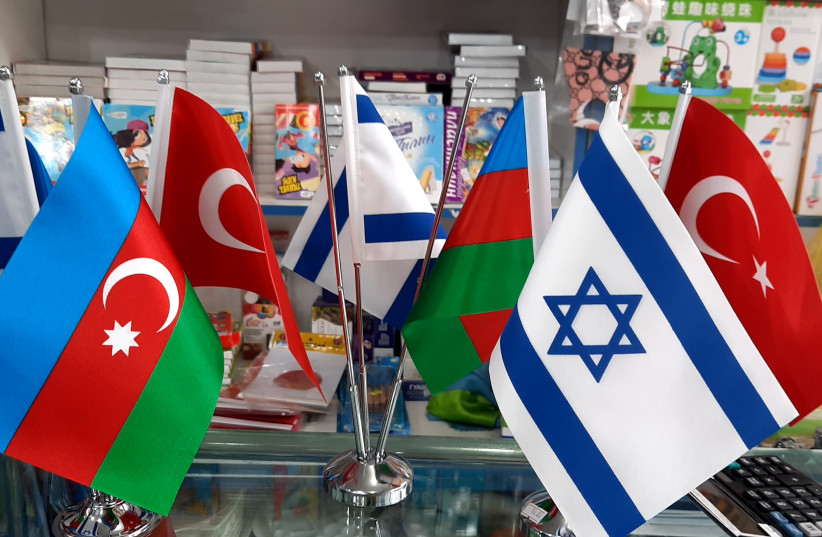
Azerbaijani and Israeli flags. (credit: Wikimedia Commons)

The informal but strategic triangle between Baku, Jerusalem, and Ankara may reshape the Syrian theater. Azerbaijan’s close military and intelligence ties with Israel grant it unique leverage. For Iran, any erosion of its influence in Syria is a red line. The Islamic Republic has spent decades building a land bridge from Tehran to Lebanon, anchored by Hezbollah.

Losing Syria would be a devastating strategic setback. Baku’s growing alignment with Israel also has symbolic weight. Its potential inclusion in the Abraham Accords, Washington’s flagship regional normalization initiative, would mark a milestone in Muslim-Israeli cooperation. Azerbaijan’s secular identity and long history of collaboration with Israel position it as a natural candidate for integration into the Western-aligned bloc.

This momentum has not gone unnoticed in Washington. US President Donald Trump recently praised Azerbaijan’s support for Israel in a letter to President Ilham Aliyev, recognizing Baku’s role in advancing regional stability. The gesture signals Washington’s view of Azerbaijan as a vital actor in countering both Iranian aggression and Turkey’s shifting allegiances within NATO.

Tehran, in turn, has reinforced its ties with Armenia, Azerbaijan’s historic adversary. In a pointed display of military cooperation, Iran and Armenia held joint drills warning against “foreign-designed border changes,” a message directed at Baku and its allies. According to The Cradle, the exercises reflect a shared effort to resist regional realignments seen as threatening to their interests.

Economically and militarily, Iran is leaning on Armenia as a strategic partner to offset the influence of pro-Western Muslim states like Azerbaijan. Yet it is in Syria where Tehran may face the greatest loss. Should Baku successfully broker Israeli-Turkish cooperation, Iran risks losing its vital corridor connecting Iraq and Lebanon, undermining its regional deterrence and ability to supply Hezbollah.

What does this mean for Azerbaijan

By expanding its role in regional diplomacy and security, Azerbaijan is proving to be a powerful geopolitical actor well beyond the South Caucasus. Since 1979, Iran has waged a hybrid campaign against Israel, the United States, and now Azerbaijan. These fronts, the Caucasus and the Levant alike, are increasingly interconnected.

Now surrounded by Abraham Accords members, a resurgent Israel-Azerbaijan alliance, and shifting Turkish calculations, Iran is recalibrating. Its partnership with Armenia represents both a hedge against strategic isolation and a historical alignment. As the U.S. and Israel deepen their ties with Baku, Tehran is likely to respond through proxy escalation and further regional entrenchment.

In this shifting landscape, Azerbaijan’s rise as a mediator between Israel and Turkey—and its prospective role in the Abraham Accords—signals a profound and dangerous change for Tehran. With Baku on the ascent and Syria slipping from its grasp, Iran’s long-held regional ambitions are being challenged like never before.

Alex Grinberg is a Captain (res.) at the IDF’s Military Intelligence research department and an expert on Iran and the South Caucasus. Grinberg is also a fellow at the Jerusalem Institute for Strategy and Security (JISS) and the Begin-Sadat Center for Strategic Studies.
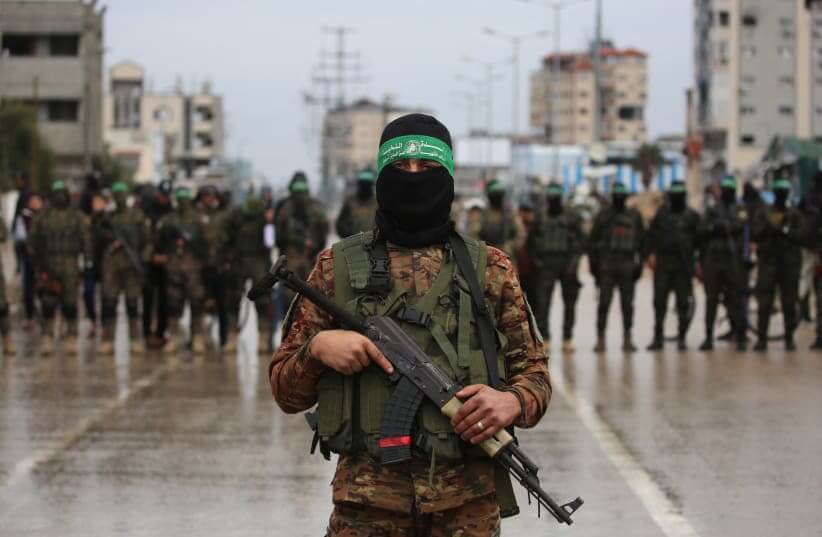

The proposal would involve the release of all Israeli hostages in exchange for a mutually agreed-upon number of Palestinian prisoners, the report said.

Hamas terrorists stand guard in Rafah, in the southern Gaza Strip, February 22, 2025 (photo credit: EYAD BABA/AFP via Getty Images)
Hamas terrorists stand guard in Rafah, in the southern Gaza Strip, February 22, 2025
(photo credit: EYAD BABA/AFP via Getty Images)
Egypt has allegedly prepared a new proposal for a hostage-ceasefire deal expected to be presented to Israel and Hamas by the end of the week, according to a Thursday report by the Saudi-owned channel Asharq News, citing sources familiar with the matter.

According to the report, the new proposal will meet both Israel’s and Hamas’s demands in a “balanced” manner and will aim to establish a long-term truce between the sides that could potentially last between five and seven years.

To ensure a truce between the two parties, the agreement would involve guarantees from regional and international parties to “ensure the fulfillment of mutual obligation,” the report added.

The new proposal was prepared by Egypt in consultation and coordination with Qatar and the current US administration, the sources in the report claimed.

According to the sources, “once a framework agreement is reached, the ground situation will be restored and all military operations will be halted.”

 A truck moves at the Rafah border crossing, amid a ceasefire between Israel and Hamas, in Rafah, Egypt, February 18, 2025. (credit: REUTERS/MOHAMED ABD EL GHANY)Enlrage image
A truck moves at the Rafah border crossing, amid a ceasefire between Israel and Hamas, in Rafah, Egypt, February 18, 2025. (credit: REUTERS/MOHAMED ABD EL GHANY)

“Humanitarian and relief aid will be introduced according to the international protocol,” the sources continued.

Hamas and Israel’s demands 

The proposal would involve the release of all Israeli hostages held by the terror group in exchange for a mutually agreed-upon number of Palestinian prisoners, the report said.

The report emphasized that the deal would be “contingent on an immediate and complete ceasefire, a full withdrawal of Israeli forces from Gaza, the initiation of the Gaza reconstruction process, and the lifting of the blockade imposed since 2007.”

Israel, in return, would expect Hamas to declare its commitment to a five-year ceasefire and that the terror group would no longer have ruling control of the Gaza Strip, the source cited in the report said.

Israeli delegation to depart for hostage talks 

The report comes as an Israeli delegation is expected to depart in the coming days for talks aimed at advancing a hostage deal, a source familiar with the details told The Jerusalem Post Wednesday.

Sources informed on the matter told the Post that there has been no change in Hamas’s position regarding the deal.

Hamas has made it clear to mediators from Egypt and Qatar that “we will not agree to a deal that includes a temporary ceasefire.”

Israel has said it will only agree to a deal in which 10-11 hostages will be released for 45 days of ceasefire. Prime Minister Netanyahu has said Israel will not agree to cease the war, as Hamas demands.

Amichai Stein contributed to this report. 


Lebanon expert Dr. Moshe Elad emphasizes that Hezbollah remains a major force in Lebanon, despite the blow it suffered from Israel.

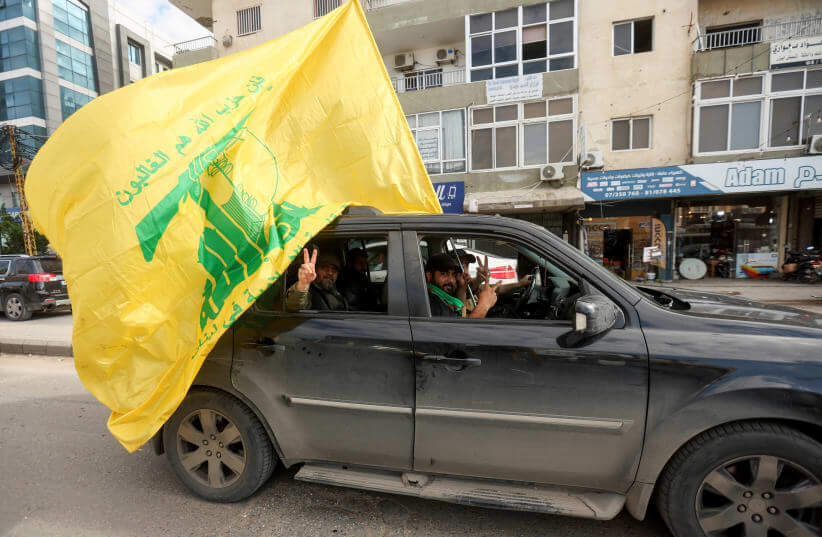
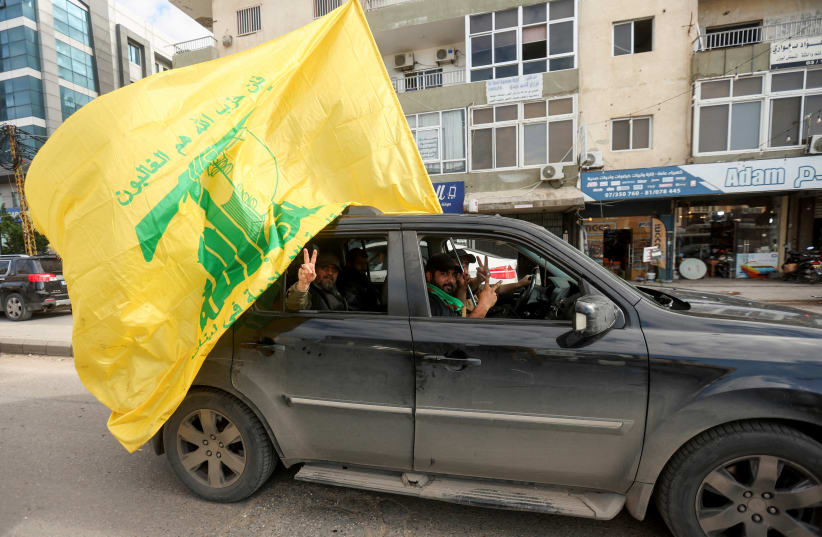
A man gestures the victory sign as he holds a Hezbollah flag, in Tyre, Lebanon, November 28, 2024 (photo credit: REUTERS/AZIZ TAHER)
A man gestures the victory sign as he holds a Hezbollah flag, in Tyre, Lebanon, November 28, 2024
(photo credit: REUTERS/AZIZ TAHER)
Colonel (res.) Dr. Moshe Elad, an expert on Lebanon and lecturer at the Western Galilee College, discussed Lebanon’s complex reality with Maariv, saying Lebanon has reached its “moment of truth.” A country torn between hope for national reconstruction and the fear of Hezbollah’s forces erupting again.

Elad, who, while in the IDF, oversaw the Tyre and Bint Jbeil regions in the security zone, presents a nuanced picture of Lebanon. “This is Lebanon’s moment of truth,” he says.

“For the first time since Hezbollah’s establishment, the organization that seized Lebanon and turned it into a ‘terrorist group with its own state,’ there are ‘Ben-Gurion-like’ attempts to create a regime in Lebanon with one government, one constitution, and one weapon. It won’t be easy, and there are great doubts about whether this will succeed.”

Elad emphasizes that Hezbollah remains a major force in Lebanon. “Despite the severe blow Hezbollah suffered from Israel, the organization is still stronger than several Lebanese armies. Everything depends on it. If Hezbollah wants, it could stage a government coup and reclaim control. If it desires, millions of Shiites will obey it, seeing the organization as their ultimate source of belonging.”

But why isn’t Hezbollah acting now? Elad explains, saying, “Hezbollah isn’t afraid of the Lebanese government, even with the backing of the United States and Europe, which seek to revive Beirut as ‘the Paris of the Middle East.’ It doesn’t regard the new government under President Michel Aoun, Prime Minister Najib Mikati, or Chief of Staff Joseph Aoun. It simply yields to public opinion, to the common citizen who requested and even begged for a chance for the new government to rebuild the country.”

 Hezbollah flags flutter as protesters, mainly Houthi supporters, rally to show support to Palestinians in the Gaza Strip and Lebanon's Hezbollah, in Sanaa, Yemen September 27, 2024.  (credit: REUTERS/KHALED ABDULLAH)Enlrage image
Hezbollah flags flutter as protesters, mainly Houthi supporters, rally to show support to Palestinians in the Gaza Strip and Lebanon’s Hezbollah, in Sanaa, Yemen September 27, 2024. (credit: REUTERS/KHALED ABDULLAH)

Elad offers a critical description of Lebanon’s current state: “The Lebanese citizens have forgotten what it means to have running water, continuous electricity, clean streets, or a currency that holds any value. Hezbollah allows the new government to act towards Lebanon’s reconstruction and does not intervene. From time to time, Hezbollah leaders make threats, but when it comes to actual confrontation with the government, or attempts to impose arrangements or even retaliation against Israel following the elimination of senior figures, there is total compliance.”

Additionally, Elad criticizes those who mock Hezbollah’s de facto leader, Naim Qassem: “Some wanted to provoke Naim Qassem, ‘the sweeper,’ Hezbollah’s effective leader, and depict him as a poodle-like lapdog following the orders of his new masters. We shouldn’t be mistaken. When President Aoun demanded that Hezbollah disarm, the organization drew a line and declared: ‘This is enough.'”

Elad adds that Qassem’s explanation was clear, noting, “As long as Israel occupies five strategic points in Lebanon, as long as the Israeli threat remains, and until the territorial issues with Israel are resolved, Hezbollah will hold on to its weapons.”

Lebanese government’s attempt at a compromise with Hezbollah

A compromise was proposed by the Lebanese leadership, including moderate Shiites. “Various leaders, including moderate Shiites, suggested a compromise: Hezbollah would store its weapons in Lebanese Army warehouses and would not have access to these stores as long as the country heads towards a security, economic, and social overhaul.”

But it doesn’t seem that Hezbollah is eager to agree, Elad said. “Hezbollah is not eager to give up its missiles and weapons. If it does, it would be a significant development that could pave the way for other terrorist organizations to seek to transform into political entities, such as Hamas, the Turkish PKK, and other terror groups worldwide.”