US Secretary of State stresses that Iran must cease uranium enrichment to reach a deal with Washington.
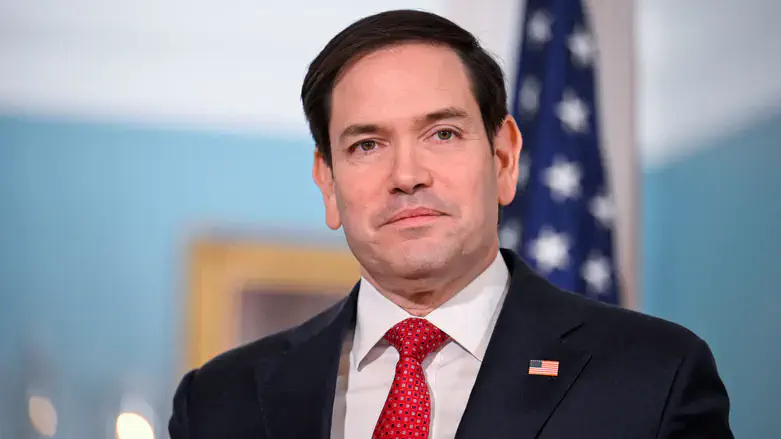
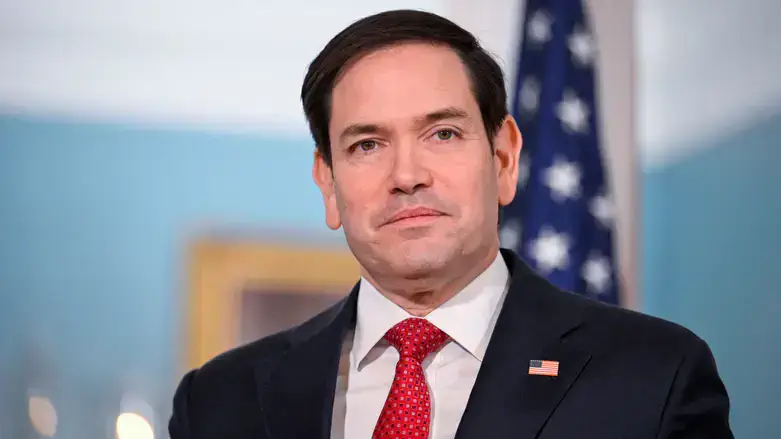
Marco Rubio

Marco RubioREUTERS/Craig Hudson

As the United States and Iran prepare for a new round of nuclear negotiations this Saturday in Oman, American officials have renewed their call for Tehran to completely abandon its uranium enrichment activities, Reuters reported on Wednesday.

US Secretary of State Marco Rubio stated that any potential agreement would require Iran to end all domestic uranium enrichment and rely solely on imported material for its civilian nuclear needs.

“There’s a pathway to a civil, peaceful nuclear program if they want one,” Rubio said during an appearance on the Honestly with Bari Weiss podcast. “But if they insist on enriching, then they will be the only country in the world that doesn’t have a ‘weapons program,’ … but is enriching. And so I think that’s problematic.”

Tehran has consistently maintained that its nuclear program is intended solely for peaceful purposes. A senior Iranian official involved in the talks reiterated this position, stating, “Zero enrichment is unacceptable.”

Rubio’s comments come ahead of a third round of nuclear talks between the US and Iran, scheduled to take place this coming Saturday.

Steve Witkoff, the US envoy to the talks with Iran, said last week that Iran need not enrich uranium beyond 3.67%, the cap established under the 2015 nuclear deal, from which President Donald Trump withdrew during his first term as President.

After his comment sparked speculation over a potential softening in US demand, Witkoff clarified Washington’s stance, asserting unequivocally that Iran must “stop and eliminate its nuclear enrichment.”

“If Iran wants a civil nuclear program, they can have one just like many other countries in the world have one, and that is they import enriched material,” Rubio concluded.

Iran weighs how fast to push for a deal – analysis

Former foreign ministry official says the talks are a “litmus test” for diplomacy and “an opportunity for both sides to gauge each other’s positions beyond media narratives and rhetoric.”

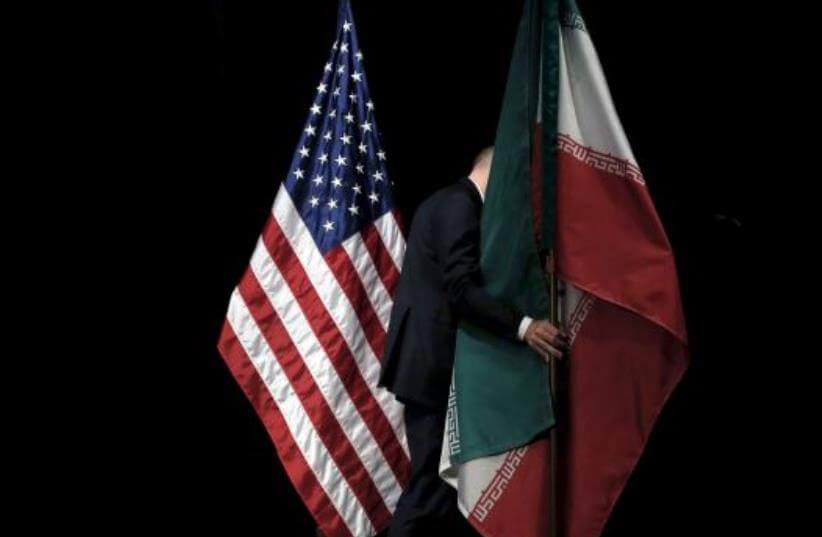
A staff member removes the Iranian flag from the stage during the Iran nuclear talks in Vienna, Austria July 14, 2015 (photo credit: REUTERS)
A staff member removes the Iranian flag from the stage during the Iran nuclear talks in Vienna, Austria July 14, 2015
(photo credit: REUTERS)
The first two weeks of Iran-US talks appeared to accelerate the drive for a deal. It wasn’t all a one-way street, though. Iran has lurched from optimism to trying to downplay expectations.

Over the last several days, it has also sought to wait-and-see as it hedges on a deal by moving forward with increased ties with Russia and China.

What’s important for Iran is that it should not be seen as “wanting” a deal too much. On the other side of the coin, it wants to strike while the iron is hot, as the Trump administration appears poised to push for diplomacy.

Iran is cognizant that there is a discussion in the US on this issue. It has likely followed closely the firing of several people at the Pentagon over accusations of leaks. It likely has watched the recent episode of Tucker Carlson, where he spent a lot of time unpacking the potential for conflict with Iran.

There is a sense of internal conflict in the halls of power about what is to be done with Iran. Central to these talks is also Israel’s view.

Iran's Foreign Minister Abbas Araqchi speaks with the members of the Iranian delegation after the negotiation in Muscat, Oman, April 12, 2025. (credit: Khabaronline/WANA (West Asia News Agency)/Handout via REUTERS)Enlrage image
Iran’s Foreign Minister Abbas Araqchi speaks with the members of the Iranian delegation after the negotiation in Muscat, Oman, April 12, 2025. (credit: Khabaronline/WANA (West Asia News Agency)/Handout via REUTERS)

US President Donald Trump spoke with Israeli Prime Minister Benjamin Netanyahu on April 22, and publicly, the Trump administration says it agrees with Israel on a plethora of issues. This apparently includes Iran. Iran’s regime would look on that with concern because it knows that Israel is pushing for a tougher stance.

What is Iran hinting at today? Iranian state media said on April 22 and April 23 that the talks, expected to focus on technical details of a deal, will take place on April 26.

Iran Foreign Ministry spokesperson Esmaeil Baqaei said this in a report that appeared on Iran state media IRNA. These talks are described as “expert-level indirect talks.”

IRNA noted that “Foreign Ministry spokesperson Esmaeil Baqaei says that the expert-level indirect talks between Iran and the United States, originally scheduled for Wednesday, have been postponed to April 26. Baqaei said that the meeting will be held concurrently with the next round of indirect talks between the heads of the two delegations.”

Meanwhile, Iran’s Oil Minister Mohsen Paknejad said Iran’s oil and gas industry “has always been attractive to international investors due to its high profitability,” IRNA reported.

Iran wants investment from the US and the West if there is a deal. In the absence of that, it wants investment from Russia, China, or other states. Paknejad “stressed that attracting investment for oil and gas projects remains a key focus for the ministry.”

 Statements from IRNA 

Meanwhile, IRNA’s CEO has given a second interview to his own network about the deal talks. He was a former foreign ministry official, and he is familiar with these issues. He says the talks are a “litmus test” for diplomacy and “an opportunity for both sides to gauge each other’s positions beyond media narratives and rhetoric.”

IRNA noted, “he said that there had been widespread speculation about the outcome of the talks before they had even begun, but added that if they had managed to create a slight opening for diplomacy, the process could be deemed a success.” Clearly, he appears optimistic, which may also be reflected in IRNA’s reporting.

As the talks progressed, the Iranian Foreign Minister Abbas Araqchi also spoke with the International Atomic Energy Agency (IAEA) head Rafaei Grossi.

Iran said its approach to the talks was based on “goodwill and seriousness.” This comes in the wake of Araqchi cancelling a talk at the Carnegie International Nuclear Policy Conference. He claimed it was due to a change of format. This shows that Iran continues to be a bit concerned about opening itself up too much to questions from the US or the West.


Report: Egypt and Qatar propose new ceasefire deal

According to a Palestinian Arab official, the mediators proposed a deal that would include, among other things, a 5-7-year ceasefire and the release of all hostages.

Release of hostages

Release of hostagesFLASH90, Abed Rahim Khatib

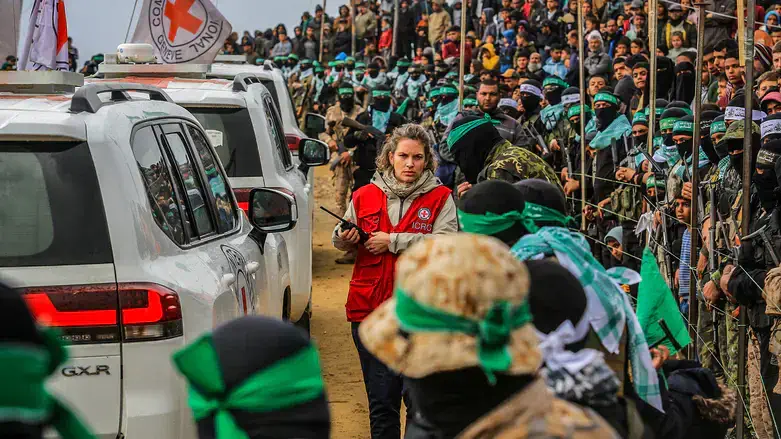
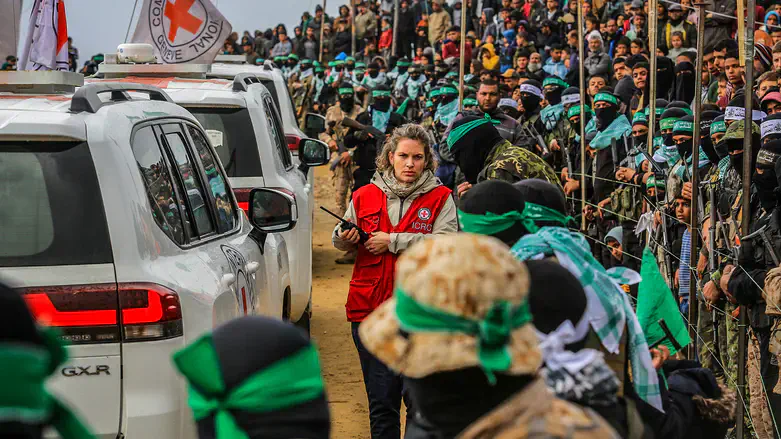
Qatar and Egypt have proposed a new deal to end the war in Gaza and free the hostages, the BBC reported on Tuesday, citing a senior Palestinian Arab official familiar with the negotiations.

According to the report, the mediators are proposing a five-to-seven-year halt to hostilities, the release of all Israeli hostages in exchange for Palestinian Arab prisoners held in Israeli jails, a formal end to the war, and a complete Israeli withdrawal from Gaza.

The Arab official told the BBC that Hamas has indicated that it is prepared to concede governance of Gaza to “any Palestinian entity agreed upon at the national and regional level”. He noted this could be the Judea and Samaria-based Palestinian Authority (PA) or a new administrative body.

The official called the current mediation effort “serious” and said the terror organization had shown “unprecedented flexibility”.

Khalil al-Hayya, who oversees the negotiations on behalf of the terror organization, claimed that “Netanyahu set impossible conditions for a deal that does not lead to the end of the war or full withdrawal. He and his government violated the agreement before its first phase ended.

“We are prepared to immediately hold true negotiations for the release of the captives that we hold in return for an agreed-upon number of prisoners being held by the occupation. The occupation in return must totally stop the war and totally withdraw from the Gaza Strip,” he demanded.

Prime Minister Benjamin Netanyahu discussed Hamas’s demands in an address to the nation on Saturday: “If we accept their conditions, it means they can defeat Israel,” he warned. “If we give in to Hamas’ dictates now, all of our enormous achievements that we have achieved thanks to our soldiers, our fallen, and our injured – all of those achievements will be lost.”

“If we commit to not fighting, we will not be able to return to fighting in Gaza,” Netanyahu stressed. “Because those agreements include the complete withdrawal of the IDF from Gaza. Were our soldiers killed and injured in vain? Hamas is seeking guarantees that we will not resume fighting – they are not stupid.”

“I am working to bring back our hostages without bowing to Hamas’ dictates.”