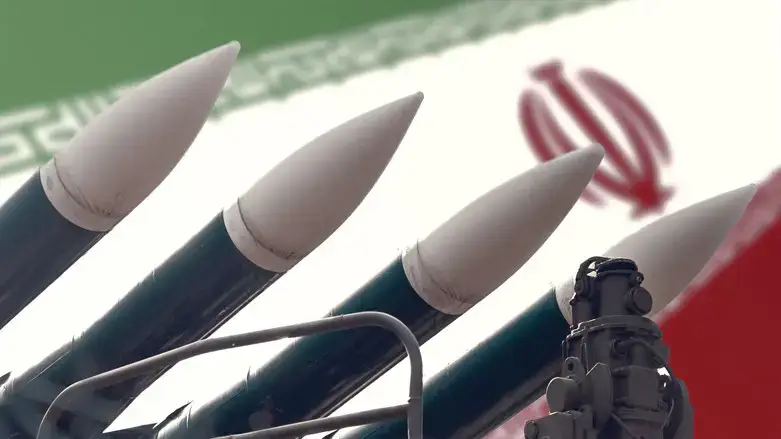
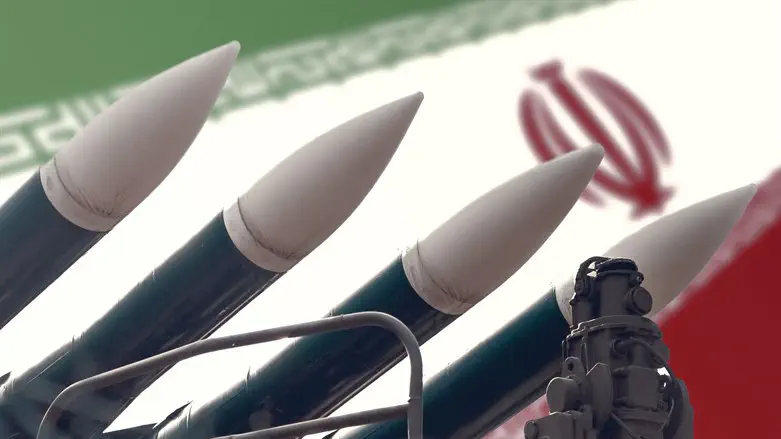
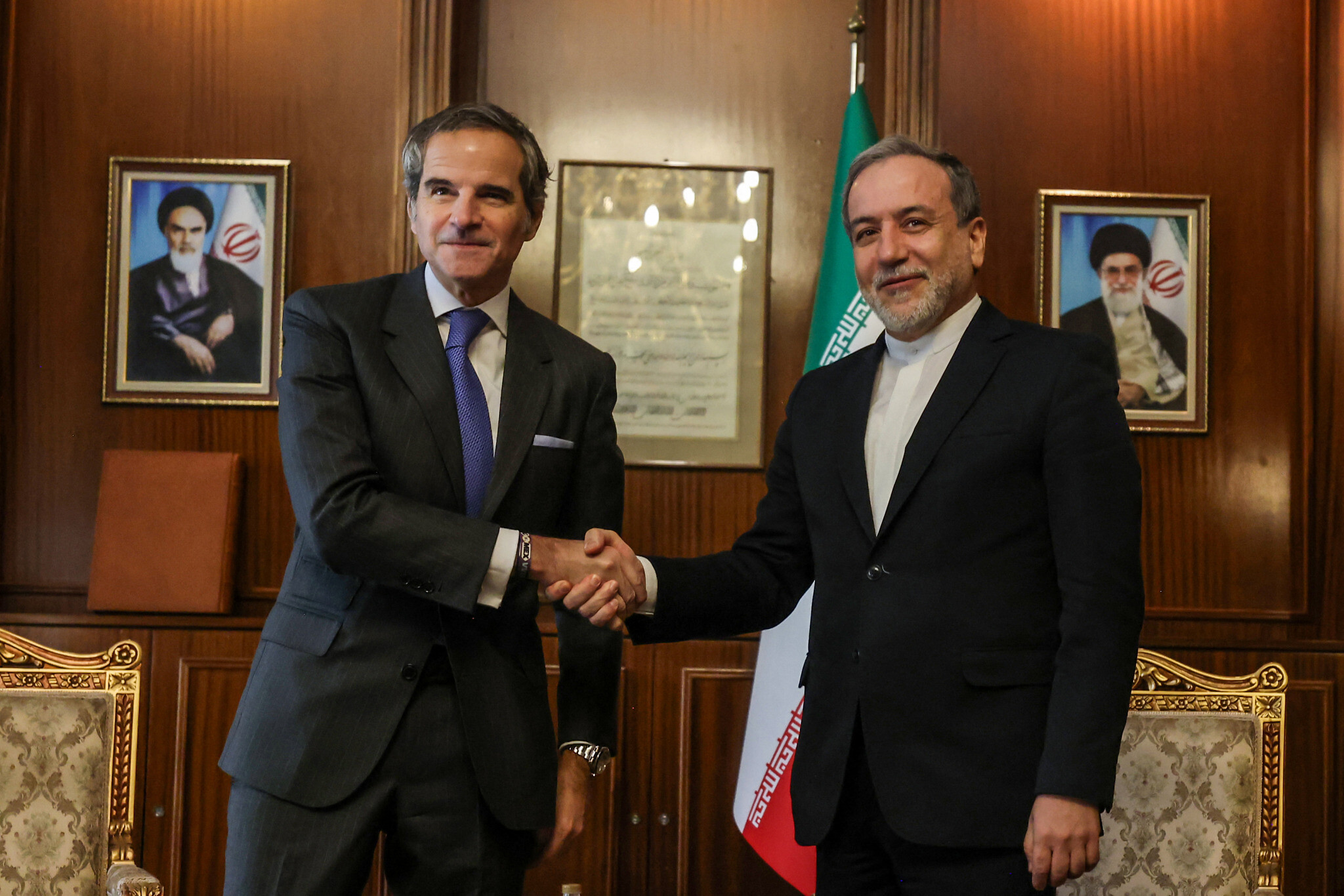
TEHRAN (AFP) — Iran would have to acquire a nuclear weapon if attacked by the United States or its allies, an adviser to the country’s supreme leader warned on Monday, following a threat by US President Donald Trump.
The comments came after Iran’s supreme leader, Ayatollah Ali Khamenei, promised to hit back if Trump carried out a threat to bomb the Islamic Republic if it did not make a deal to curb its nuclear program.
“We are not moving towards (nuclear) weapons, but if you do something wrong in the Iranian nuclear issue, you will force Iran to move towards that because it has to defend itself,” Khamenei’s adviser Ali Larijani told state TV.
“Iran does not want to do this, but … (it) will have no choice,” he added.
“If at some point you (the US) move towards bombing by yourself or through Israel, you will force Iran to make a different decision.”
Trump said on Saturday that “there will be bombing” if Iran did not agree to a nuclear deal, according to NBC News, which said he also threatened to punish Tehran with what he called “secondary tariffs.”
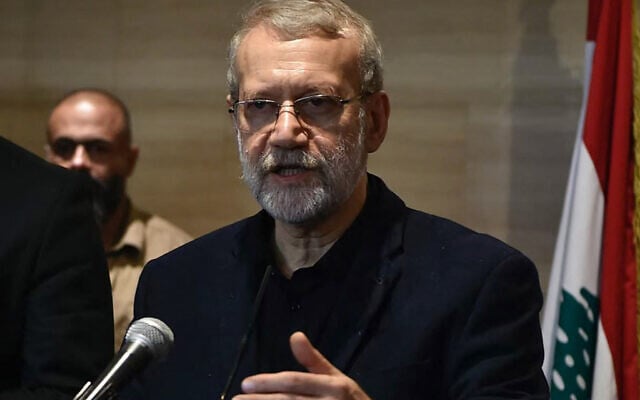
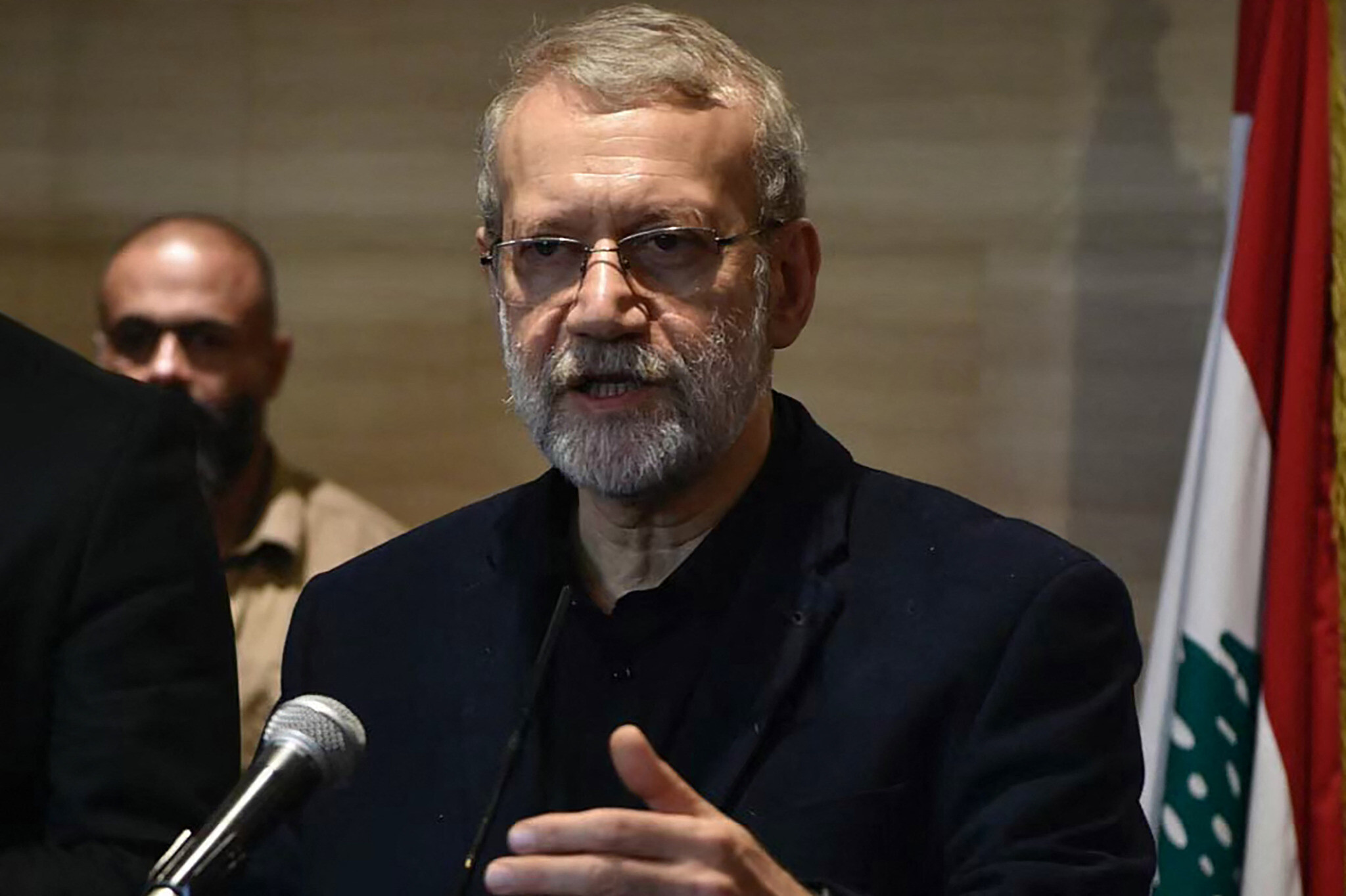
Ali Larijani, a senior adviser to Iran’s Supreme Leader Ali Khamenei, delivers a statement after meeting with Lebanon’s parliament speaker in Beirut on November 15, 2024. (AFP)
Despite the sharpening of Trump’s comments, it was not clear if he was threatening a US bombing or an operation coordinated with another country, possibly Iran’s nemesis Israel.
“They threaten to do mischief,” Khamenei said of the remarks during a speech for the holiday marking the end of the Muslim fasting month of Ramadan.
“If it is carried out, they will definitely receive a strong counterattack.”
The message was sent to the UN Security Council in a letter by Iran’s UN ambassador Amir Saeid Iravani which condemned what he called “warmongering provocations.”
Iran “will respond swiftly and decisively to any act of aggression or attack by the United States or its proxy, the Israeli regime,” the envoy added.
‘Glass room’
Iran’s foreign ministry summoned the charge d’affaires of the Swiss embassy, which represents US interests in Iran, “following the threats by the US president”, a ministry statement said.
“The Americans have at least 10 bases in the region around Iran, and they have 50,000 troops,” warned General Amir Ali Hajizadeh, a senior commander in Iran’s Islamic Revolutionary Guard Corps.
“Someone who is in a glass room shouldn’t throw stones at anyone,” the man in charge of Iran’s ballistic missile program threatened on state television Monday.
Since taking office in January, Trump has reinstated his “maximum pressure” policy, which in his first term saw the United States withdraw from a landmark agreement on Iran’s nuclear program and reimpose sanctions on Tehran.
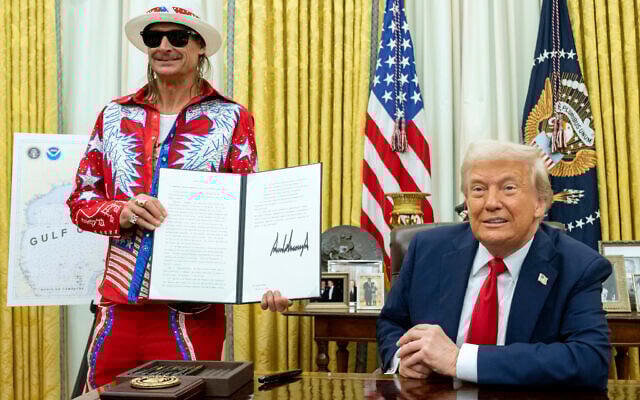
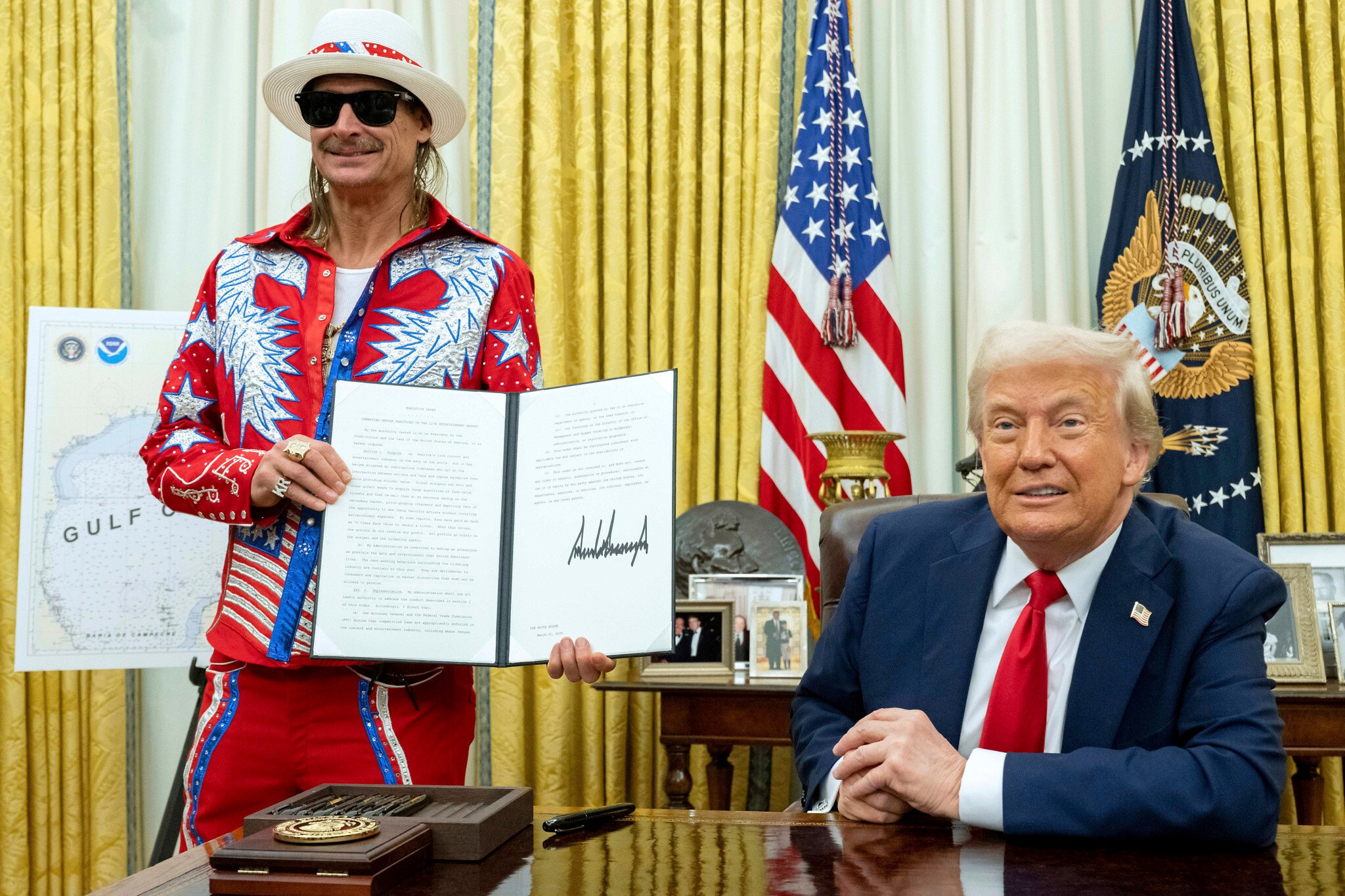
Kid Rock holds a signed executive order regarding ticket scalping after US President Donald Trump signed it in the Oval Office of the White House in Washington, Monday, March 31, 2025. (Pool via AP)
Western countries including the United States have long accused Iran of pursuing a nuclear weapon, which Tehran has denied, insisting its enrichment activities were solely for peaceful purposes.
The 2015 nuclear deal between Tehran and world powers required Iran to limit its nuclear processing in exchange for sanctions relief.
‘Indirect’ channel
On March 7, Trump said he had written to Khamenei to call for nuclear negotiations and warn of possible military action if Tehran refused.
The letter was delivered to Tehran on March 12 by a United Arab Emirates envoy, Iran’s Fars news agency reported at the time.
On Thursday, Iranian Foreign Minister Abbas Araghchi said a response had been sent through Oman, without detailing its content.
Araghchi said Iran would not engage in direct talks “under maximum pressure and the threat of military action.”
In his remarks, however, the minister left open the door for “indirect negotiations.”
According to NBC, Trump said US and Iranian officials were “talking,” but he did not give details.
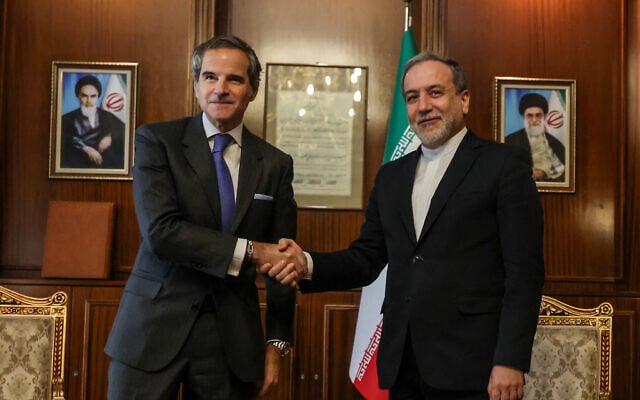
Iran’s Foreign Minister Abbas Araghchi (R) shakes hands with International Atomic Energy Agency (IAEA) Director General Rafael Mariano Grossi before a meeting in Tehran on November 14, 2024. (Photo by Atta KENARE / AFP)
President Masoud Pezeshkian on Sunday said Khamenei, who as supreme leader has the final say in major state policies, had permitted indirect talks.
Oman has served as an intermediary in the past, in the absence of US-Iranian diplomatic relations severed after the 1979 Islamic revolution.
On Monday, Araghchi said the United States had received Iran’s letter.
“We have been informed by our friends in Oman that the letter has reached its destination and has been read.”
Beyond its nuclear program, the West also accuses Iran of using proxy forces to expand its influence in the region, a charge Tehran rejects.
“There is only one proxy force in this region, and that is the corrupt usurper Zionist regime,” Khamenei said, calling for Israel to be “eradicated.”
AdvertisementMeanwhile, Iranian military officials have
reportedly been calling for a preemptive strike on a military base that houses US troops before it is used to target Iran.
“Top commanders are being urged to launch preemptive strikes on the island and its base if Trump’s threats have become more serious,” a senior Iranian official told The Telegraph.
The site in question is Diego Garcia military base, which is located on Britain’s Chagos Islands and is jointly used by British and American forces.
Times of Israel staff contributed to this report.