Donald Trump briefly mused about Israel’s decision, in 2005, to unilaterally evacuate its settlements and soldiers from Gaza.

Illustrative image of US President Donald Trump. (photo credit: Canva, Melina Mara/Pool via REUTERS, REUTERS/IBRAHEEM ABU MUSTAFA)
Illustrative image of US President Donald Trump.
(photo credit: Canva, Melina Mara/Pool via REUTERS, REUTERS/IBRAHEEM ABU MUSTAFA)
US President Donald Trump said Friday he would “recommend” — but was “not forcing” — his plan to depopulate the Gaza Strip and have the United States take it over, as Arab states have roundly rejected the idea and tensions mount over the Israel-Hamas ceasefire and hostage release deal.

Speaking to Fox News’ Brian Kilmeade, Trump also repeated his comparison of recently returned Israeli hostages to Holocaust survivors, and ridiculed former Israeli Prime Minister Ariel Sharon’s 2005 unilateral withdrawal from Gaza.

“I’ll tell you the way to do it is my plan. I think that’s the plan that really works,” Trump said. “But I’m not forcing it. I’m just going to sit back and recommend it. And then the U.S. would own the site, there’d be no Hamas. And they’d be developed and you’d start all over again with a clean slate.”

The notion that Trump’s proposal to relocate Gaza’s entire population is merely a recommendation marks a shift for him. He has repeatedly pressed Jordan and Egypt, neighboring states that have peace deals with Israel, to accept Palestinians from Gaza, citing the amount of aid the United States provides them. And he has likewise repeated his proposal for the United States to take control of the territory, a plan Israel’s government has endorsed.

Trump has predicted that Arab states would come around to the idea of depopulating Gaza, but they have not, aside from Jordan agreeing to take in 2,000 sick children. On Friday, a group of them met to compose an alternative plan that would leave Gaza’s population of approximately 2 million in place.

 A large billboard posted by the Ayalon highway in Tel Aviv, in support of US president Donald Trump, February 5, 2025 (credit: MIRIAM ALSTER/FLASH90)Enlrage image
A large billboard posted by the Ayalon highway in Tel Aviv, in support of US president Donald Trump, February 5, 2025 (credit: MIRIAM ALSTER/FLASH90)

But even as he signaled in the interview that he would not insist on his plan, Trump touted it.

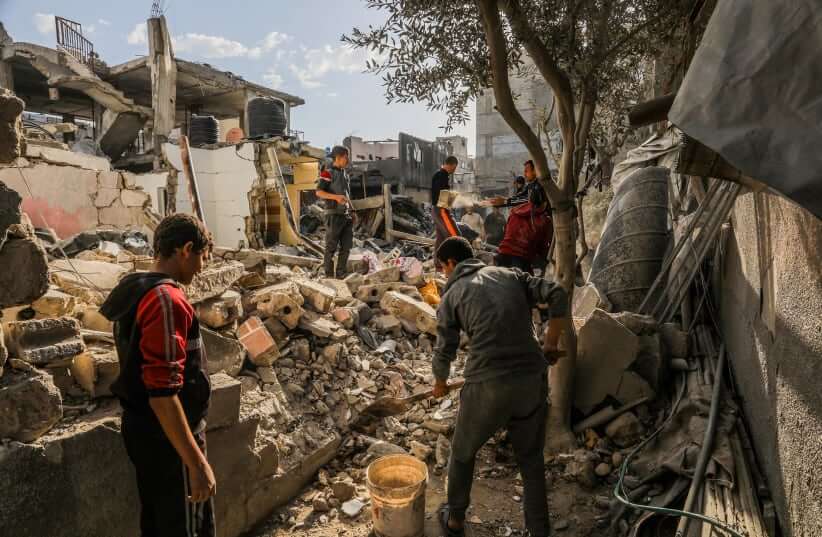
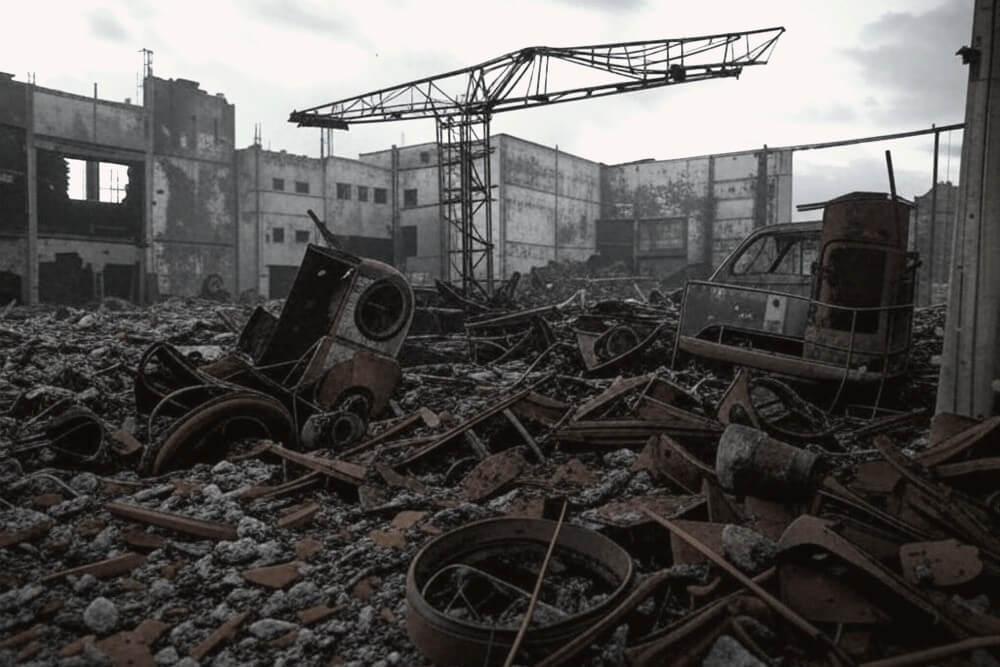
“It’s really essentially leveled now, you don’t have too much to do other than remove debris,” he said about the Gaza Strip. “That place is not livable. And if you gave people the choice between that and living in a nice community, I think I know where they’d go. But we’ll see what happens.”

Trump discusses Israel’s past decisions

Then the president briefly mused about Israel’s decision, in 2005, to unilaterally evacuate its settlements and soldiers from Gaza and hand the territory over to the West Bank-based Palestinian Authority.

“It’s a great location. I don’t know why Israel ever gave that up. Why’d they give it up?” Trump said. Without naming Sharon directly (though Kilmeade did) Trump went on, “Somebody from Israel, I can’t tell you who, but was well known, decided to give it up. It’s one of the bad real estate deals.”

Describing Hamas’ return of the bodies of Ariel and Kfir Bibas, whose coffins they paraded on a stage as part of a gruesome ceremony, as “barbaric,” Trump said he understood why current Prime Minister Benjamin Netanyahu would be “angry.”

When asked whether he would prefer Netanyahu prioritizing rescuing the remaining Hostages or trying to finish off Hamas, the president said he would accept either.


“They want to continue ruling Gaza. They will do everything to make that happen,” Igra said.

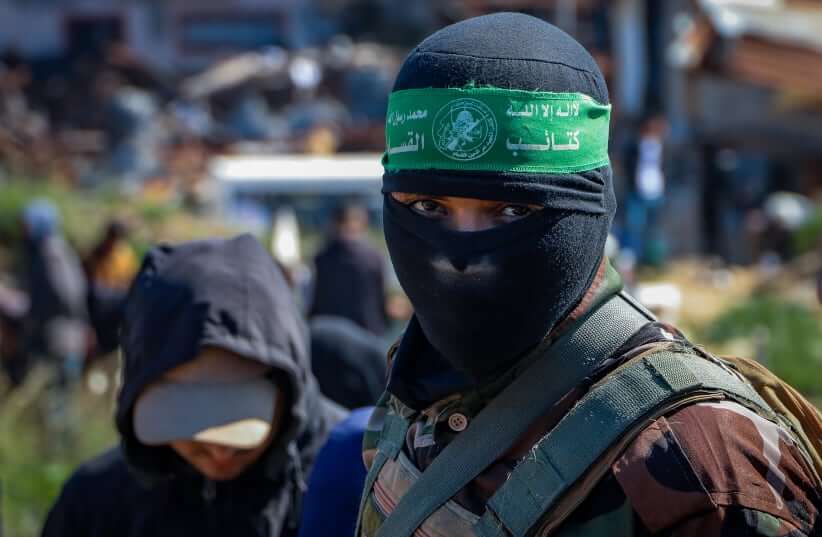
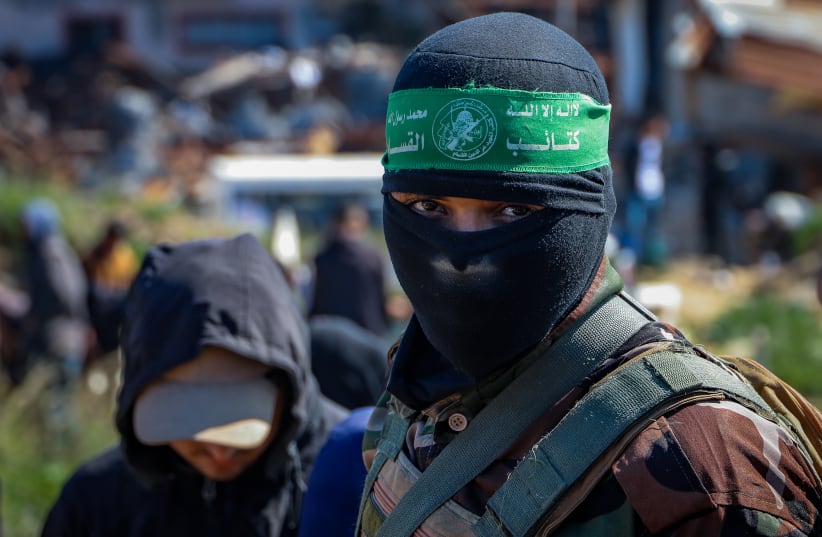
Palestinian Hamas militants keep guard on the day Hamas hands over deceased hostages
(photo credit: REUTERS/Ramadan Abed)
Rami Igra, former head of the Mossad’s Prisoners and Missing Persons Division, warned that Hamas seeks to establish a Hezbollah-style rule in Gaza, using the Palestinian Authority as a front while maintaining control behind the scenes in an interview with 103FM on Wednesday.

Igra discussed the ongoing negotiations for the second phase of the hostage deal and the accompanying American pressures. He emphasized that Hamas’s primary goal is to remain in power in Gaza, stating, “They want to continue ruling Gaza. They will do everything to make that happen.”

Alternative governance structure

He suggested that Hamas aims to establish a governance model similar to Hezbollah’s influence in Lebanon, where the Palestinian Authority would serve as the official front while Hamas operates behind the scenes.

Regarding Israel’s strategy, Igra criticized the current approach, asserting that military action alone is insufficient to topple Hamas. He advocated for providing the residents of Gaza with an alternative governance structure, potentially through establishing a military administration that would introduce a different entity to lead.

Reflecting on past decisions, Igra remarked, “The State of Israel should have conquered Gaza.”

 An illustrative image of a Hezbollah flag in the backdrop of an individual holding a weapon.  (credit: SHUTTERSTOCK)Enlrage image
An illustrative image of a Hezbollah flag in the backdrop of an individual holding a weapon. (credit: SHUTTERSTOCK)

Igra also addressed the influence of American policy, expressing skepticism about the US administration’s priorities.

He noted that American pressure has significantly shaped the terms of the current deal, with Hamas and US influence determining the conditions rather than Israel.


Hajizadeh justified ballistic missile attacks against Israel, saying it was due to Israel’s “misconception that Iran would not take direct action.”

Amir Ali Hajizadeh, commander of the  Islamic Revolutionary Guard Corps elite Aerospace force (photo credit: TASNIM NEWS AGENCY/WIKIMEDIA COMMONS)
Amir Ali Hajizadeh, commander of the Islamic Revolutionary Guard Corps elite Aerospace force
(photo credit: TASNIM NEWS AGENCY/WIKIMEDIA COMMONS)
The Islamic Republic’s Aerospace Force is ready for any conflict that could occur, IRGC Brigadier-General Amir Ali Hajizadeh said on Tuesday, according to Iranian state media Mehr News.

Hajizadeh is also commander of the IRGC’s Aerospace Force.

“The world’s largest ballistic missile operation was carried out by the Islamic Republic of Iran, and this demonstrates our power to defend our people,” he noted.

Hajizadeh justified Iran’s ballistic missile attacks on Israel in April and October of last year, claiming the Islamic Republic’s actions were due to Israel’s “misconception that Iran would not take direct action because it was avoiding war.”

“We expected these clashes to be ping-pong matches, back and forth. We hadn’t prepared ourselves for a conflict, but it was natural that if the enemy took action, we would also react,” he said, likely referring to Israel, as he initially claimed in the Mehr report that “Operation Al-Aqsa Flood,” which was Hamas’s mass terrorist attacks on October 7, 2023, was “a failure by Israel that cannot be repaired, and everyone sees that this failure is irreparable.”

 The remains of a ballistic missile fired from Iran which landed in Israel, October 1, 2024 (credit: VIA MAARIV ONLINE)Enlrage image
The remains of a ballistic missile fired from Iran which landed in Israel, October 1, 2024 (credit: VIA MAARIV ONLINE)

“They [Israel] had created an unrealistic image of their power,” the report additionally quoted the Iranian general as saying. “But we see that they failed both in preventing the Al-Aqsa Flood operation and in negotiating a ceasefire.”

Hajizadeh also said the war brought “global awareness, which was a great achievement for Palestine and a great defeat imposed on the Zionist regime that can never be compensated.”

Iran’s attacks in October saw 1,800 rocket sirens sounding throughout Israel, with 180 ballistic missiles launched into the country. Only one casualty, a Palestinian worker from Gaza, was killed in the attack in the West Bank city of Jericho. The first ballistic missile attack in April seriously wounded a seven-year-old Bedouin girl from a village near Arad.

Referring to Israel’s air defense, Hajizadeh claimed, according to Mehr, “When we fired the missiles, they started firing anti-ballistic missiles in a panic, and some of these missiles hit each other by mistake, indicating the collapse of their defense system,” later adding that 75% of their missiles hit their target.

Claims that IRGC defense and missile production have advanced

The production line of the IRGC Aerospace Force has also continued, Hajizadeh added, “despite enemies’ efforts to stop it,” he claims in the report, and said that the Islamic Republic had made significant advancements in defense and drone capabilities, such as developing 2,000 km-range missiles and also an anti-ballistic missile defense system, a project which the Brigadier-General says began in 2022, and that it’ll be ready by next year, the report said.

Earlier this week, Mehr News also quoted IRGC deputy commander Brig.-Gen. Ali Fadavi, who said that Iran’s next attack would be carried out at an appropriate time, calling it Operation “True Promise 3” – referring to it as a continuation of Iran’s attacks from April and October.

Hajizadeh also echoed Fadavi’s statements in the more recent report. “The Americans and the Zionists are looking for concessions, and their threats are mostly psychological,” he said.