Iran reaffirms commitment to cooperation with nuclear watchdog

Iranian Deputy Foreign Minister says Tehran remains “committed” to cooperating with the International Atomic Energy Agency.
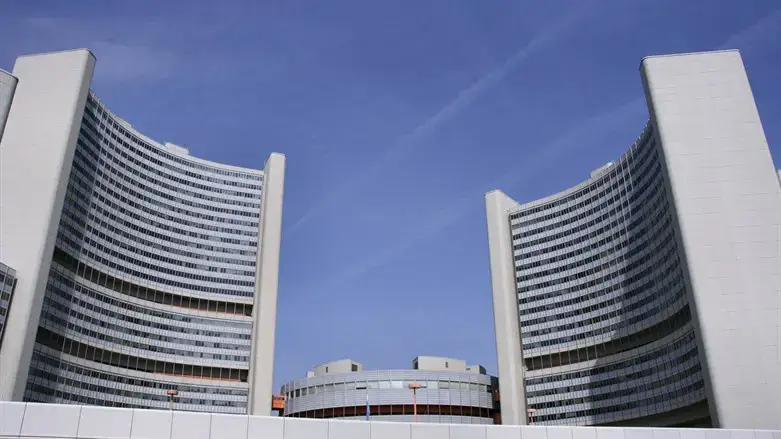
IAEA headquarters

IAEA headquartersiStock

Iranian Deputy Foreign Minister Kazem Gharibabadi reaffirmed on Monday that Tehran remains “committed” to cooperating with the United Nations’ nuclear agency following discussions with Rafael Grossi, chief of the International Atomic Energy Agency (IAEA), reported AFP.

Gharibabadi described the talks in Vienna as “frank and constructive,” emphasizing that Iran remains dedicated to working with the IAEA while prioritizing its national security interests.

“While safeguarding its national security and interests, Iran remains committed to cooperating with the IAEA within the framework of its safeguards’ obligation,” he stated.

He further expressed hopes that collaboration with the IAEA would help address “the few remaining differences — provided that external political pressures on the Agency are eliminated.”

Grossi, separately, underscored the necessity of cooperation, stating that it is “indispensable to provide credible guarantees of the peaceful nature of Iran’s nuclear program.”

The meeting in Vienna followed Gharibabadi’s recent discussions in Beijing, where he met with Russian and Chinese counterparts to discuss Iran’s nuclear program.

After his talks with Grossi, he also met with Russian and Chinese representatives in Vienna to explore “closer and greater coordination and cooperation on issues of interest,” particularly regarding the IAEA and related developments.

Iran has expanded its nuclear activities since 2019, following the decision by US President Donald Trump, in his first term in office, to withdraw from the 2015 nuclear deal signed between Iran and world powers.

In its latest step to advance its nuclear program, Iran recently informed the IAEA of its intention to “significantly increase” its production of uranium enriched up to 60 percent.

An IAEA report in late February found that Iran has significantly escalated its production of near-weapons-grade uranium, with its stockpile of uranium enriched up to 60% reaching 274.8 kilograms, marking an increase of 92.5 kilograms since November.

Trump, whose second term in office started in January, reimposed sanctions on Tehran as part of his administration’s “maximum pressure” strategy on the Islamic Republic.

Even with the sanctions, Trump has also said he would rather reach a deal with Iran than have Israel attack Iran’s nuclear facilities.

Despite the President’s recent comments on his desire to pursue a deal with Iran, Iranian Supreme Leader Ayatollah Ali Khamenei has cautioned the Iranian government against engaging in talks with Washington, describing such a move as “reckless.”

Iranian officials have ruled out the possibility of direct negotiations with the United States regarding Iran’s nuclear program so long as the “maximum pressure” policy remains in place.
Military says it hit Hezbollah surveillance operatives, terror group’s sites in Lebanon; weapons in Syria; Palestinian suspects trying to plant bomb near troops in Strip


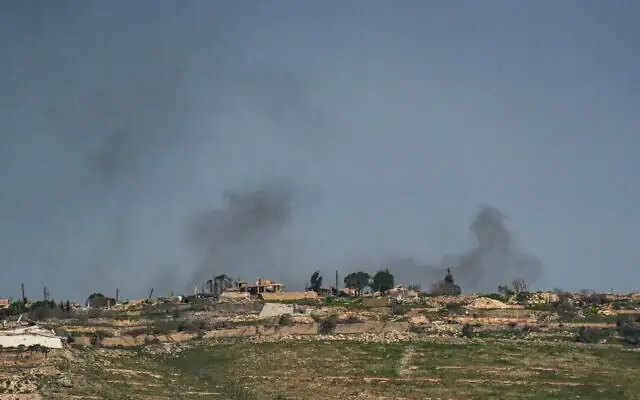
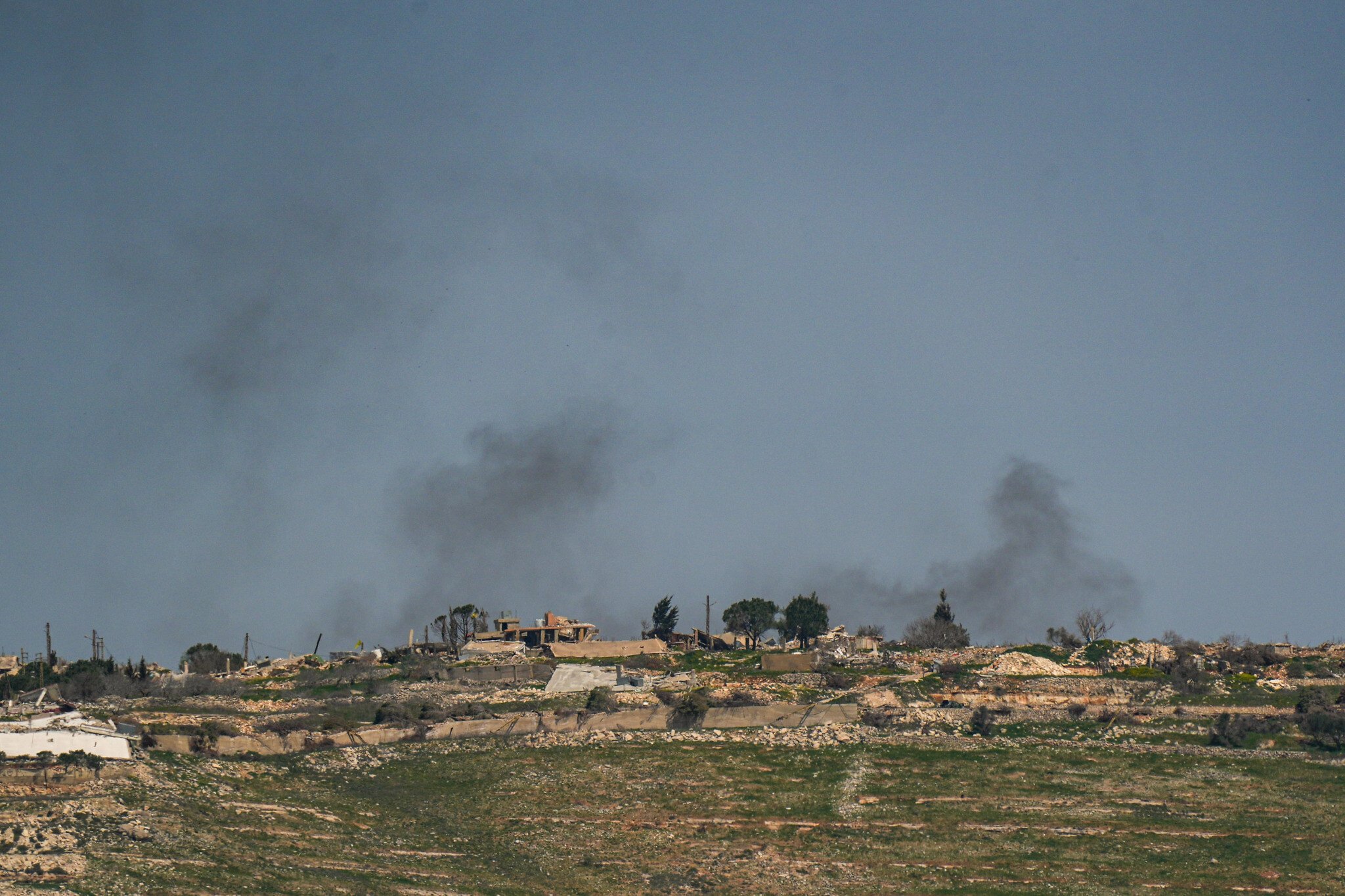
Smoke rises from a village in southern Lebanon, as seen from the Israeli side of the border, on March 17, 2025. (Ayal Margolin/ Flash90)

Smoke rises from a village in southern Lebanon, as seen from the Israeli side of the border, on March 17, 2025. (Ayal Margolin/ Flash90)

The Israeli military conducted airstrikes in Syria, Lebanon, and the Gaza Strip on Monday, which it said targeted several terror operatives and military sites that “posed a threat to the State of Israel.”

According to local media and medics, the strikes killed at least nine people and wounded several others.

In Lebanon, a strike in the afternoon targeted two Hezbollah operatives, whom the Israel Defense Forces said were carrying out surveillance operations on Israel and were directing “terror activity” in the area of the southern town of Yohmor.

The state-run National News Agency said that the drone strike in Yohmor had targeted a motorcycle with two riders, but a passing van was also hit by shrapnel, and “fires erupted in it” and a nearby shop.

Lebanon’s health ministry said both men were killed in the strike, and at least two passersby were wounded.

Later in the day, the IDF carried out a wave of airstrikes in Lebanon’s northeastern Beqaa Valley region — a Hezbollah stronghold — as well as in the country’s south. There were no immediate reports of casualties in the evening strikes in Lebanon.

The IDF said it targeted sites where it had identified Hezbollah operatives and weapons, adding that “the terror activity at these sites poses a threat to the State of Israel and is a blatant violation of the understandings between Israel and Lebanon.”

Later on Monday, the IDF said it was carrying out airstrikes on military targets in southern Syria, targeting including headquarters and other facilities used to store weapons and equipment belonging to the former Syrian regime. The military said it identified attempts by unspecified groups to use those weapons.

“The presence of these [weapons] in southern Syria is a threat to the State of Israel. The IDF will not allow the existence of a military threat in southern Syria and will act against it,” the IDF said.

Syrian state news agency SANA reported that “two civilians died and 19 others were injured in Israeli airstrikes on the outskirts of Daraa city.”

Also on Monday, the IDF carried out several strikes in the southern and central Gaza Strip.

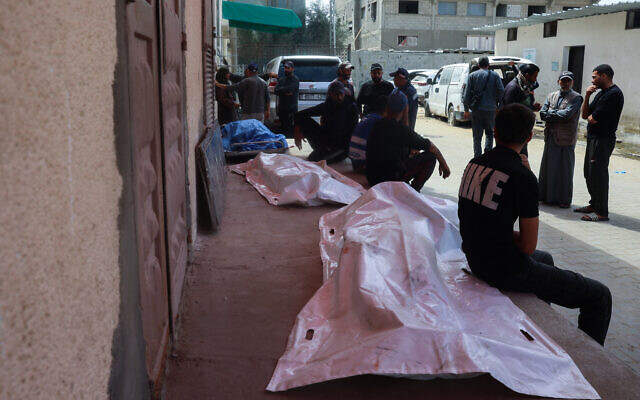
Relatives gather near the bodies of three Palestinian men who were killed in an Israeli drone strike east of the Bureij camp, at the al-Aqsa Martyrs hospital in Deir el-Balah in the central Gaza Strip on March 17, 2025. (Eyad BABA / AFP)

Two separate drone strikes were conducted in the Bureij area of central Gaza, with the IDF saying it had targeted two groups of terror operatives trying to plant bombs in the ground, near troops.

According to Palestinian media reports, five were killed in the strikes.

Separately, the IDF said it carried out another strike against a group of terror operatives who were trying to plant a bomb in the ground near troops in southern Gaza’s Rafah, which local media said left several wounded.

The strikes in Lebanon and Gaza came during ceasefires on both war fronts, but Israel has said it will continue to act against terror operatives who are in breach of the truces and who pose threats to its forces.

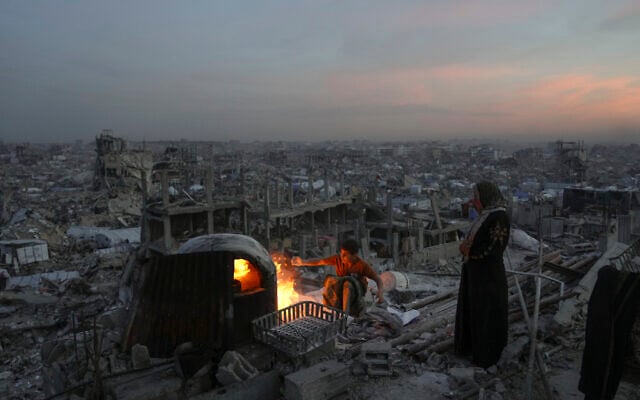
Palestinians Ali Marouf and his mother Aisha cook on fire on the roof of their destroyed house in Jabaliya, Gaza Strip, March 17, 2025. (AP Photo/Jehad Alshrafi)

A November 27, 2024, truce in Lebanon largely halted more than a year of hostilities between Hezbollah and Israel. The fighting came after the terror group attacked Israel on October 8, 2023, in support of ally Hamas, which invaded from Gaza a day earlier. The persistent rocket fire from Lebanon displaced some 60,000 Israeli civilians.

Last month, Israel withdrew all its forces from southern Lebanon, except from five strategic points, saying it had received a green light from the US to remain at those posts and citing the need to prevent Hezbollah from returning to the area and threatening Israel.

In Gaza, Israel and Hamas agreed to a ceasefire and hostage release deal that began on January 19, which has seen 33 Israelis returned. Talks are underway to potentially extend the first phase or move to the second stage of the agreement, although Israel has said there could be a return to fighting.

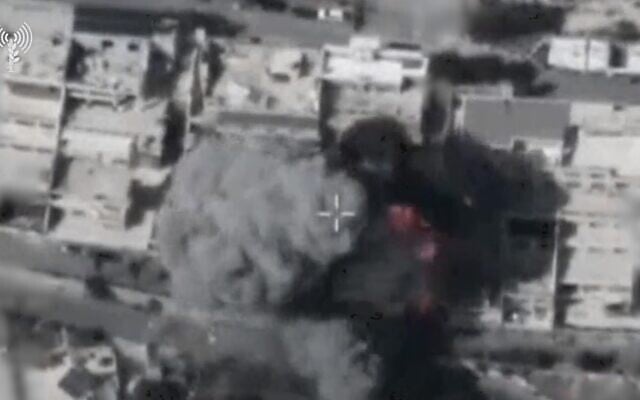
An Israeli airstrike, captured in footage published by the military, targets a building in Damascus, Syria, alleged to be a Palestinian Islamic Jihad nerve center. (Screenshot: Israel Defense Forces)

In Syria, the IDF has said it will continue to act against all threats as the country’s new regime grapples with consolidating power in the wake of the collapse of the decades-long rule of the Assad family.

In the months since his coalition ousted longtime Assad, interim President Ahmed al-Sharaa and his government have made strides in reforming the government, including passing a temporary constitution earlier this month.

While the collapse of the Assad regime brought an end to the country’s more than decade-long civil war, a renewed wave of sectarian violence sparked fears that the new government would not be able to effectively keep the peace in Syria.

Israeli leaders have consistently stated that they do not trust Sharaa, whom Katz has called an “extreme Islamic leader.”

Sharaa has dismissed Israel’s threats and Katz’s comments as “nonsense.”