IAEA chief warns time is running out to curb Iran’s nuclear program

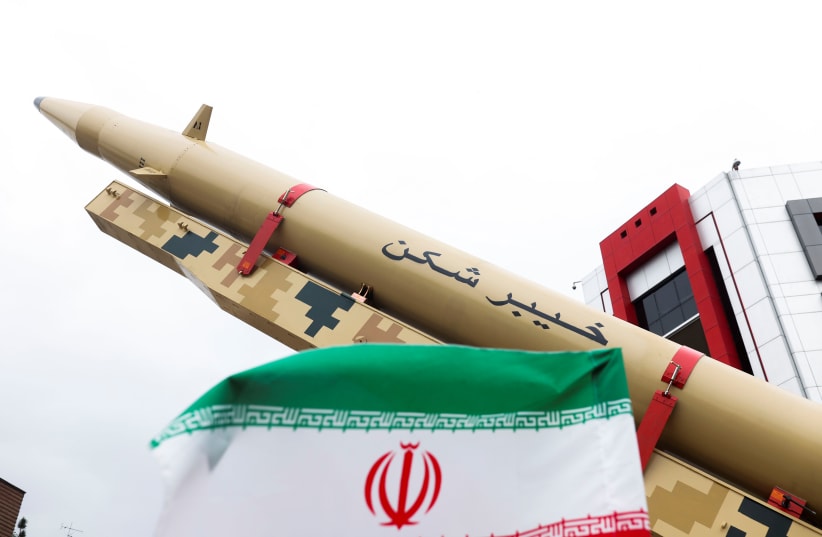
UN nuclear watchdog chief Rafael Grossi warns that time is running out to reach an agreement to curb Iran’s nuclear program as the country continues accelerating its uranium enrichment to near weapons-grade levels.

Rafael Grossi

Rafael GrossiLev Radin/Sipa USA via Reuters Connect

Time is running out to reach an agreement to curb Iran’s nuclear program as the country continues accelerating its uranium enrichment to near weapons-grade levels, UN nuclear watchdog chief Rafael Grossi warned on Friday, according to Reuters.

Iran has expanded its nuclear activities since 2019, following the decision by then-US President Donald Trump, in his first term in office, to withdraw from the 2015 nuclear deal signed between Iran and world powers.

In its latest step to advance its nuclear program, Iran recently informed the IAEA of its intention to “significantly increase” its production of uranium enriched up to 60 percent.

“I think we are running out of time, but it doesn’t mean that we can’t do it fast,” said Grossi, the head of the International Atomic Energy Agency (IAEA), in an interview on the sidelines of the Munich Security Conference. “The IAEA is there and has all the information and elements, but when it comes to the policy it’s up to the countries.”

Grossi stated that Iran is in the process of increasing its monthly production of uranium enriched up to 60% by about sevenfold. He estimated that by the time the agency releases its next report in the coming weeks, Iran would have stockpiled roughly 250 kg of such material—an amount that, if further enriched, could be sufficient for six nuclear bombs, according to IAEA assessments.

“It’s clearly a sign that should be taken very seriously. So this is why I believe that we shouldn’t be wasting more time. I hope that we can refocus on Iran,” he said, as quoted by Reuters.

Trump, whose second term as President began last month, Trump has reaffirmed his “maximum pressure” approach against Iran, and this past week imposed financial sanctions on individuals and entities accused of facilitating the shipment of hundreds of millions of dollars’ worth of Iranian crude oil to China.

At the same time, Trump has also said in recent days that he would rather reach a deal with Iran on its nuclear program than have Israel attack Iran’s nuclear facilities.

Iran’s Supreme Leader, Ayatollah Ali Khamenei, last week cautioned the government against engaging in talks with Washington, describing such a move as “reckless.”

Iran’s Foreign Minister Abbas Araqchi made clear that Iran is open to negotiations with the United States but not under Trump’s “maximum pressure” strategy.

“The lifting of sanctions requires negotiations, but not within the framework of a ‘maximum pressure’ policy, because it would not be a negotiation but a form of surrender,” Araqchi stated in a message published on Telegram.

(Israel National News’ North American desk is keeping you updated until the start of Shabbat in New York. The time posted automatically on all Israel National News articles, however, is Israeli time.)


Lebanon rejects Israeli presence in south as ceasefire deadline nears

Lebanon’s parliamentary speaker says his country has rejected Israel’s request to maintain a presence in five southern locations beyond the February 18 deadline for fully implementing the ceasefire.

Nabih Berri

Nabih BerriAmr Abdallah Dalsh/Reuters

Lebanon has rejected Israel’s request to maintain a presence in five southern locations beyond the February 18 deadline for fully implementing a ceasefire agreement, parliamentary speaker Nabih Berri said on Thursday, according to the AFP news agency.

Under the ceasefire agreement between Israel and Lebanon, the IDF was supposed to transfer control of the territories it had captured to Lebanon on January 26. However, due to the fact that Lebanon did not bring enough forces, thus breaching the agreement, the White House announced that the ceasefire would be extended until February 18.

Berri, an ally of Hezbollah, told reporters that the United States had informed him that while Israel would withdraw from the villages it still occupied by February 18, it planned to remain in five locations.

“I informed them in my name and on behalf of President General Joseph Aoun and Prime Minister Judge Nawaf Salam of our absolute rejection of this proposal,” Berri stated, according to a release from his office, as quoted by AFP.

Earlier, Berri held talks with US ambassador to Lebanon Lisa Johnson and US Major General Jasper Jeffers, who co-chairs a committee consisting of representatives from the United States, France, Lebanon, Israel, and UN peacekeepers, responsible for monitoring and addressing any ceasefire violations.

“I refused to discuss any extension to the deadline for (Israel’s) withdrawal,” Berri asserted, adding, “It is the responsibility of the Americans to enforce the withdrawal, otherwise they will have caused the greatest setback for the government.”

On Wednesday, senior members of the security cabinet reported that Israel has received approval from the United States to continue the IDF presence at several points in southern Lebanon beyond the expected ceasefire date of February 18.


Kan 11 News reported, citing senior officials, that the Israeli and American teams discussed the matter before and during the meeting last week between Prime Minister Benjamin Netanyahu and US President Donald Trump. Preliminary understandings were reached, and further work is expected to close the details.

The senior officials noted that the IDF presence in parts of southern Lebanon was necessary to ensure the security of the residents of the north, and that the United States understood this.


By Vered Weiss, World Israel News

The Lebanese government is preventing a plane scheduled to fly to Beirut from leaving Tehran’s airport due to suspicions that it is being used to transfer funds to Hezbollah, according to reports from Arab media.

By stopping the plane from flying to Beirut, the Lebanese government is fulfilling a provision in the ceasefire agreement with Israel, which requires it to prevent Iran from transferring funds to the Lebanese terror group.

Passengers at Tehran’s airport protested the fact that the plane was prevented from traveling on its scheduled route.

Hezbollah supporters gathered outside the airport, waving flags associated with the terror group, protesting the decision by blocking the road and burning tires.

IDF Arabic Language Spokesman Avichay Adraee revealed that Hezbollah and the Iranian Quds Force have been using international flights to receive funds from Iran.

“The IDF stays in communication with the ceasefire monitoring mechanism and regularly shares detailed information to disrupt these transfers. Despite these efforts, we believe that some of these money-smuggling attempts have been successful,” Adraee stated.

  Jerusalem man arrested for colluding with Hezbollah

He declared, “The IDF will prevent Hezbollah from arming itself and will use all available means to enforce the ceasefire agreements, ensuring the security of Israel’s citizens.”

Iran is attempting to rebuild its weakened proxy group, Hezbollah, by flying millions of dollars to the terror organization through Beirut International Airport, a practice that the IDF has warned must stop immediately.

The discovery of Iran transferring funds to terror groups through commercial flights comes just days before the deadline for Israel to withdraw its troops from southern Lebanon.

A Trump administration official recently confirmed that Washington expects the IDF to leave the region by February 18. However, reports suggest that Israel is lobbying to extend that deadline.

Displaced residents of northern Israel’s border region, who were evacuated from their homes shortly after the October 7, 2023, terror onslaught, have still been unable to return to their communities.

The Israeli government set March 1st as the date by which displaced northerners are expected to return home, but that timeframe now appears unlikely.