Netanyahu said, quoting Hezbollah leader Naim Qassem, “Hezbollah has lost its supply route through Syria.”

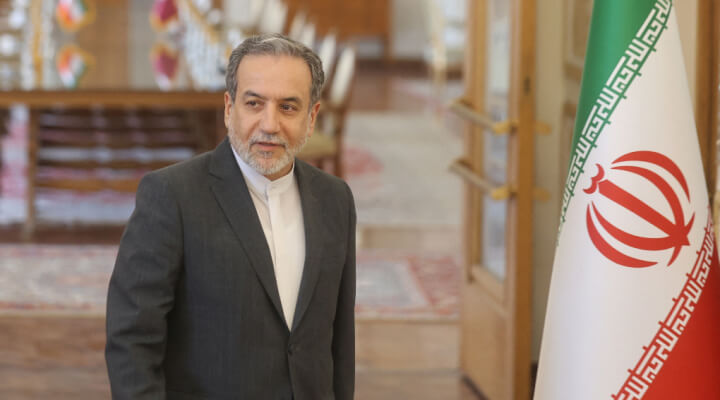
 (Illustrative) Prime Minister Benjamin Netanyahu over a backdrop of Iran and Hezbollah flags. (photo credit: Canva, PMO, SHUTTERSTOCK)
(Illustrative) Prime Minister Benjamin Netanyahu over a backdrop of Iran and Hezbollah flags.
(photo credit: Canva, PMO, SHUTTERSTOCK)
Prime Minister Benjamin Netanyahu on Sunday warned Iran and Hezbollah that Israel will continue to act against them to achieve total victory and that he discussed this matter with US President-elect Donald Trump.


“I say to Iran and Hezbollah, to prevent you from harming us, we will continue to act against you as much as is required, anytime, anywhere,” Netanyahu said in a speech posted to X/Twitter.

Addressing Israel’s actions regarding recent developments in Syria, Netanyahu stressed, “Israel has no interest in confronting Syria. We will shape our policy based on the reality on the ground. For decades, Syria was an active enemy of the State of Israel.

IDF operates in the buffer zone between Israel and Syria on December 13, 2024. (credit: IDF SPOKESPERSON'S UNIT)Enlrage image
IDF operates in the buffer zone between Israel and Syria on December 13, 2024. (credit: IDF SPOKESPERSON’S UNIT)

Preventing Hezbollah from rearming 

“In recent days, we have taken a series of intensive actions. Together with Defense Minister Katz, I directed the IDF to thwart potential threats from Syria and prevent terrorist elements from gaining a foothold near our border.”

Netanyahu stated that Israel’s actions in Syria have been justified through the effects they’ve had on Hezbollah’s capabilities.

Netanyahu said, quoting Hezbollah leader Naim Qassem from a televised speech on Saturday, “Hezbollah has lost its supply route through Syria.”

While reiterating Israel’s preference to avoid conflict, Netanyahu affirmed the nation’s determination to curb Hezbollah’s rearmament. “This is an ongoing test for Israel. We must meet it – and we will meet it,” he said.

Netanyahu described his conversation with Trump as “very friendly, very warm, and very important.”

“We discussed the need to complete Israel’s victory and spoke extensively about the efforts we are making to bring our hostages home. We are working tirelessly to bring back our hostages, both the living and the fallen,” Netanyahu said. “I’ll add that the less we talk about this, the better our chances of success, and with God’s help, we will succeed,” his speech concluded.


“We are closer than ever to reaching a prisoner exchange deal and a ceasefire, provided that Netanyahu does not obstruct the agreement,” the official said.

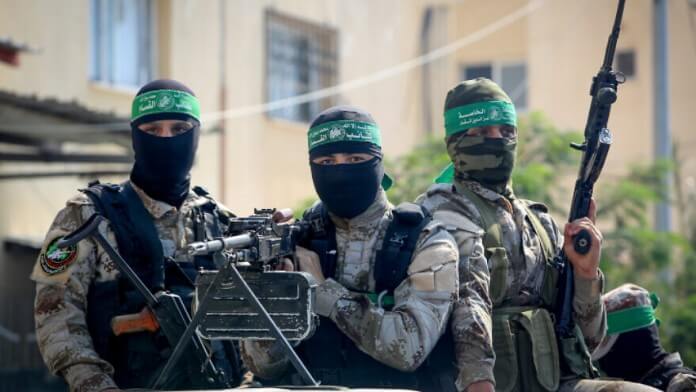
 Palestinian fighters from the armed wing of Hamas. (Illustrative) (photo credit: IDF SPOKESPERSON'S UNIT, REUTERS/IBRAHEEM ABU MUSTAFA)
Palestinian fighters from the armed wing of Hamas. (Illustrative)
(photo credit: IDF SPOKESPERSON’S UNIT, REUTERS/IBRAHEEM ABU MUSTAFA)
A Gaza hostage-ceasefire is closer than it has ever been before, a senior Hamas official told the Saudi news outlet Asharq on Monday.

“We are closer than ever to reaching a prisoner exchange deal and a ceasefire, provided that Netanyahu does not obstruct the agreement,” the official reportedly said, speaking on the condition of anonymity.

Hamas and other terror groups in Gaza have proposed a “progressive and highly flexible position,” agreeing to a gradual end to the war and a phased IDF withdrawal based on a mutually agreed timeline, with guarantees from international mediators to “end the aggression and protect the Palestinian people,” the official told Asharq.

The Hamas official also said that it would not back down from its demands for an end to the war, a complete Israeli withdrawal from Gaza, the return of displaced persons, and the conclusion of a “dignified prisoner exchange deal.”

Mediators advised against publicly discussing details of the deal to “to ensure its success and to avoid giving Netanyahu an excuse to evade it,” the official told Asharq.

 View of the Philadelphi Corridor between the southern Gaza Strip and Egypt, on July 15, 2024.  (credit: Oren Cohen/Flash90)Enlrage image
View of the Philadelphi Corridor between the southern Gaza Strip and Egypt, on July 15, 2024. (credit: Oren Cohen/Flash90)

The terror groups are ready for a hostage-ceasefire deal, “but the problem lies with the occupying force,” another source familiar with the negotiations told the Saudi outlet, adding, “The US administration and President-elect Donald Trump want a prisoner exchange deal and a ceasefire agreement as soon as possible, perhaps before the end of the year and before Trump’s inauguration on January 20.”

Talks have reportedly come to a standstill

Concurrently, the Hezbollah-affiliated Lebanese outlet Al Akhbar reported on Monday that while mediators have confirmed that there is an “unprecedented readiness” on both sides to complete a deal, talks have come to a standstill.

Egyptian officials told the Lebanese outlet that the discussions taking place in recent days have “focused on expanding the deal to include larger numbers and extending it over a longer duration, though this matter has not been definitively resolved.”

The Egyptian sources reportedly believed the IDF’s recent activities in the Gaza Strip were motivated by US President-elect Donald Trump’s efforts to exert pressure to complete a ceasefire deal.

IDF reportedly trying to maximize leverage

The officials told Al Akhbar they viewed the Israeli military’s activities in the enclave as an effort to extract more concessions from the Palestinian parties, such as “freedom of movement” for the IDF during the period following the implementation of a potential deal.

The Al Akhbar report follows one from Saturday when the news outlet cited Egyptian sources as claiming Israeli terms had complicated talks.

According to the earlier report, the Philadelphi Corridor, a strip running parallel to Gaza’s border with Egypt in the southern portion of the Strip, remained a hurdle as Israel continues to pursue maintaining control of the area as a critical component for preventing Hamas’s future rearmament.

Late last month, an Israeli official told Walla that Hamas was willing to compromise on several points of disagreement in the hostage deal negotiations.

Earlier this month, Palestinian sources familiar with the matter reiterated the idea, telling the Saudi-owned news outlet Asharq Al-Awsat that Hamas may have been more open than it previously had been to compromise in the hostage deal talks and that the terror group had indicated it would accept a gradual withdrawal of Israeli troops from the Gaza Strip, including the Philadelphi and Netzarim corridors.

The Netzarim Corridor is an eight-kilometer stretch of land located a few kilometers south of Gaza City that bisects the Gaza Strip.

On Thursday, Arab mediators told The Wall Street Journal that Hamas has agreed to yield to two of Israel’s “key demands” for a ceasefire deal.

Danielle Greyman-Kennard and Aaron Reich contributed to this report.


Nefesh B’Nefesh Chairman Tony Gelbart, spoke at the Jerusalem Post Miami Summit.


 Nefesh B’Nefesh co-founder and chairman Tony Gelbart (photo credit: Elliot La-Mer - DEMAGIC)
Nefesh B’Nefesh co-founder and chairman Tony Gelbart
(photo credit: Elliot La-Mer – DEMAGIC)
Nefesh B’Nefesh co-founder and chairman Tony Gelbart, speaking at the Jerusalem Post Miami Summit, said that interest in aliyah has actually increased since the beginning of the war in October 2023. “Having a 100% increase says something to the Jewish people and for the Jewish people,” he noted.

Gelbart added that interest in aliyah has come from throughout the United States, and olim are moving to different locations throughout Israel. “The Golan Heights, Beersheba, Eilat – they’re moving everywhere. You can feel it.” Since its inception, Nefesh B’Nefesh has brought 85,000 new immigrants to Israel, with a retention rate of over 93%.

In recent years, Israel has been experiencing a critical shortage of doctors, and Nefesh B’Nefesh has been working to increase the number of doctors making aliyah. “We have an initiative now with the Ministries of Health and of Aliyah and Integration to bring 2,000 physicians over the next five years to Israel from all over the world,” said Gelbart. To that end, Nefesh B’Nefesh has held ‘Med-Ex’ events in the United States, Europe, and South America, to attract more medical professionals to Israel. “We identify a problem, and then we fix the problem,” said Gelbart.  The organization has also provided significant assistance, together with FIDF, to young olim who make Aliyah and are required to serve in the IDF,  helping them as lone soldiers to navigate that process.

Gelbart added that olim from the US are “loving and running to Israel” because they are fulfilling their dreams. “It’s less complicated to make Aliyah than it was twenty years ago,” said Gelbart, who pointed out that immigrants to Israel are a valuable national investment. “Not only do they bring their skills, but they’re bringing their money as well. They’re buying houses, buying bread, going to school, and buying cars. It really is in Israel’s national interest, both in human capital and economic value. It’s a great return on investment to bring olim.”