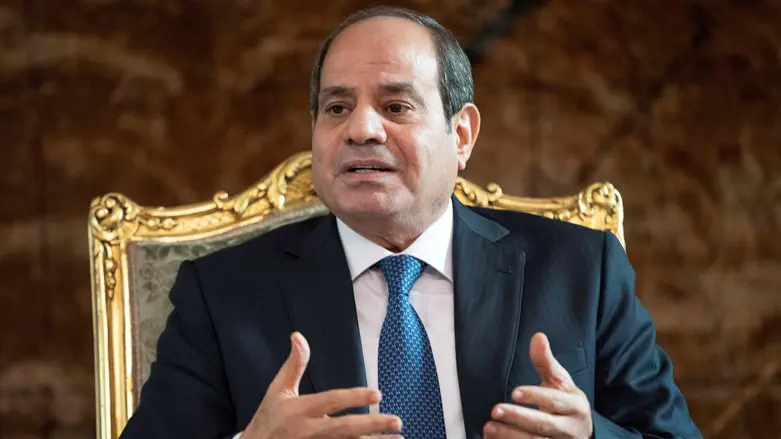
The United Arab Emirates condemned the “Israeli government’s decision to expand settlement in the Golan Heights.”
The UAE statement claimed that “this is another commemoration of the occupation and a violation of international law.”
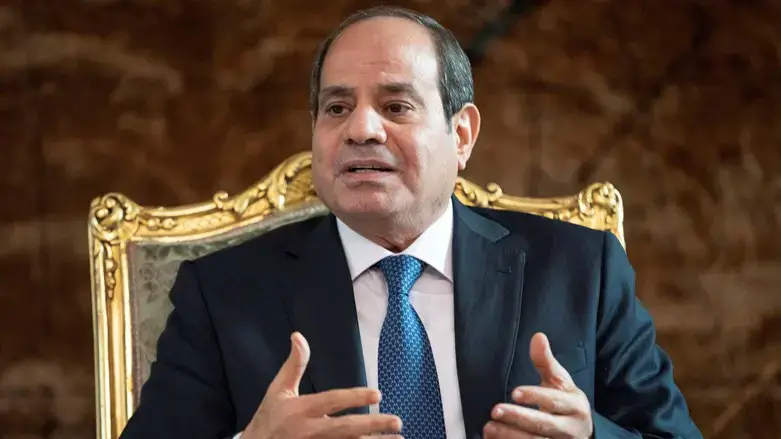
The United Arab Emirates condemned the “Israeli government’s decision to expand settlement in the Golan Heights.”
The UAE statement claimed that “this is another commemoration of the occupation and a violation of international law.”
By World Israel News Staff
Israeli intelligence agencies are concerned that Islamist rebels in Jordan could overthrow the Hashemite Kingdom’s monarch, King Abdullah II, following the recenter ouster of longtime Syrian dictator Basher al-Assad.
Top intelligence officials, including Shin Bet (Israel Security Agency) Chief Ronen Bar and the head of the Israeli army’s Intelligence Directorate, Maj.-Gen. Shlomi Binder, secretly visited Jordan on Friday to discuss the developments in the region, according to Hebrew-language media reports.
Bar and Binder were met with the director of Jordan’s national intelligence agency, Ahmed Husni, along with other senior officials.
Jordan-based terror groups have used the long land border between the two countries to infiltrate Israel and carry out attacks.
Axios reported that the meetings were focused on security issues related to the Islamist groups now tasked with forming a transitional government in Syria, with Jordan serving as a mediator between the militas and Israeli government.
While many Jordanian politicians are outwardly hostile to Israel, the country has maintained a cold peace with Jerusalem since 1994, and the two countries frequently collaborate on security issues.
Jordan’s cooperation with Israel, including allowing its airspace to be used to shoot down incoming Iranian missiles and rockets, has sparked backlash in the kingdom.
Some 70 percent of Jordan’s population are of Jordanian descent, while the king is a member of the Hashemite minority. Iran and Sunni extremists have long worked to stoke tribal tensions between the groups, with the goal of toppling the royal dynasty that has ruled Jordan for more than a century.
Iran has recently ramped up its efforts to smuggle weapons to Palestinian terror groups in Judea and Samaria via Jordan, as well as exacerbating anti-monarchy sentiment in the country.
US National Security Adviser Jake Sullivan says that “for many months, Hamas has not been prepared to even do the basic things of coming to the table with the names of hostages.”
The comments in an interview with Channel 13 come amid reports earlier in the week that the terror group has passed along a list of hostages it is prepared to release in the first stage to the mediators.
An Arab diplomat denied a Wall Street Journal report claiming as much.
Sullivan spoke in the present tense, saying “has” and not “had,” but it wasn’t entirely clear whether he was revealing that Hamas has still yet to provide names of the hostages to date or whether he was referring to previous months before talks were jumpstarted last week.
Pressed on whether Prime Minister Benjamin Netanyahu has been an obstacle in the talks, as Arab mediators have told The Times of Israel, Sullivan gives a diplomatic answer.
“Israel negotiated hard to defend and justify its position in this negotiation,” he says.
He is less generous regarding Hamas, asserting that the terror group “has been deeply intransigent,”
“We have seen Hamas repeatedly, time and again, when the opportunity was there to do something, not be prepared to step up and do it,” Sullivan says.
“But we have also seen Israel and the Israeli government choose to drive a negotiation where it had its perspective on what was required in order to get the hostages home and ensure Israel’s security,” he adds, without elaborating what he means by that.
Asked whether Donald Trump’s election and the threat that the president-elect issued to those holding hostages in the Middle East are the reasons why there has been renewed optimism regarding the chances for a deal, Sullivan disagrees.
The top Biden aide points to the fall of the Assad regime, the ceasefire in Lebanon and Israel’s killing of Hamas leaders. “My view on why we are in [this] position… is not about American politics or the outcome of the election… It’s about the regional situation here.”
“My conviction is that because of developments in the region, the moment is ripe; and it is my job to seize that moment to bring these people home, including American citizens, who have been away from their families for too long.”
As for the call from some hostage families to have a one-phase deal that sees all 100 captives released at once, Sullivan says the US still believes that the three-phase framework that it has been pushing since Israel proposed it in May will be the most effective.
“Our judgment is that trying to proceed in phases and getting this thing started so people start coming out — that is the best way to get to the end of the process,” he says.
“We will obviously test that… and we will see what happens. But it’s the judgment of the US and of the mediators that operating in this way is the most likely method of getting everyone home safely to their loved ones in the shortest possible time.”