US President-elect Donald Trump doesn’t like being asked what he meant when he threatened “all hell to pay” if the hostages aren’t released by his January 20 inauguration.
Twice this past week he was pressed to elaborate, sparking angry reactions of “I don’t think I have to go into it anymore” and “Do I have to define it for you?”
When The Times of Israel subsequently asked two of Trump’s aides to explain what he meant by the threat, they also declined to do so.
This is the same Trump who during his first term promised “fire and fury like the world has never seen” if North Korea continued threatening the US, only to later build a warm relationship with Kim Jong Un, even as the latter continued to threaten Washington.
But Trump also ordered the strike that took out the head of Iran’s Islamic Revolutionary Guard Corp’s elite Quds Force, Qassem Soleimani, in 2020, demonstrating that he wasn’t afraid to take unprecedented military action against the Tehran-led Axis of Resistance against Israel.
The lack of clarity regarding Trump’s threat may be meant to preserve maximum maneuverability and an element of surprise, but it has also somewhat blunted the effectiveness of his message.
“Trump tries to use his unpredictability as an asset,” said a senior Arab diplomat for one of the countries mediating the hostage talks between Israel and Hamas. “Sometimes there’s something behind his threats, and sometimes there isn’t. The problem is, we don’t know which is the case this time.”
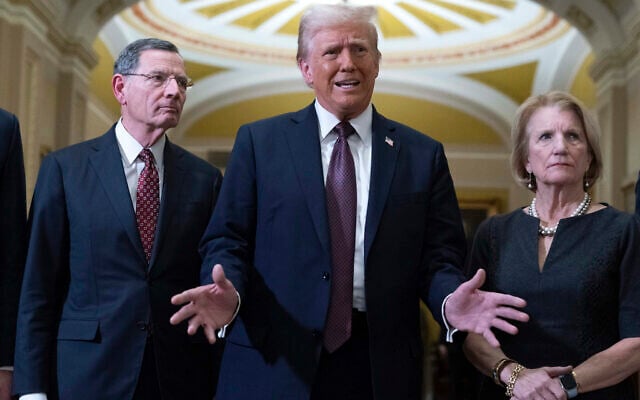
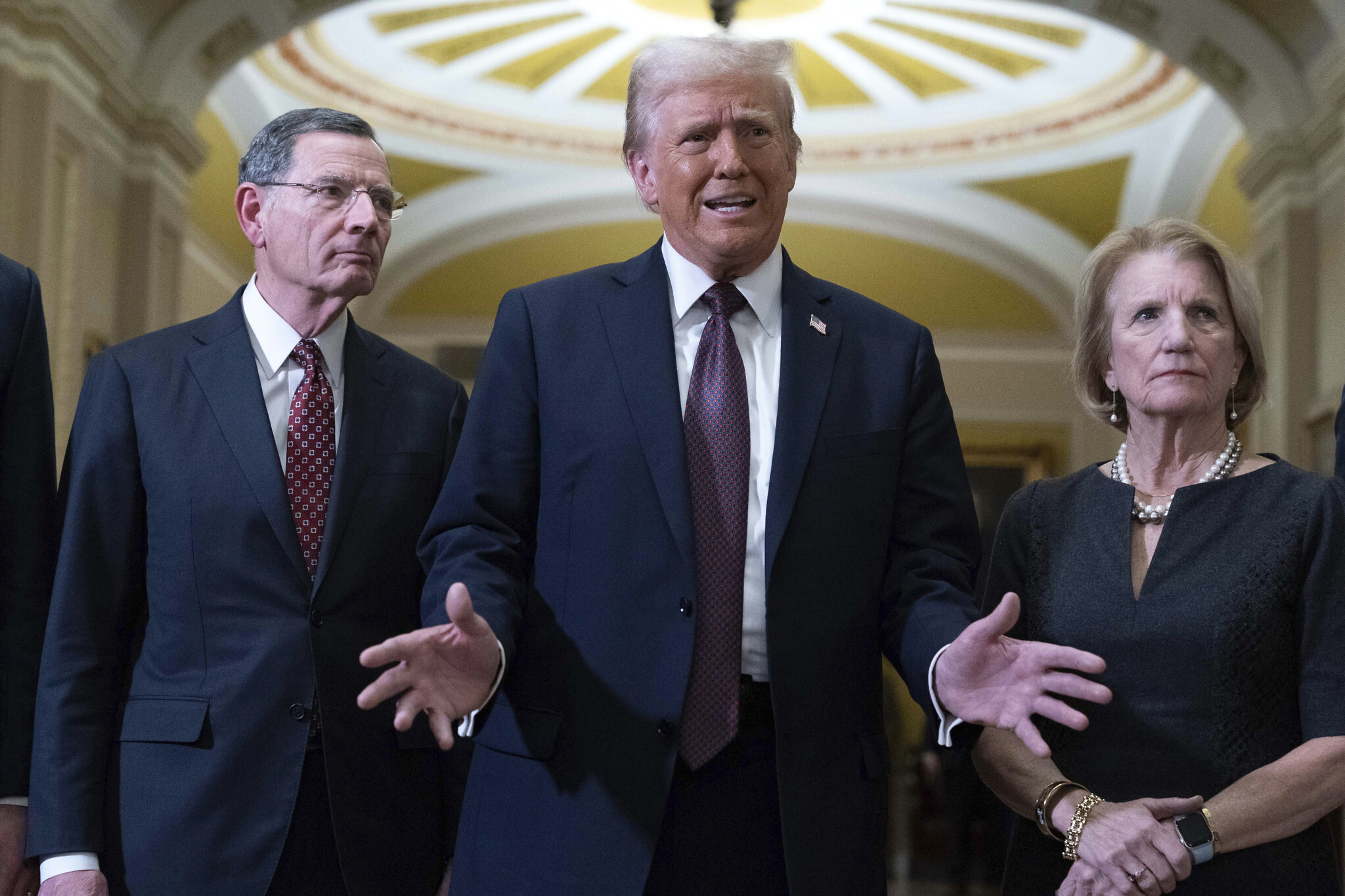
US President-elect Donald Trump flanked by Sen. John Barrasso, Republican of Wyoming, left, and Sen. Shelley Moore Capito, Republican of West Virginia, talks to reporters after a meeting with Republican leadership at the Capitol on Wednesday, Jan. 8, 2025, in Washington. (AP/Jose Luis Magana)
The vagueness of Trump’s comments also leaves open the possibility that he does not intend the US to be the one making good on the “all hell to pay” threat. Enter Israel.
Once January 20 rolls around, Israel is planning to ramp up various forms of pressure on Hamas in Gaza to get a deal over the finish line, unencumbered by the demands of outgoing US President Joe Biden’s administration or his threat of cuts to security assistance over the humanitarian crisis in the Strip, an Israeli official told The Times of Israel.
The official said Prime Minister Benjamin Netanyahu’s office has weighed significantly restricting the amount of humanitarian aid entering Gaza if there is no hostage deal by the inauguration.
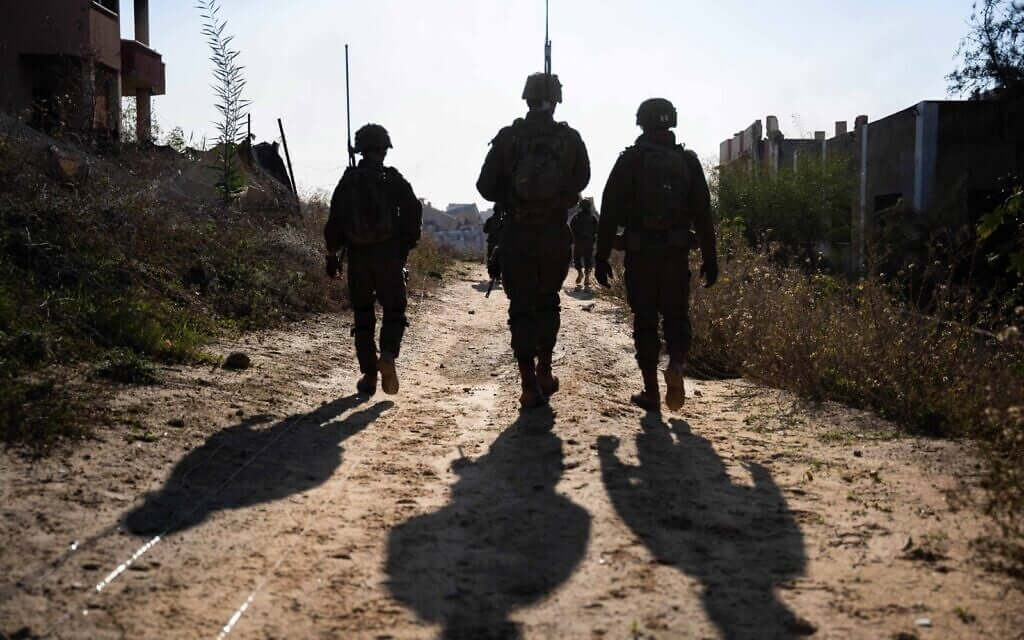
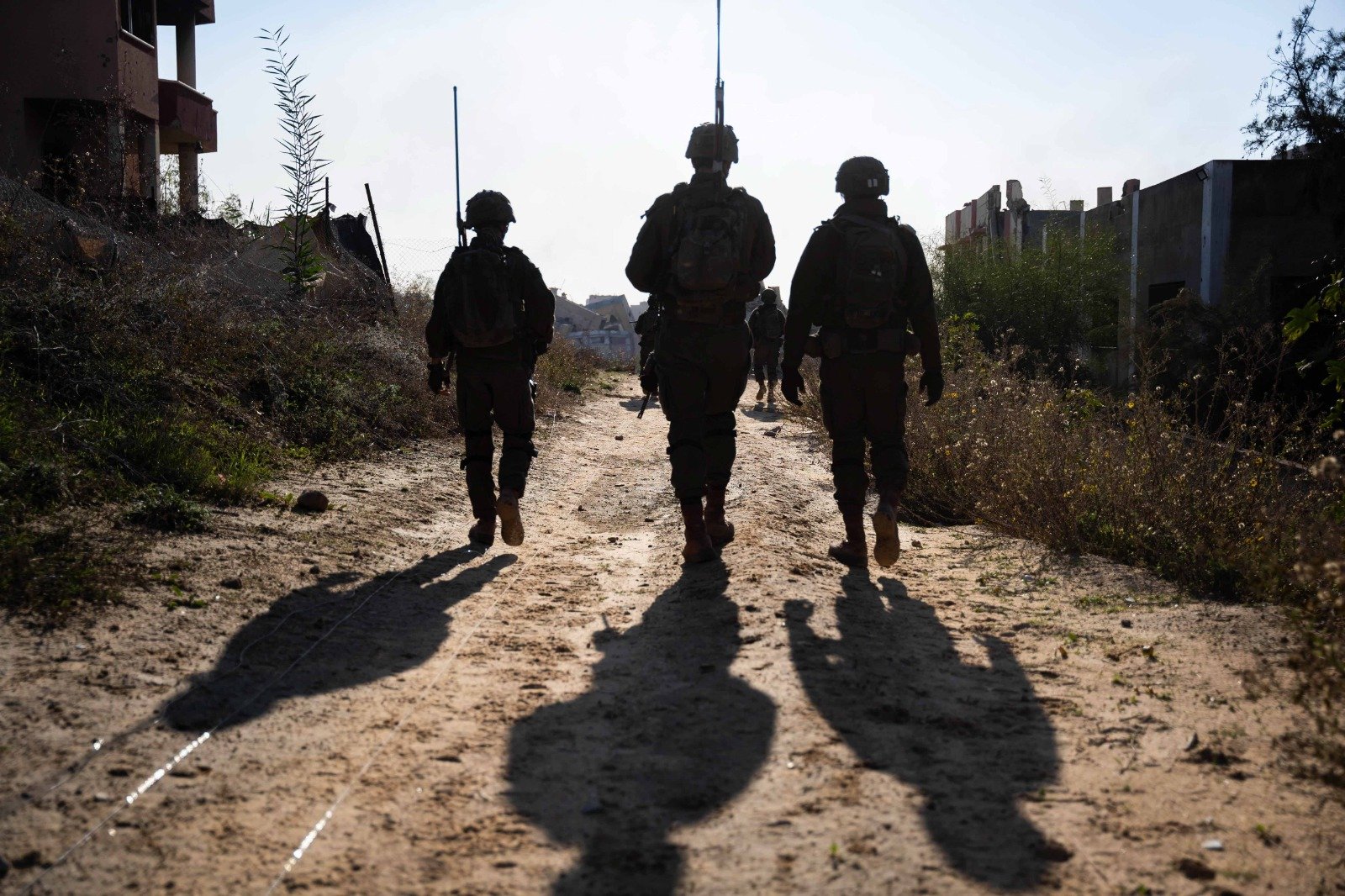
Israel is also planning to ramp up the IDF’s ongoing ground offensive in Gaza, expanding the operation that has largely targeted the northernmost quarter of the Strip toward central Gaza, the Israeli official said, adding that the goal is to rob Hamas of another area where it still has some control.
The result of these two actions could well create the “hell” for Hamas that Trump has referred to, the Israeli official said.
But as CIA Director William Burns pointed out on Friday, people in Gaza — including Palestinian civilians and Israeli hostages — are already living in “hellish” conditions.
Aid levels in Gaza have periodically become alarmingly low, with October seeing the smallest amount entering the territory in all of 2024, despite repeated US prodding.
For several weeks in the fall, no aid at all was allowed into large areas of northern Gaza where the IDF was operating, leading to concerns in the international community that Israel was implementing the so-called General’s Plan, which envisions laying siege to northern Gaza in order to snuff out remaining Hamas fighters.

Palestinians collect food aid at the Bureij camp in the central Gaza Strip, on November 6, 2024. (Eyad Baba/AFP)
Israel has since taken steps to increase the amount of aid it allows into Gaza, while also arguing that this same assistance is keeping Hamas in power because the power group diverts convoys for its own use or demands kickbacks from those who deliver or distribute the aid. Accordingly, Netanyahu’s office is considering withholding this key source of income from Hamas, once Trump enters office.
But cutting off humanitarian essentials will impact everyone in Gaza, including the hostages, a second Israeli official warned. He noted that Israel would be risking the lives of the hostages in the hope that Hamas will cave before their health expires.
The UN has warned that even if Israel refrains from actively adopting this strategy, aid entering Gaza could still grind to a halt due to Knesset legislation that goes into effect at the end of January outlawing, and banning Israeli authorities from contacting, the relief agency for Palestinian refugees, UNRWA.
While Israel said after passing the laws that it was prepared to work with other international organizations to fill the vacuum left by UNRWA, a US official told The Times of Israel that the agency is the bureaucratic backbone for the Gaza humanitarian operation, and no comprehensive plan has been put together to fully account for its absence.
It’s also unclear whether threats of further punitive action will sway Hamas when it recognizes that the hostages are the only leverage it has for coaxing Israel to permanently end the war.
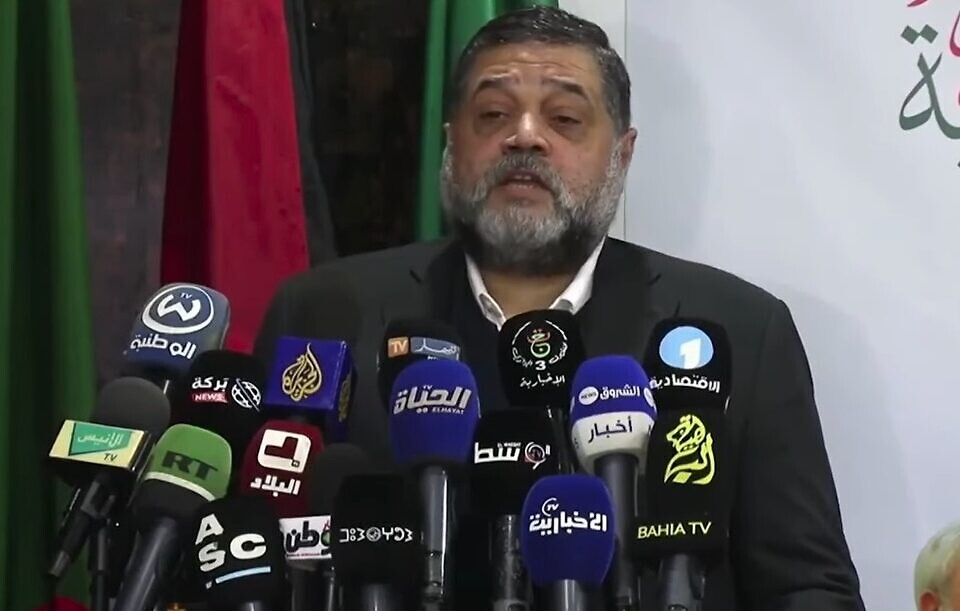
Sitting comfortably outside of Gaza, senior Hamas official Osama Hamdan appeared to reflect that sentiment, telling reporters at a press conference in Algiers that the terror group and its supporters in Gaza are not afraid of Trump’s threats “because they already live in hell” in the Strip.

Hamas official Osama Hamdan holds a press conference in Algiers, Algeria on January 7, 2024. (Screen capture/YouTube)
With Hamas apparently unfazed by the incoming US president’s threats, Israel is stepping up its rhetoric against the terror group as well.
“If the hostage deal does not materialize by the time President Trump takes office, there must be a complete defeat of Hamas in Gaza,” Defense Minister Israel Katz said in a statement Friday in which he said he had ordered the military to present him with a plan for securing such a defeat.
Katz didn’t elaborate on how the plan he was demanding differed from Israel’s already existing war aims of dismantling Hamas’s governing and military capabilities.
If the plan means expanding the military’s northern Gaza offensive southward, that too could risk the lives of the remaining hostages, many of whom are believed to be held in central Gaza, the second Israeli official said.
Some in the government have called for Israel to annex part of Gaza in order to pressure Hamas to release hostages, but the second Israeli official argued that this would only ensure an open-ended insurgency against Israel while delegitimizing its war against the terror group.
What options does Israel have left? The security establishment has pushed the government to make the compromises necessary to reach a deal with Hamas to free the hostages while as many as half of the remaining 98 are still alive, said the second Israeli official.
This can be done in a temporary ceasefire, which Netanyahu prefers because it allows Israel to resume fighting against Hamas and would likely keep his coalition intact. The premier’s far-right governing partners envision reestablishing settlements in Gaza and have threatened to topple the government if the war ends.

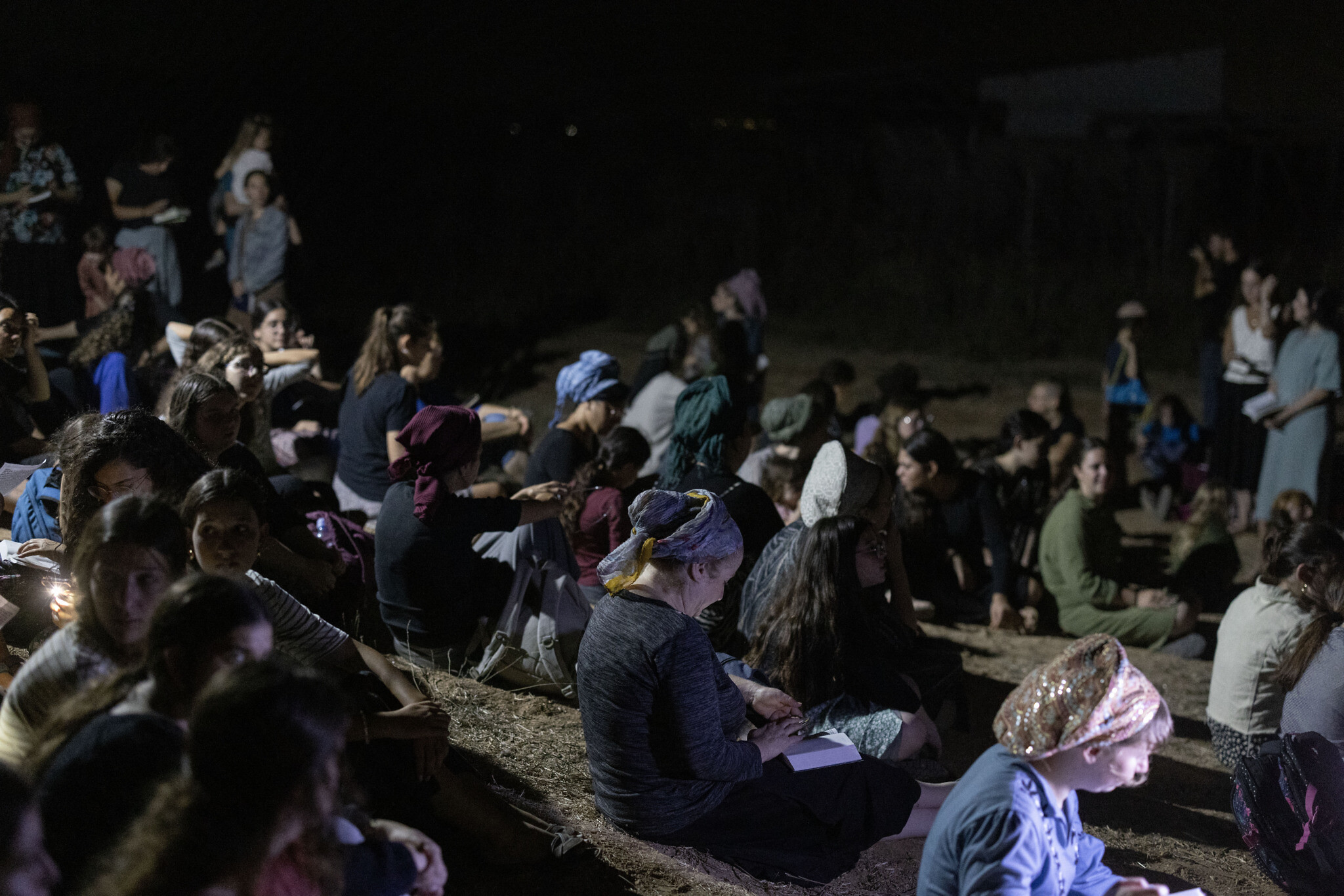
Israeli right-wing activists pray during a gathering to call to establish Israeli settlements in Gaza and to mark the annual Tisha B’Av (Ninth of Av) fasting and memorial day, near the border with the Gaza Strip on August 12, 2024. (Oren ZIV / AFP)
Much of the security establishment is less concerned about the prospect of stopping the war, arguing that the IDF can return to Gaza if or when Hamas violates the terms of the ceasefire, as it is doing in Lebanon against Hezbollah, the second Israeli official explained.
The security establishment also argues that Netanyahu’s conduct of the war contains no exit strategy since he has refused to put forth a viable alternative to Hamas’s rule, thereby allowing the terror group to repeatedly return to areas briefly cleared by the IDF. The security establishment and the international community have pushed for allowing the Palestinian Authority, which enjoys limited governing powers over parts of the West Bank and which had been kicked out of Gaza by Hamas in 2007, to return to the Strip.
Netanyahu has rejected the idea out of hand, likening the PA — which backs a two-state solution — to Hamas. His far-right coalition partners seek to collapse the PA entirely and would likely threaten to collapse the government if he considers empowering it.
Hostage negotiations appeared to be nearing a climax over the weekend, with Netanyahu dispatching Israel’s most senior negotiators — who also happen to lead the country’s security agencies — back to Doha to try and finalize an agreement.
If they don’t succeed, he may well choose to turn Trump’s threat into action. Palestinians, and Israelis, in Gaza may pay the price.