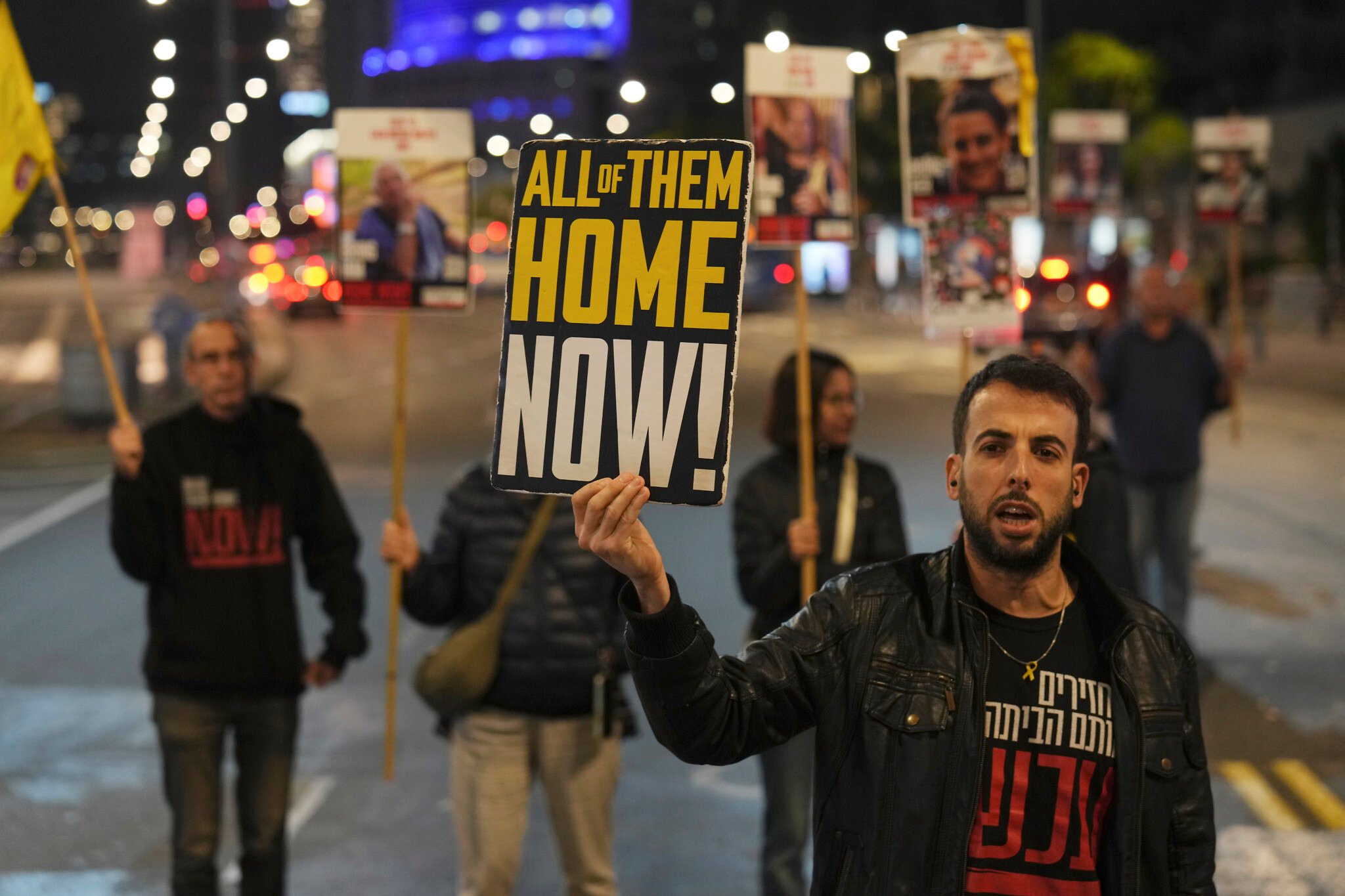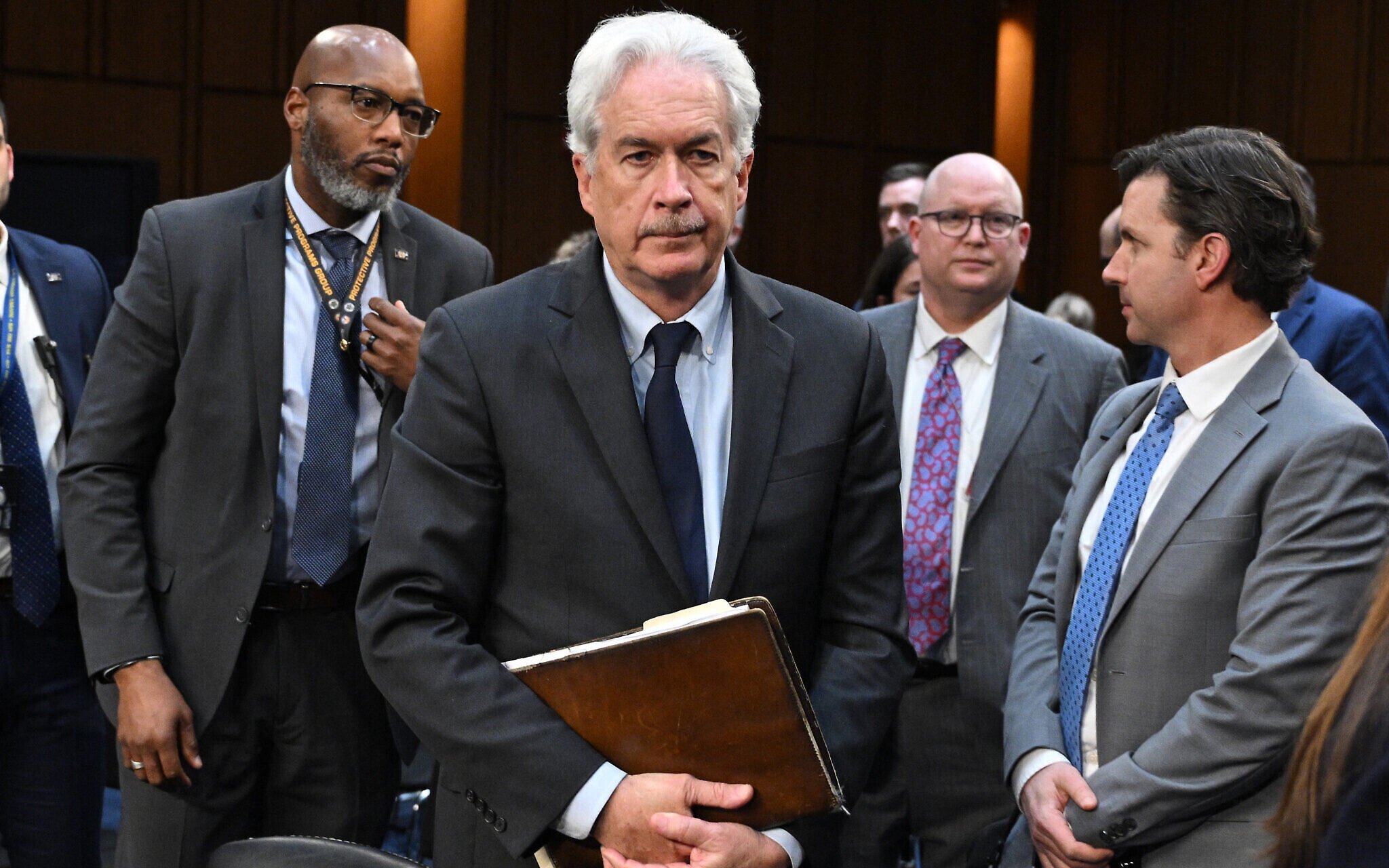
In conversation with Egyptian Foreign Minister, US Secretary of State reveals that Hamas has rejected yet another proposal for a hostage release in exchange for a ceasefire.
Hamas has once again refused to release the hostages it has been holding in Gaza since its attack on Israel last October, US Secretary of State Antony Blinken told Egyptian Foreign Minister Badr Abdelatty.
The State Department on Monday released a readout following a call between Blinken and Abdelatty, which took place on Sunday and which dealt with the situation in the Middle East and Sudan.
“The Secretary noted that Hamas has once again refused to release even a limited number of hostages to secure a ceasefire and relief for the people of Gaza,” said State Department Spokesperson Matthew Miller, who added that Blinken “discussed the importance of establishing a path for the post-conflict period that provides governance, security, and reconstruction.”
The two also discussed Lebanon, according to Miller, who said, “The Secretary and Foreign Minister Abdelatty discussed efforts to promote a diplomatic resolution that would enable civilians on both sides of the blue line to return to their homes with safety and security. The Secretary underscored the need for Lebanese leaders to swiftly address the country’s presidential vacancy.”
Blinken’s comments to Abdelatty show once again that Hamas has continuously rejected any proposal for a hostage release that has been presented to it. This includes Egyptian President Abdel Fattah Al-Sisi’s proposal from last week, which would have seen a two-day ceasefire in Gaza, during which four Israeli hostages will be released in exchange for terrorists. In the ten days following, negotiations would be held regarding a more extensive deal.
Last week, senior Hamas official Sami Abu Zuhri stressed again that any agreement must include a full Israeli military withdrawal from Gaza.
Sources cited by Axios say Washington, Riyadh looking at signing smaller agreement that falls short of defense pact initially sought, before Biden leaves office in January
US Secretary of State Antony Blinken (C) is greeted as US Ambassador to Qatar Timmy Davis (2R) and Qatari Ministry of Foreign Affairs Chief of Protocol Ibrahim Fakhroo (R) walk behind upon his arrival in Doha, October 24, 2024. (Nathan Howard/Pool/AFP)
Top American and Saudi officials held talks last week in Washington about a possible security agreement that does not include Riyadh normalizing ties with Israel, according to a Monday report.
Normalization has been all but shelved amid the ongoing Gaza war and Israel’s refusal to establish a diplomatic horizon for a future Palestinian state.
However, Washington and Riyadh are still looking at signing a smaller security deal that falls short of the defense pact initially sought by Saudi Arabia, before US President Joe Biden leaves office in January, Axios reported, citing three unnamed sources.
Last week, Saudi Foreign Minister Prince Faisal bin Farhan said Riyadh could potentially move “quite quickly” on some bilateral agreements with Washington even if a mega-deal involving normalization with Israel remains out of reach.
The Biden administration had been working to broker a normalization accord between the two countries that would include US security guarantees for Saudi Arabia, among other bilateral deals between Washington and Riyadh. Those efforts stalled after the October 7 Hamas attack on Israel, which saw some 1,200 Israelis and foreign citizens killed, most of them civilians, and 251 hostages kidnapped to Gaza.
Prime Minister Benjamin Netanyahu said on Monday he seeks peace with Arab countries, after a year of war in Gaza and Lebanon, and as Washington seeks to rally Arab countries around long-term plans for post-war governance in the Gaza Strip and further normalization deals with Israel.
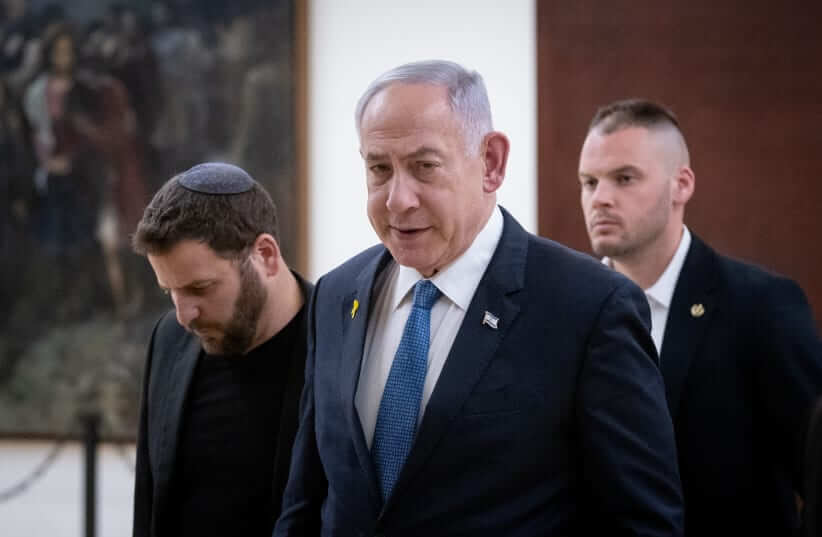
Prime Minister Benjamin Netanyahu speaks on the opening day of the winter session at the Knesset in Jerusalem, October 28, 2024. (Maayan Toaf / GPO)
“I aspire to continue the process I went through a few years ago, with the signing of the historic Abraham Accords, in order to achieve peace with other Arab countries,” Netanyahu said in a speech to lawmakers as the Knesset began its winter session.
The US-brokered Abraham Accords, signed in 2020 under then-US president Donald Trump, saw Gulf countries Bahrain and the United Arab Emirates, as well as Morocco, establish formal ties with Israel.
“I emphasize peace for peace, peace out of strength with important countries in the Middle East,” Netanyahu said.
“These countries and other countries see very well the blows we inflict on those who attack us, the Iranian axis of evil,” he added, two days after Israel attacked military targets in Iran, as retaliation for a massive Iranian missile barrage on Israel on October 1.
“They are impressed by our determination and courage. Like us, they aspire to a stable, secure, prosperous Middle East.”
Saudi Arabia did not join the 2020 deals and has never recognized Israel.
Last week, US Secretary of State Antony Blinken sought to make headway on normalization, flying directly from Tel Aviv to Riyadh on a tour of the Middle East, days before the US election.
US Secretary of State Antony Blinken speaks with members of the media at Ben Gurion Airport before departing for Riyadh, Saudi Arabia, in Tel Aviv, October 23, 2024. (Nathan Howard/Pool Photo via AP)
“There remains, despite everything that’s happened, an incredible opportunity in this region to move in a totally different direction,” Blinken said minutes before leaving Israel.
“Saudi Arabia would be right at the heart of that, and that includes potentially normalization of relations with Israel.”
Axios also cited the sources as saying that Saudi national security adviser Musaad bin Mohammed al-Aiban visited Washington last week, and met with Blinken, along with his US counterpart Jake Sullivan and Biden advisers Brett McGurk and Amos Hochstein at the White House.
A healthcare clinic of the UNRWA (United Nations Relief and Works Agency) in Deir al-Balah, in the central Gaza Strip, on October 31, 2024.
Israel has terminated the 1967 agreement outlining the terms of its relations with the United Nations Relief and Works Agency (UNRWA), a week after the Knesset passed legislation banning the organization’s operations in the Jewish state.
“UNRWA, whose employees took part in the October 7 massacre and many of whose workers are Hamas operatives, is part of the problem in the Gaza Strip, not part of the solution,” according to a statement by Foreign Minister Israel Katz on Monday.
“The U.N. was provided with countless pieces of evidence regarding Hamas operatives who work at UNRWA and about the use of UNRWA facilities for terrorism, and nothing was done,” he added.
“Don’t believe those claiming there is no substitute for UNRWA. Already, the vast majority of humanitarian aid [in Gaza] is delivered through other organizations, only 13 percent is delivered through UNRWA.
“The State of Israel is bound by international law and will continue to allow the entry of humanitarian aid into Gaza in a manner that will not harm the security of the citizens of Israel,” continued Katz.
Israeli Ambassador to the U.N. Danny Danon welcomed the move, and reiterated Jerusalem’s commitment to providing aid to the PA Arabs.
“Despite the overwhelming evidence we submitted to the U.N. that substantiate Hamas’ infiltration of UNRWA, the U.N. did nothing to rectify the situation,” tweeted Danon.
“The State of Israel will continue to cooperate with humanitarian organizations but not with organizations that promote terrorism against us,” he added.
Last week, the Knesset made it illegal for UNRWA to operate in Israeli territory, and for state officials to cooperate with the agency.
Two laws were passed by a large majority following the exposure of UNRWA staff complicity in Hamas’s Oct. 7, 2023 massacre, and despite pressure from the United States and other countries against the move.
Following the Knesset’s vote, the Israeli Foreign Ministry called the agency “rotten.”
“It is not just a few rotten apples, as U.N. Secretary-General [Antonio] Guterres is trying to claim. UNRWA in Gaza is a rotten tree entirely infected with terrorist operatives,” the ministry stated at the time.
Despite the ban, which will come into full effect in 90 days, Israel has committed to ensuring the continued flow of humanitarian aid to Gaza.
“Israel is committed to international law and to providing humanitarian aid to Gaza, and will continue to act on this subject with UN agencies and international organizations such as the World Food Program, UNICEF, the World Health Organization, and a number of other organizations, this while complying with its international obligations,” the ministry said.
“Hamas has infiltrated UNRWA in Gaza widely and deeply,” the statement continued. “UNRWA employees were involved in the horrific 7 October massacre. Moreover, Israel handed over to the U.N. details about an additional 100 Hamas operatives who are employed by UNRWA, yet UNRWA has not taken any measures to handle the issue, and is not moving forward with any serious steps to deal with the terrorist operatives in its ranks.”
The U.S. State Department expressed “deep concern” over the legislation, emphasizing UNRWA’s role in delivering aid to Gaza.
The Biden administration has stepped up pressure on Jerusalem to meet a host of demands focused on vastly expanding the entry of humanitarian aid into the Strip.
Last month, the White House confirmed an Axios report that Washington had sent a letter to Israel containing an ultimatum: Improve the humanitarian conditions in the Gaza enclave within 30 days or risk a hold-up in the supply of U.S. weapons.