“The Iranians have paid a very high price for operating all their proxies against Israel over the past year,” explained Sabati.
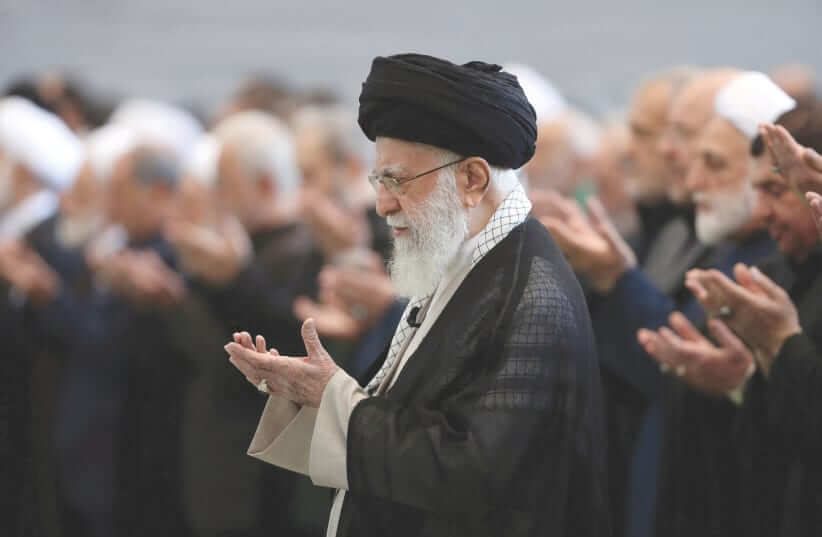
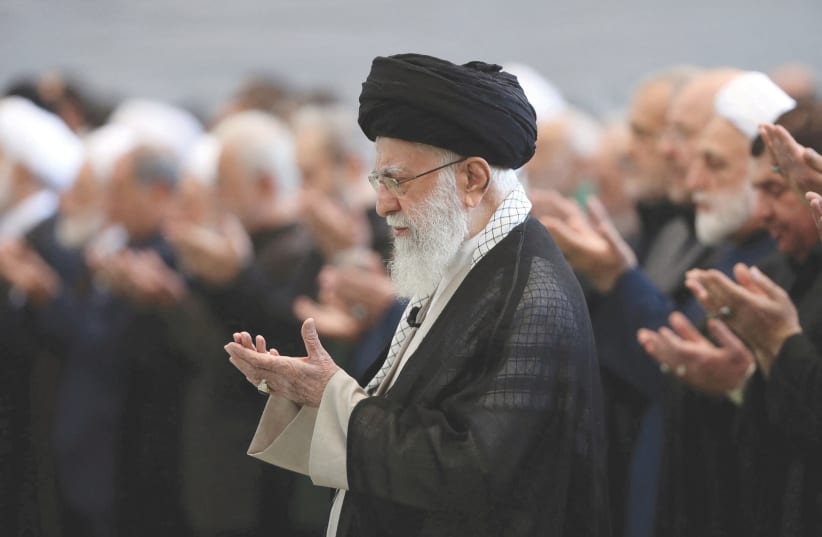
By MAYA COHENUpdated: DECEMBER 2, 2024 10:31IRAN’S SUPREME Leader Ayatollah Ali Khamenei attends Friday prayers and a memorial ceremony for Hassan Nasrallah in Tehran earlier this month.(photo credit: Office of the Iranian Supreme Leader/West Asia News Agency/Reuters)
The surprising offensive by Sunni rebels in Syria reveals a deep crisis in Iran’s strategy, Institute for National Security Studies researcher Benny Sabati said in a recent interview with Maariv, arguing that Tehran’s efforts in combatting Israel left the Islamic Republic depleted.
“The Iranians have paid a very high price for operating all their proxies against Israel over the past year,” explained Sabati.
Iran finds itself significantly weakened
“Their command has been eliminated, their soldiers and field commanders – many of whom are in Hezbollah, Hamas, and other groups,” Sabati noted. As a result, “Iran is entering the campaign in Syria in a very weak state; it has no means to help Assad’s regime at all.”
This double blow is not only about the inability to provide assistance but also about inflicting harm.
“They targeted a general and several IRGC members, killed them, and captured the Iranian consulate. On one hand, Iran is unable to assist; on the other, it has become a target itself.”
Members of Syrian opposition fighters walk along a street in Aleppo, after the Syrian army said that dozens of its soldiers had been killed in a major attack by rebels who swept into the city, in Syria November 30, 2024. (credit: REUTERS/MAHMOUD HASSANO)
Struggling with parallel fronts
According to Sabati, Iran’s problem is compounded by its inability to manage simultaneous fronts.
“The Iranians have an issue. They neither like nor believe in fighting on two fronts. When they’re focused on the Israeli front, that’s all they deal with,” Sabati said.
“They likely had to neglect this front of the extremist Sunnis,” Sabati added. “They’ve abandoned it for the past two or three years in favor of focusing on Israel.”
The consequences of this neglect are now becoming evident, the researcher argued.
“Now the genie is out of the bottle.”
Turning to Russia for help
In search of a solution, Iran turned to Russia, he continued. “Iran’s foreign minister spoke last night with Russia’s foreign minister, asking for help.”
However, even the Iranian foreign minister’s visit to Damascus seemed futile, Sabati added.
“He can come to encourage – that’s all he can do. They don’t have much in their pocket.”
Domestic criticism and regional implications
The situation is escalating amid internal criticism in Iran, as “the public is very angry about the aid provided to regional countries and all the terrorist organizations,” said Sabati.
Meanwhile, the regional implications largely depend on Russia’s response.
“If the Russians intervene and suppress this rebellion, it’s a different story. If they don’t, we will witness a significant weakening of both Iran and the Syrian regime.”
The weapons may include missiles, production and storage facilities of chemical weapons like sarin, tanks, and armored personnel carriers.
By AMIR BOHBOTRebels fire at the Syrian military on the outskirts of Aleppo in Syria. November 29, 2024.(photo credit: BAKR ALKASEM/AFP via Getty Images)
Israel’s security establishment has raised concerns that Syrian rebels may seize strategic rebels in the Aleppo area after the rebel groups entered the city last week and forced President Bashar al-Assad’s regime to flee.
Such weapons may include missiles, production and storage facilities of chemical weapons like sarin, tanks, armored personnel carriers, and aircraft at bases in the Aleppo area and its surroundings.
In addition to stockpiles of light weapons, shoulder-fired missiles, vehicles, and various types of ammunition, the area contains infrastructure sites for the production of weapons such as rockets, precision missiles, and other armaments, some of which are manufactured for Hezbollah and pro-Iranian Shiite militias.
These production sites are designed to complicate IDF operations targeting the smuggling of weapons from Iran to Syria and from there to Beirut.
The rebels are mostly from organizations rooted in al-Qaeda.
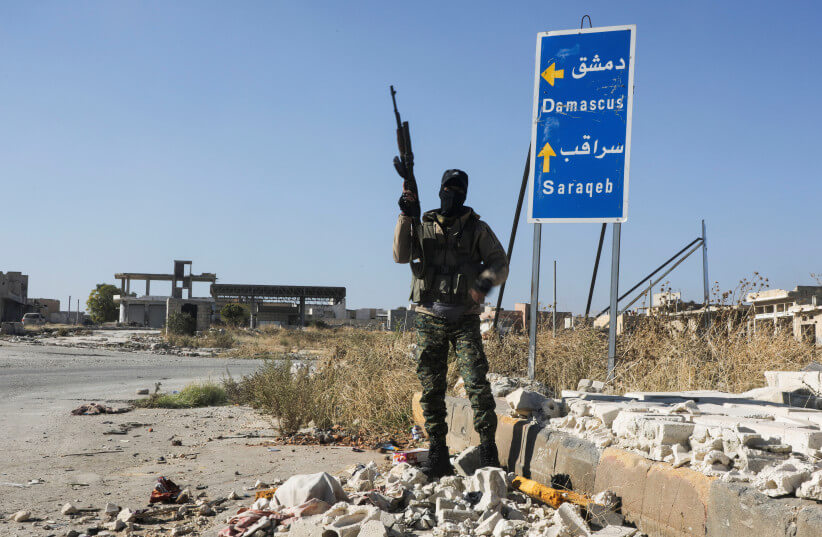
A Syrian rebel carries a weapon as he stands at the entrance of Saraqeb town in northwestern Idlib province, Syria. December 1, 2024. (credit: REUTERS/MAHMOUD HASSANO)
In the short term, they are focused on opposing the Assad regime. However, the defense establishment fears that once they consolidate control over the area, they may turn their intentions and firepower toward the Israeli home front.
The weapons that might fall into their hands, combined with their extremist ideology, could threaten Israel’s security interests, necessitating constant vigilance.
Iran’s involvement
Another highly dangerous development for Israel is Iran’s involvement, which is currently striving to suppress the rebellion led by the rebels against the Assad regime.
Further, Iranian success in the Syrian arena could bolster its influence over the Syrian regime.
Recently, however, there have been growing calls among moderate Sunni states urging Assad to break away from the “Axis of Evil,” rejoin the Arab League, and benefit from investments that could help rehabilitate his regime and Syria.
“Takfiri groups are good news for enemies of the world of Islam,” Iranian Supreme Leader Ayatollah Ali Khamenei wrote on X.
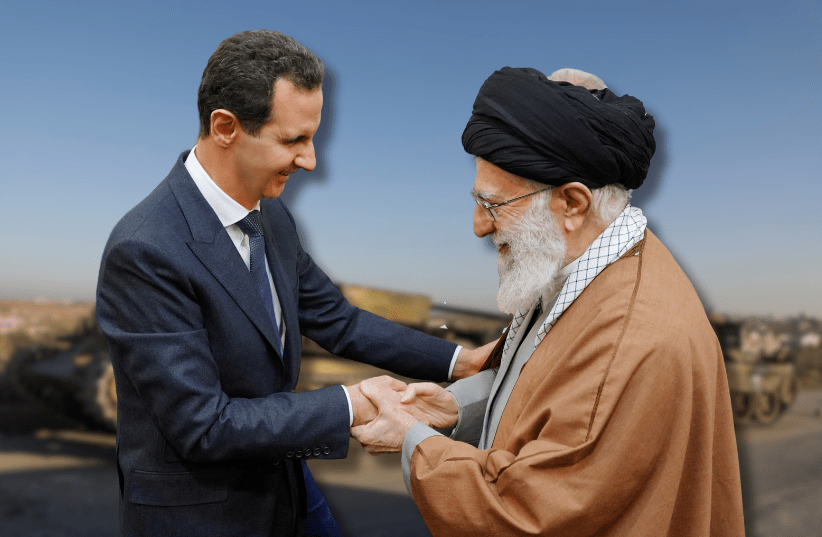
By ALEX WINSTONUpdated: DECEMBER 2, 2024 16:31Illustrative image of Syrian President Bashar al-Assad and Iranian Supreme Leader Ayatollah Ali Khamenei(photo credit: Canva, REUTERS/MAHMOUD HASSANO, SANA/HANDOUT VIA REUTERS)
At a time when Hezbollah and Israel have signed a shaky ceasefire and Hamas is seriously weakened in Gaza, one of Iran’s other proxy strongholds in the Middle East is causing increasing concern for the ayatollahs of the Islamic Republic of Iran: Syria.
Dozens of Syrian Army soldiers have been killed as rebels of the Islamist terror group Hayat Tahrir al-Sham swept into the major city of Aleppo, forcing the army to redeploy in the biggest challenge to President Bashar al-Assad in years.
Russia, a major Assad ally, said its air force had carried out strikes on Syrian rebels in support of the country’s army, following what was the boldest rebel assault for years in a civil war where front lines had largely been frozen since 2020.
Iranian-backed militias also entered Syria on Sunday night from Iraq to support Assad and were heading to northern Syria to reinforce the beleaguered Syrian Army forces battling insurgents, according to Syrian Army sources. Dozens of Iran-aligned Iraqi Hashd al-Shaabi fighters from Iraq also crossed into Syria through a military route near Al Bukamal crossing.
Hayat Tahrir al-Sham, or HTS, once known as the Nusra Front, is designated a terrorist group by the United States, Russia, Turkey, and other states.
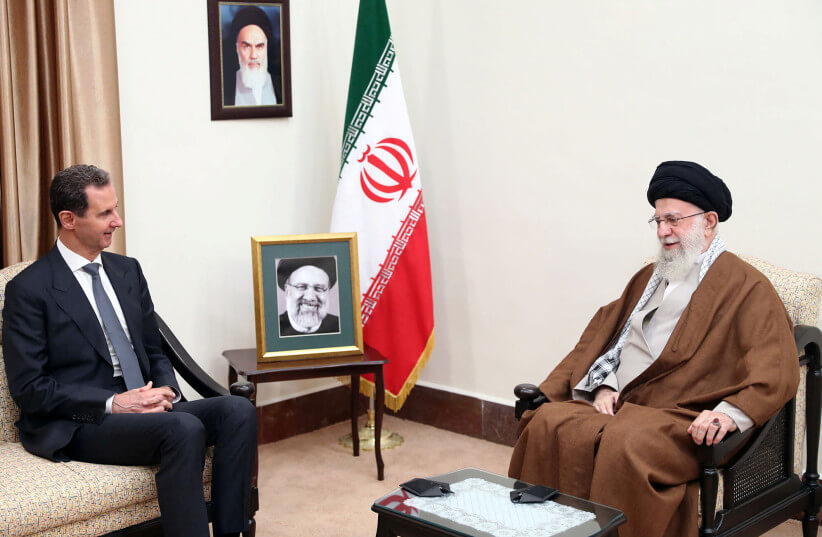
Iran’s Supreme Leader Ayatollah Ali Khamenei meets with Syrian President Bashar al-Assad, in Tehran, Iran May 30, 2024. (credit: Office of the Iranian Supreme Leader/WANA (West Asia News Agency) via REUTERS)
To throw his opinion into the mix, Iranian Supreme Leader Ayatollah Ali Khamenei sent out a post on X on Sunday evening, addressing the current situation in Syria, stating, “Takfiri groups are good news for enemies of the world of Islam. Exactly at a time when all Islamic Ummah’s attention is focused on the issue of Palestine, takfiri [apostate] groups, [that] instead of concentrating on [the] Zionist regime’s malevolent nature, draw the attention to other places. #Syria”
Khamenei’s post criticizes takfiri groups, a term often used to describe extremist Sunni factions that declare other Muslims apostates. He accused these groups of serving the interests of Islam’s enemies, such as the US and Israel, by diverting attention away from the Palestinian cause and the “malevolent nature” of the “Zionist regime.”
This perspective aligns with Khamenei’s long-standing belief in the umma (Muslim community at large) – that unity among Muslims is essential to resist external threats, particularly from Israel. By engaging in internal conflicts – such as those in Syria – takfiri groups weaken the Islamic world and shift focus from what Khamenei views as the central issues: Palestinian liberation and opposition to Zionism.
Khamenei, while embodying the Shia theocratic model, often invokes the concept of the umma to assert Iran’s leadership in a broader Islamist struggle.
A relationship worth saving?
Iran and Syria’s alliance began in the aftermath of Iran’s 1979 Islamic Revolution. Syria, under former president Hafez al-Assad, was one of the first Arab nations to back Iran during the Iran-Iraq War. The shared hostility toward Israel and opposition to Western influence in the Middle East cemented their ties. Syria also provided critical logistical support to Iran, allowing the passage of arms and supplies to Hezbollah – the Iranian-backed militia in Lebanon – which Israel has spent years trying to disrupt and has amped up its pressure since the war against Hezbollah erupted after October 7.
The Islamic Revolutionary Guards Corps (IRGC), particularly its Quds Force, has been the primary actor managing Iran’s relationship with Syria. The Quds Force, tasked with overseeing Iran’s extraterritorial operations, established a significant presence in Syria to support both strategic goals and ideological ones, such as exporting the Islamic Revolution’s principles. Iran’s support for Syria includes arms supplies, economic aid, and the training of pro-Assad militias.
The onset of Syria’s civil war in 2011 marked a turning point in the relationship.
Syrian President Bashar al-Assad, like his father Hafez, positioned himself as a key ally of Iran. When anti-Assad protests escalated into a violent conflict, the IRGC intervened decisively to ensure Assad’s survival, as losing Syria would have been a strategic blow to Iran’s regional influence.
Iran has since poured billions of dollars into Syria, supplying arms, deploying IRGC officers, and recruiting militias from across the region, including Afghan, Pakistani, and Iraqi fighters. This intervention helped Assad regain control over much of the country. Iran also viewed the war as a chance to expand its “axis of resistance” against Israel, consolidating a land corridor from Tehran to the Mediterranean.
The Assad family’s secular Ba’athist ideology contrasts with Iran’s theocratic Shi’a governance, but their partnership endures due to shared goals. Both regimes oppose US policies in the region, support Palestinian resistance groups, and resist Sunni-dominated powers like Saudi Arabia and Turkey.
For Iran, Syria acts as a critical bridge to Hezbollah in Lebanon and provides access to Israel’s borders, complicating Israel’s defense strategies and acting as an Iranian deterrence.
While the Iran-Syria alliance remains strong, it faces challenges, including economic pressures and differing priorities in post-war reconstruction. Syria’s dependence on Russia has introduced a new player into the dynamic, sometimes complicating Iran’s influence. However, the IRGC’s deep entrenchment in Syrian security and economic structures ensures its continued leverage.
The relationship between Iran, the IRGC, and Syria is a multifaceted alliance defined by strategic necessity, ideological convergence, and mutual survival against shared adversaries. The IRGC’s role as Iran’s external arm ensures that Syria remains central to Iran’s regional ambitions.
Missing friends
Over the course of 2024, Khamenei has lost some of his closest allies.
The elimination of figures such as Hezbollah leader Hassan Nasrallah, Hamas political chief Ismail Haniyeh (killed in Tehran itself), and Hamas’s Gaza chief Yahya Sinwar will have led the Iranian leadership to be desperate to keep Assad – its closest ally in the region – in power, no matter what the cost.
In Khamenei’s eyes, the umma is not just a concept but a mission, embodied in the jihadist groups that Iran backs and the IRGC’s extensive reach. His message, accusing HTS of drawing attention away from Israel’s wars and the Palestinian issue is merely a pretense hiding his real intention: Assad must stay in power, or Iran’s influence will be critically wounded in Israel’s periphery.